Mountain driveways change the first conversation
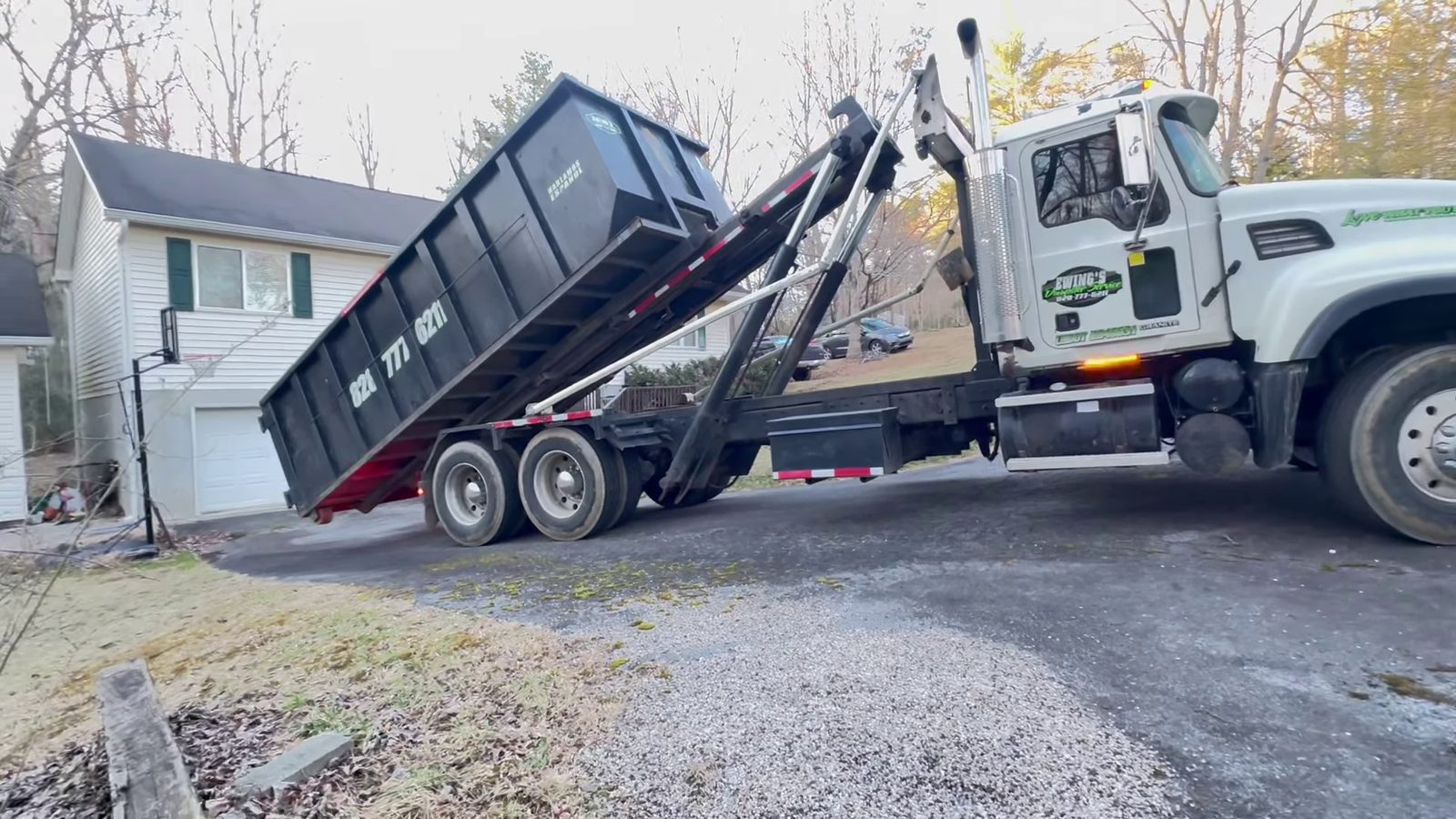
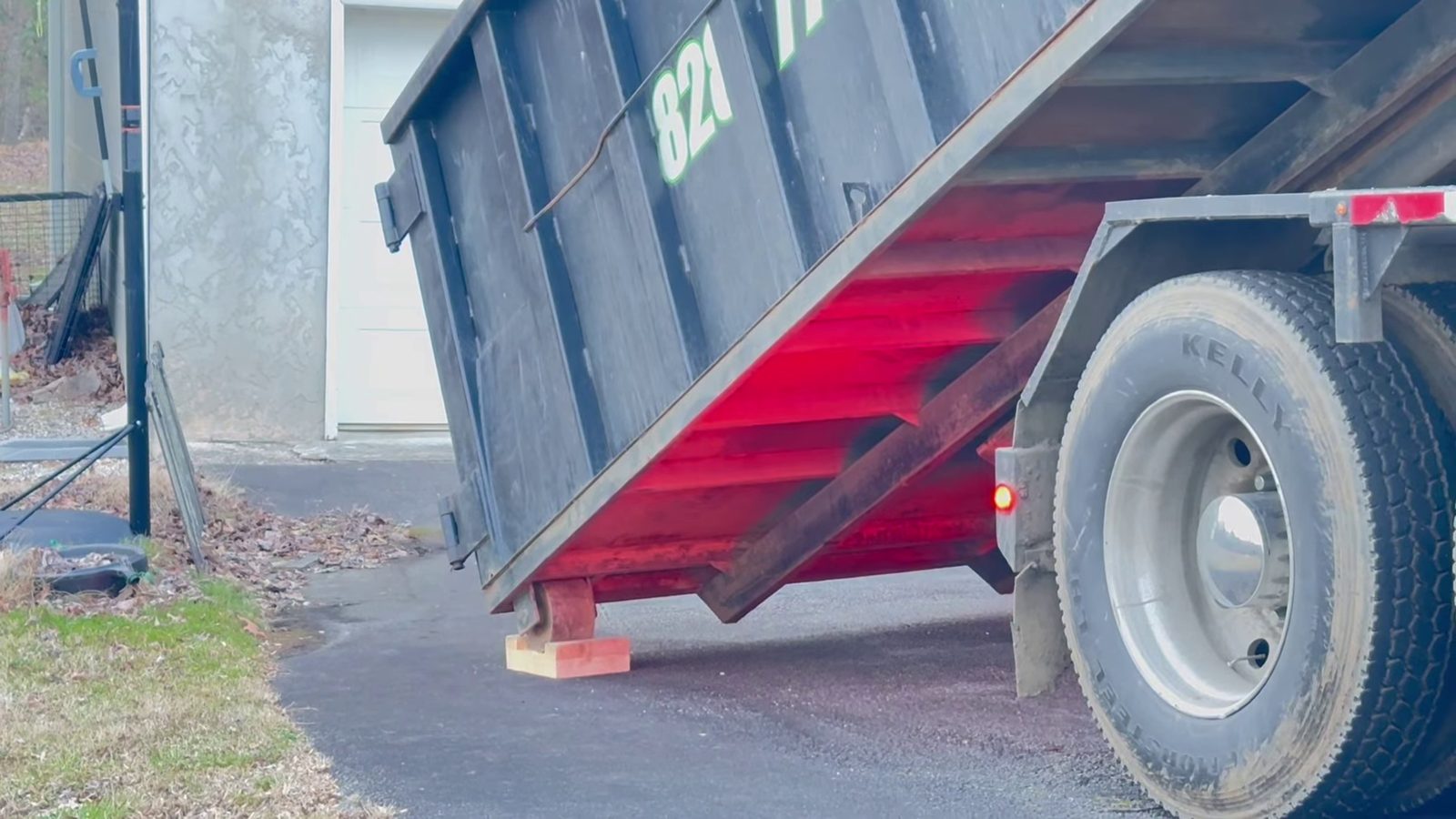
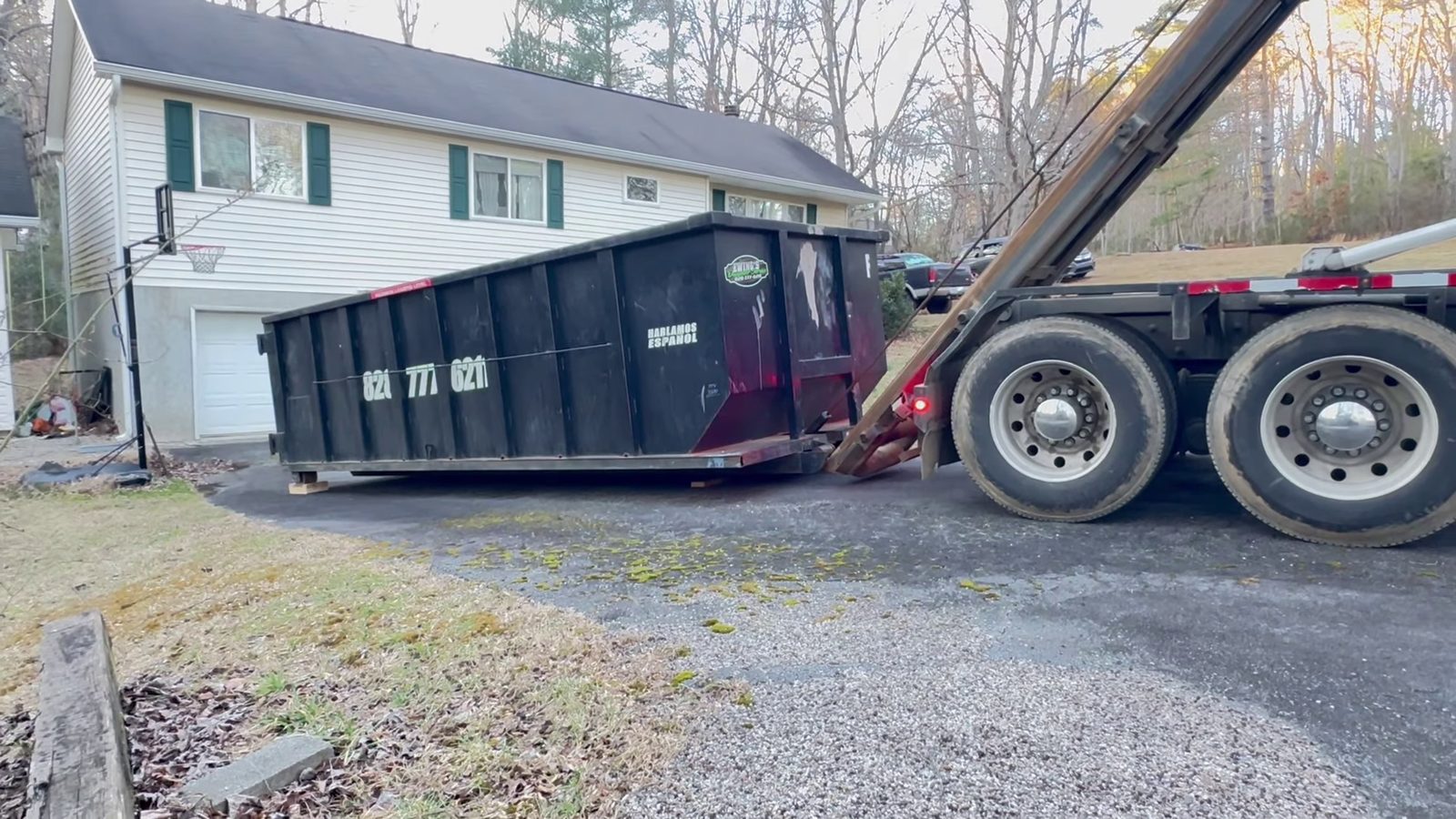
Asheville sits at roughly 2,100 feet, and the neighborhoods fanning out from downtown — Kenilworth, North Asheville, the ridge streets above West Asheville, the rural routes toward Weaverville and Leicester — regularly feature driveways with grades, gravel surfaces, and overhead clearance issues that a flatland delivery driver never encounters. That physical reality shapes how Ewing's dispatches a 10-yard box in this county. Before the truck rolls, the question is whether the driveway can safely receive the vehicle; the answer is not always yes on a hillside property.
Delivery access is worth confirming at booking. A job that requires staging the dumpster at the road instead of the driveway changes your load workflow. The price stays the same — $199, covering delivery, pickup, one ton, and seven days on-site — but knowing the approach ahead of time saves the back-and-forth on the day of drop.
| Project type | Typical debris load | Included ton covers it? | Expected cost |
|---|---|---|---|
| Attic or garage cleanout | Furniture, boxes, bagged goods | Usually yes | $199 |
| Single bathroom renovation | Drywall, tile, light fixtures | Often yes | $199 |
| Deck or fence removal | Lumber, hardware, posts | Yes | $199 |
| Partial roofing strip | Asphalt shingles (dense) | Borderline | $199 or overage applies |
| Plaster wall removal | Heavy masonry plaster, lath | Often no | $199 base + per-ton overage |
The last two rows matter most on older Buncombe County renovations. Plaster walls in West Asheville bungalows run two to three times the weight per square foot of modern drywall. A box that looks one-third full can already be at the weight cap when the load is dense.
Volume and weight are not the same number
A 10-yard container holds roughly ten cubic yards of loose debris — the equivalent of about three full-size pickup truck loads. That volume handles a single bathroom gut, an attic worth of furniture and boxes, or the fence line from a standard residential lot. What it does not handle automatically is weight above the included ton.
Volume and weight cap independently. You can fill the box to the fill line with lightweight items — bags, foam, lumber, old furniture — without approaching the weight limit. Or you can hit the ton cap with the bin only one-third full if the load is dense. The difference matters most on renovation jobs in Buncombe County's older housing stock: the craftsman bungalows in North and West Asheville, the brick ranches in the Haw Creek corridor, and the mid-century houses in Black Mountain and Swannanoa often carry multiple flooring layers, cast-iron plumbing, and lath-and-plaster walls that add up quickly once they come out.
The 10-yard is the right starting point for most single-project residential jobs. Where it falls short is multi-room gut jobs or full-house cleanouts — those typically need a larger container to avoid a mid-project swap. Where it overshoots is a single-load haul you could manage in one or two truck trips: a dumpster earns its keep when debris accumulates across several days or the material is too awkward or heavy to load directly into a truck bed.
Not sure yet? The dumpster size guide matches job scope to container before you book the 10-yard rental.
Permits and placement across Asheville and the county
Where the box lands determines whether you need paperwork. On private property — a driveway, a job-site pad, a parking area — no permit is required for most Buncombe County residential addresses. That is the common case, and driveway placement is what Ewing's recommends whenever access allows.
Dumpsters placed in a public street or right-of-way operate under different rules. For state-maintained roads outside Asheville city limits, the NC Department of Transportation manages encroachment permits for temporary obstructions in the right-of-way. For streets within Asheville, check with the City of Asheville before dispatch — residential streets in some neighborhoods require a temporary obstruction permit before a container can sit on the roadway. Placing a bin in a city street without it creates liability if the box blocks a lane or restricts emergency access.
Asheville's dense historic neighborhoods — the grid streets of Montford, the tight lots along Lexington Avenue, the sloped blocks in the River Arts District — are the situations where a quick city permit call prevents a bigger problem. Those streets were laid out well before dumpster trucks existed, and narrow travel lanes leave little margin for a container that was never cleared.
Placement on Buncombe County's secondary mountain roads adds a sight-line issue that permitting alone does not resolve. A 10-foot steel container on a blind curve is a hazard regardless of paperwork. Building and fire codes referenced by the International Code Council address container clearance from building openings and fire apparatus access lanes — a detail that matters on tight job sites or properties where fire department access is limited by grade.
What NC landfills cannot accept
Every residential dumpster load from Buncombe County travels to a licensed transfer station or landfill operating under state and federal solid waste rules. The composition of the load matters: certain materials are prohibited regardless of how they end up mixed in with clean debris.
The NC DEQ Solid Waste Section maintains the restricted-materials list for facilities in this state. For residential projects, the most common sources of rejected loads are tires, lead-acid batteries, used motor oil, electronics, and unencapsulated asbestos-containing material. Homes built before 1980 — and there are many in Asheville's historic districts — may contain vermiculite attic insulation, floor tiles bonded with older adhesive, and pipe insulation products that require professional assessment before they go into a bin.
Paints, solvents, pesticides, pool chemicals, and fluorescent tubes are household hazardous waste. The EPA guidance on household hazardous waste explains what qualifies and where it should go instead. Buncombe County operates periodic HHW collection events; the county solid waste department maintains current drop-off dates. For renovation debris specifically, the EPA construction and demolition materials guidance outlines what qualifies as clean C&D debris and what requires separate handling — a distinction worth knowing on a gut job before the dumpster fills.
Loads rejected at the disposal facility for prohibited materials come back to the renter, not Ewing's. If you are unsure whether a material is restricted, pull it out before calling for pickup.
Making the posted price hold for the full week
Seven days covers most residential projects from start to finish when the scope is clear before the box drops. The exception in this county is storm-driven cleanup: Buncombe County has experienced 19 federally declared disaster events (1973-2026), and the cleanup demand that follows a major weather event compresses scheduling windows across the service area. If a storm has just moved through, build a buffer day into your pickup request.
Three habits that keep the $199 total from climbing:
- Put dense material in first, spread low. Plaster, tile, and concrete go on the floor of the bin at the start, spread across the full width. That keeps the load balanced and makes it easier to track where you stand against the included ton as the job progresses.
- Break bulky items down before loading. Doors, shelving units, and long lumber pieces laid flat use the volume efficiently. Items standing upright waste headroom and reduce how much total debris the bin holds before it reaches the fill line.
- Call for pickup on your last active work day, not the last included calendar day. Requesting pickup the morning after your final loading session keeps scheduling flexible and avoids a gap if Ewing's trucks are running full in your part of the county.
Compare container options and project costs across Western NC in the full rental cost guide.