Henderson County's conversion boom and what it leaves in the dumpster
Mills River incorporated in 2003 and has spent two decades watching Henderson County's apple orchards and poultry operations give way to subdivisions, light industrial parks, and commercial strips along NC-280. The old structures left behind — chicken houses with pressure-treated framing, tobacco barns built from wide-board oak, concrete block implement sheds — generate debris that rarely matches what a suburban renovation site produces.
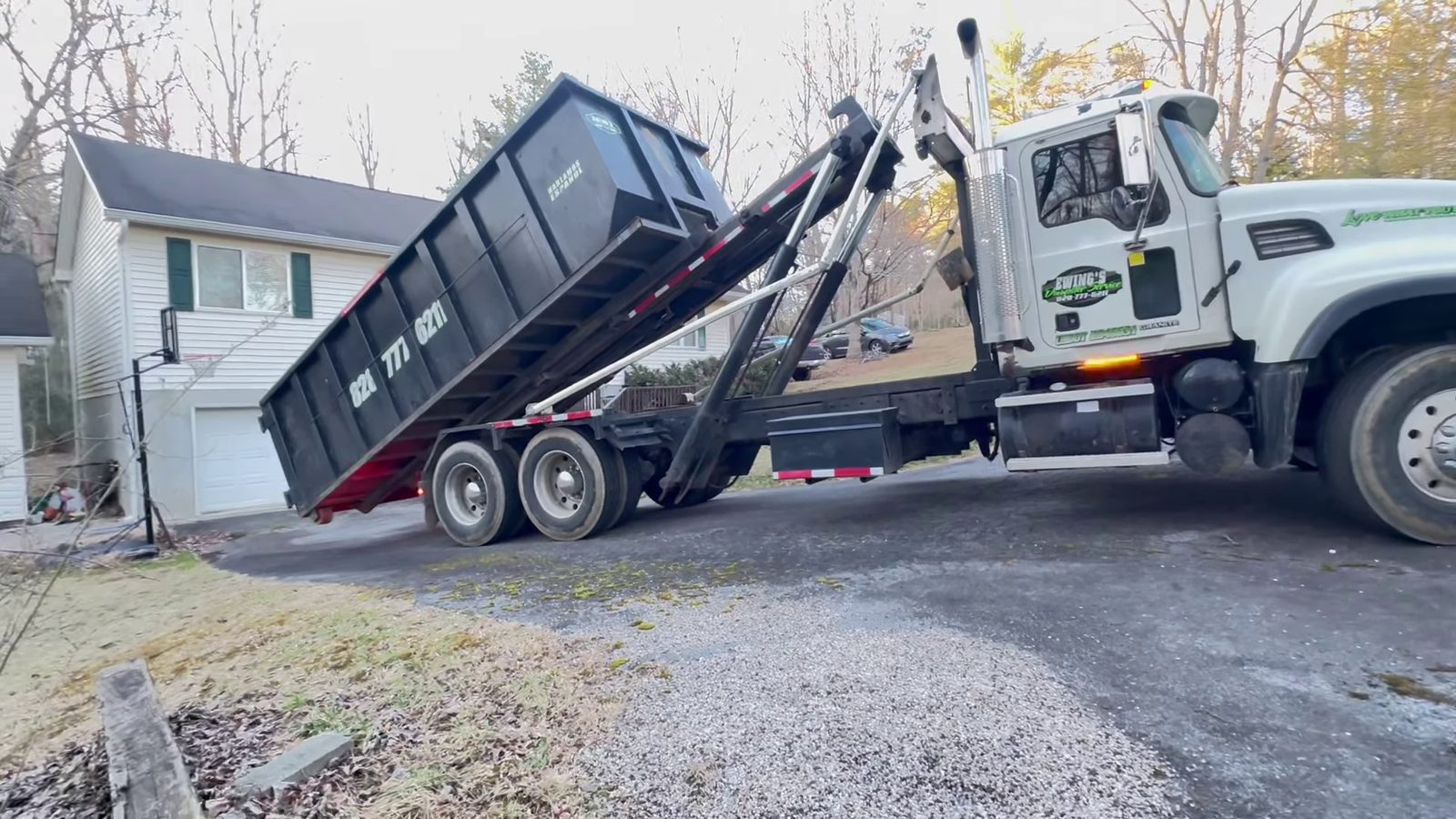
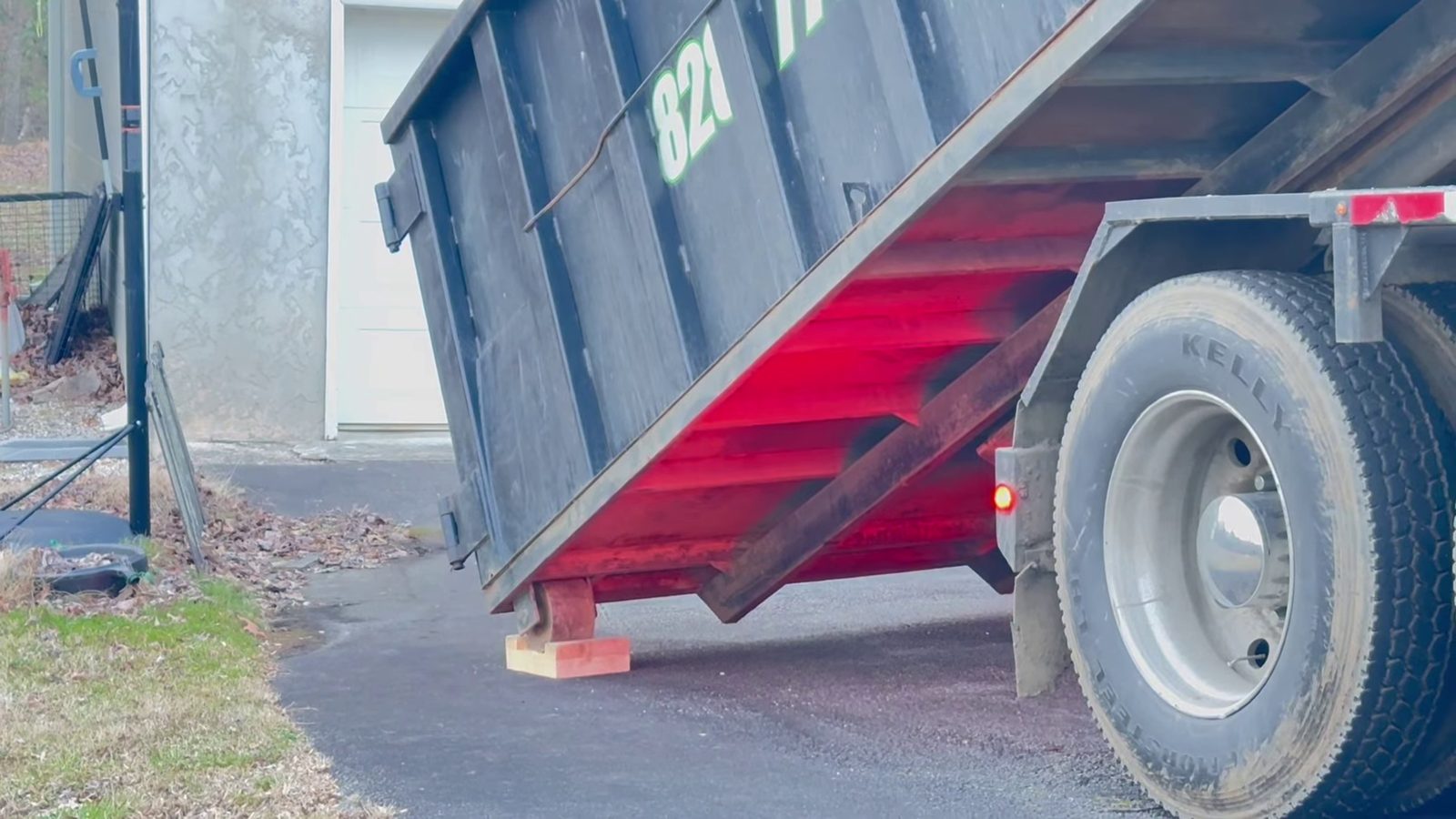
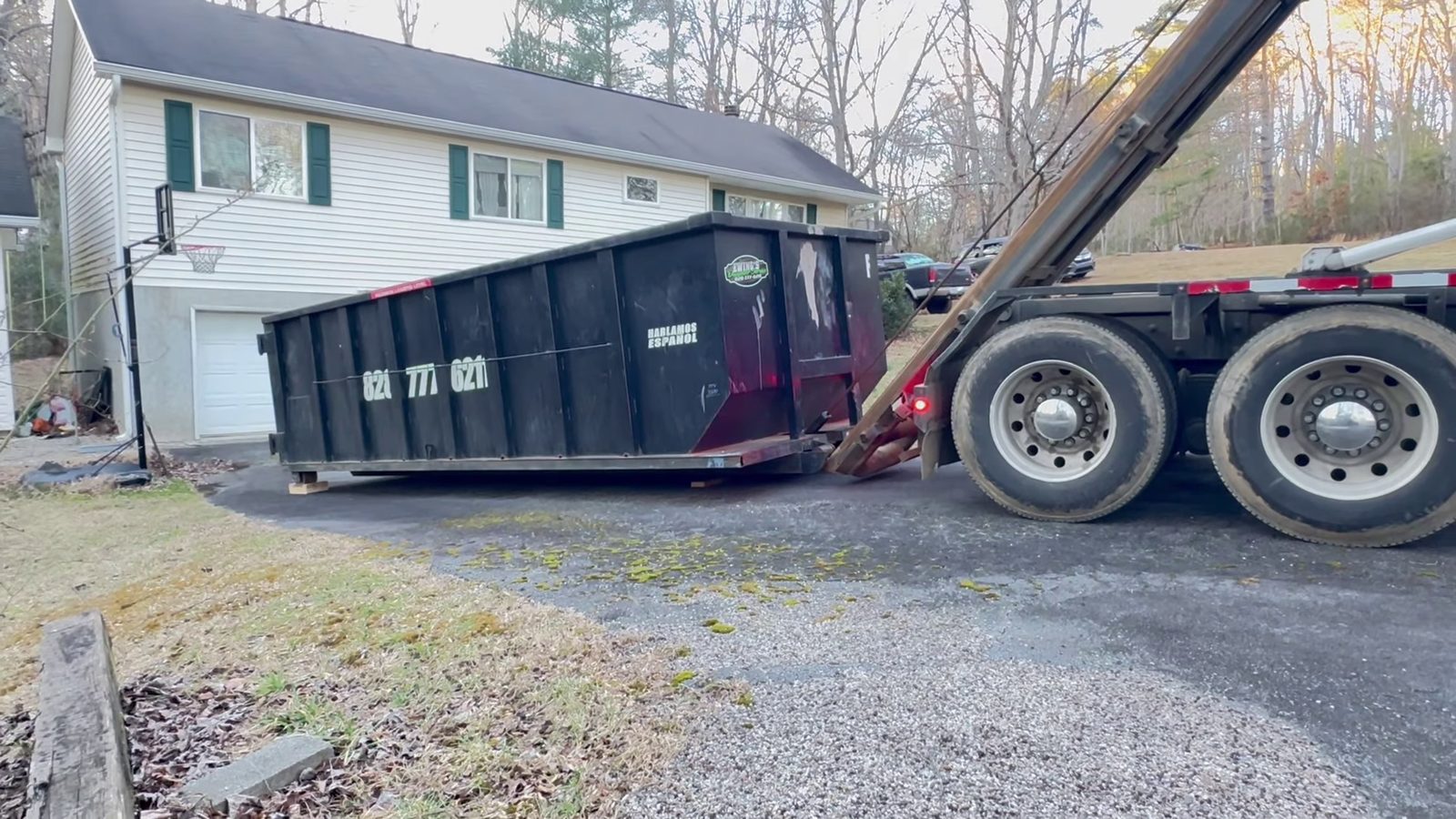
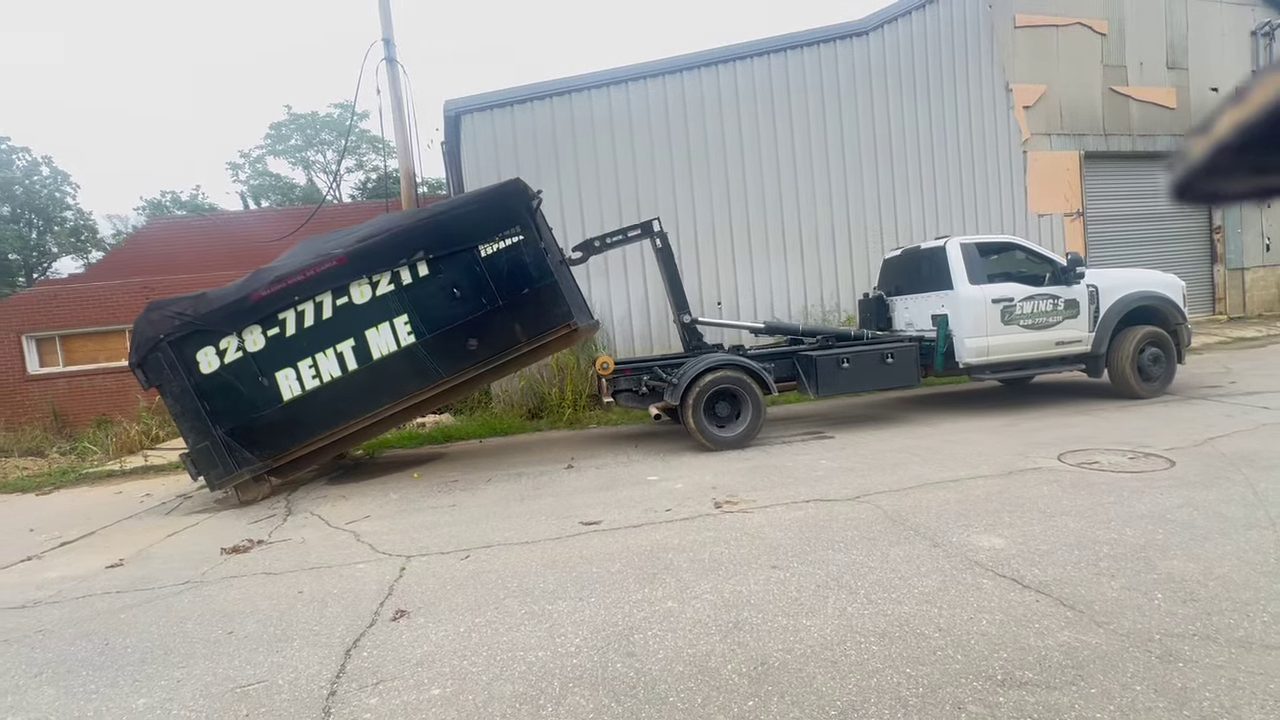
Dense concrete, old-growth dimensional lumber, and corrugated metal roofing pack differently than drywall and modern framing. Those materials are heavier by volume, they don't stack efficiently, and a bin that looks half-empty can already be close to its weight threshold when most of what's in it is broken slab or block. That difference shapes every sizing decision on a Mills River job. Our construction dumpster rental service handles both sides of that ledger — new residential builds going up on converted farm parcels and the clearings that make room for them.
Scope and price on a Mills River construction job
Two container sizes cover the full range of construction work here. The 17-yard at $325 is right for single-trade jobs — a roofing tear-off, a kitchen gut, a small outbuilding coming down. The 30-yard at $480 handles multi-trade renovations, agricultural structure teardowns, and new construction framing cleanup. Both prices include delivery and pickup with no fuel surcharge added after the fact.
| Project type | Recommended size | Price |
|---|---|---|
| Bathroom or kitchen gut | 17 yd | $325 |
| Roofing tear-off (single-family) | 17 yd | $325 |
| Small outbuilding or shed demo | 17 yd | $325 |
| Barn or agricultural structure teardown | 30 yd | $480 |
| Full house renovation or addition | 30 yd | $480 |
| New construction framing cleanup | 30 yd | $480 |
Concrete, block, and brick are the variables that break simple size estimates. A quarter-load of broken foundation registers very differently on the scale than a full load of framing lumber. The dumpster weight limits guide breaks down what that means before you start loading heavy material.
What Henderson County landfills won't accept
The NC DEQ Solid Waste Section maintains a restricted materials list that every transfer station and landfill in the state enforces on inbound loads. For construction dumpsters in Henderson County, prohibited materials include tires, lead-acid batteries, appliances containing refrigerants, liquids, and anything that qualifies as hazardous under federal solid waste law. Paints, solvents, and agricultural chemicals — all realistic finds inside an old farm structure — fall into that category. The EPA's household hazardous waste guidance covers proper disposal options for items that cannot go in the bin.
Treated wood deserves special attention on agricultural teardowns. CCA-treated lumber — identifiable by its greenish tint on older posts and sill plates — is not accepted as general construction debris at most facilities. Keep it staged separately and confirm with the receiving facility before it goes in the dumpster. The same caution applies to any roofing material on structures built before 1980, where asbestos-containing products were common. For guidance on managing construction and demolition materials responsibly, the EPA's C&D materials resource outlines what to divert or recycle before it enters the disposal stream.
Placing a dumpster on Mills River job sites
Mills River job sites split between private parcels with room to stage equipment and commercial corridors along NC-280 where right-of-way is tighter. For any container placed on a public road, shoulder, or state right-of-way, an encroachment permit is required — the NC Department of Transportation handles permits for state-maintained roads, and Henderson County covers county-maintained roads. Most residential driveways and private lots do not require a permit; on-street placements almost always do.
River-adjacent parcels need extra attention to placement. The North and South Forks of the Mills River run close to multiple residential and commercial properties in the valley. Containers placed near drainage swales or stormwater channels can allow debris to reach the watershed during a rain event. Henderson County has seen 16 federal disaster declarations over 1978-2026, the majority of them tied to flooding — the valley floor moves water fast when storms stack up. Keep containers away from drainage paths regardless of permit requirements.
Industrial and commercial sites along the NC-280 corridor often have site-specific delivery and staging rules set by property management. Confirm access and placement clearances before scheduling delivery on any commercial address.
Choosing between the 17-yard and the 30-yard
The price difference between sizes is $155. That is roughly the cost of a second pickup-and-redeliver if you underestimate the job. For single-trade work with consistent debris — all roofing shingles, all clean drywall, all dimensional lumber — the 17-yard handles most residential projects without trouble. For anything with concrete, mixed agricultural materials, or more than one trade working the site, the 30-yard container is the right starting point.
Henderson County contractors doing farm structure clearings typically order the 30-yard on first contact. Old barns and implement sheds don't pack the way modern framing does — wide boards, corrugated panels, and irregular timbers leave air pockets that make a bin look emptier than its weight says it is. Sizing tight on a demolition and needing a swap almost always costs more than the upgrade would have. If your project spans multiple days or phases, mention your timeline when you book so we can plan delivery and pickup around your schedule.