What Candler construction actually generates
Candler's housing stock tells the story of western Buncombe County's growth. Along the I-26 corridor and spilling into the flatlands toward Leicester, new subdivisions have been going up steadily as buyers price out of Asheville proper. Meanwhile, the older fabric of the community — mid-century ranches, farmhouses on three-to-five-acre lots, some structures predating World War II — is in the middle of a renovation wave. Those two categories of work produce fundamentally different debris streams, and they are both landing on dumpsters in Candler at the same time.
New construction generates framing drops, OSB scraps, packaging, and site-prep material: high volume, light weight, fills a bin fast but rarely maxes the tonnage limit. A gut renovation of an older structure runs the opposite direction: board-and-batten sheathing, cast-iron pipe, concrete block, possibly asbestos-containing floor tile from pre-1980 work. That material loads heavy against a relatively small visual footprint. Knowing which category your project falls into — or whether it mixes both — determines whether a 17-yard bin handles the job or whether you are calling for a second pull before the work is finished.
The construction dumpster rental overview breaks down job categories in detail. For Candler specifically, the volume-to-weight balance of your material is the question worth answering before you book.
Matching the bin to the job
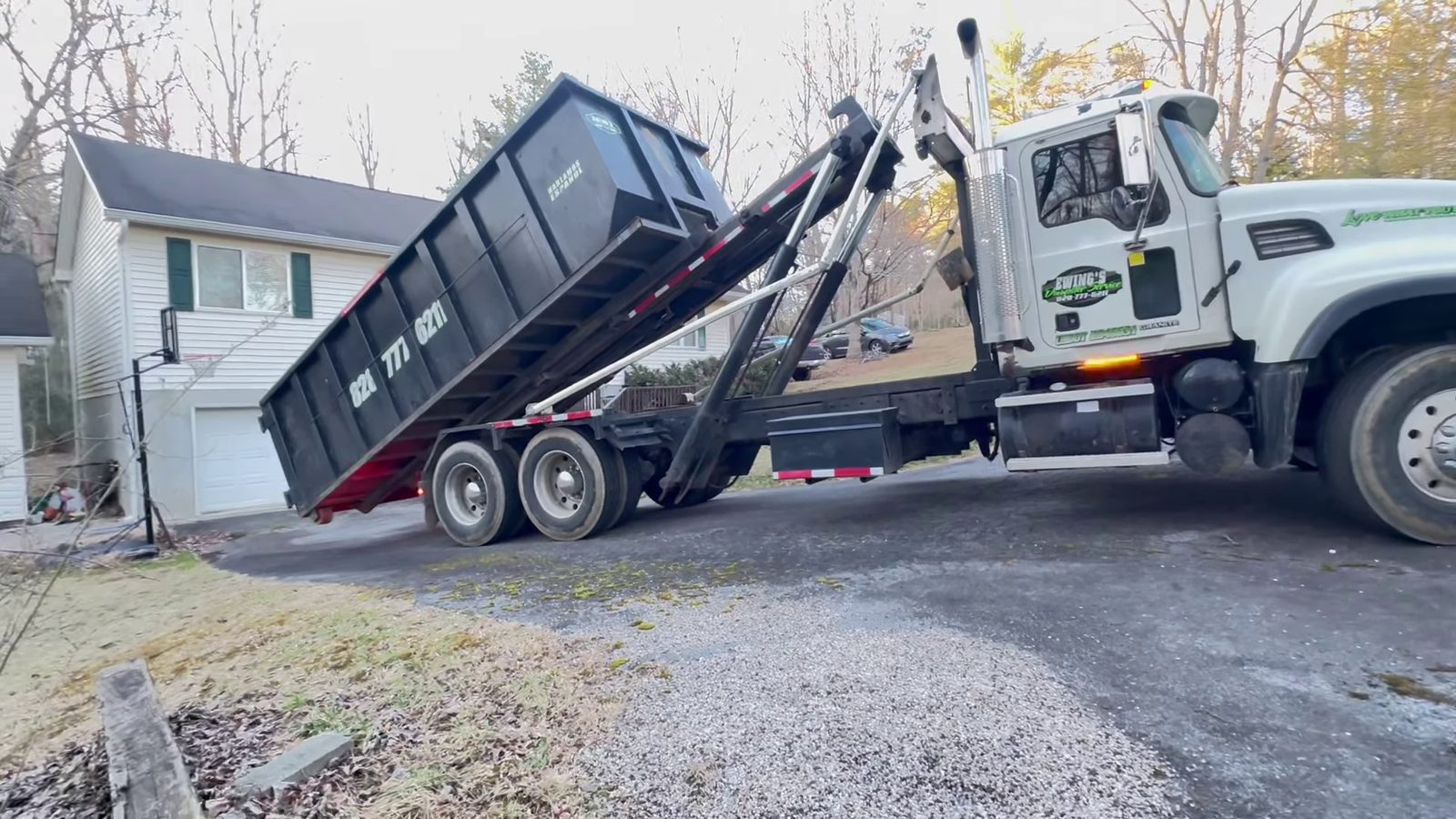
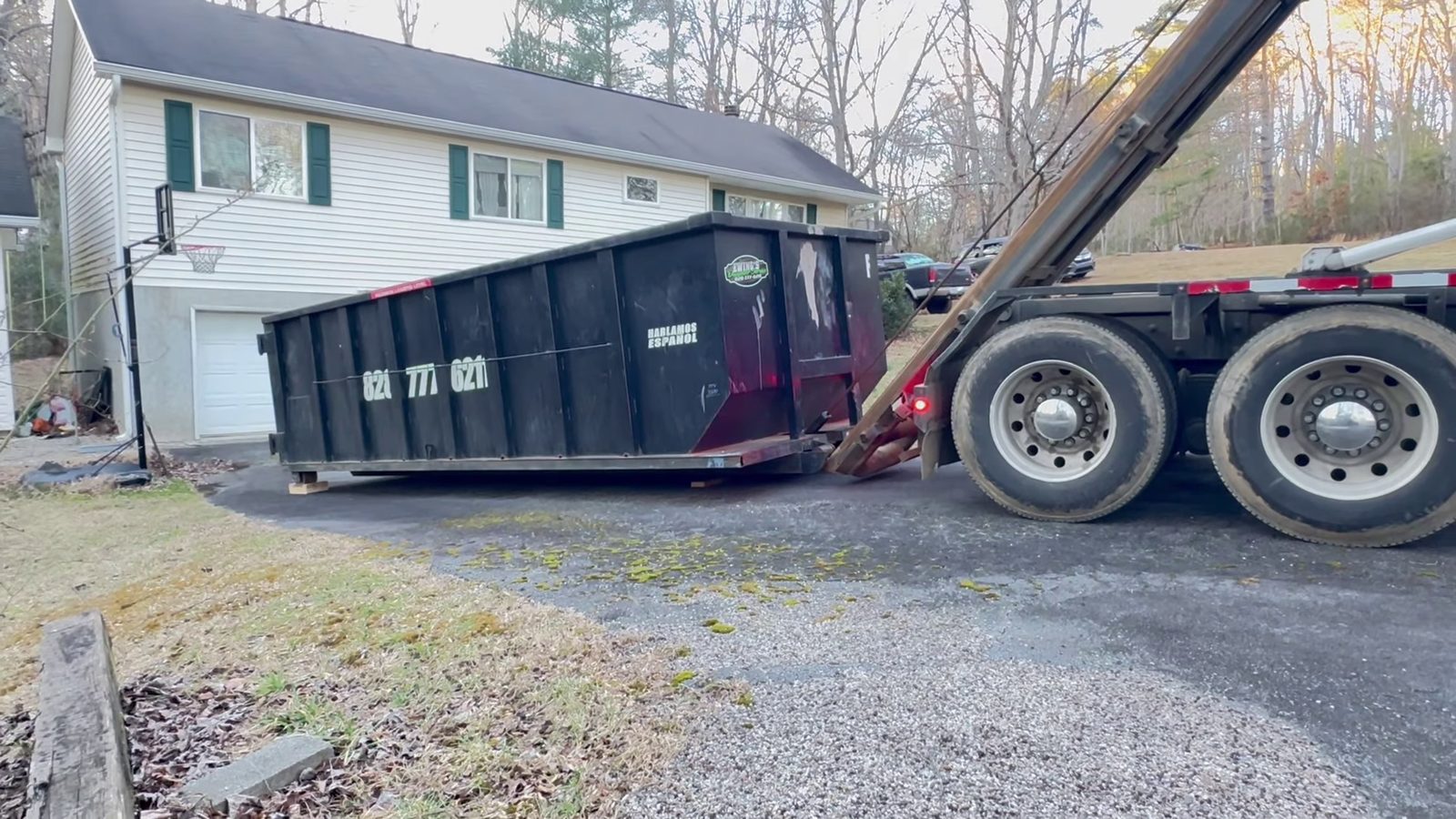
Ewing's serves the Candler area with two container sizes. The 17-yard handles single-trade and single-room work; the 30-yard handles additions, full-gut renovations, and new-build site cleanup. Prices are flat and all-in: delivery, pickup, and haul are included.
| Job type | Container | Price (Candler area) |
|---|---|---|
| Single-room remodel, bathroom gut | 17 yard | $325 |
| Kitchen renovation, partial demo | 17 yard | $325 |
| Roofing tear-off (single layer, standard roof) | 17 yard | $325 |
| Full-gut renovation, multi-room demo | 30 yard | $480 |
| Addition framing and rough-in cleanup | 30 yard | $480 |
| New-build site waste | 30 yard | $480 |
| Post-storm cleanout (mixed heavy debris) | 30 yard | $480 |
For jobs that mix material types — framing plus tile demo, roofing plus drywall — the denser material should go in first to keep the load balanced and avoid a situation where the bin looks empty but is already at the weight ceiling. The weight limits page explains how tonnage works in practice and what to do when a job produces more than a single bin's capacity.
What unincorporated means for your permit picture
Candler is not incorporated, which produces a practical difference from Asheville city jobs: a container placed entirely on private property — a driveway, a construction pad, a cleared lot — does not require a City of Asheville right-of-way permit. That is one less coordination step and one less approval window in the schedule. Buncombe County's building department handles residential construction permitting for work in unincorporated areas like Candler, so your renovation or new-build permit goes through the county rather than the city — another instance where the jurisdictional line matters for your contractor's paperwork, even if it does not directly affect the dumpster placement.
Road placement is a different question. When any part of the bin sits on a state-maintained road or shoulder, the right agency is the NC Department of Transportation, which issues encroachment permits for containers in public rights-of-way in unincorporated areas. For standard driveway deliveries — the majority of Candler residential and construction-site jobs — that threshold is not crossed. But if your site has limited driveway access and the driver needs to place the bin at the curb, Ewing's will flag it before the bin touches the ground.
Active construction sites also fall under ICC building and fire code requirements governing on-site waste containers — specifically minimum clearances from ignition sources, combustibles, and emergency vehicle access routes. These apply regardless of whether a permit was required for the placement itself, and they are the contractor's responsibility to maintain once the bin is on site.
What the bin can't take — older Candler homes especially
Standard construction and demolition debris — framing lumber, drywall, sheathing, roofing shingles, fixtures, non-hazardous flooring — belongs in the bin. What does not belong is a specific list, and it matters more for older structures than newer ones.
The NC DEQ Solid Waste Section governs what North Carolina landfills can accept, and the prohibited list includes paint, solvents, fluorescent tubes, and treated lumber above certain thresholds. Gut renovations of older Candler structures surface these materials with some regularity: pre-1980 vinyl floor tile often contains asbestos-binding agents; vermiculite insulation used in some mid-century attics may carry asbestos contamination; older painted trim tests positive for lead. When demo reveals any of these, the regulated material comes out before the bin gets loaded — it routes separately, and Ewing's can help direct you to the right channels.
Appliances, tires, batteries, and electronics all have separate disposal routes. The EPA's household hazardous waste framework and the separate federal rules governing construction and demolition material management both establish the baseline for what goes where. When you are not sure about a specific material, ask before it goes in rather than after.
Delivery timing and the Buncombe weather pattern
Buncombe County has seen 19 federal disaster declarations across the span of 1973-2026, the majority of them storm and flood events. That record reflects how often western Buncombe weather generates cleanup work on short notice, and how quickly an active renovation can produce an unexpected volume of storm debris on top of planned construction waste.
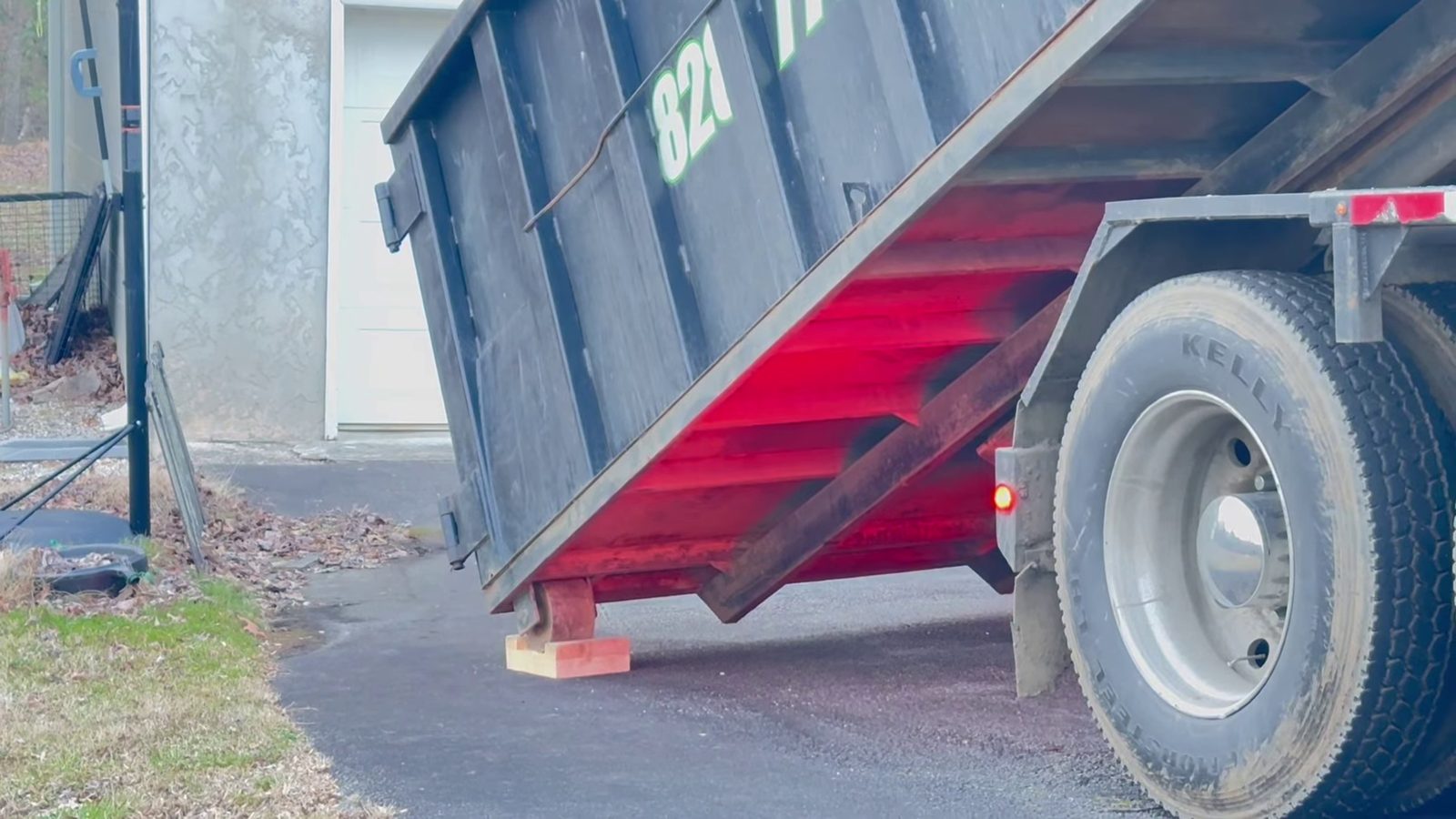
For scheduled construction projects, timing delivery around weather windows makes the pickup easier and protects the driveway. A full 30-yard bin sitting on softened ground after heavy mountain rain adds friction to the pickup: heavier pull weight and risk of tire impression on the surface beneath the bin. Where the schedule allows, coordinating a mid-job pull rather than a single end-of-project haul spreads that risk and keeps the site workable when debris accumulates faster than expected.
The 30-yard rental page covers high-volume scenarios including post-storm cleanouts, multi-stage pulls, and what to plan for when job scope changes after demo begins — a common situation in older Candler structures where the walls tell a different story once they are open.