Unincorporated Arden and what it means for permits
Arden sits in unincorporated Buncombe County, south of Asheville's city limits, and that boundary changes the administrative side of scheduling a construction dumpster. The City of Asheville requires a placement permit for any container in its right-of-way; Arden has no municipal government to issue one. For the overwhelming majority of construction jobs here — bin on a driveway, a parking pad, or anywhere on private property — there is no city permit required. That removes a step, and sometimes several days, from the front of a construction schedule.
The right-of-way question does not disappear entirely. If a site has no off-street clearance and the bin needs to sit on a road shoulder maintained by the state, an encroachment permit from the NC Department of Transportation applies regardless of municipal boundaries. That requirement follows the road, not the town. The simplest path is confirming driveway clearance before booking delivery — most Arden construction sites have it. When a driveway is too short or too steep to hold the bin safely, calling ahead lets the driver assess approach angles on the first trip rather than the second.
Arden's steady construction activity — residential renovation along Airport Road, new builds on hillside lots above Skyland, teardowns and additions across the older grid streets near US-25 — reflects the practical speed advantage that unincorporated placement delivers over working inside city limits.
Scope and cost: matching the bin to the project
Arden's housing stock runs from postwar ranches in the flats near Airport Road to newer hillside construction above Skyland. The debris profile changes with the house: older ranches produce heavier plaster, lath, and old-growth lumber; newer renovations run more drywall, vinyl flooring, and engineered wood. Both fit in a standard roll-off — bin size is the main variable. The construction dumpster rental overview covers how bins are matched to common trades; the working table for Arden jobs is below.
| Project scope | Bin size | Price |
|---|---|---|
| Bathroom gut (tile, fixtures, drywall) | 17 yd | $325 |
| Kitchen remodel (cabinets, flooring, plaster) | 17 yd | $325 |
| Roofing tear-off, single-story | 17 yd | $325 |
| Roofing tear-off, two-story or large footprint | 30 yd | $480 |
| Room addition or deck demolition | 30 yd | $480 |
| Full gut renovation or whole-house cleanout | 30 yd | $480 |
Prices are Ewing's posted January 2026 rates for the Arden area, delivery and pickup included. Shingle loads run dense — check the weight limits page before topping off a roofing bin. For projects on the boundary between sizes, the 30-yard rental page covers the bin's footprint dimensions and what placement clearance a full-length container needs on tighter lots.
What loads and what cannot
Standard construction debris loads without issue: dimensional lumber, drywall, insulation, roofing shingles, flooring, cabinets, fixtures, windows, and doors. What cannot go in: anything carrying a hazardous-material disposal label. Paints, solvents, adhesives, treated lumber, fluorescent tubes, and similar items fall under EPA household hazardous waste rules and cannot travel in a construction dumpster headed to a standard solid-waste landfill. Those materials need a separate disposal path arranged before the bin arrives on site.
For construction and demolition projects specifically, the EPA's construction and demolition materials management guidance recommends sorting reusable material — dimensional lumber, clean metal, concrete — before it goes in the bin. Buncombe County solid-waste capacity is finite, and what can be diverted often should be. The NC DEQ Solid Waste Section publishes the current list of landfill-prohibited materials; that list is the governing reference when a specific item is in question.
Concrete and heavy masonry are worth a separate note: they are not prohibited, but a bin loaded too deep with masonry will hit weight limits before it looks full. Load heavy material along the bottom in a mixed load and distribute it evenly across the floor of the bin.
Wet ground, tight lots, and what placement actually requires
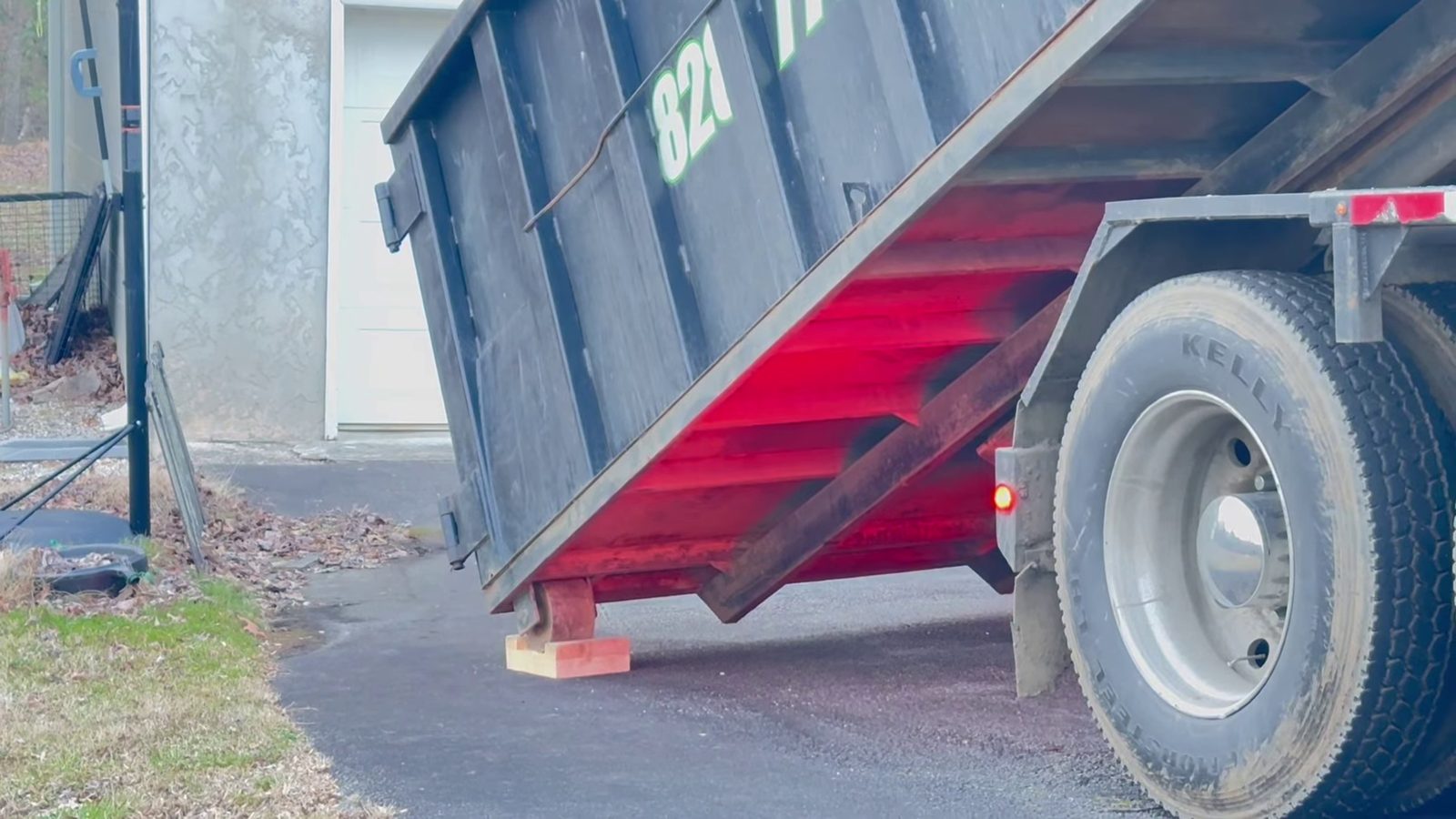
Buncombe County carries 19 federal disaster declarations over 1973-2026, the bulk of them tied to storm and flooding events along the French Broad River watershed. Arden sits within that drainage, close enough that sustained wet conditions are a real planning factor on construction sites. A bin placed on saturated soil can settle out of level and become difficult to move; a driveway with meaningful slope needs wheel chocks and a confirmed truck departure path from the moment the bin lands.
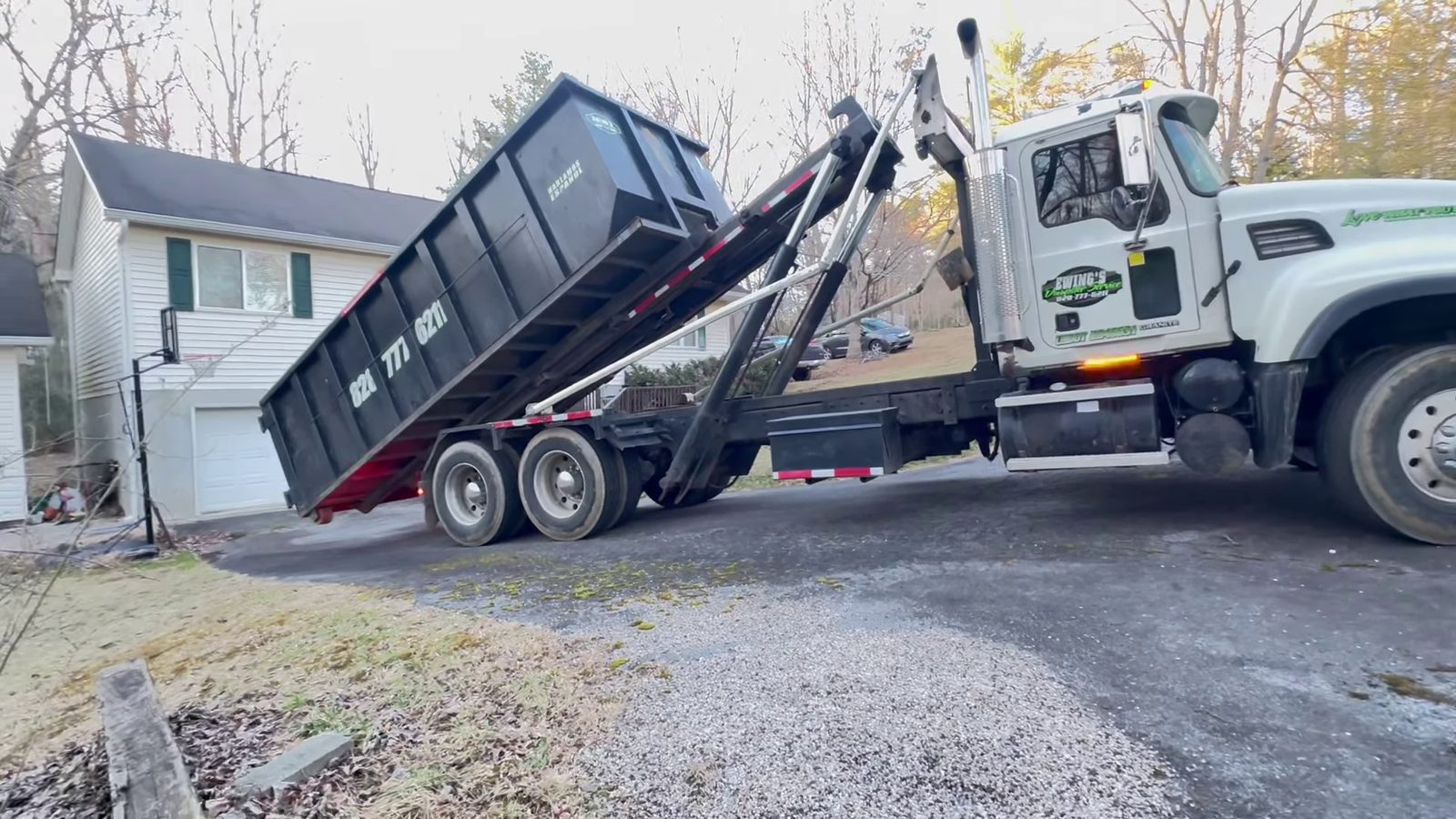
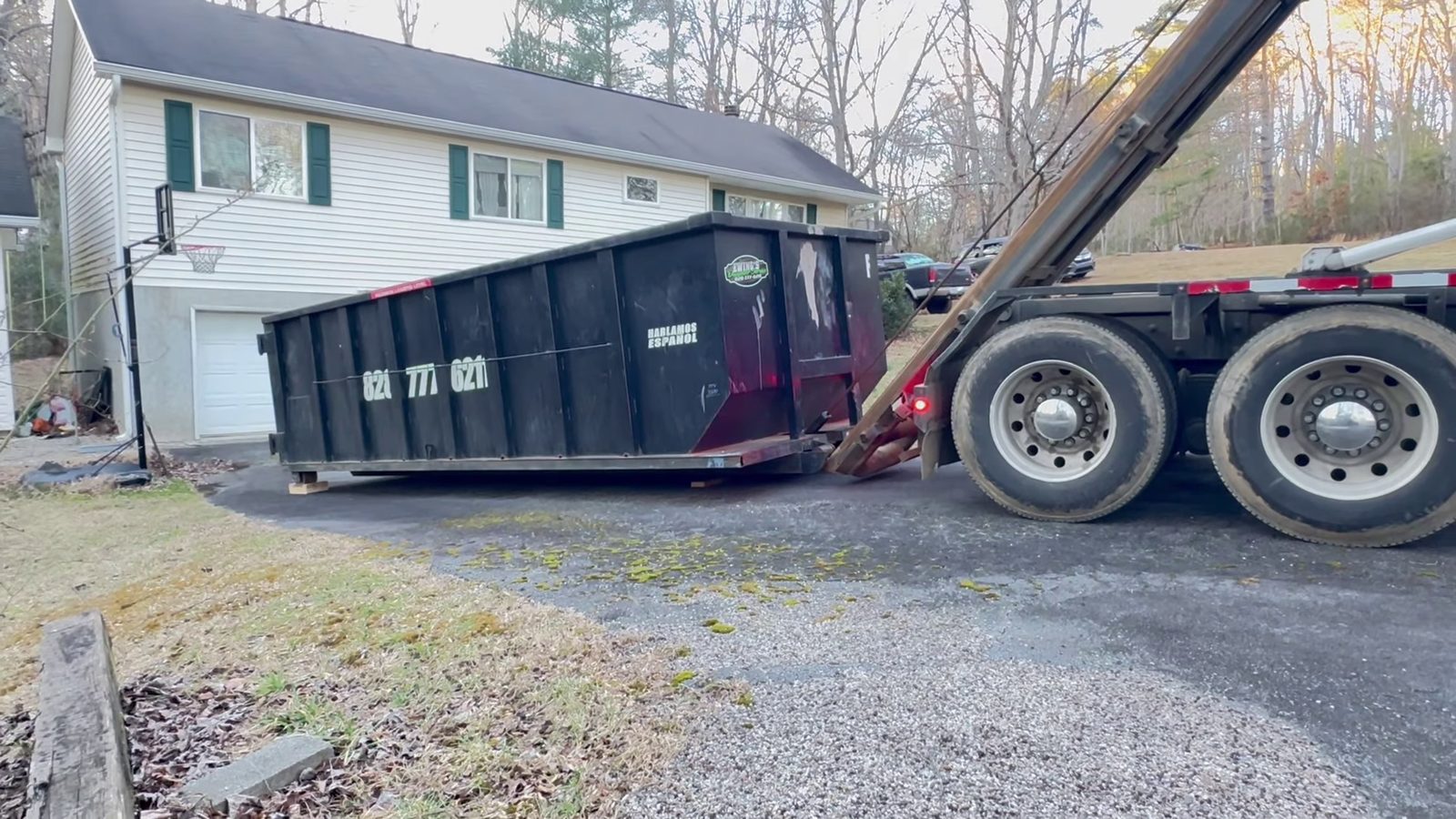
The practical placement checklist: a surface that is level or close to it, at least 22 feet of overhead clearance for the roll-off arm, and a confirmed in-and-out path for the delivery truck. Older Arden ranches on compact lots occasionally lack driveway depth for a full-length 30-yard bin — that is one more reason the 17-yard handles more jobs in this area than the size alone suggests. For any placement that pushes into a state-maintained road shoulder, confirming the NCDOT encroachment process before scheduling delivery is the right sequence, not an afterthought.
From first call to pickup: running the rental without delays
Most construction dumpster rentals in Arden follow a simple sequence: confirm bin size against project scope, verify placement clearance, schedule delivery, fill the bin, call for pickup. The full service walkthrough is on the construction dumpster rental page. For additions and whole-house work where the larger bin is the right fit, the 30-yard rental page covers how much it holds, what footprint to plan for, and how weight limits apply to heavy mixed loads.
Two checks worth making before the truck rolls: know what your project's heaviest materials are and whether they push against weight limits, and confirm that any prohibited items have a separate disposal path arranged. Those two steps prevent the only situations that complicate an otherwise routine rental. The unincorporated location takes the permit friction off the table for most jobs — the rest is scheduling and load discipline.