The driveway question comes first
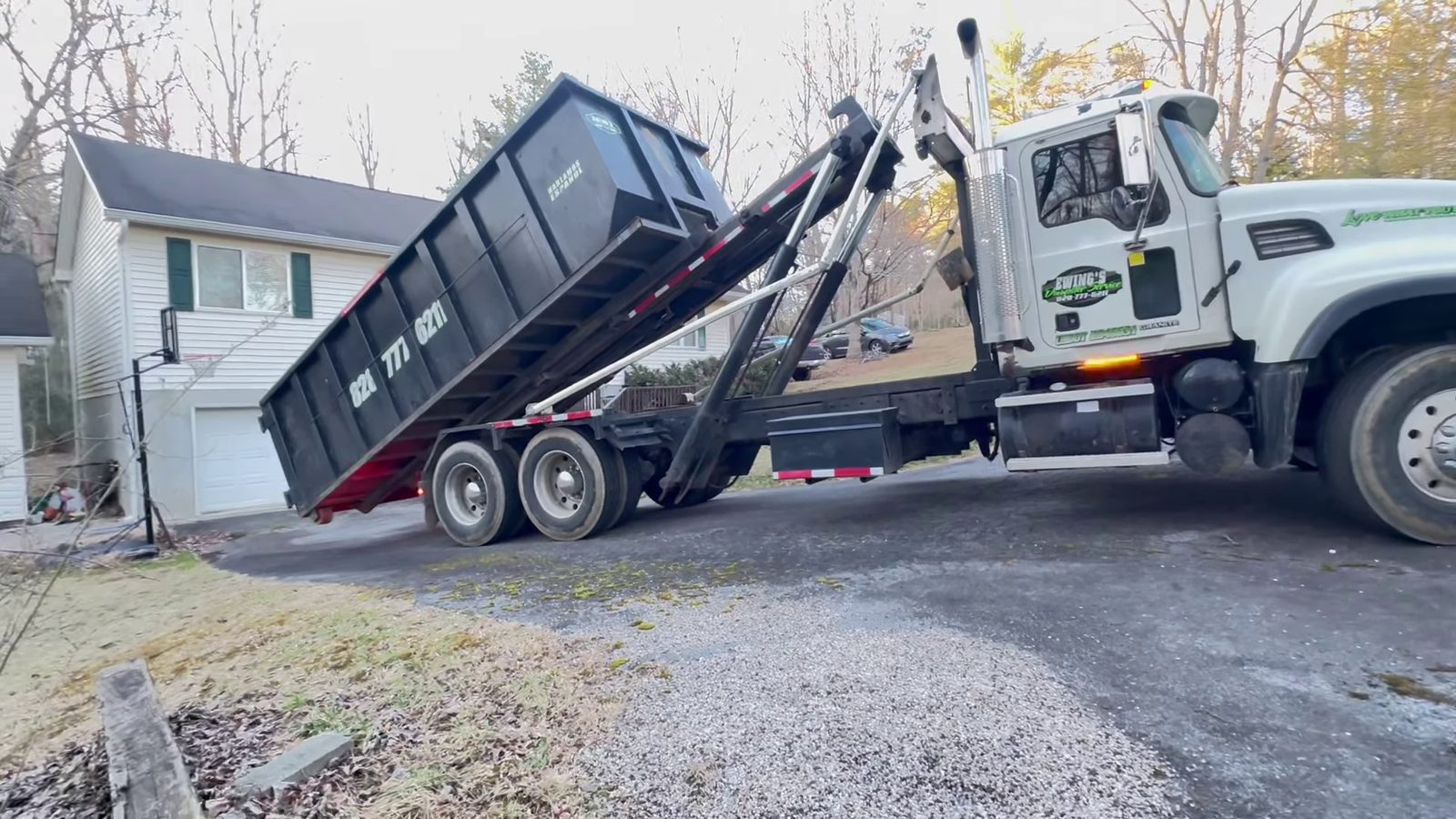
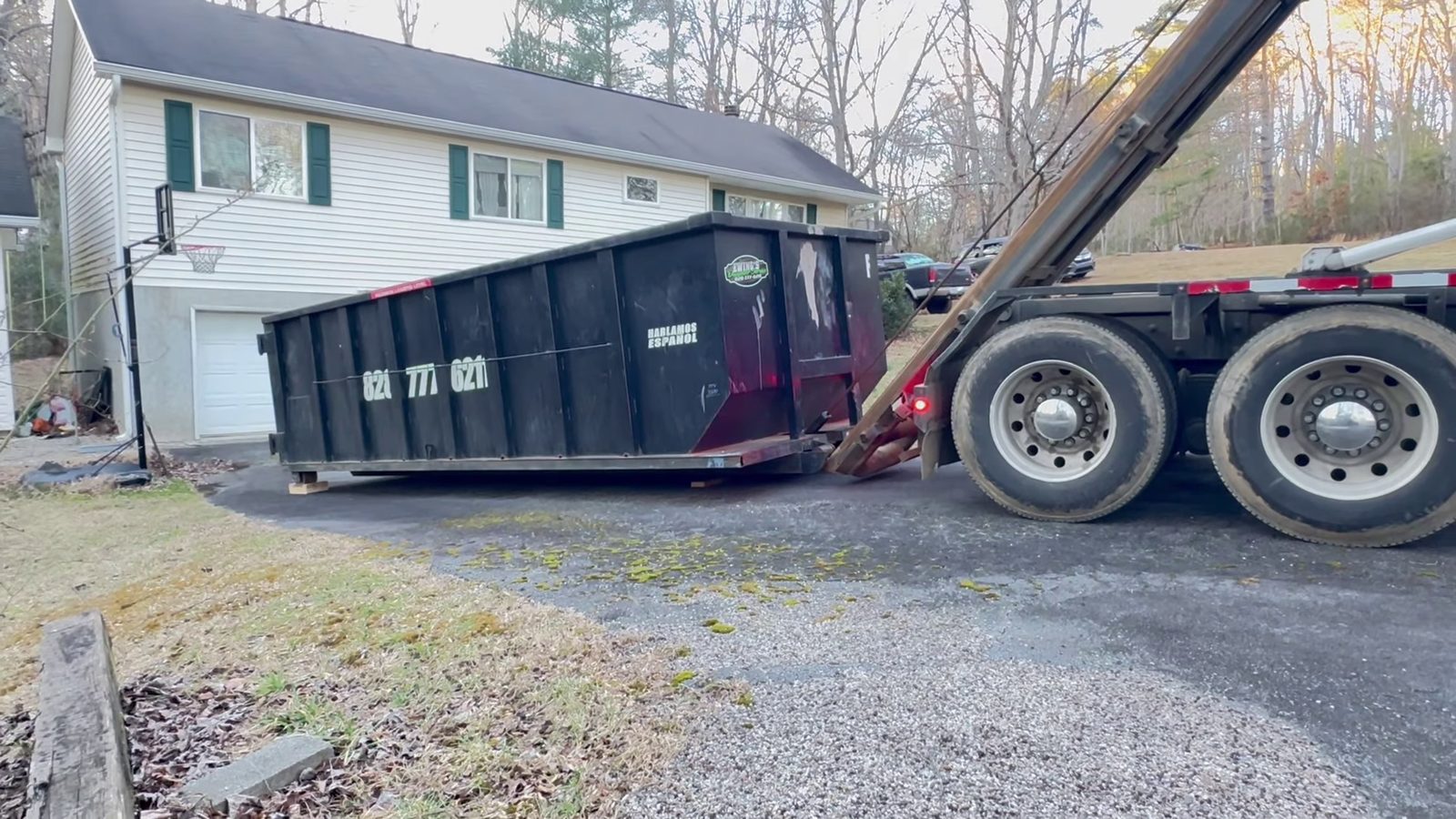
Weaverville sits ten miles north of Asheville on US-25, where Buncombe County transitions from suburban street grids into the first genuine mountain terrain of the Blue Ridge. The town's housing stock runs the full range: 1970s ranch houses on flat street lots, older farmhouses set back behind gravel drives on the Reems Creek side of town, and newer builds perched on cut-and-fill lots that gain significant elevation between the road and the front door. That terrain character is the first thing worth mentioning to Ewing's before you schedule delivery — not the cubic yards you need, but how a roll-off truck is going to reach your property and back out again.
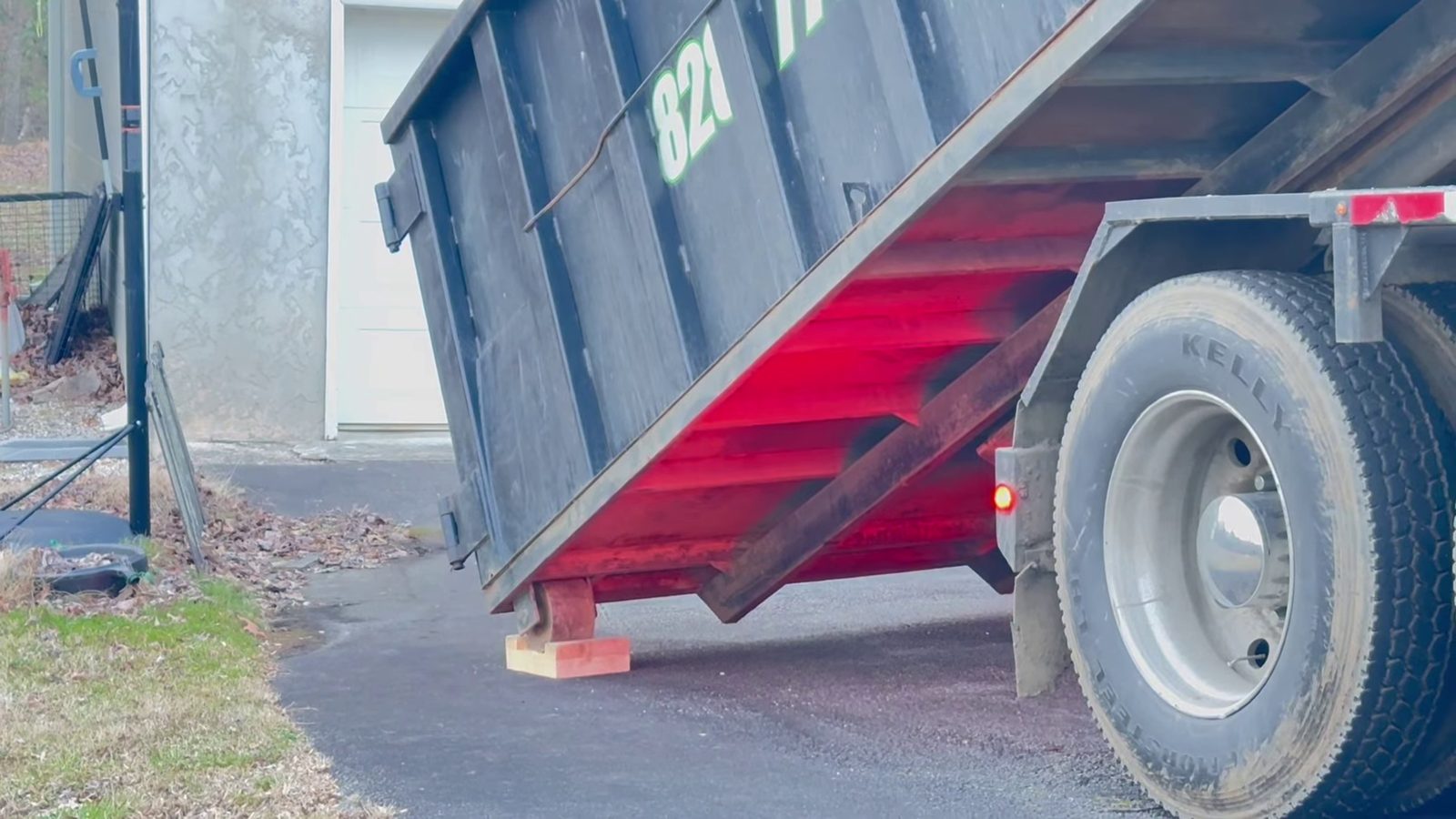
Steep driveways in Weaverville run two varieties: paved with frost-heave cracks, and gravel with ruts cut by mountain runoff. Neither is automatically a problem, but both need a straight conversation before the truck arrives. Any solid dumpster company will ask about grade, overhead clearance (porches, power service drops, low tree canopy), and turnaround room. If your driveway won't work, street placement with a permit may be the answer. See the roll-off dumpster rental page for how the delivery process works from call to pickup. And if you're not sure which size a renovation or cleanout actually needs, the size guide matches project type to bin before you commit.
The renovation character of Weaverville also matters for what ends up in the box. Older farmhouses on the north end of town often have fieldstone foundations and brick chimneys that come down heavy when a renovation reaches that level. Ranch houses from the 1970s may contain materials that require testing or special handling before disposal — something to confirm with your contractor before the dumpster arrives. Single-story cabins from the 1980s and 90s, common on wooded lots east of town, typically need a full gut before they can be updated, which pushes debris volume toward a 15 or 17 yard.
Sizing the job and the bin
Ewing's posted prices as of January 2026 include delivery and pickup in every number — $199 for a 10-yard bin at the low end, $480 for a 30-yard at the top. The dumpster rental cost page has a full breakdown of what drives price above the base rate. The short version for Weaverville projects:
| Project type | Typical size | Ewing's posted price |
|---|---|---|
| Single-room cleanout, minor demo | 10 yard | $199 |
| Full-room gut, estate cleanout | 15 yard | $280 |
| Garage + yard debris combo | 17 yard | $325 |
| Whole-house renovation, roofing | 30 yard | $480 |
Two cost items to plan for before booking: swap fees (a second trip to empty and return the same box mid-job, priced separately) and overweight charges. Mountain renovation debris — concrete from an old chimney, ceramic tile, fieldstone — weighs more per cubic yard than general household contents. If the load skews heavy, going up one size is cheaper than the overweight fee. Tell Ewing's what's in the box upfront and let them confirm the right call.
What Buncombe County landfills won't take
The NC DEQ Solid Waste Section maintains the statewide prohibited materials list, and Buncombe County's landfill enforces it at the gate. The categories that catch customers off guard most often: paints and solvents, batteries, tires, and pesticides or herbicides stored in older sheds and outbuildings. Appliances containing refrigerant — a common find when clearing older homes — require separate handling and cannot go in the bin under any circumstances.
Before anything labeled hazardous goes near a dumpster, check the EPA's household hazardous waste guidance for licensed disposal options; Buncombe County holds periodic collection events for these materials. The reality in older Weaverville homes is that sheds accumulate decades of this category: half-empty paint cans, pesticide containers, motor oil from lawn equipment. A shed sweep before the dumpster arrives — setting prohibited materials aside — prevents a rejected load and the surcharge that follows. For renovation and construction debris, the EPA's construction and demolition materials program notes that some clean materials (unpainted lumber, uncontaminated concrete) may qualify for reduced-rate disposal facilities. If you're doing a whole-house gut, ask Ewing's whether splitting the load is worth it.
Street placement and right-of-way permits
If a steep or narrow driveway rules out on-property placement, the next option is usually the street. In Weaverville, many residential roads are state-maintained, which puts right-of-way permits under the jurisdiction of NC DOT, not the town or county. Encroachment permits for dumpsters placed in a state right-of-way are required, not optional — lead time and fees vary by road classification. Confirming the road type with Ewing's before booking is the simplest way to make sure the permit is in hand on delivery day rather than the reason a job gets delayed.
The practical implication is straightforward: call before you assume. A residential street that looks like a town road may be on the state system. If it is, the permit process starts with NC DOT, and the permit must be in place before the box goes down. Skipping it creates liability for the homeowner if the box damages pavement or creates a hazard for passing traffic — mountain roads with limited sight lines carry that risk year-round. Dumpsters placed close to a building entrance also carry fire-code considerations; standards from the International Code Council address container clearance from exits and emergency access routes. On a mountain lot with a single-entry gravel drive and limited turnaround, knowing where the box can legally land before the truck arrives prevents a problem at the worst moment.
When storm debris drives the call
Buncombe County has accumulated 19 federal disaster declarations over 1973-2026, the majority tied to mountain storm and flood events. After a significant blow, dumpster rental calls in Weaverville follow within days: fallen hardwoods, damaged outbuildings, waterlogged furniture, and saturated insulation pulled from flooded crawl spaces. That sequence has its own load characteristics worth knowing before you book.
Wet debris is heavier than dry. Storm loads often mix categories — wood, roofing material, household contents — in ways that complicate sorting after the fact. And the pressure of storm cleanup (insurance timelines, mold risk in opened wall cavities) pushes toward overfilling. The standard transport rule applies regardless of urgency: material cannot extend above the bin's top rail. If the volume runs bigger than expected, a swap or a second bin is the right answer. Use the size guide for a storm-debris checklist alongside the standard renovation categories.