Dense materials in Buncombe County homes change the math
Asheville's older neighborhoods — Montford, West Asheville, the ridge lots above Haw Creek — hold some of the densest residential construction in the Southeast. Craftsman bungalows from the 1920s and 1930s were built with real plaster over wood lath, old-growth hardwood floors, and stone or brick fireplaces. Mid-century ranch homes in Black Mountain and Swannanoa are similar: solid construction, heavy materials, nothing engineered for lightness.
That history is what makes dumpster rental cost per day — or per week, which is how this area actually prices it — work differently than a national calculator suggests. Modern drywall weighs about 2 pounds per square foot; plaster over lath runs 8 to 12. Old-growth pine floors are twice as dense as today's dimensional pine. A 10-yard dumpster loaded with plaster and hardwood can hit its 1-ton limit while looking half empty. That weight overage, at $65 per additional ton, is the most common unexpected charge on Buncombe County renovation jobs.
What this means in practice: a renovation estimate built on bin volume alone is likely to underestimate cost on jobs involving original Asheville construction. A 15-yard dumpster loaded entirely with 1930s plaster and lath can hold two to three tons — well past the included limit. Sizing up sometimes costs less than booking the smaller bin and hitting the overage line twice. The dumpster weight limits guide shows how to estimate load weight before you pick a size.
What different jobs cost in overages: the Buncombe County range
Every Ewing's rental — 10, 15, and 17-yard — includes 7 days and 1 ton in the base price. Beyond those thresholds, extra days run $3 each and extra tons run $65 each. The table below maps common project types to what they typically add in overages; total cost is the base rate plus the overage column.
| Project | Recommended size | Typical duration | Weight likelihood | Typical overage |
|---|---|---|---|---|
| Single-room junk removal | 10 yd | 1–3 days | Under 1 ton | None |
| Kitchen gut, modern construction | 10–15 yd | 5–7 days | ~1 ton | None–$65 |
| Renovation with plaster or hardwood | 15–17 yd | 7–14 days | 2–3 tons | $65–$151 |
| Roofing tear-off, single layer | 10–15 yd | 2–4 days | 2–3 tons | $65–$130 |
| Estate or whole-house cleanout | 17 yd | 7–14 days | 1–2 tons | None–$86 |
Roofing is the category where weight overages surprise homeowners most. Asphalt shingles run roughly 300 pounds per roofing square, and a typical Buncombe County ranch roof covers 15 to 20 squares — that is 2.25 to 3 tons of shingles before the decking and drip edge go in. Even a modest roofing job clears the included ton. See the full cost breakdown for how project pricing compares across the region.
Placing a dumpster in Asheville and Buncombe County
Dumpster placement on private property — a driveway or yard — typically requires no permit in unincorporated Buncombe County. When the bin needs to sit on a public street or occupy a sidewalk inside Asheville city limits, a right-of-way permit is required before delivery. The City of Asheville handles that permitting for city addresses; for homes on state-maintained roads outside city limits, check right-of-way requirements with NC DOT, which manages encroachment permits for the state highway system.
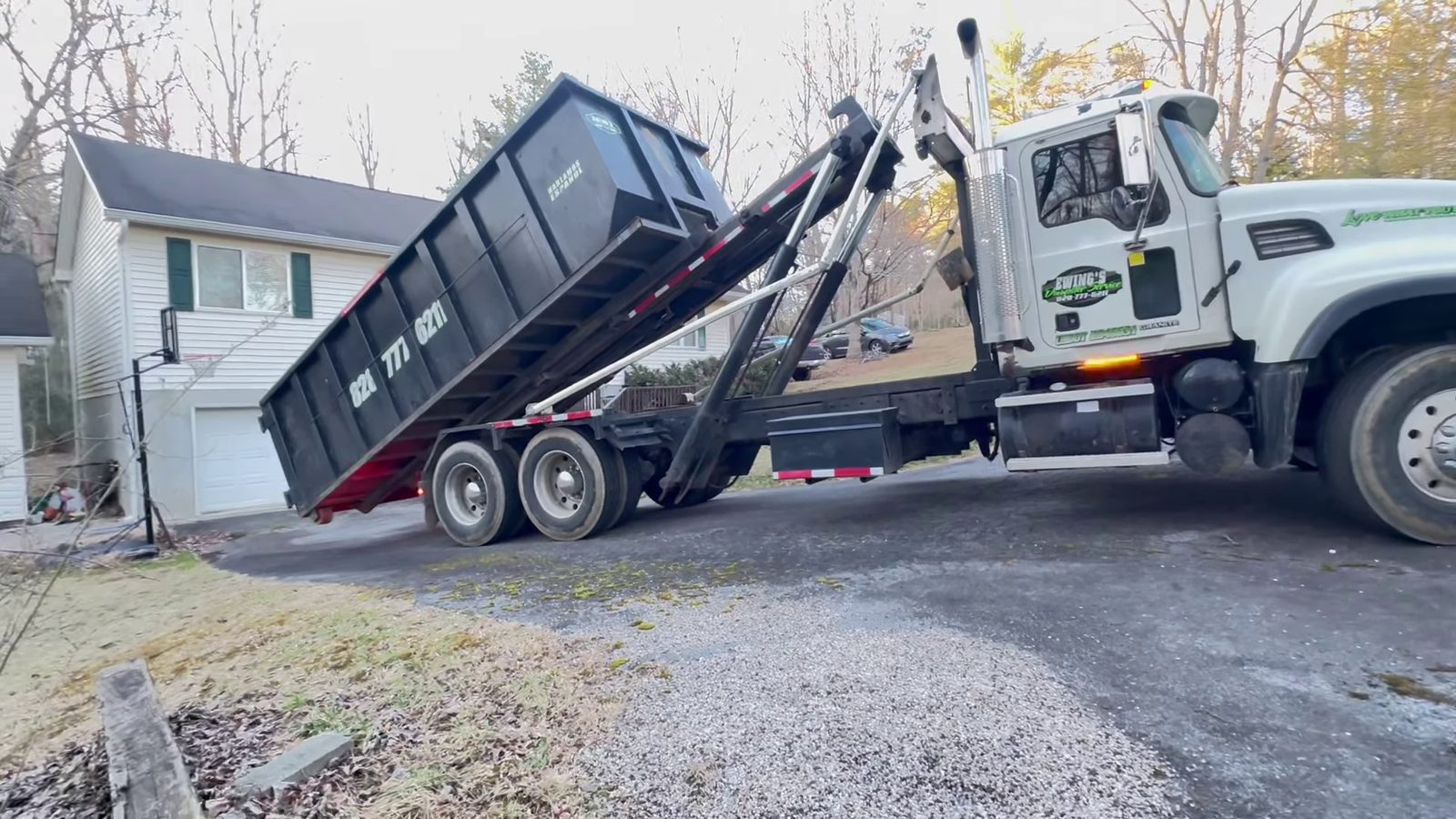
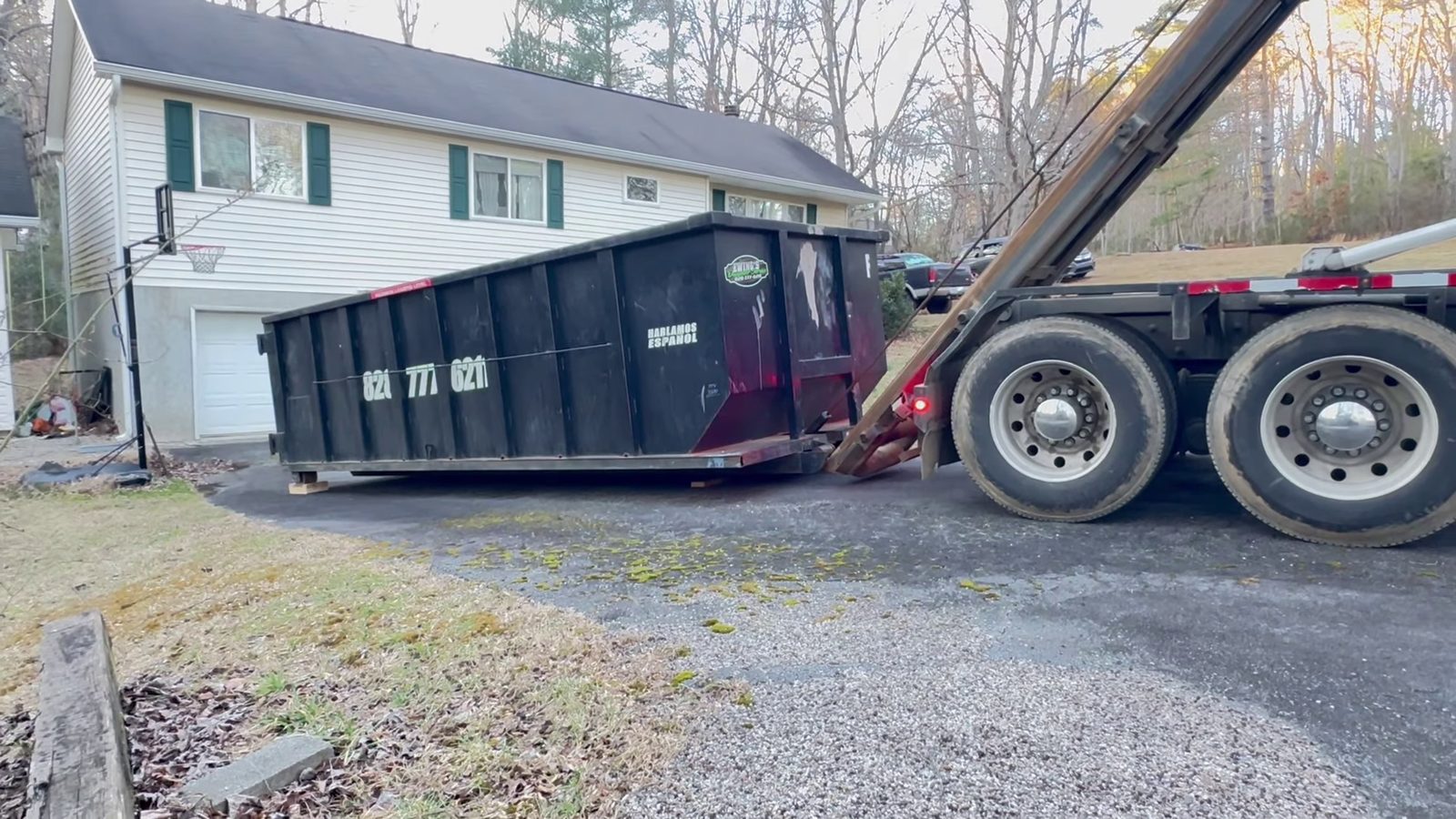
Steep driveways add a practical layer the permit form does not capture. A dumpster truck needs sufficient clearance and grade to set down and retrieve a loaded bin safely. On steep ridge-lot properties — common throughout eastern and northern Buncombe County — the bin sometimes needs to stage at the base of the driveway or at a flat pull-off rather than at the work site itself. Flagging access constraints when you book avoids a wasted trip.
Asheville's older neighborhood streets compound this: the narrow grid in Montford, the tight curves off Kimberly Avenue, the one-lane approaches in parts of West Asheville. Early-morning delivery on constricted streets avoids mid-day parking and congestion that makes setting a bin difficult. Coordinate delivery timing the same call you book the size.
What cannot go in the bin in North Carolina
Some material categories are excluded from residential dumpsters statewide. Household hazardous waste — paint, solvents, pesticides, motor oil, fluorescent bulbs — goes to Buncombe County's designated collection programs, not into a rented bin. Electronics, tires, batteries, and medical waste are similarly excluded.
For renovation and construction debris, the relevant controls come from the NC DEQ Solid Waste Section, which governs what landfills in this state can and cannot accept. Pre-1980 homes in Asheville's historic districts frequently contain asbestos in floor tile, ceiling tile, pipe insulation, and roofing felt — material that requires licensed abatement and separate disposal, not dumpster placement. If your project touches an older home's original finishes or mechanical systems, have suspect materials tested before anything goes in the bin. Getting it wrong means a contaminated load, a rejected haul, and a bill that dwarfs any overage charge.
Standard construction and demolition debris — wood framing, drywall, non-asbestos roofing, most flooring — is accepted in line with EPA guidance on construction and demolition materials. Concrete and masonry are typically accepted but weigh heavily against the included ton; flag them at booking if your job involves significant masonry work so the right size gets scheduled.
How long most Buncombe County jobs actually run
The 7-day window covers most single-trade renovation jobs and standard residential cleanouts. Where jobs commonly stretch past a week in this county: permitted renovation work waiting on inspections, estate clearouts where family members need time to sort, and exterior projects — roofing, decking — that get pushed by mountain weather. Buncombe County has seen 19 federally declared disaster events spanning 1973-2026, most of them storm-related, which reflects just how variable Blue Ridge precipitation can be. A job planned for five days in October can easily slide to nine.
At $3 per extra day, holding through a weather delay is not a budget concern — three extra days adds $9 to the total. Where the duration math shifts is on multi-phase projects: a kitchen gut this week and bathrooms next month might be cheaper as two separate rentals rather than a single extended hold, depending on how the base rate compares to the daily hold cost. The rental duration guide works through that calculation for projects that stage in phases.
Choosing the right bin for a mountain renovation
The 10, 15, and 17-yard sizes cover the full range of residential work in Buncombe County. The 10-yard handles single-room cleanouts, small bathroom guts, and junk removal jobs that are mostly lightweight material. The 15-yard is the right call for a kitchen renovation, a full bathroom gut, or a bedroom floor replacement — volume headroom matters, and stepping up is cheaper than a second rental. The 17-yard covers whole-house clearing, estate cleanouts, multi-trade renovation projects, and anything involving significant structural demolition.
For jobs with mixed material — some light, some heavy — size for weight, not volume. A 10-yard bin loaded with plaster and old hardwood hits the 1-ton limit before it looks remotely full; a 15-yard on the same job distributes the included ton across a larger load, with room for lighter debris on top. The tradeoff is worth running before you book, not after the first haul. The cost overview shows how size selection affects the final number across different project categories.