Steep lots and the placement question
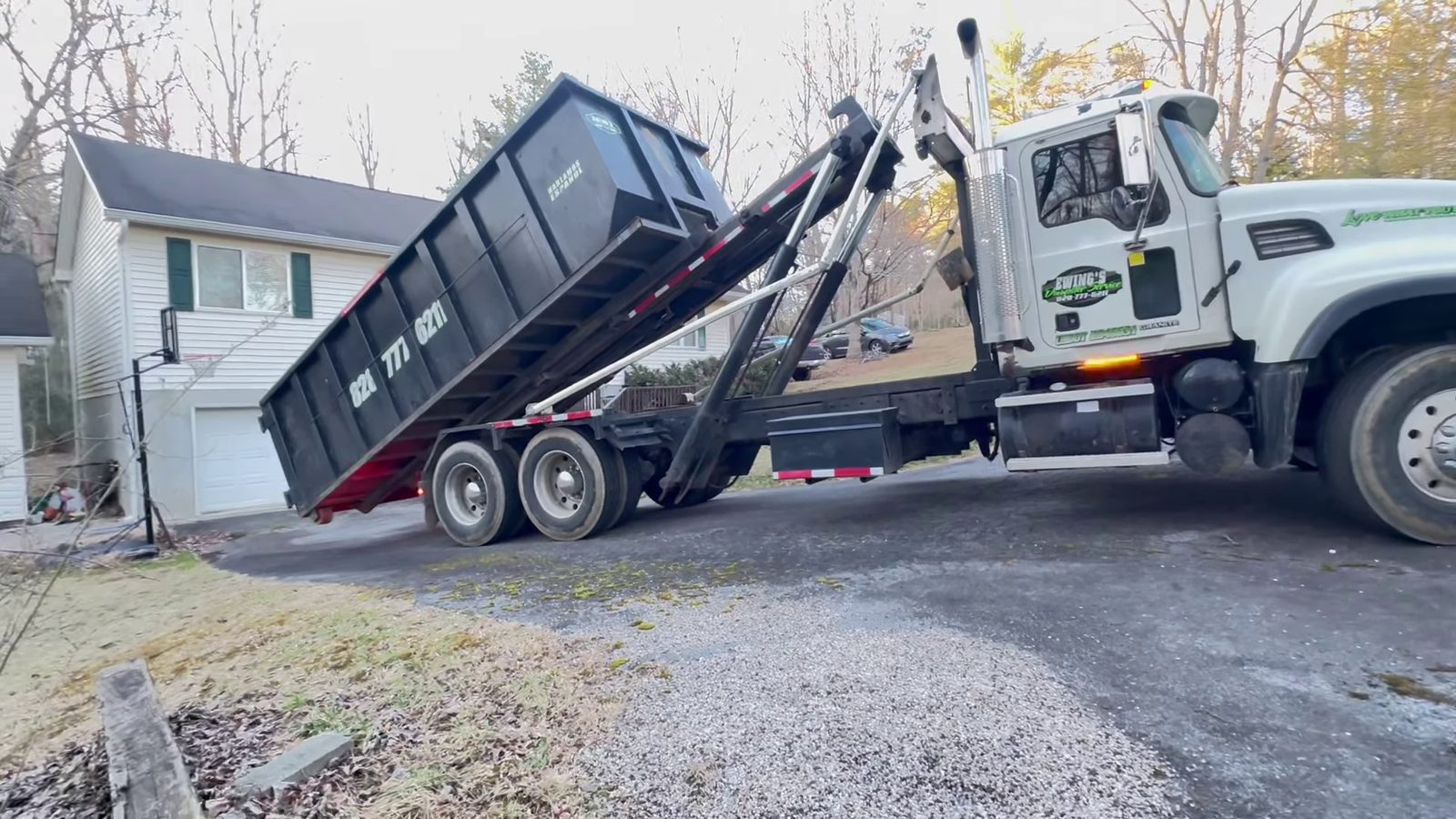
Black Mountain sits at the eastern edge of Buncombe County where the Swannanoa Valley starts its climb into the Black Mountains proper. The main roads through town are manageable, but the residential streets and driveways branching off them regularly are not. A craftsman bungalow on a ridge spur may have a steep single-lane drive, a wall of native rock on one side, and a sharp drop on the other. That changes what a construction dumpster job looks like here compared to a flatland order closer to Asheville.
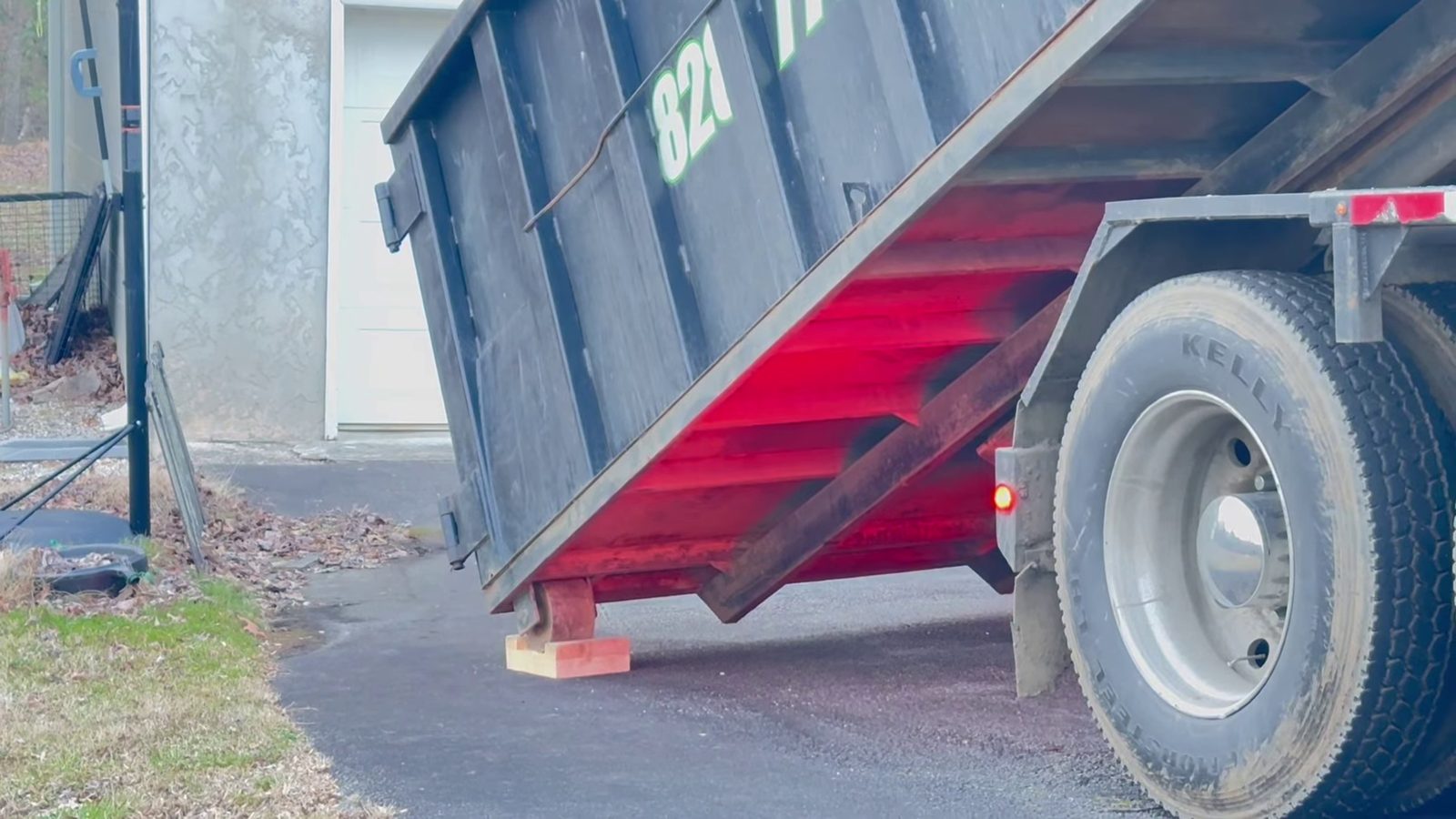
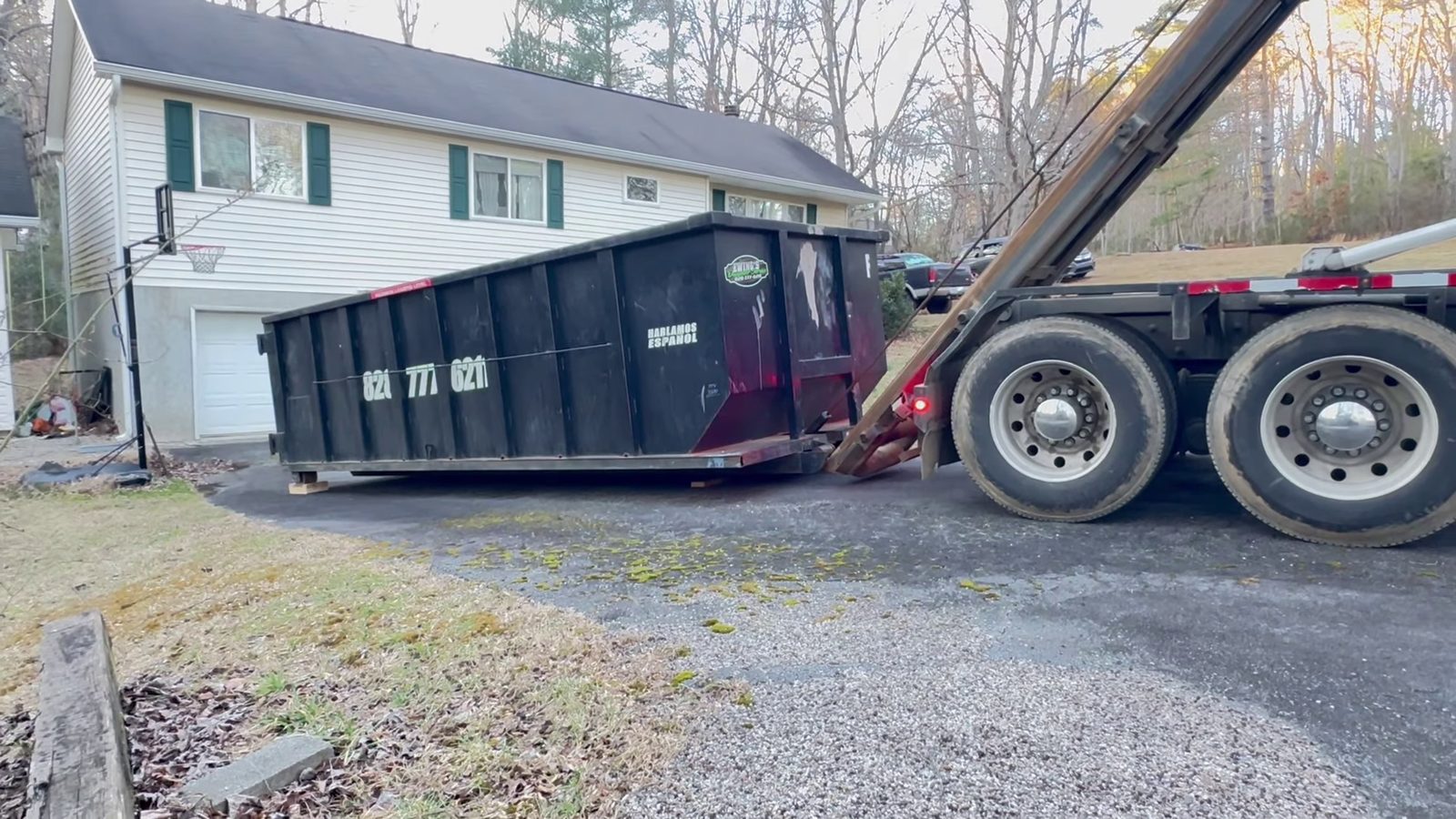
Before size, Black Mountain jobs start with placement. Can the bin sit on private property at a grade the delivery truck can safely reach, or does it need to land in the street? A driveway that works for a passenger car may not give a delivery truck room to tip a bin in place and exit cleanly. If the street is the only option, an encroachment or right-of-way permit from NC DOT may be required before the dumpster drops, and that is worth confirming before delivery day, not after the truck is already there.
Most Black Mountain jobs can be planned around this in advance. A quick description of the access — grade, width, any overhead lines — is all Ewing's needs to confirm delivery feasibility before you book. The harder jobs are the ones where nobody asked until the driver was at the bottom of the drive.
What Black Mountain jobs cost
Ewing's serves Black Mountain with two bin sizes. Both prices include delivery and pickup from Buncombe County with no fuel surcharges or hidden fees. Full service territory details are on the construction dumpster rental page.
| Project scope | Typical bin | Price |
|---|---|---|
| Junk removal or single-room cleanout | 17-yard | $325 |
| Kitchen or bathroom gut | 17-yard | $325 |
| Roofing tear-off, one layer, smaller home | 17-yard | $325 |
| Multi-room renovation or deck removal | 30-yard | $480 |
| Full interior gut or structural demo | 30-yard | $480 |
| Roofing tear-off, multiple layers or larger home | 30-yard | $480 |
Dense material moves the sizing decision more than volume does. Roofing shingles and concrete weigh more than most people expect; a bin that looks half-full of either material can hit its legal haul weight before it looks full. The weight limits guide explains how material density maps to tonnage, and it is worth reading before booking any job with heavy demo material.
When a project could go either way, the 30-yard is usually the right call for a full renovation. An overage trip costs more than the upsize.
What goes in and what stays out
A construction bin accepts what a renovation or cleanout generates: lumber, drywall, roofing shingles, flooring, insulation, fixtures, doors, windows, concrete in moderate quantity, and mixed construction debris. What it cannot accept is a separate category: materials that landfills will not take and that federal and state rules require separate handling for.
North Carolina prohibits disposal of certain materials in standard solid-waste streams. The NC DEQ Solid Waste Section maintains the current list, which includes asbestos-containing material, lead paint debris, and electronic waste. Black Mountain's older housing stock is more likely than a new subdivision to contain these materials. If you are pulling out insulation, floor tile, or pipe wrap from before the 1980s and are not sure what it is, testing before demo is the right call, not an overreaction.
Household hazardous waste — paint, solvents, adhesives, pesticides — is separately regulated under EPA household hazardous waste rules and cannot go in a standard dumpster. Buncombe County runs periodic HHW collection events for residents who need to dispose of these materials properly. When in doubt, set it aside and check the county schedule before it goes in the bin.
Mountain weather and job timing
Buncombe County carries a substantial storm and flood declaration record. With 19 federal disaster declarations on file (1973-2026), this region sees enough post-storm debris runs and weather-delayed projects that experienced local contractors plan around weather windows, not just calendar dates.
For Black Mountain specifically, elevation matters. At over 2,000 feet, the town gets meaningful snowfall in winter and afternoon thunderstorms through summer. Both can affect site access: a steep driveway that worked fine in September may be unreachable after a February ice event. Scheduling the bin drop for early in the week rather than late gives a project room to absorb a weather disruption without stalling the job.
The storm record also explains why so many Black Mountain renovation projects start with water and drainage work before structural or cosmetic repairs. The EPA's guidance on construction and demolition material management notes that project sequencing affects both cost and waste volume. Doing demo before water intrusion is controlled often means doing it twice, and the dumpster call is part of that sequencing decision, not an afterthought.
Before the bin drops
Three logistics items make a Black Mountain delivery go cleanly: a confirmed drop spot, a clear access route, and a permit in hand if the bin is going in the street. For state-maintained roads and public right-of-way, the encroachment process runs through NCDOT. Worth starting before the project does, not the week the bin needs to arrive.
Bin weight is the other item worth confirming at booking. Roofing, concrete, and tile are dense; a bin that is physically half-full can still hit its legal haul weight on those materials. The weight limits page gives the specifics, and Ewing's can help size the job over the phone if the material mix is unusual.
For standard renovation debris — drywall, lumber, flooring, fixtures — the construction dumpster rental page has the full service territory and booking form. Black Mountain jobs in Buncombe County are within Ewing's standard delivery area, and same-week service is typically available on most project timelines.