Mountain terrain sets this county apart
Buncombe County driveways are carved into hillsides, not laid across flat ground. The climbs toward Reynolds Mountain, Town Mountain Road, and the ridgeline neighborhoods north of Asheville run grades that would stop most flatland delivery trucks before the first bend. Add the housing pattern — older homes on steep in-town lots in North Asheville and West Asheville, newer builds on engineered fill pads along the northern ridgelines, and rural properties on former logging roads — and the result is a county where nearly every street has at least one driveway that makes a roll-off driver do the math before pulling in.
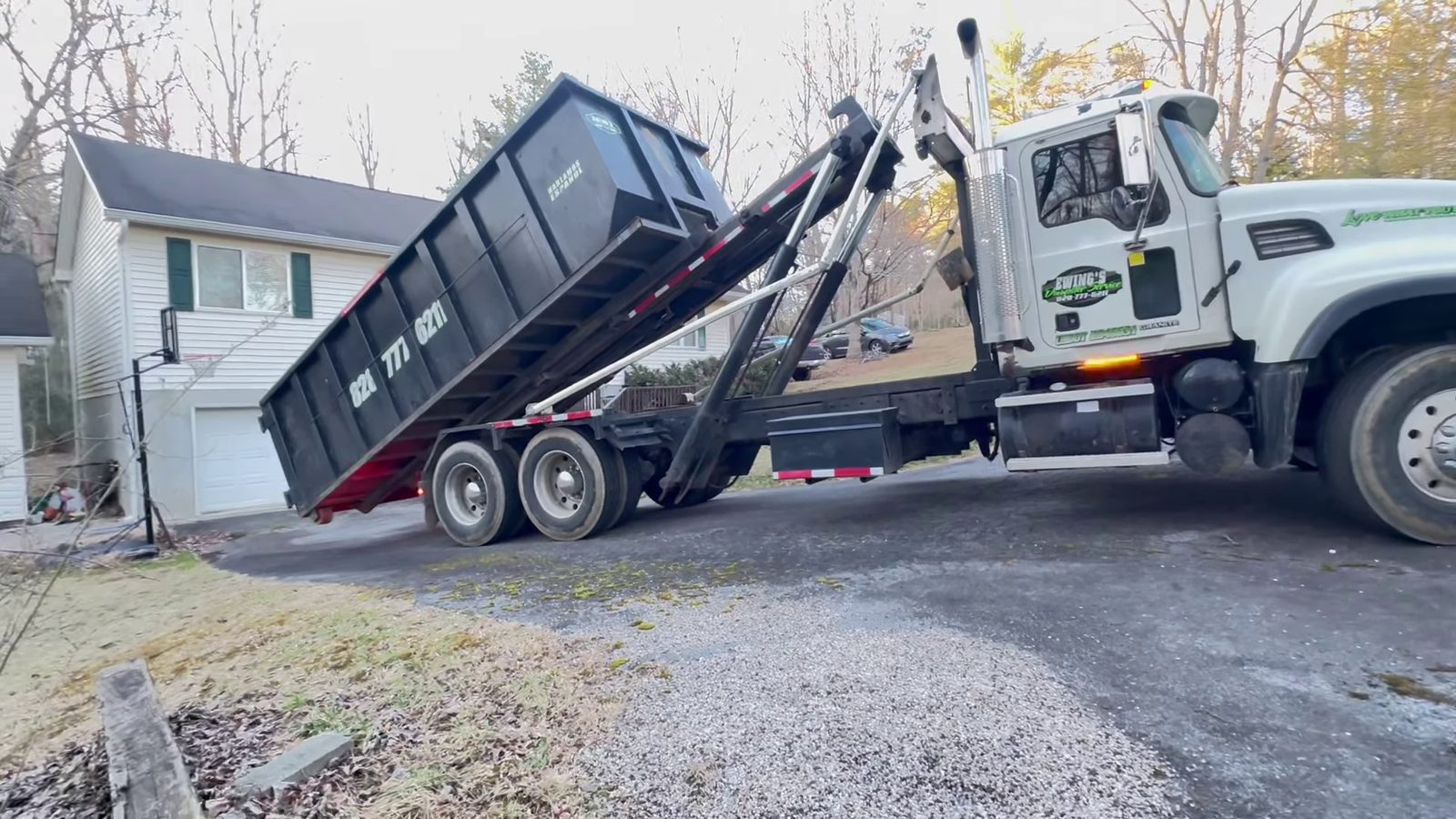
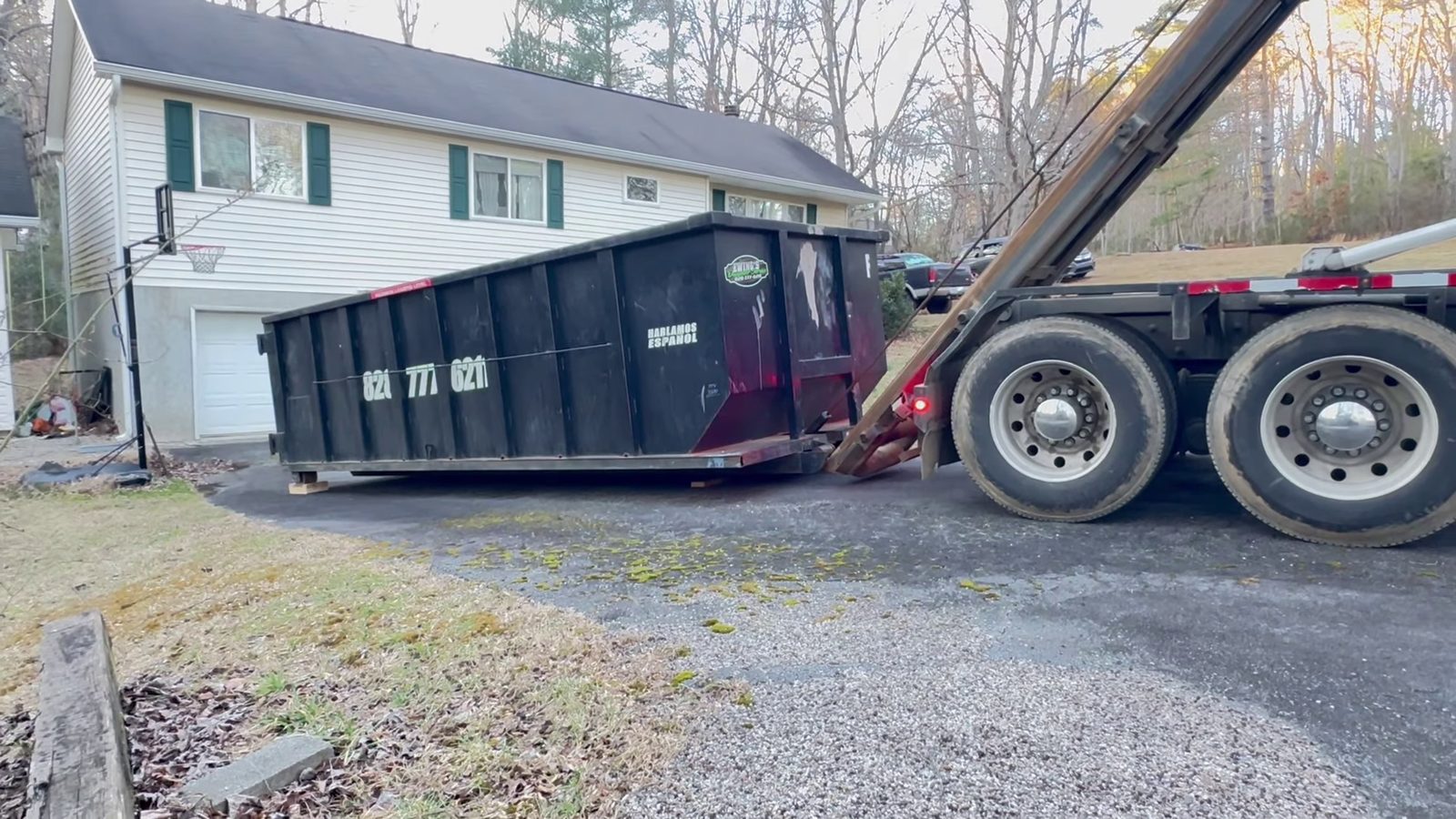
A dumpster delivery in this terrain is a different calculation than on flatland NC. The truck has to reach the placement spot, set the container level, and exit without incident — sometimes on wet asphalt in November, or over gravel that has not fully dried after the last heavy storm. Grade is the first variable to solve, but clearance, surface condition, and turn radius are close behind it, and all four have to work together before a placement is confirmed.
Clearance, surface, and grade — the numbers that matter
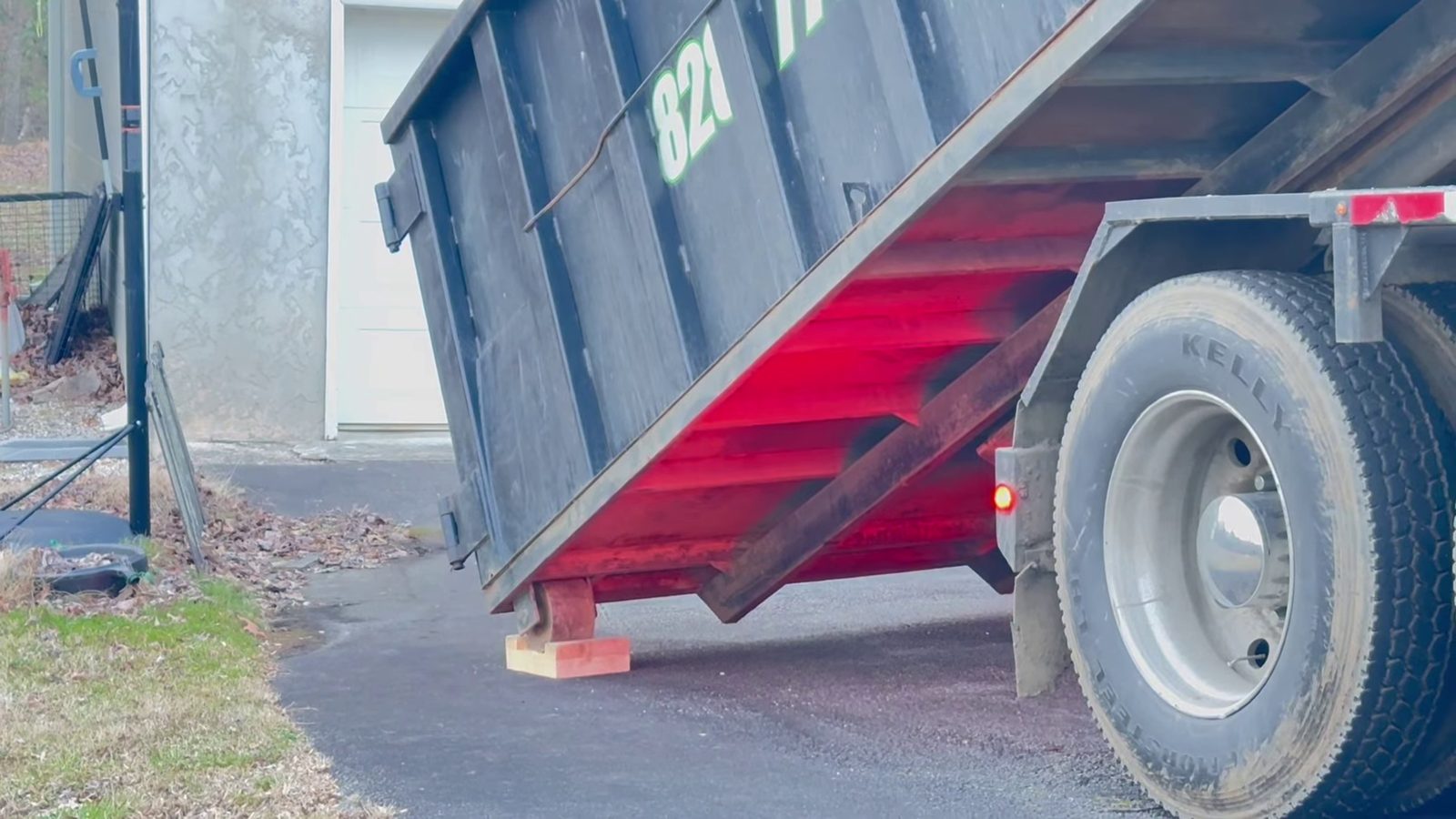
Roll-off trucks are long, heavy, and unforgiving about margins. The practical minimums most operators apply: 10 feet of unobstructed width (12 is more practical on a curve), 14 feet of overhead clearance for the hoist arm at full extension, and a surface that will not flex under outrigger pressure — solid asphalt or concrete in good repair, not crumbled edges or soft patch. These are not soft guidelines; a hoist arm that clips a utility line or an outrigger that sinks into soft ground ends the job and starts a recovery conversation instead.
Grade is where mountain driveways earn their reputation. Most roll-off operators draw the practical limit somewhere between 15 and 20 degrees of slope. Above that range, positioning and leveling a container on a hillside stops working in the truck's favor. A switchback that a standard pickup navigates without a second thought can stop a 50-foot articulated truck before the first turn.
| Driveway condition | Likely outcome |
|---|---|
| Paved, grade under 15°, 10+ ft wide, clear overhead | Standard delivery; use the driveway placement guide for surface and setback rules |
| Paved, grade 15–20°, 10+ ft wide | Delivery possible with operator review; describe the site fully when booking |
| Grade over 20° or width under 10 ft | Turnaround, street-edge placement with permit, or base-of-drive recommended |
| Gravel or soft-surface driveway | Surface assessment needed; plywood boards or timber mats may be required |
| Low overhead (utility lines, tree canopy, roof overhang) | Delivery blocked regardless of grade; alternative placement required |
Placing the bin when the driveway is off the table
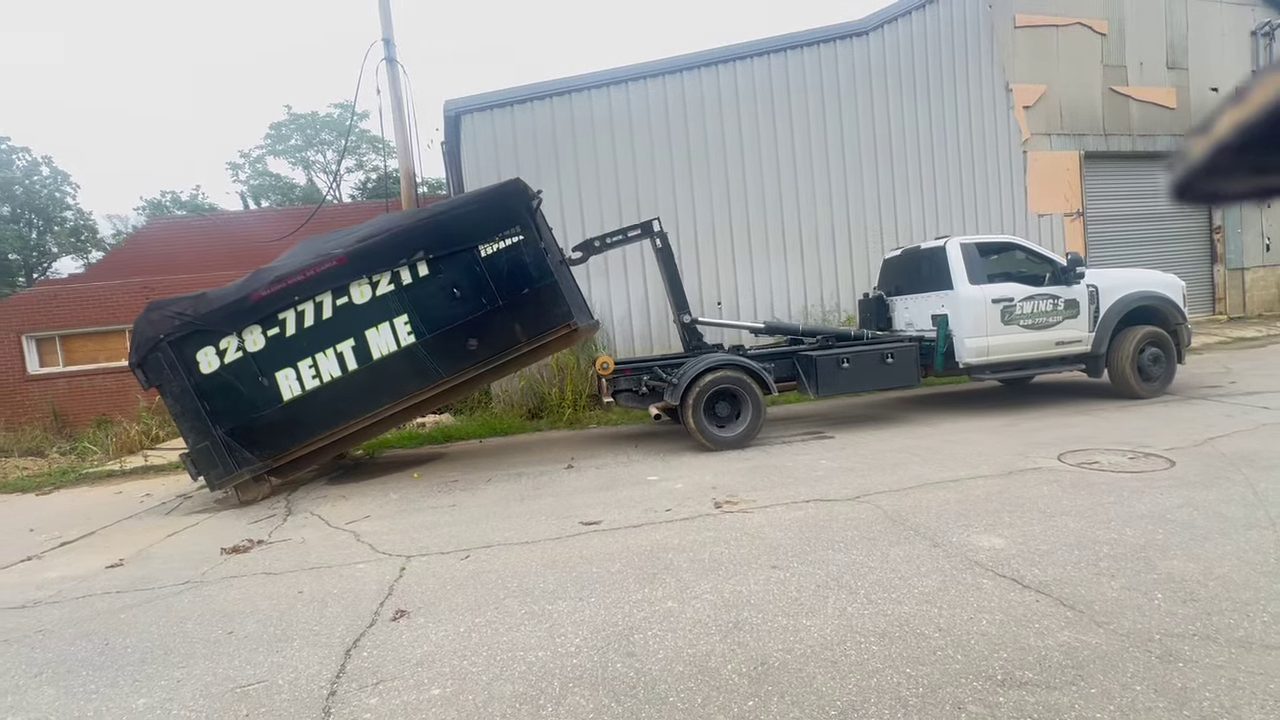
When the driveway itself cannot take the truck, three real alternatives exist: a turnaround pad at the base of the drive, the street edge adjacent to the property, or a flat section of the parcel or a neighboring property with permission. Each option changes how material moves from the work area to the bin, which affects whether going up a size on the container makes sense for the project.
Street placement is the most common workaround for steep-lot jobs in Asheville and unincorporated Buncombe County, but it carries permit requirements that must be cleared before the container arrives. Within Asheville city limits, containers sitting in public right-of-way fall under the City of Asheville's encroachment and right-of-way rules. On state-maintained roads and many county roads, the NC Department of Transportation encroachment permit process applies. Both programs typically require reflective markers on the container and a passable traffic lane alongside it. Book the permit before the delivery date — not after the truck is already on the schedule.
The International Code Council's fire code also sets minimum clearance distances between on-site containers and building openings; local jurisdictions adopt and sometimes adjust those thresholds, so it is worth confirming with the city or county building department on larger projects before placing the bin against the structure.
Matching container size to what the access allows
Container length is as consequential as capacity when access is constrained. A 10-yard dumpster runs roughly 14 feet long and 8 feet wide; a 15 or 17 yard box extends to about 22 feet. On a narrow or steep approach, the shorter container is easier to position, easier to retrieve, and less likely to scrape a retaining wall or block emergency-vehicle access on its way out. For most Buncombe County cleanouts and renovation debris jobs, a 10-yard box handles the volume without the placement complications that come with the larger size.
When a project genuinely needs more capacity and the turnaround or street placement allows for the extra length, a roll-off dumpster rental in a 15 or 17 yard size is worth pricing out — especially if going larger means one fewer haul on a job where every pickup trip up a mountain-road schedule adds real time to the finish date.
What to do before you book
The best time to work through the access question is before the reservation is confirmed. Measure the driveway at its narrowest point, not the most generous section. Note every overhead obstruction along the approach: power lines, tree canopy, roof overhangs, and any low-clearance portal you pass through on the way to the placement spot. Walk the route from the proposed placement back to the street and check for the driver's line of sight on the swing-out when the container is being set.
If the site is marginal, describe it honestly when you call. Most operators would rather sort through a workaround before dispatch than arrive to find the access is blocked. A photo taken from the street looking toward the house, and a second from the proposed placement spot looking back toward the road, gives the dispatcher an accurate picture of what the truck is facing. The slope that reads mild in a straight-on photo can look very different from the angle a driver calculates in real time — especially on the first visit to a new ridge address.