Asheville's terrain reshapes the standard rental conversation
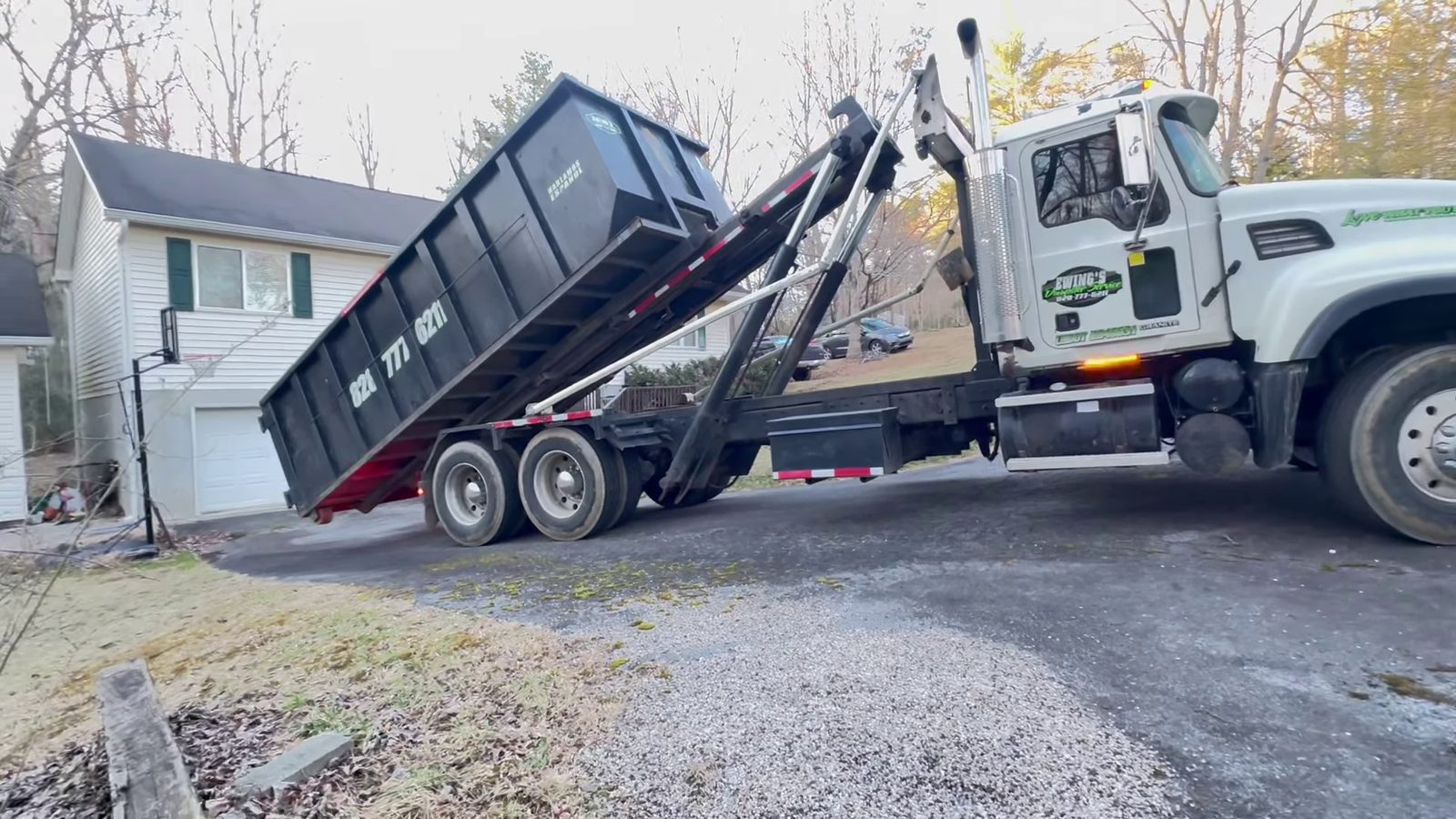
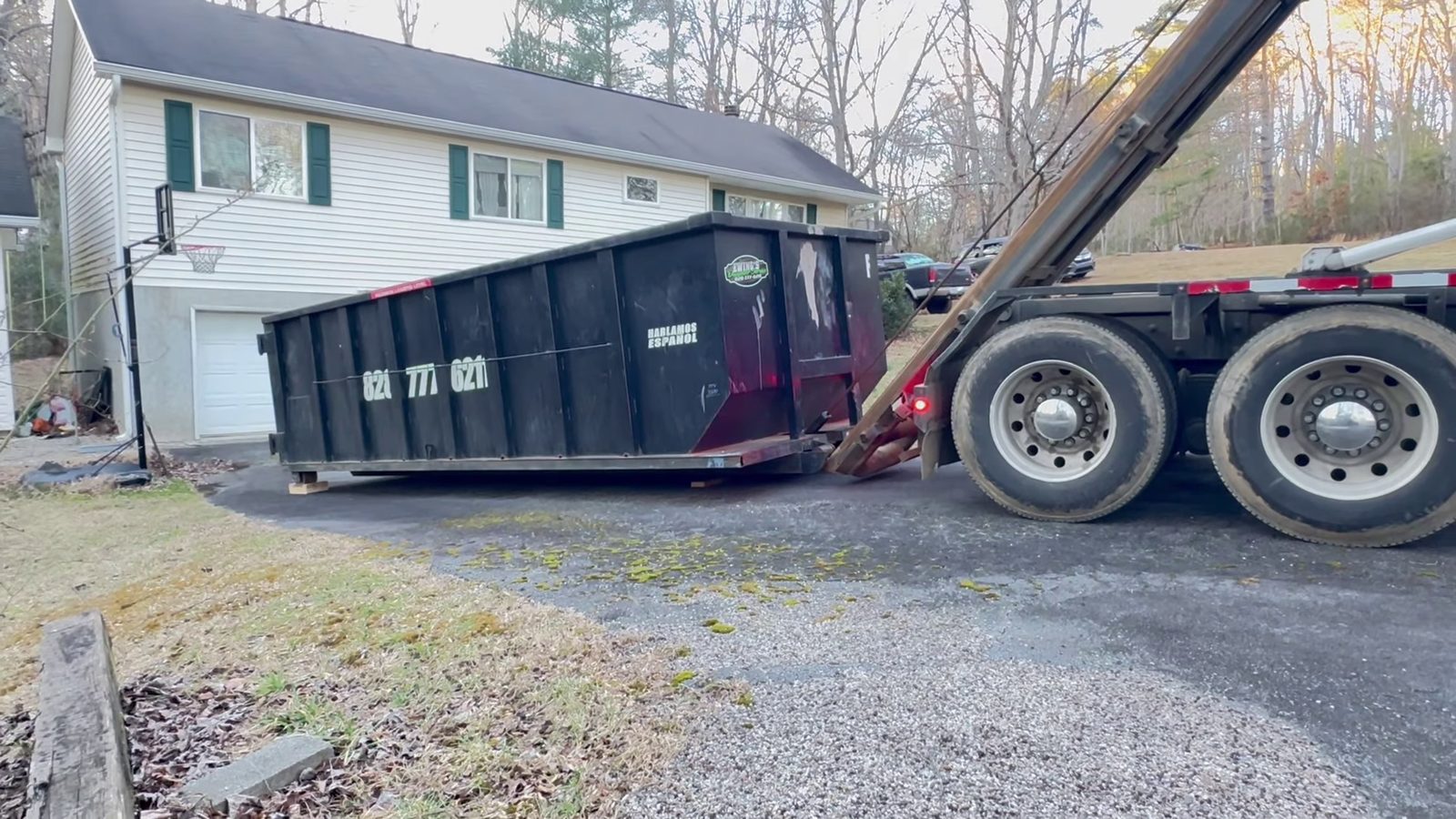
The French Broad and Swannanoa river valleys cut through Buncombe County at the foot of the Blue Ridge, and most of the residential housing follows those contours — which means driveways that climb, turn, or narrow in ways that flat-county properties rarely do. When Ewing's drops a 17-yard bin, the question isn't just which size fits the job. It's where on the property the bin can actually land safely, and whether the approach tolerates a loaded roll-off truck.
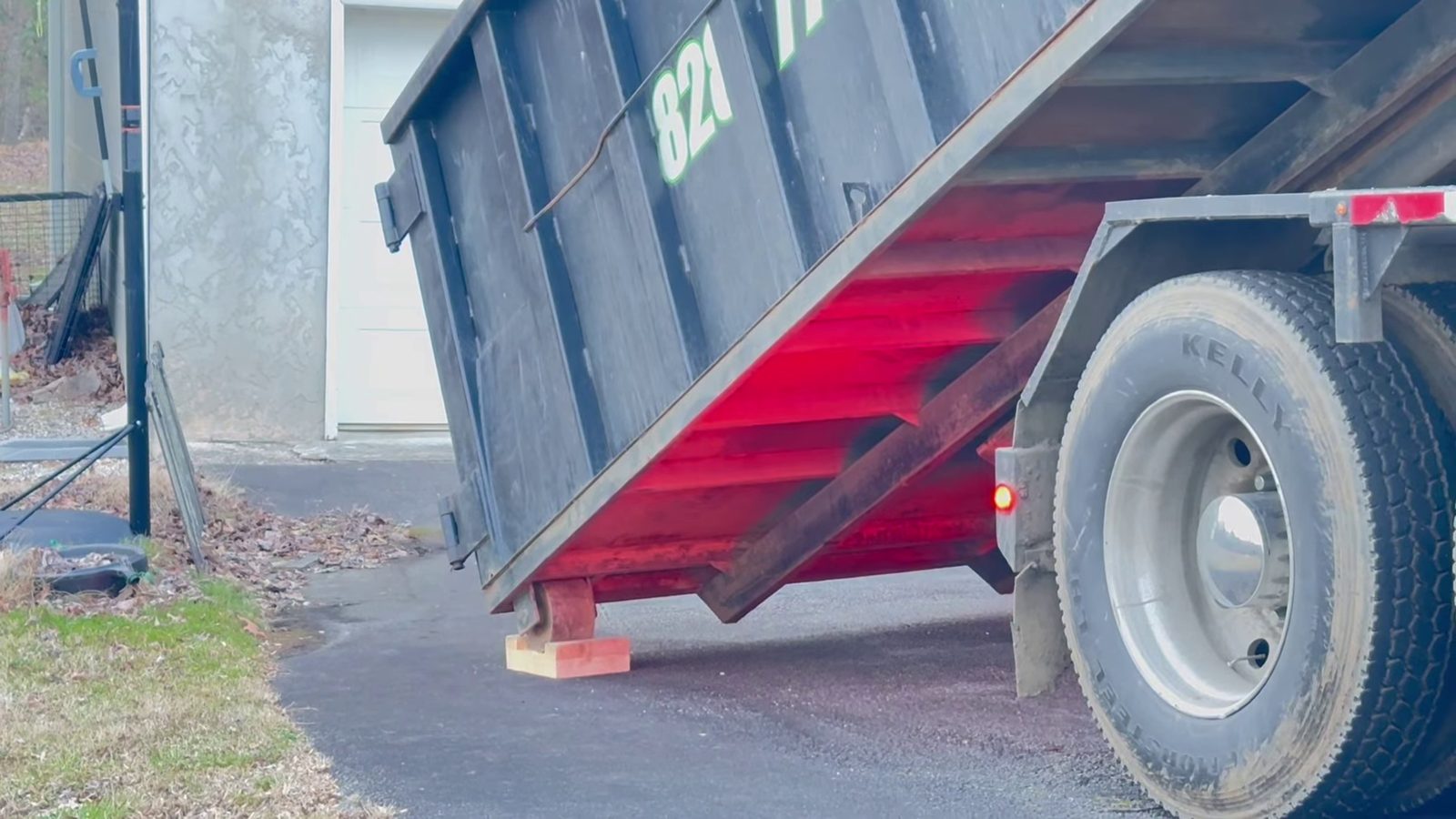
A 17-yard container weighs roughly three tons empty. Set it on a pitched driveway without considering drainage and load distribution, and you've traded a renovation project for a property repair. Describing the approach — grade, surface material, overhead clearance — is the first real conversation on any Buncombe County delivery. Street placement is an option when driveways aren't workable, but a bin on a public road in Asheville or unincorporated Buncombe County may require an encroachment permit from NC DOT, and city streets carry additional requirements through the City of Asheville. Sorting that before the truck rolls avoids scrambling on delivery day.
What a 17-yard bin actually holds
Seventeen cubic yards is roughly six to eight full pickup-truck loads of debris — a volume that covers the most common residential project types in one container without overbuying. Kitchen gut jobs, bathroom remodels, single-room tear-outs, deck removals, attic cleanouts, and single-pass estate cleanouts all land squarely in this range.
The 17-yard steps up from the 15-yard bin for jobs where the smaller container might fill before the work does. It stops well short of the 30-yard container, which is the right call when the job spans multiple rooms, involves a full roof tear-off, or generates mixed debris from structural work. The EPA's construction and demolition materials guidance identifies C&D waste as the heaviest-volume residential stream — the 17-yard bin handles it well at single-room scale.
One common mistake: mixing heavy materials with volume-fillers. Seventeen yards of furniture fills quickly by volume; 17 yards of broken concrete hits the one-ton weight limit long before the bin looks full. Know your material mix before booking. Buncombe County sees a lot of renovation work in older neighborhoods — West Asheville craftsman bungalows, Swannanoa Valley ranch homes, in-town infill builds — and the single-room gut scope is exactly what this bin size is built for.
What $325 covers and what moves the final number
Ewing's posts $325 for a 17-yard dumpster in Buncombe County as of January 2026 — that rate includes delivery, pickup, one ton of debris, and up to seven days on-site. Three variables shift the final invoice:
| Job scope | Price |
|---|---|
| Standard cleanout, under 1 ton, standard location | $325 (base rate) |
| Heavier demo load exceeding 1-ton included weight | $325 plus weight overage |
| Rental extended beyond 7 days | $325 plus daily rate |
| Street placement requiring encroachment permit | $325 plus permit cost (varies by jurisdiction) |
| Location at outer edge of service area | May approach upper end of quoted range |
Weight overages are where most surprises land. Roofing shingles, concrete, brick, and soil weigh dramatically more per cubic yard than drywall or furniture. A job that looks like a volume question often becomes a weight question midway through. For a broader look at how material type and project scope affect total cost across all bin sizes, the rental cost page breaks it down scope by scope.
The posted rate reflects standard service areas around Asheville and Swannanoa. Locations at the outer edges of the service territory — far up a ridge road, or in a hollow that adds significant drive time and maneuvering — may land toward the top of the quoted range. Confirming your address at booking is the fastest way to clear up any range question before the truck rolls.
Materials that go somewhere other than the bin
Not everything a renovation uncovers belongs in a roll-off. NC DEQ's Solid Waste Section governs what enters the state's disposal stream, and certain material categories have regulated paths that don't run through a dumpster. Common items that must be handled separately:
- Paint, stains, solvents, and automotive fluids
- Batteries and electronics
- Propane tanks and pressurized containers
- Asbestos-containing materials — present in a meaningful share of pre-1980 Asheville and Swannanoa homes
- Tires
- Appliances with intact refrigerants
The EPA's household hazardous waste guidance covers proper disposal paths for most of these categories. Buncombe County has HHW collection options for residents, but that's a separate process from dumpster rental, running on its own schedule. Putting prohibited materials in the bin shifts disposal liability to the renter. Older Asheville and Swannanoa housing stock regularly turns up asbestos tile, vermiculite insulation, and lead paint during gut jobs — all of which need licensed abatement work before debris loading begins.
Weather windows and the Swannanoa valley floor
Buncombe County has accumulated 19 federal disaster declarations over 1973-2026, most tied to flooding events along the French Broad and Swannanoa rivers. That history matters for dumpster logistics in two ways: renovation timelines here get disrupted more often than in drier markets, and saturated ground changes what a placement that looked solid in dry conditions can support once a bin is loaded.
A full 17-yard bin with one ton of debris puts significant point load on whatever surface it sits on. Waterlogged gravel, softened soil, or a driveway with marginal drainage can shift under that load in ways a dry week wouldn't reveal. Spring months and late-summer storm season are when this matters most on the valley floor. Gravel pads and driveway boards are both common solutions on Buncombe County properties when site conditions are uncertain — describing the driveway surface and recent weather to Ewing's at booking is the simplest way to avoid a retrieval problem later.