What mid-century materials do to a dumpster order
Hendersonville has been receiving a steady wave of retirees and remote workers from Charlotte, the Triangle, and further away. Many arrive, buy a 1950s or 1960s ranch on the south side of town or a split-level closer to Flat Rock, and start tearing things apart. That is the renovation story running through Henderson County right now, and it changes construction dumpster orders in one specific way: the original materials in those homes are dense.
Plaster walls over wood lath, mortar-set ceramic tile, cast-iron drain lines, and original hardwood subfloors all weigh considerably more per cubic yard than the drywall, PVC, and OSB that fill dumpsters in newer subdivisions. A single bathroom in a 1958 ranch, fully gutted down to the studs, can reach the weight limit of a 17-yard container before the box is half full. If you are pulling plaster from more than one room or stripping original tile from a combined kitchen-and-bath gut, that density factor needs to be part of the conversation when you schedule the container. The general guidance on construction dumpster rental covers the standard sizing framework; the Henderson County version adds the density variable on top of it.
The concentration is visible in certain Henderson County neighborhoods. The older sections of Hendersonville, the established roads off Sugarloaf Mountain Road, and the mid-century subdivisions between town and the county line are seeing active renovation work at a rate well above the regional average. Contractors working those jobs are dealing with original windows, true-dimension lumber framing, and floor systems that move weight differently than modern platform framing does. That context matters for how a dumpster order gets sized.
Sizing from scope and material, not just project type
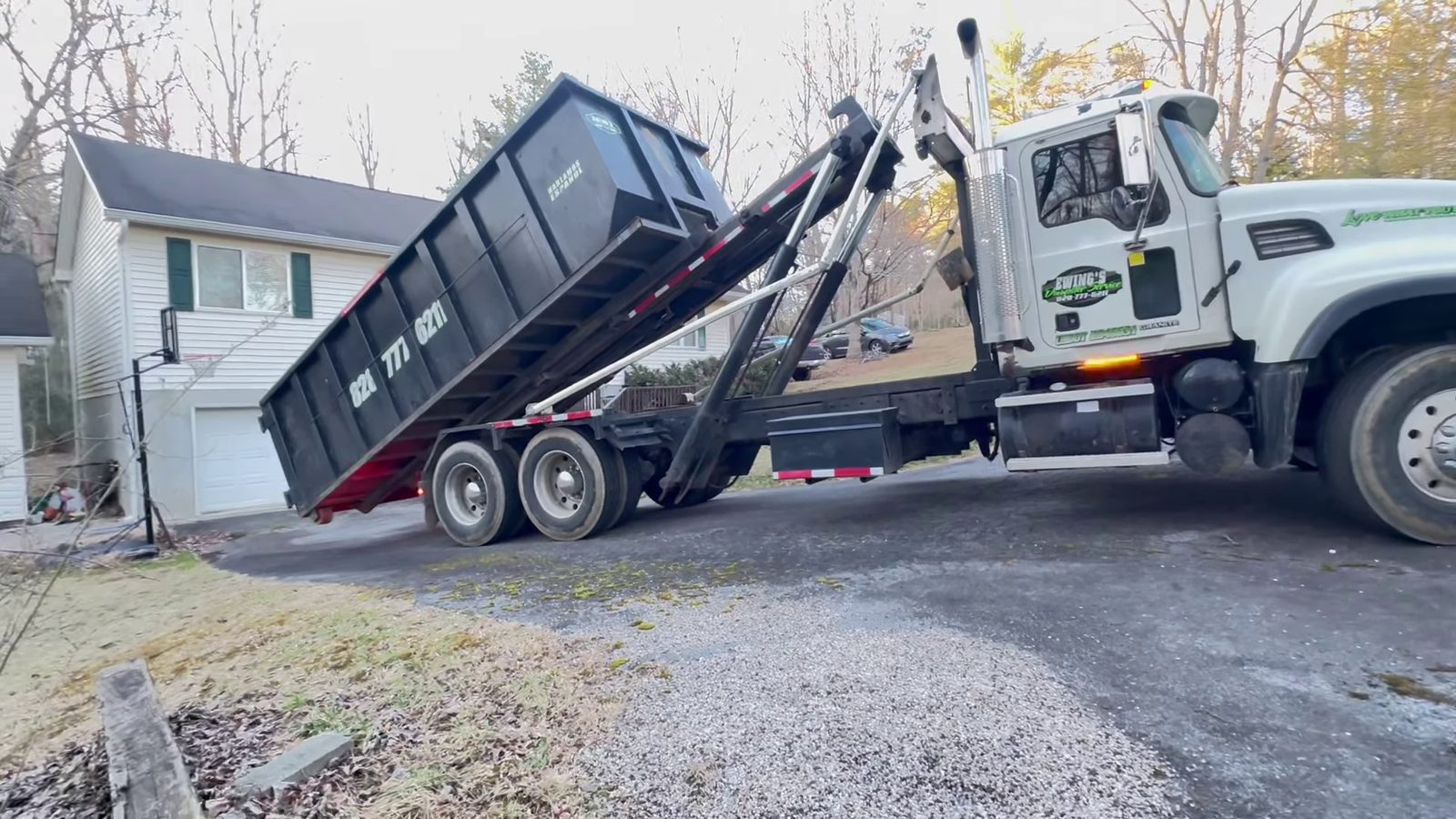
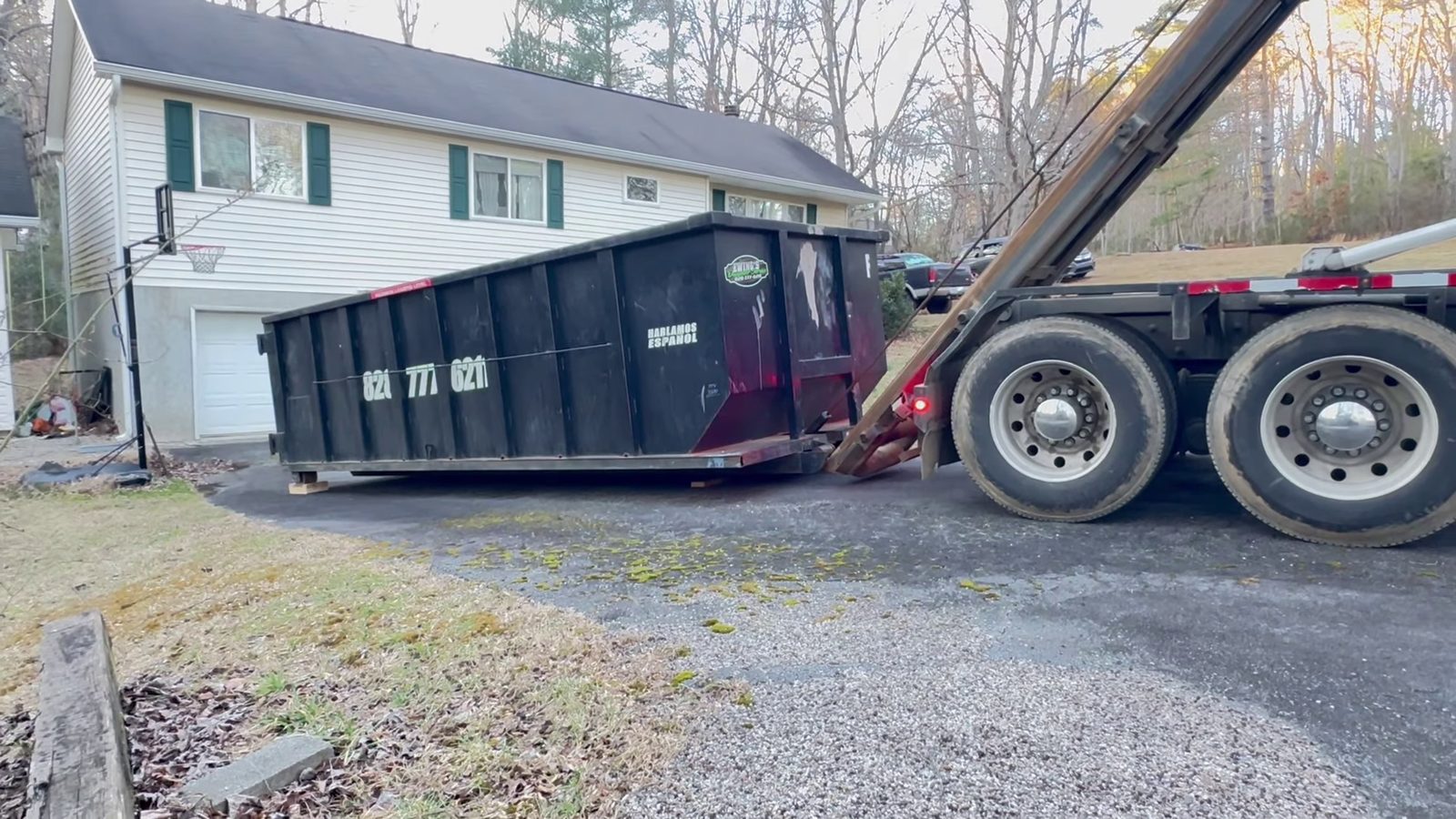
Ewing's runs two sizes for Henderson County construction work. The 17-yard container handles most single-trade jobs: a roofing tearoff on a typical ranch, a full bathroom gut, a deck demolition, or a cleanout of an outbuilding. For jobs involving original heavy materials across multiple rooms, or any whole-house renovation scope, the 30-yard container is the more reliable choice. Both prices include delivery and pickup, and both apply across Henderson County, not just in the city limits.
| Job scope | Container | Price (Jan 2026) |
|---|---|---|
| Single bathroom gut (original tile, mortar, vanity) | 17-yard | $325 |
| Roofing tearoff, up to 2,000 sq ft | 17-yard | $325 |
| Deck or accessory structure demolition | 17-yard | $325 |
| Plaster removal across two or more rooms | 30-yard | $480 |
| Kitchen plus full bath combo, original materials | 30-yard | $480 |
| Whole-house renovation or full addition demo | 30-yard | $480 |
Weight is the variable that job scope alone does not predict reliably. Original plaster over lath, mortar-bed tile, and cast-iron pipe run significantly denser than their modern replacements. Before you start loading, the weight limits guide explains how those density differences translate to tonnage and what the overage process looks like at pickup.
Driveways, streets, and when a permit enters the picture
The majority of Hendersonville construction dumpsters land in a driveway, which is the simplest placement and requires no permit. When a job site does not have a usable driveway, or when access requires placing the container on a public road, the requirements shift. For state-maintained roads, an encroachment or right-of-way permit through NC DOT applies. Locally maintained streets in Hendersonville and Henderson County have their own permit process. If you are unsure which authority maintains your street, ask before the delivery is scheduled; a dumpster sitting in a right-of-way without the correct permit creates a liability that belongs to the contractor, not the hauler.
The International Code Council addresses on-site waste container placement within its building and fire codes, and local inspectors active on permitted jobs can flag placements that block egress, obstruct fire lanes, or restrict utility access. Those requirements are easiest to satisfy on a driveway. For any street placement, plan for sight-line clearance at intersections and emergency-vehicle access before the container arrives.
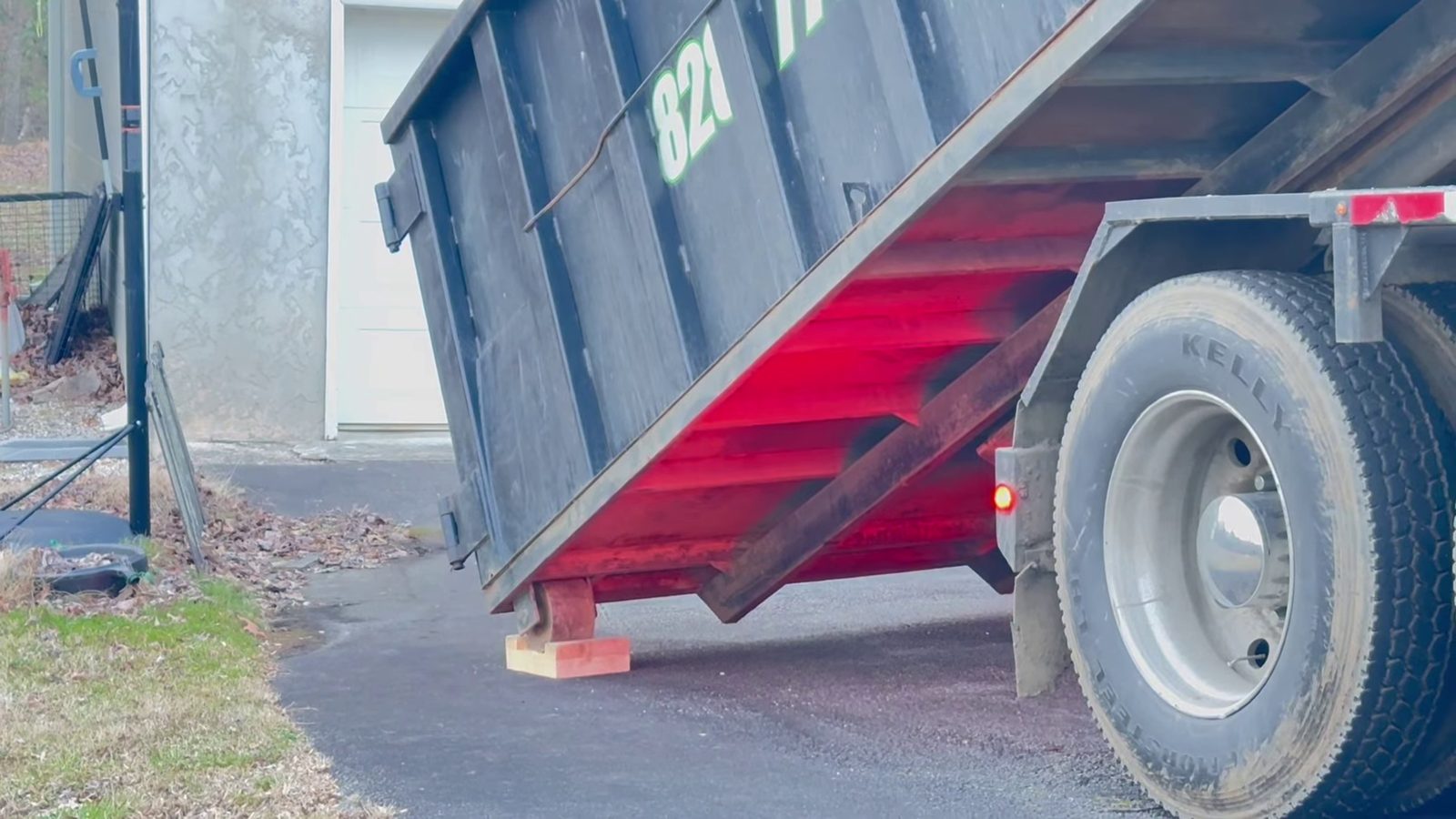
Driveway access on Henderson County's older lots is worth assessing before the driver arrives. Many properties near downtown Hendersonville have narrow driveways, low-hanging trees, or grade changes that limit where a loaded container can be set down safely. A quick description of the access when you schedule the delivery prevents the most common placement problem: arriving with a full-size container and discovering the driveway will not accommodate it. If access is tight, a street permit is the fallback, and that process should start before the delivery date.
Materials that need a different destination
Henderson County's mid-century housing stock is the reason this section matters locally. Pre-1980 renovation work occasionally surfaces lead paint, asbestos-containing floor tile, vermiculite insulation, and other regulated materials. None of those belong in a construction dumpster, and none of them are accepted at the landfills that receive standard construction debris in this state. The NC DEQ Solid Waste Section governs what North Carolina permitted facilities can accept; regulated hazardous materials are not on that list regardless of how small the quantity looks on a job site.
Renovation cleanouts sometimes sweep in household chemicals that have accumulated in a basement or outbuilding for decades: old paint cans, solvents, pesticides, and pool supplies. Those are household hazardous waste, with their own disposal path. The EPA's household hazardous waste guidance covers what qualifies and where it goes; Henderson County's solid waste program periodically holds collection events for residents. Standard construction debris follows the separate framework the EPA's construction and demolition materials program outlines for recycling and landfill diversion.
Storm cleanup and Henderson County's weather pattern
Henderson County has accumulated 16 federal disaster declarations across 1978-2026, most of them tied to storm and flood events. The mountains around Hendersonville channel weather systems in ways that produce localized wind and water damage: rooflines that lose shingles, outbuildings that come apart, and tree debris that piles against structures. After a significant event, the demand for construction dumpsters in Hendersonville typically spikes within 48 hours. Containers fill up fast, and scheduling later in the cleanup window often means a longer wait.
Storm debris loads differently than renovation debris. Mixed loads of branches, torn roofing material, and water-damaged insulation are generally lighter per cubic yard than the dense materials that characterize a mid-century renovation gut. If you are combining post-storm debris with renovation material from a repair job, describe both when you call. The right size depends on the mix, and a combined load may let you fit more volume than a weight-only estimate would suggest.