What drives the work in Arden
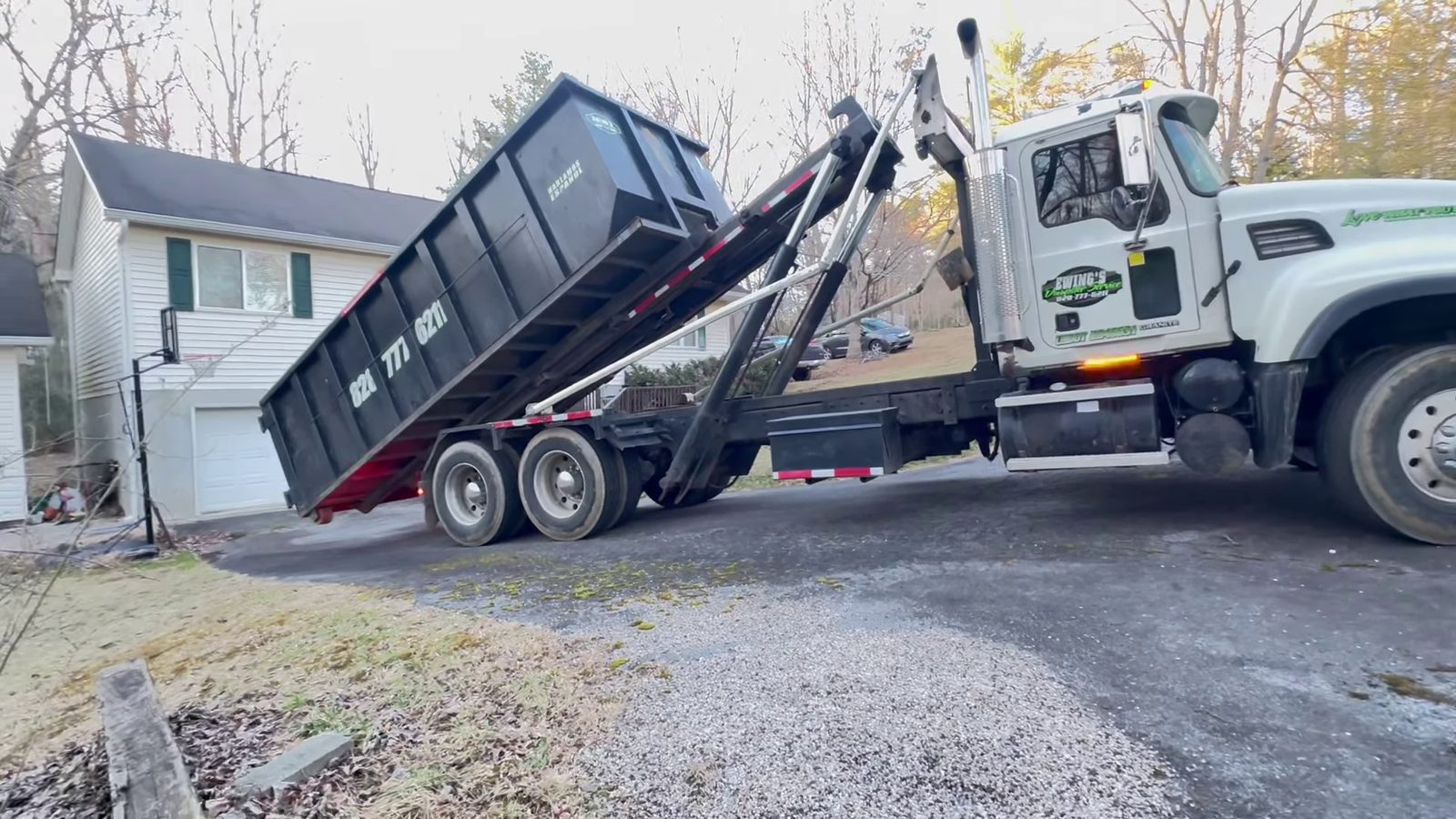
Arden sits at the southern end of Buncombe County, where the airport-area commercial strip meets a dense band of postwar residential neighborhoods — ranch homes built from the 1960s through the 1980s, newer subdivisions pushed out from Asheville's growth boundary, and light industrial uses scattered along the main corridors. The result is a pattern of rental demand that doesn't match what drives the market in Asheville's historic districts or on its ridge-top builds: gut renovations on older homes being updated for resale, storm cleanup after mountain weather events, and commercial cleanouts from the airport-corridor businesses.
The postwar housing stock is the defining factor. These homes were built to a generation's standard — slab or crawl-space foundations, single-layer roofing, kitchens and baths that most buyers today want gutted. That work generates predictable debris volumes: stripped shingles, removed cabinetry, flooring, and drywall. The right container size for the job is a real decision, because under-sizing means a mid-project pickup call and over-sizing means paying for cubic yards you don't use. A ranch remodel is almost always a 15- or 17-yard job.
Container sizes and what they cost
Ewing's runs four container sizes covering nearly every residential and light commercial job in the area. The table below reflects posted January 2026 pricing — delivery and pickup included, no surcharges for the Arden area. For a detailed look at what moves a rental price higher — overweight loads, extended rental terms, material-specific disposal fees — the cost breakdown page has the line-item version.
| Project type | Container | Price |
|---|---|---|
| Single-room cleanout, light yard debris | 10 yd | $199 |
| Whole-home junk removal, deck or fence teardown | 15 yd | $280 |
| Kitchen or bath remodel, mid-size landscaping project | 17 yd | $325 |
| Full gut renovation, roofing job, estate cleanout | 30 yd | $480 |
Most Arden jobs settle in the 15- or 17-yard range. The 10-yard fills faster than expected when demo material is involved — a single bathroom gut-out can consume one quickly. The sizing guide maps specific project types to container volumes more precisely than a phone estimate can.
Materials that can't go in the container
A roll-off is not a universal solution. North Carolina's solid waste rules, administered through the NC DEQ Solid Waste Section, prohibit certain materials at transfer stations and landfills regardless of how they arrive. The practical list includes hazardous liquids, fluorescent tubes, used motor oil, treated lumber in certain forms, and anything meeting the federal definition of hazardous waste under the Resource Conservation and Recovery Act. Tires and appliances containing refrigerants are also excluded.
For older Arden homes, the implication is pre-renovation sorting. A ranch home that hasn't been touched since it was built may have vinyl floor tile, pipe insulation, or ceiling material containing asbestos — all require licensed abatement and separate disposal before the container arrives. If the walls are going down on a pre-1978 renovation, federal rules require lead-safe work practice certification from the contractor, and debris handling responsibilities follow from that. These aren't edge cases in this neighborhood; treating them as standard pre-work is the safer and faster assumption.
Where the container goes — and when a permit matters
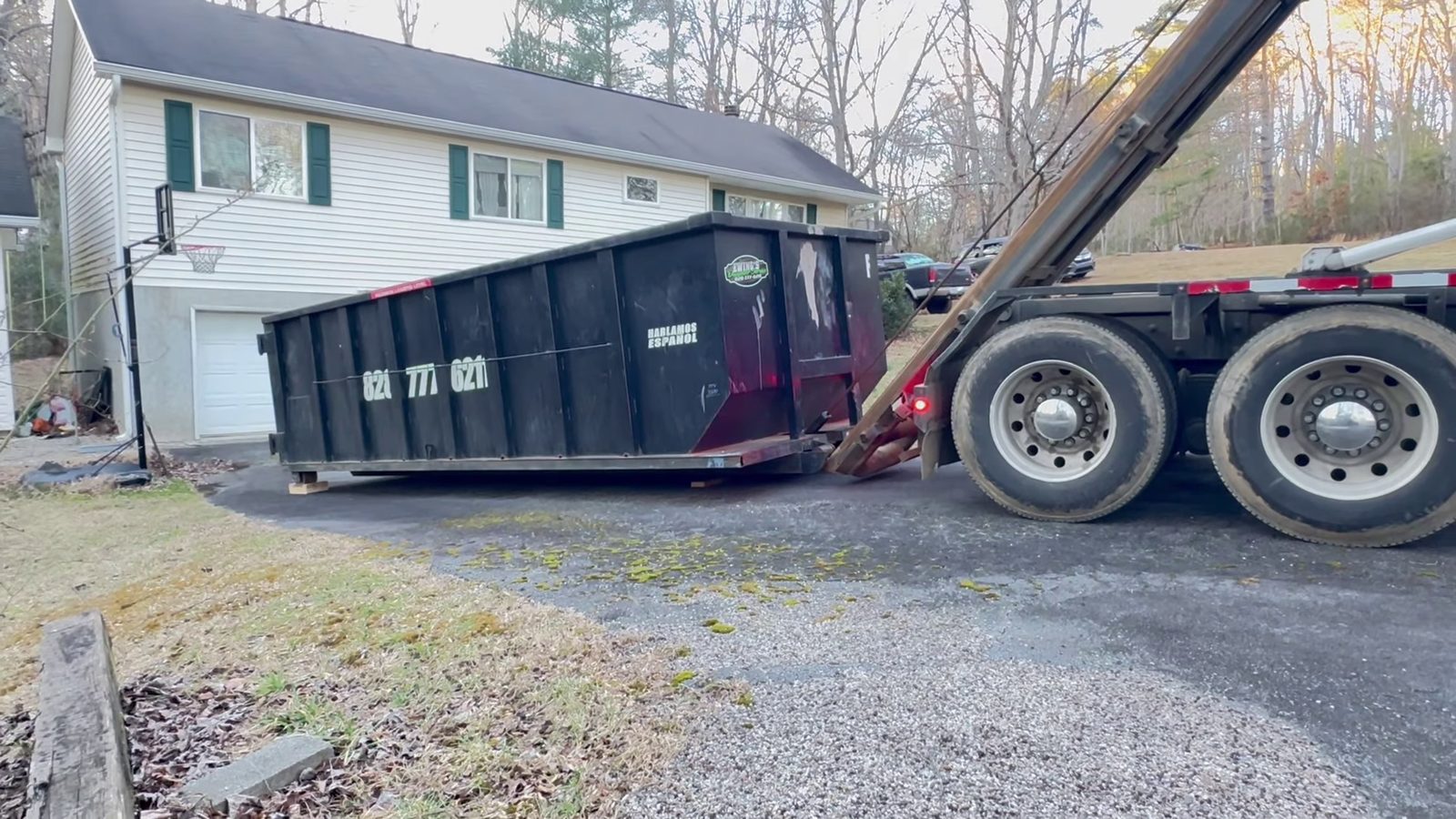
On private driveways and off-street surfaces, a dumpster can be placed without any permit. The complication arrives when the only usable placement is on a public street or road shoulder. In parts of Arden with tight single-car driveways or no off-street parking — older residential sections near the main corridors — that situation comes up regularly.
North Carolina's DOT treats road right-of-way placement as an encroachment requiring a permit from the relevant division office. The process has a real lead time and is not a same-day clearance. If your placement might land in a state road right-of-way, review the encroachment permit requirements at NCDOT before scheduling delivery. High-traffic corridors like Hendersonville Road and Airport Road add a safety dimension to the placement question on top of the permit requirement — where a residential side street is an option, it's usually the better call.
The International Code Council's building codes also set standards for temporary container placement during active renovation work — primarily setback distances and emergency access clearances. For homeowner-managed projects, it's worth a quick check before the container lands in a tight location.
Storm cleanup and construction debris
Buncombe County has accumulated 19 federal disaster declarations over 1973-2026, most tied to storm and flooding events. Each one generates a surge in dumpster demand: tree and limb debris, damaged roofing, waterlogged flooring, and the mixed residential debris that comes from a fast post-storm cleanout. After a significant event, rental availability tightens within 24 to 48 hours. If you're working from storm damage, booking early is not conservative — it's practical. Buncombe County's elevation means weather events that feel minor in flatland counties can produce serious debris volumes here, especially from downed hardwoods and damaged outbuildings.
Construction and demolition debris from renovation work is the other major driver. The EPA's construction and demolition materials guidance covers how C&D waste is categorized at the federal level — relevant for commercial-side jobs needing documentation. For residential renovation in Arden, the practical point is weight: concrete, tile, and roofing shingles push loads toward the weight limit faster than lighter materials. A roofing-heavy project earns the 30-yard on tonnage alone, not just volume.
The roll-off rental page covers availability and turnaround across the full service area, including Arden and surrounding Buncombe County communities.