Forty years of mountain living in one two-car garage
Asheville's housing stock tells the story before you open the garage door. West Asheville bungalows from the 1920s and 1930s sit on lots where a detached carriage garage became the first storage unit. Kenilworth ranches from the 1950s came with single-car garages that absorbed every leftover renovation material for decades. Newer construction on the ridge roads above town fills up fast with outdoor gear, storm prep supplies, and furniture that might be useful someday.
Buncombe County has recorded 19 federal disaster declarations over 1973-2026, most of them storm and flood events. Each one left behind a cleanup wave: waterlogged furniture, ruined appliances, and salvaged materials stacked in the garage for now. For many households, that is where the pile started. The result is a cleanout job with layers. Surface stuff loads straight into a roll-off, but underneath it, in almost every older Asheville garage, there is a shelf with paint cans from multiple owners, a jug of motor oil, and something labeled with a hazard symbol that nobody remembers buying. That layer changes the job, and knowing it is there before the dumpster arrives saves time, money, and a potential violation.
What you are sorting before you load
Household hazardous waste is the reason Asheville cleanouts need a sort pass before the container shows up. The EPA classifies household hazardous waste as products that are ignitable, corrosive, reactive, or toxic — a category that covers most of the shelf in an older garage: latex and oil-based paint, motor oil, pesticides, pool chemicals, fluorescent bulbs, and batteries. These cannot go into a roll-off dumpster and cannot go into the trash. NC DEQ's Solid Waste Section enforces what enters the state's landfills, and haulers who accept prohibited materials face real enforcement consequences, which is why a reputable dumpster company inspects before it hauls.
Buncombe County runs periodic HHW collection events where residents can drop off paint, chemicals, and electronics at no charge. Set those items aside during your sort, check the county schedule, and route them to the right facility. The rest — furniture, boxes, broken tools, old appliances, bagged trash — belongs in the dumpster. See what can go in a dumpster for a full accepted and prohibited list before you start loading.
Picking the right container for the pile
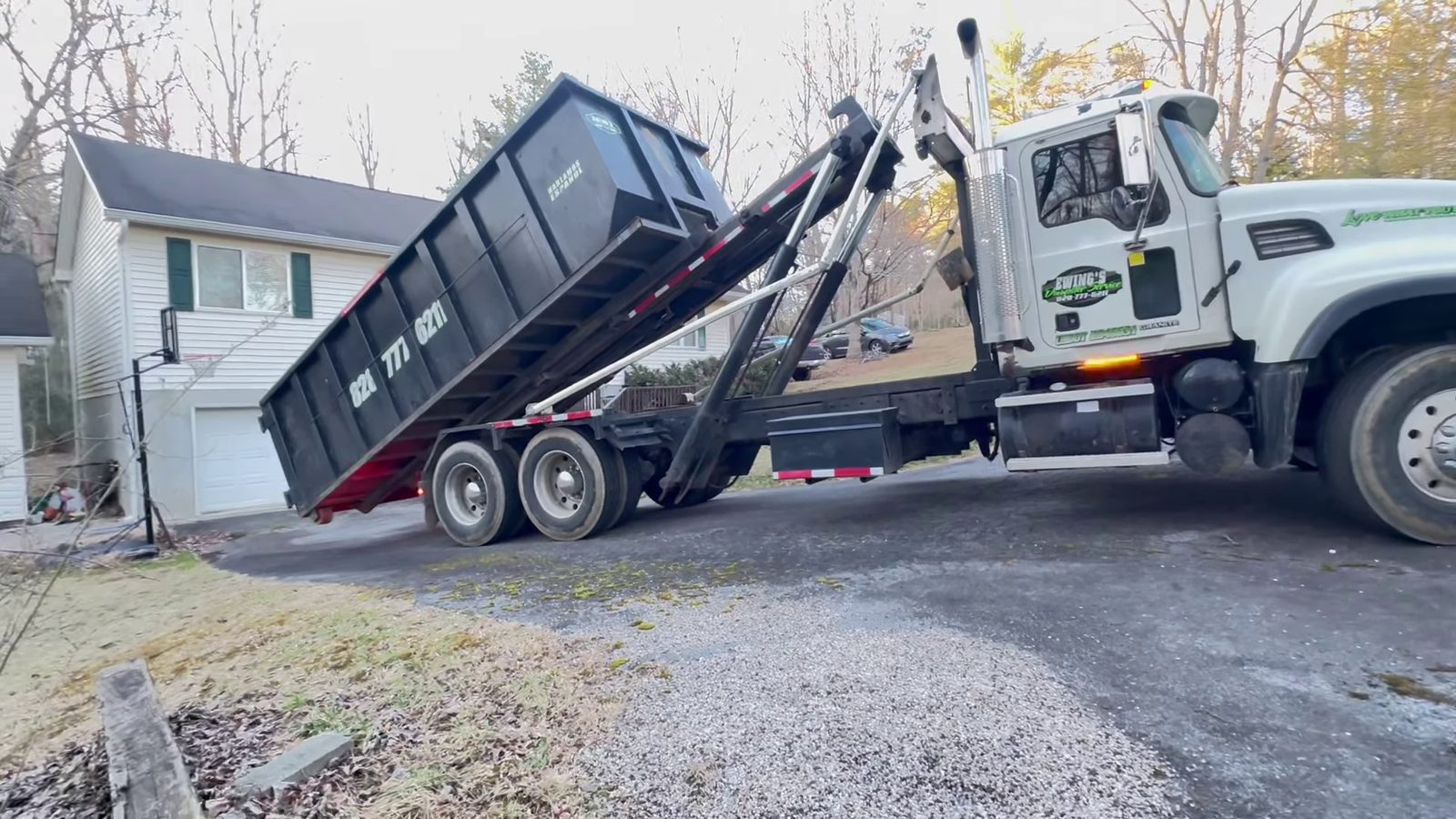
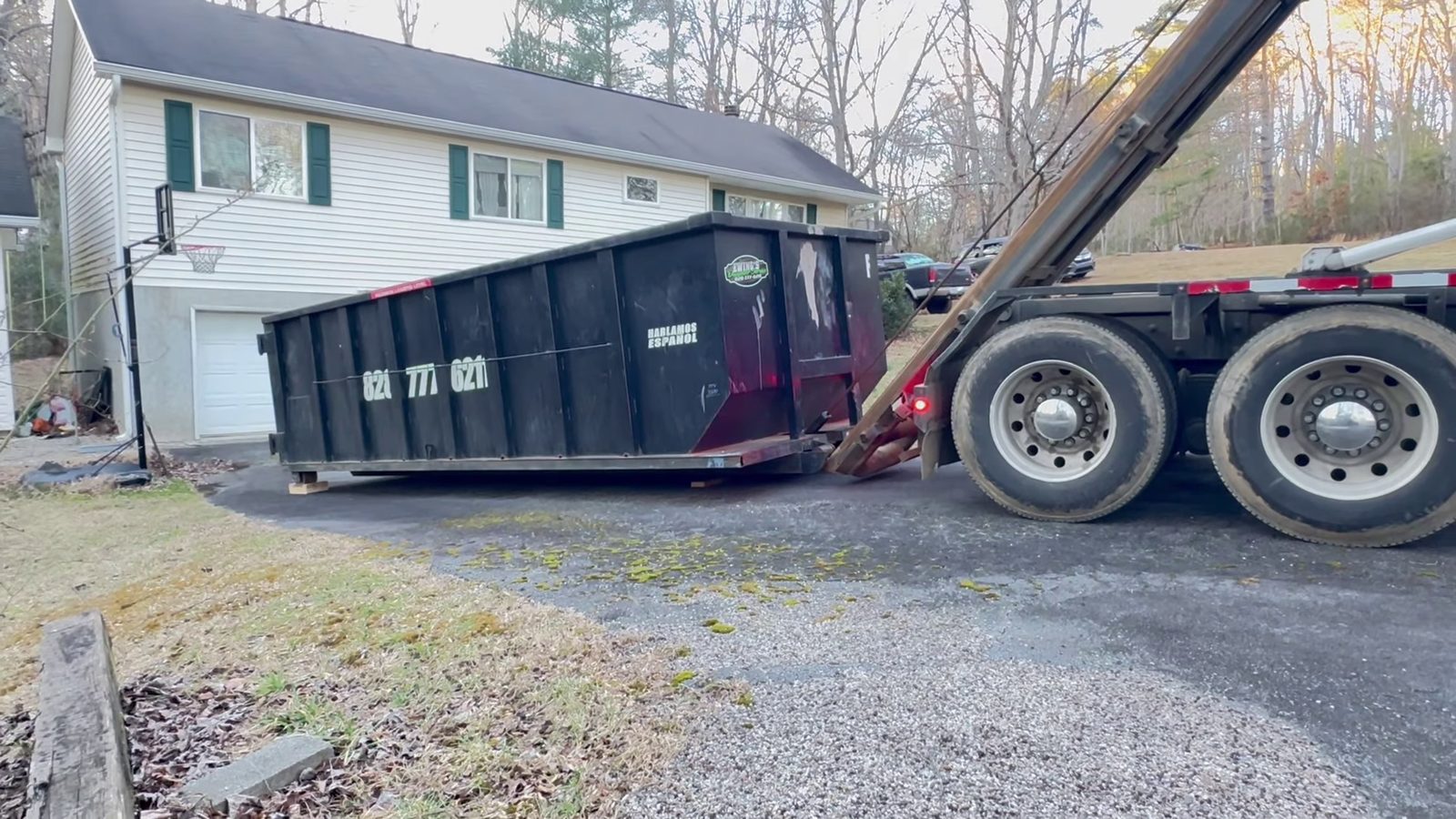
Most garage cleanouts in Buncombe County fit a 10-yard dumpster. A 10-yard holds roughly three to four pickup truck loads, which covers a single-car garage packed to the rafters or a full basement storage area. It sits in a standard driveway without overhanging the street and does not require heavy equipment access. The 10-yard dumpster rental page has weight limits and dimensions so you can confirm your driveway works before you book.
Step up to a 15 or 20-yard container if you are clearing a two-car garage plus an attached basement, or if the contents include bulky items like old sofas, mattresses, and large exercise equipment. If you are on the fence, sizing up once is cheaper than scheduling a second haul. The only scenario that calls for more than 20 yards in a residential cleanout is a full estate situation, and those typically stage as multiple loads anyway.
What a Buncombe County cleanout typically costs
Dumpster rental pricing in this area reflects haul distance, weight, and rental period. The table below shows realistic ranges for the most common cleanout scopes, covering the container only and not labor to load it.
| Cleanout scope | Container size | Ewing's price |
|---|---|---|
| Single-car garage, lightly packed | 10 yard | $199 |
| Single-car garage, full to ceiling | 10 yard | $199 |
| Two-car garage or large basement | 15 yard | $280 |
| Garage plus attic or detached workshop | 17 yard | $325 |
| Full estate or multi-structure cleanout | 30 yard | $480 |
Weight overage fees apply when contents run heavier than the included tonnage. Dense items like old concrete pavers, soil, gravel, or tile can push a lightly loaded container over its limit. If heavy debris is mixed in with household junk, mention it when you book so the driver arrives with the right container. For a full-service option that includes a loading crew, see cleanout dumpster rental.
Getting the container to the right spot
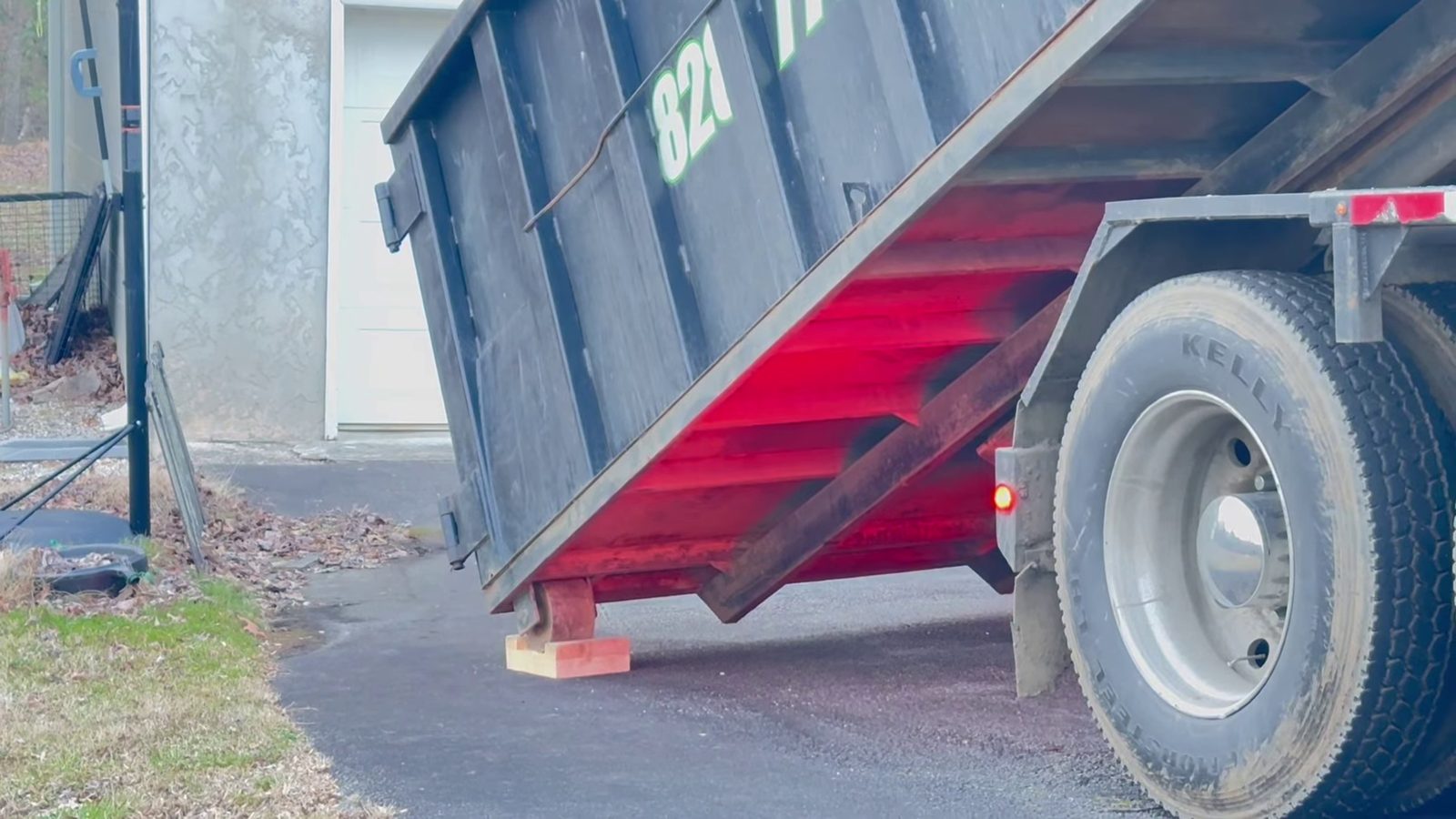
Most Buncombe County driveways can receive a roll-off, but Asheville's mountain terrain creates placement situations that flatland communities rarely deal with. A steep-grade driveway on the north or west side of town may not safely hold a loaded container. Drivers assess grade on arrival and will decline a spot that risks a rollback — that is the correct call. Talk through your driveway's slope when you book, and share your address so access issues can be flagged before delivery day.
If the driveway will not work and the container needs to sit on a public street or inside the right-of-way, a permit is required. For state-maintained roads, that means an encroachment permit through the NC Department of Transportation. For city streets in Asheville, right-of-way permits go through the City of Asheville. The permit process typically takes a few business days and includes placement conditions such as cones and reflectors. Your rental company should be familiar with the process and can often handle the paperwork on your behalf, but confirm that expectation before assuming it is included.
Making the cleanout day count
One sort pass before the container arrives makes the actual loading go significantly faster. Walk the garage or basement and pull anything that cannot go in the dumpster — paint, chemicals, propane tanks, electronics — into a separate staging area. What remains is straightforward: furniture, clothing, broken tools, construction scraps, appliances, and bagged trash all load without issue.
Asheville has an active resale and donation community worth tapping before you fill the container. Working tools, furniture in decent condition, and anything with obvious value can go to a local thrift store or Habitat ReStore, reducing the total weight in the container and keeping reusable material out of the landfill — an approach the EPA's Sustainable Materials Management program treats as the preferred first step in any residential cleanout. When you are ready to book, the cleanout rental page walks through scheduling, typical delivery windows, and what happens on pickup day.