Why Buncombe County jobs fill a box by weight before volume
Steep terrain sets construction dumpster rental Asheville NC apart from most of the state — Buncombe County's grades and aging housing stock change both the size decision and the placement conversation in ways that flat-market contractors don't anticipate. The housing stock that developed on those grades runs old and dense: Craftsman bungalows from the 1920s and 1930s, mid-century brick ranches, and infill construction crowded onto lots that would have stopped development anywhere flatter. When a renovation crew pulls plaster-on-lath walls, slate roofing tiles, cast-iron pipe, or old brick foundation work, that debris runs two to four times heavier per cubic yard than standard drywall-and-lumber loads. A 17-yard container that looks half-full after a full day of tile demo may already be at its weight ceiling.
That gap between visual fill and actual tonnage is the most common source of overage charges on mountain renovation jobs, and it catches first-time customers regularly. Understanding the weight limits on each container size before you start loading matters more here than on most flat-state jobs. The gap grows wider after heavy rainfall: Buncombe County has recorded 19 federal disaster declarations over 1973-2026, and debris from post-storm cleanouts — saturated insulation, waterlogged lumber, mud-laden materials — consistently exceeds what the same materials weigh dry.
The practical step before booking is to identify what is coming out of the structure and in what proportions. Concrete, masonry, and roofing tile warrant a different size conversation than framing lumber and drywall. Swannanoa Valley jobs in the lower corridor often include remediation debris that sits in a category of its own and should be discussed with the hauler before the bin goes on the property.
Matching the container to the job scope
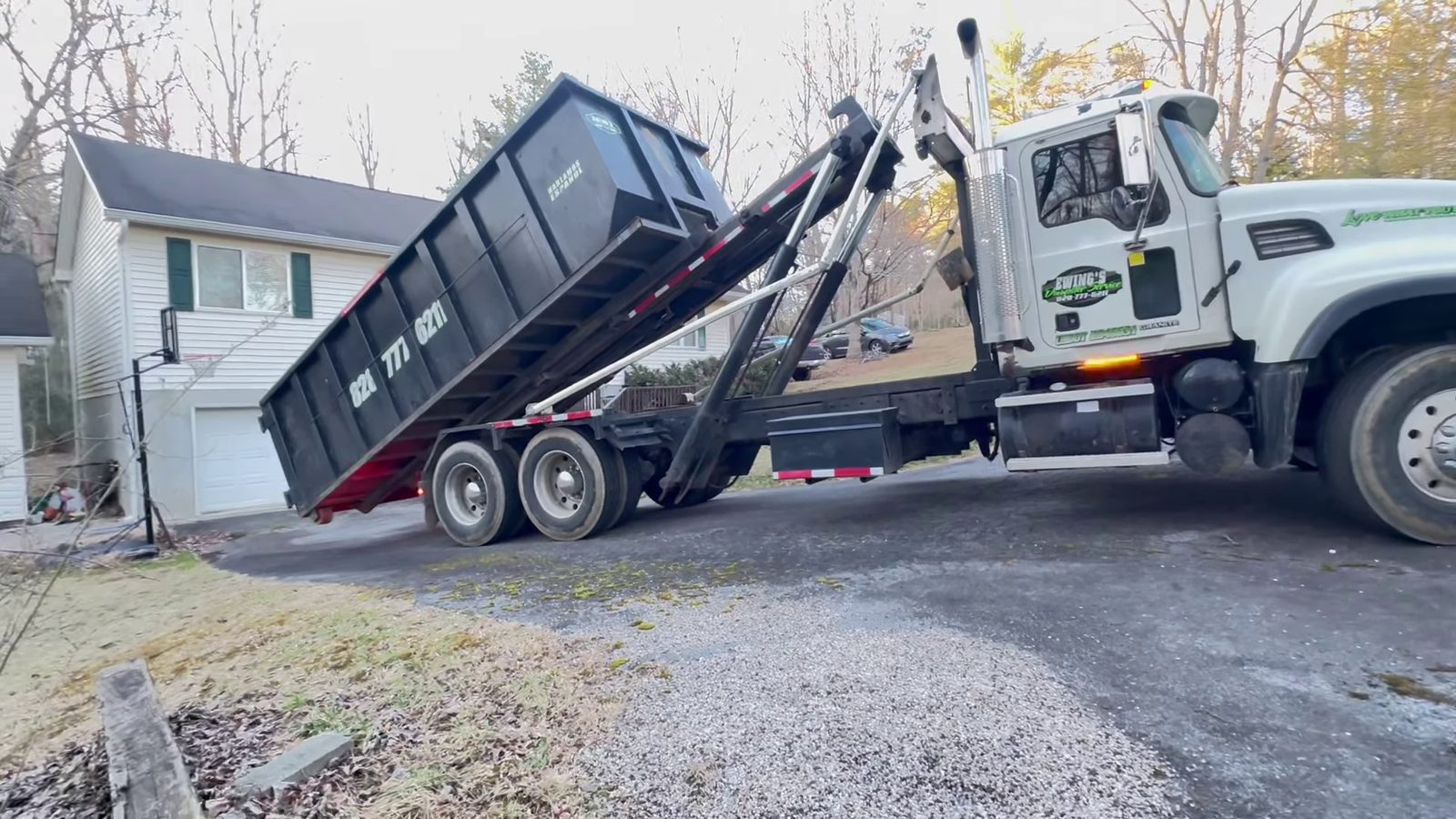
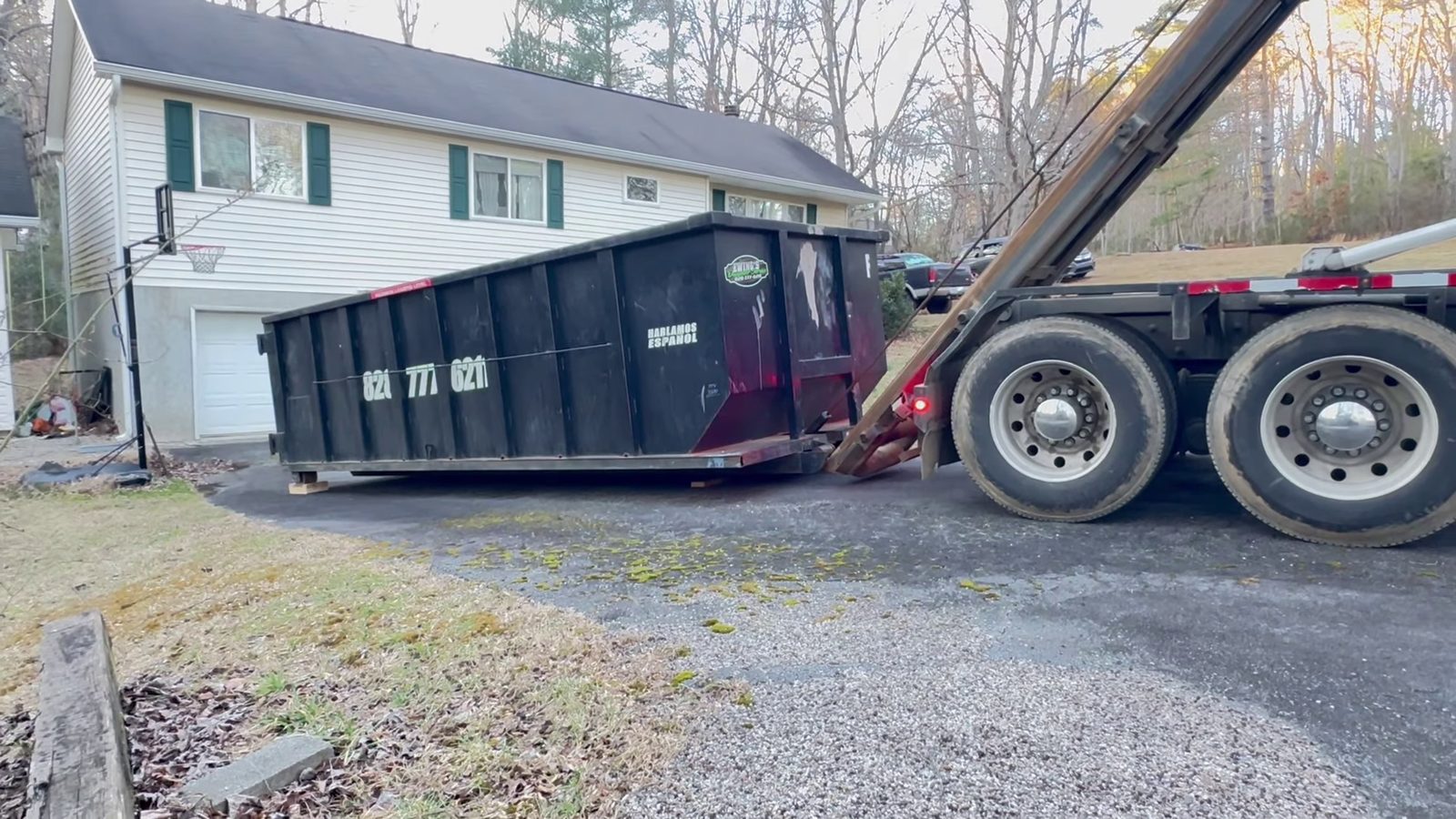
Ewing's serves Buncombe County construction and demolition work with two bin sizes: the 17-yard and the 30-yard. Those two containers cover the full range of residential renovation and demolition work in this region, from a single-room gut to a whole-structure teardown.
| Project scope | Container size | Typical cost |
|---|---|---|
| Bathroom demo, small deck teardown, single-room gut | 17 yard | $325 |
| Full kitchen gut, combined bath and kitchen remodel, standard roof replacement | 17 yard | $325 |
| Whole-house renovation, large addition cleanout, full interior strip | 30 yard | $480 |
| New construction site cleanup, full structural demolition | 30 yard | $480 |
Pricing is per rental and includes delivery and pickup. Location within the service area can move the cost within that range — tighter mountain roads, steep lot grades, and distance from the base of operations all factor in. The 17-yard bin fits most renovation jobs in Asheville's older neighborhoods, where lot size and driveway access often make a larger container impractical regardless of job scope. When a job generates mixed debris — heavy masonry alongside lighter framing — a conversation about load density before delivery helps avoid a mid-project swap. If a driveway grade makes the delivery approach unsafe, the bin goes streetside; see the placement section below for what that triggers in terms of permits.
Street placement, right-of-way permits, and what they actually cover
Most Buncombe County residential driveways handle a bin delivery without issue. Some don't — a grade above 15 degrees, a tight turn off a narrow street, or insufficient overhead clearance can make a driveway approach unsafe for the delivery truck. When those conditions exist, the bin goes streetside, and placement rules apply immediately.
Road jurisdiction determines which permit you need. If the street is state-maintained — which covers most arterials and many through-streets in Asheville and Swannanoa — NC DOT's encroachment permit process governs any container placed in the right-of-way. City-maintained streets fall under City of Asheville public works requirements. Both processes are routine and not especially time-consuming, but neither is optional. An unpermitted container in a public right-of-way creates liability for the property owner, not the hauler, and that distinction matters when something goes wrong.
Beyond jurisdiction, ICC codes governing on-site waste containers set standards that local building inspectors enforce: required clearance from fire hydrants, overhead utility lines, and sight triangles at intersections. In dense Asheville neighborhoods — North Asheville, West Asheville, Kenilworth — these clearances are real constraints, not paperwork formalities. Confirm road ownership before the delivery date to avoid last-minute complications on a job where the schedule is already tight.
What cannot go in a construction dumpster, and why older homes complicate the list
The NC DEQ Solid Waste Section publishes the statewide prohibited materials list that all permitted landfills in North Carolina enforce. For construction and demolition work, the items that most often show up unintentionally in a bin include paint cans with wet paint, solvents, adhesives, batteries, fluorescent tubes, refrigerants, and tires. Any of these can result in the load being rejected at the facility, with disposal fees and liability returning to the customer.
Older Buncombe County homes add another layer of complexity. Much of Asheville's pre-1980 housing stock — the historic neighborhoods of Montford, Kenilworth, and North Asheville, as well as the older structures throughout the Swannanoa corridor — is more likely to contain asbestos in floor tile, roofing shingles, pipe insulation, and joint compound. Asbestos-containing material requires licensed abatement before any disposal and cannot go into a construction dumpster under any circumstances.
The EPA's household hazardous waste guidance covers alternative disposal paths for materials the bin cannot take, and the EPA's sustainable management of construction and demolition materials program identifies what can be diverted from landfill entirely — clean concrete, salvageable lumber, and scrap metal are worth separating when the job generates enough volume to make it worthwhile. The full approved and prohibited list for Ewing's containers is at what can you put in a dumpster.
Three questions that keep a construction dumpster rental honest
"What is the weight limit, and what does an overage charge look like?" The posted rental price covers the container to its rated tonnage. On a Buncombe County renovation with heavy legacy materials — tile, cast iron, concrete block, old masonry mortar — this question comes first, not last. The answer determines whether one 30-yard bin is smarter than two sequential 17-yard bins, and that decision affects both cost and schedule. The weight limits page has the rated tonnage by container size.
"Is this street state or city maintained?" The permit paths differ between NCDOT and the City of Asheville, and lead times are not identical. Finding out after the bin is already in the right-of-way is the costly way to learn. Both agencies have online tools for checking road jurisdiction, and five minutes of research before booking prevents delays on delivery day.
"What is the rental period, and what does an extension cost?" Older homes with concealed rot, hidden structural issues, or phased renovation work run long. Knowing the daily extension rate before the bin arrives means that project overruns don't generate billing surprises at the same time everything else is already behind schedule.