Why Leicester delivery runs differently than an Asheville drop
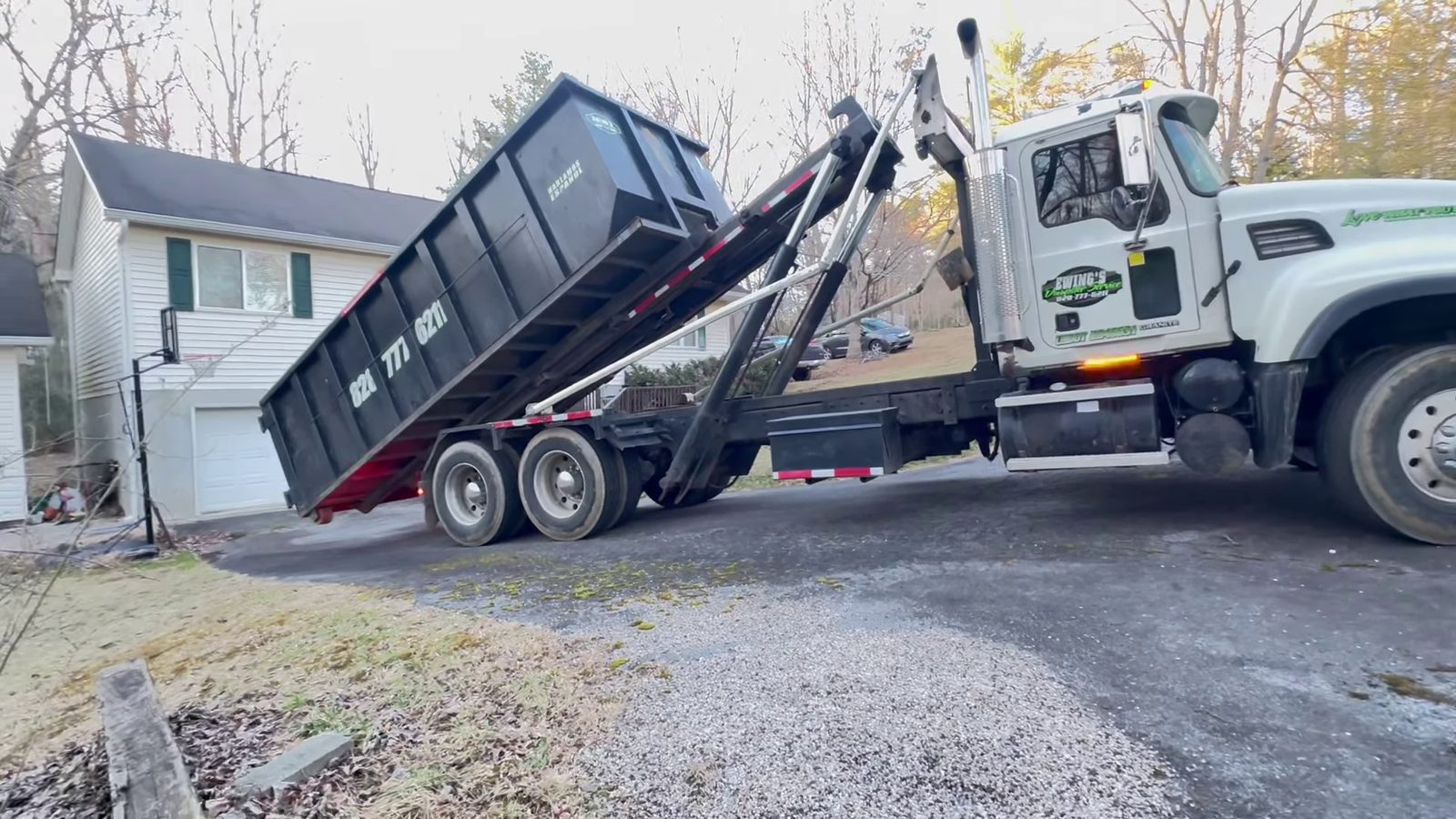
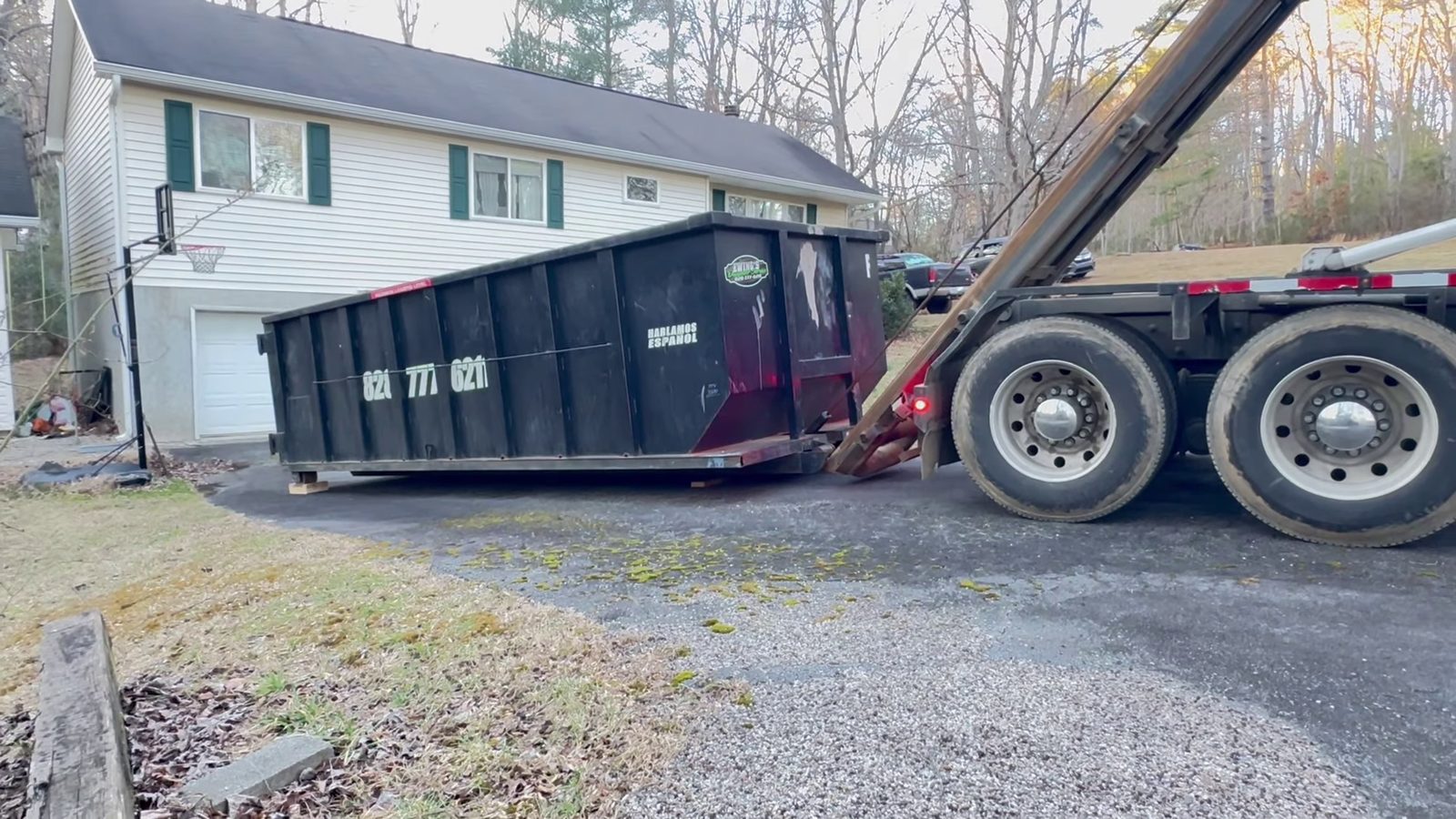
Leicester traces NC-63 west from the edge of Asheville into the creek hollows and ridge tops of western Buncombe County. The housing stock here is a real mix: tobacco-road farmhouses that have changed hands and are now being gutted, manufactured homes on ridge cuts, agricultural land being cleared for new construction, and older timber-frame outbuildings that need to come down before anything new goes up. All of that generates construction dumpster work. What makes it different from a city job is the approach.
Many Leicester addresses sit a quarter-mile back on a gravel drive. Others are uphill from a narrow state road that wasn't graded for a loaded roll-off truck. Some lots back against creek banks that limit where a bin can sit without settling. None of these are deal-breakers, but they are planning inputs — and catching them before the truck rolls prevents a wasted trip and gets the bin placed correctly on the first drop.
When you book a construction dumpster rental for a Leicester address, tell us what the approach looks like: surface type, slope, any overhead lines or low branches, and roughly where on the property you need to work. Ewing's has delivered to tight rural sites across western Buncombe and can find a workable drop zone when given accurate information up front.
Matching bin size to what your job produces
The two scales that drive most Leicester calls: the full renovation — flooring, drywall, roofing, old outbuildings all coming out — and the focused trade job, like a bathroom gut or a deck removal. Volume alone doesn't settle the question when heavy materials are involved. If your job mixes roofing or masonry with lighter debris, check the weight limits guide before you load. A bin that looks right for the cubic footage can hit its weight ceiling well before it looks full, and mixed-load jobs are where that happens most often. For specifics on the larger option, the 30-yard dumpster rental page covers capacity and typical use cases.
The table below maps common Leicester job types to the right bin and the price that comes with it. All prices include delivery and pickup. Location within western Buncombe County may affect the final number — confirm your address through the quote form before booking.
| Job type | Suggested bin | Price |
|---|---|---|
| Bathroom or kitchen remodel | 17-yard | $325 |
| Deck or porch teardown | 17-yard | $325 |
| Single-room gut (drywall, flooring) | 17-yard | $325 |
| Asphalt roof replacement (one layer) | 17-yard | $325 |
| Full-house renovation or multi-layer roof | 30-yard | $480 |
| Barn or outbuilding demolition | 30-yard | $480 |
| Whole-property or estate cleanout | 30-yard | $480 |
What goes in the bin and what stays out
Standard construction and demolition debris — lumber, drywall, roofing material, vinyl siding, old fixtures, broken concrete — is exactly what a dumpster is for. The boundary that matters is what a licensed NC solid waste facility can accept. The NC DEQ Solid Waste Section maintains the restricted materials list; in practice for a Leicester renovation, the operative rules are: drained appliances are generally accepted; tires are not; treated railroad ties are restricted; and anything that qualifies as hazardous under federal guidelines needs a separate disposal path regardless of how it ended up in the pile.
The EPA's guidance on construction and demolition materials frames renovation waste as a managed resource stream, meaning clean metal, wood, and concrete can often be separated for recycling rather than landfill. For older Leicester structures, the sequencing point that overrides everything else: if the structure might contain lead paint or asbestos-based materials, those require testing and separate handling before demolition work begins. This is not a dumpster rule. It is a renovation sequence requirement, and the liability follows the property owner once the debris is loaded, regardless of when the issue is discovered.
Road placement, right-of-way, and when a permit applies
The large majority of Leicester jobs place the bin on private property: a driveway, a gravel pad alongside the work area, a cleared spot near the barn. No permit is required for that. The situation that triggers a permit is when site constraints push the bin onto a public road shoulder or state right-of-way. At that point, the NC Department of Transportation encroachment permit process applies before the bin can land.
On rural Leicester lots, this comes up occasionally: creek-bank properties with no flat staging area, narrow-frontage lots where the road and the work site are essentially the same surface, or jobs where the county road provides the only practical turnaround for the truck. It is not a complicated process, but it has to happen before delivery, not after. If your site looks like one of those cases, flag it when you book and we will work through the permit requirement before the truck is dispatched.
Storm cleanup and what western Buncombe's flood history means for your project
Buncombe County has accumulated 19 federal disaster declarations spanning 1973-2026, nearly all of them storm and flood events. Western Buncombe — including the Hominy Creek corridor and the hollows running off NC-63 through Leicester — takes its share of that history. After major weather events, cleanup volume on rural properties can exceed what any planned renovation produces: flood-soaked framing, destroyed outbuildings, and storm-damaged roofing all need to come out before rebuilding can begin, often on a compressed timeline.
Storm-damaged construction material is legitimate dumpster content. What flood damage does not change is the restricted materials list. Old paint cans, solvents, and pesticide containers that were sitting in the barn when it flooded are still household hazardous waste — they do not become construction debris because of their condition or circumstance. If you are sorting through storm damage, separate the construction material from the chemical material before anything goes in the bin, and plan disposal routes for each category accordingly.