Mountain homes carry more than they look
Montford, West Asheville, and the hillside streets climbing off Merrimon Avenue were built before drywall became the standard. Original plaster walls, true-dimension lumber, brick chimneys, and cast-iron plumbing fixtures all add significant weight when they come out during renovation. That matters for bin sizing because weight and volume do not move together the same way in a 1920s craftsman as they do in a 2005 subdivision house. A single-room gut in a pre-war Asheville home can fill a 10-yard bin with plaster debris alone, leaving no room for the flooring and trim that follow.
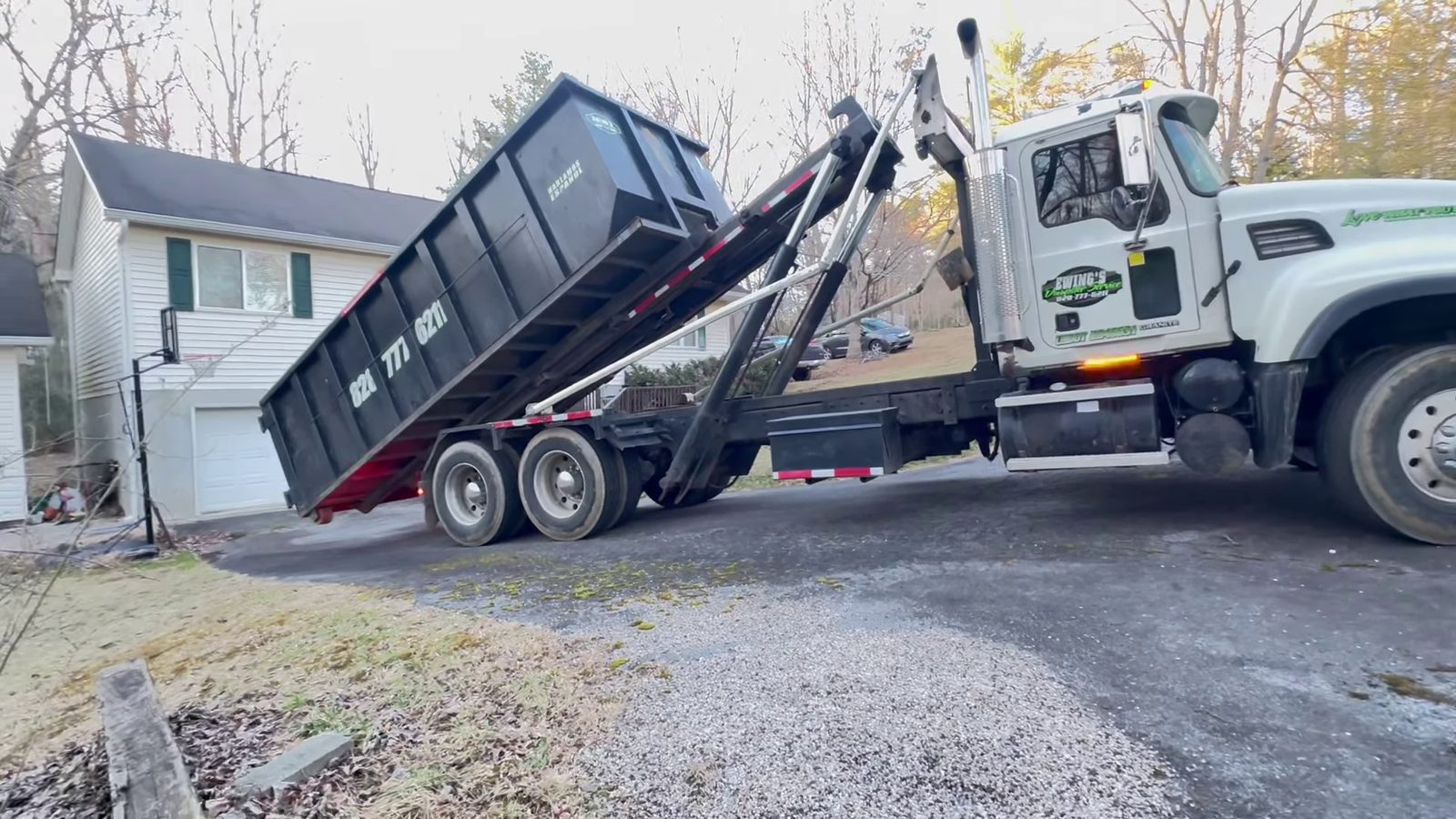
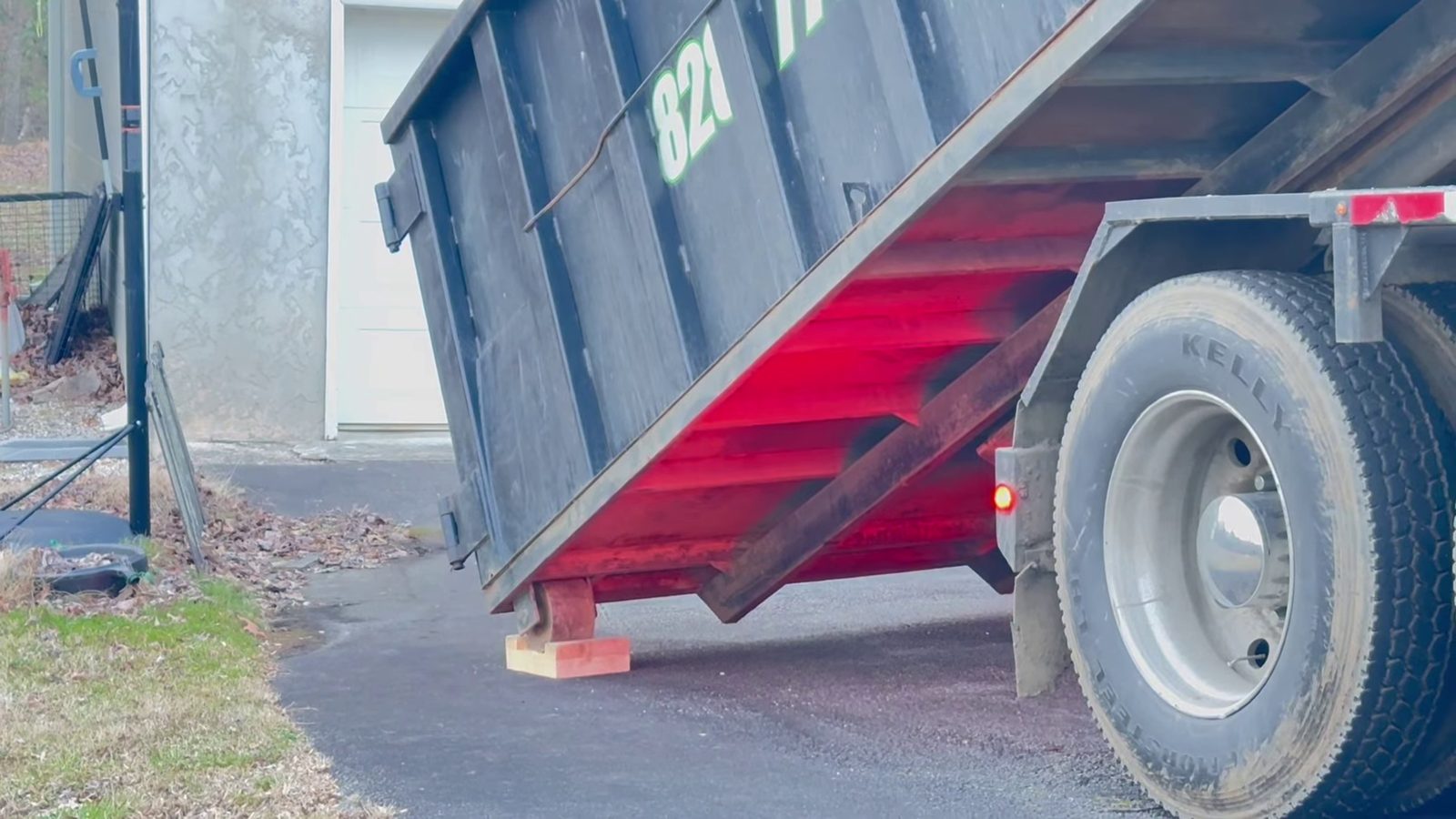
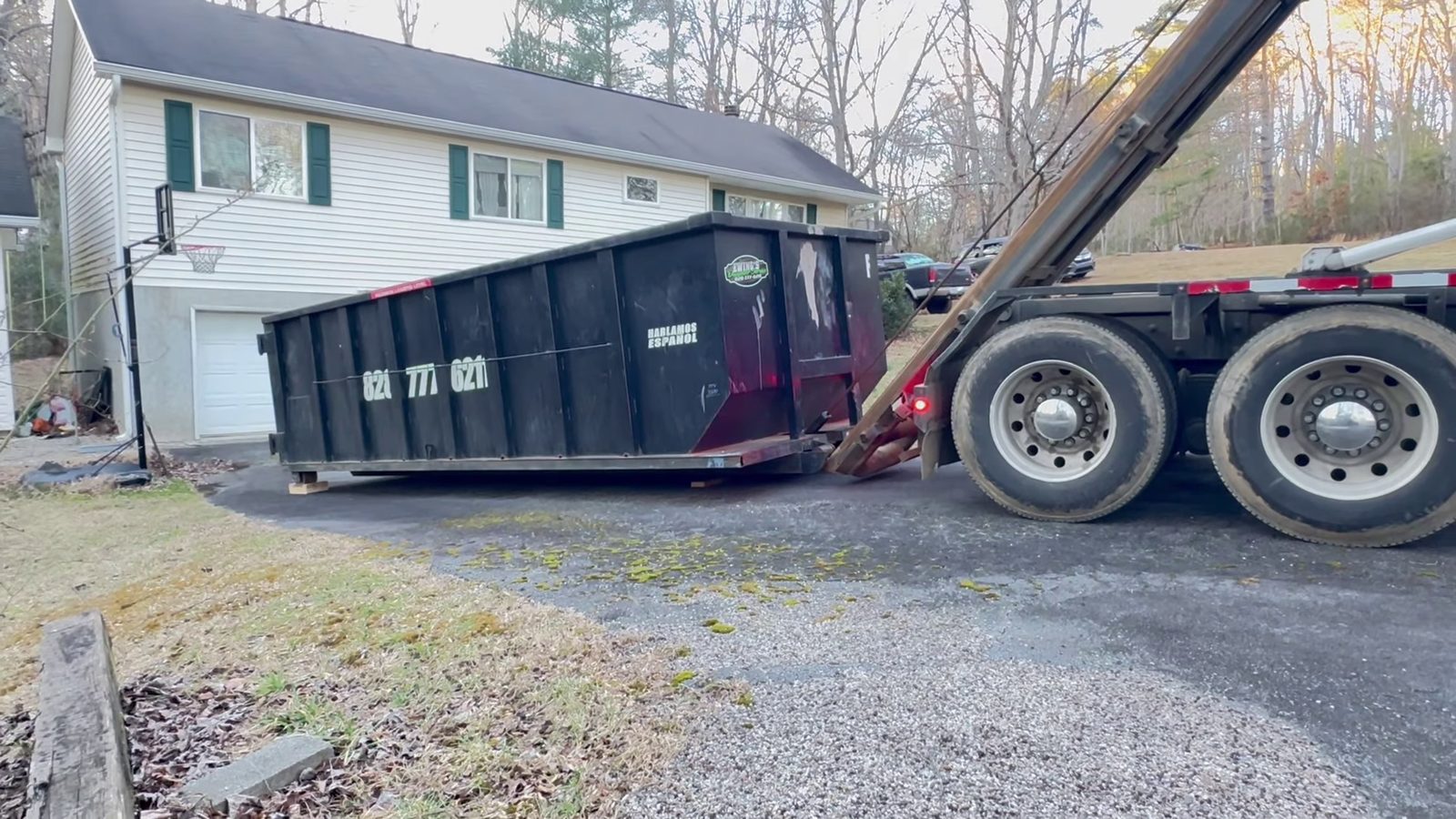
Buncombe County's terrain introduces a second constraint. Delivery trucks need a reasonably flat pad and enough clearance to position and release the bin. Steep driveways, tight turnarounds, and terraced lots narrow the placement options on many Asheville properties before a cubic yard is calculated. Getting the size right the first time is not just a budget decision but a scheduling one: a bin that overfills cannot legally transport to the landfill, and arranging a second haul on a hillside lot is harder to fit than it sounds.
After 19 federal disaster declarations spanning 1973-2026, storm-cleanup hauls are a recurring category in this county: damaged roofing, waterlogged insulation, compromised flooring. Those loads pack denser than general junk. If your project follows a significant weather event, plan to size up.
Matching the bin to the job
The four sizes Ewing's delivers cover the full range of residential and light commercial work in Buncombe County. The table below maps common job types to the right bin, with pricing as of January 2026 (delivery and pickup included):
| Job type | Recommended size | Delivered price |
|---|---|---|
| Single-room cleanout, light junk haul, small attic or garage clear-out | 10 yard | $199 |
| Multi-room cleanout, partial renovation, single-trade gut | 15 yard | $280 |
| Kitchen or bathroom renovation, deck removal, moderate mixed-trade rehab | 17 yard | $325 |
| Full gut rehab, roofing replacement, exterior cladding, large construction haul | 30 yard | $480 |
The 15-yard splits the difference between a light single-trade job and a true mid-size renovation: it is the right call when a 10-yard feels obviously too tight but a 17-yard seems excessive for the scope. For multi-room or mixed-trade work, the 17-yard is the most common fit in this market. Kitchens and bathrooms together, with their cabinets, tile, fixtures, flooring, and drywall, typically max out a 17 when the work is thorough. Full gut rehabs, roofing replacements, and jobs touching exterior cladding belong in a 30-yard, where weight capacity matters as much as cubic yardage.
What the bin accepts and what it doesn't
Most renovation debris is accepted without restriction: drywall, framing lumber, roofing shingles, flooring, cabinets, furniture, standard appliances, cardboard, and general household goods. Mixed loads are common and present no problem. The prohibited list is narrow; a typical Buncombe County renovation cleanout has no excluded materials at all.
The loads that cannot go in are defined by NC state regulations and federal solid waste law, not by Ewing's preference. The NC DEQ Solid Waste Section maintains the list of materials that Buncombe County's transfer facilities are not permitted to receive, and those exclusions follow the bin:
- Household hazardous waste: paints, solvents, motor oil, pesticides, and pool chemicals. The EPA's household hazardous waste guidance outlines proper disposal routes. Buncombe County holds periodic collection events for these materials.
- Appliances with refrigerant: refrigerators, air conditioners, and dehumidifiers. Freon must be recovered by a certified technician before disposal.
- Tires, batteries, fluorescent bulbs, and electronics.
- Medical or biohazardous waste.
- Any liquid waste.
Concrete, brick, dirt, and asphalt can go in the bin in moderate quantities, but they affect transportation weight limits. Dense loads that run overweight cannot leave the site legally. If your project involves significant masonry demolition, excavated soil, or concrete flatwork, mention it when you book so the right weight threshold can be confirmed.
For projects generating substantial construction debris, the EPA's sustainable management guidance for construction and demolition materials outlines what can be diverted or recycled. Some items have local recovery options in the Asheville area that reduce what ultimately needs to go in the bin.
Street placement and right-of-way permits
Placing a dumpster on private property (a driveway, a yard pad, an off-street surface) requires no permit. Placing it on a public street or sidewalk does, and the governing authority depends on whose road it is:
| Placement location | Permit authority | Notes |
|---|---|---|
| Private driveway or lot | No permit required | Confirm access and a level drop pad before delivery |
| Street within Asheville city limits | City of Asheville encroachment permit | Required for temporary containers in the right-of-way |
| State-maintained road, unincorporated Buncombe County | NCDOT ROW encroachment permit | Applies to many county roads outside city limits |
Residential streets in older Asheville neighborhoods present a particularly mixed jurisdiction picture: city-maintained roads, county roads, and NCDOT-maintained routes can run within a few blocks of each other, and appearance alone does not distinguish them. A bin placed in a state road right-of-way without an NCDOT permit is subject to citation and removal. The permit process for temporary placement is generally straightforward and low-cost; it becomes a problem only when it surfaces mid-job as a citation rather than a checkbox.
Steep driveways also introduce a physical placement question beyond the permit. The bin must sit level enough to load safely and to transport without the contents shifting. If the approach grade is a concern, a curbside placement on a flatter street section is sometimes the more practical answer, which then brings the permit question back into play. It is worth asking before the truck arrives, not after.
The two sizing mistakes that cost the most
Ordering too small is the more common error. A bin that fills before the job is done forces a mid-project pickup-and-swap: two delivery fees, a possible project pause while the exchange is scheduled. On a hillside Asheville lot where truck access requires coordination, that second trip is harder to slot than the first. When two sizes are plausible, the larger one almost always costs less over the life of the job than a swap does. Review what the 10-yard reliably handles before committing it to a job that might run long.
Ordering too large is less common but real. The 30-yard is a substantial box that needs a flat, unobstructed surface for safe placement and pickup. Some Asheville driveways dead-end into a slope or a retaining wall before a 20-foot container can sit level and clear the swing of the delivery truck. The 30-yard rental page includes placement guidance; if the driveway is a question mark, raise it before booking rather than at delivery.
For most renovation projects in Buncombe County, the 17-yard is the right starting point: it handles the jobs most homeowners are running, and the rental page details capacity in concrete terms. Use the size table above, compare it honestly against your scope, and go up a size if any part of the project is uncertain.