Mountain lots change the conversation before delivery
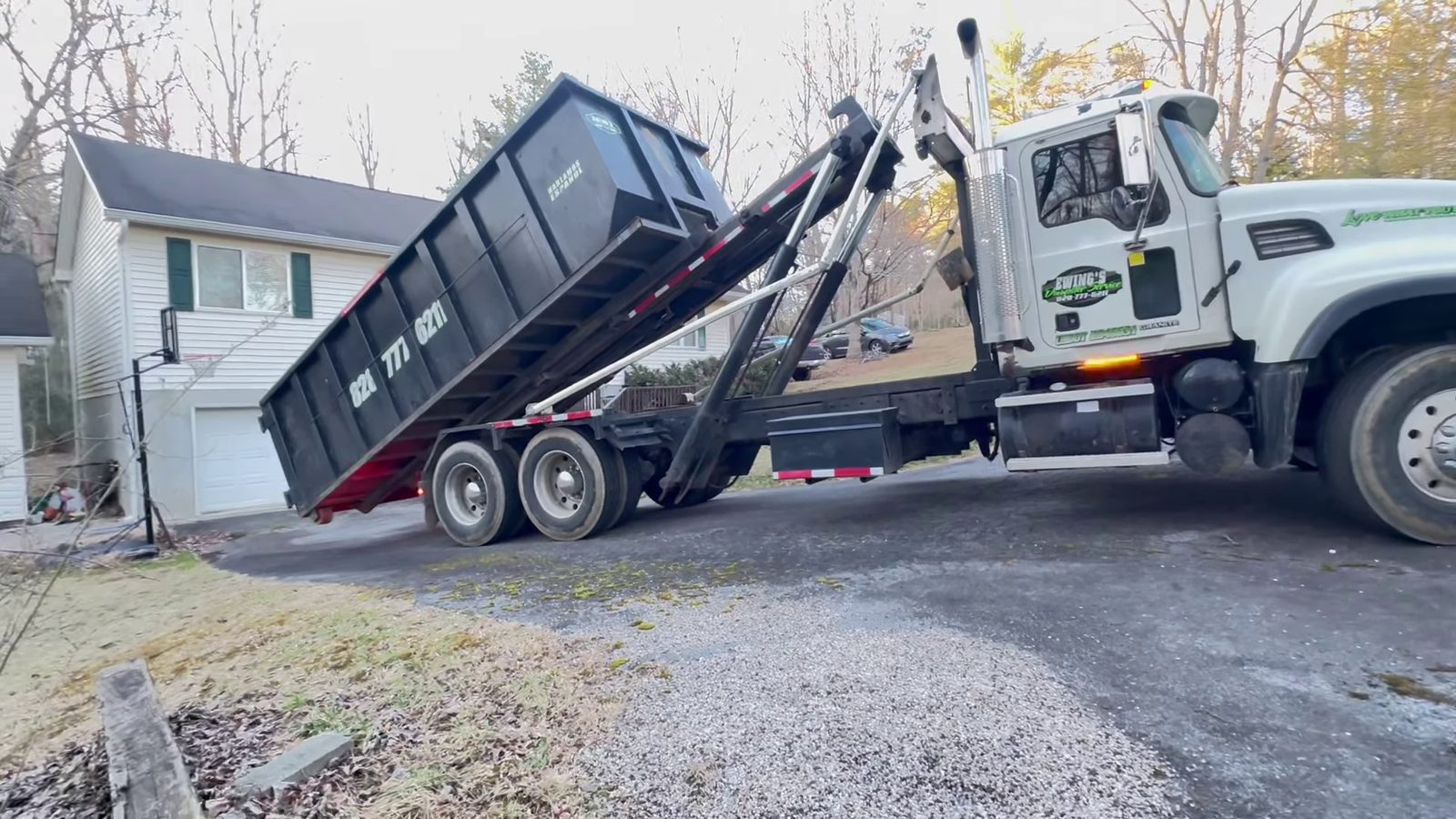
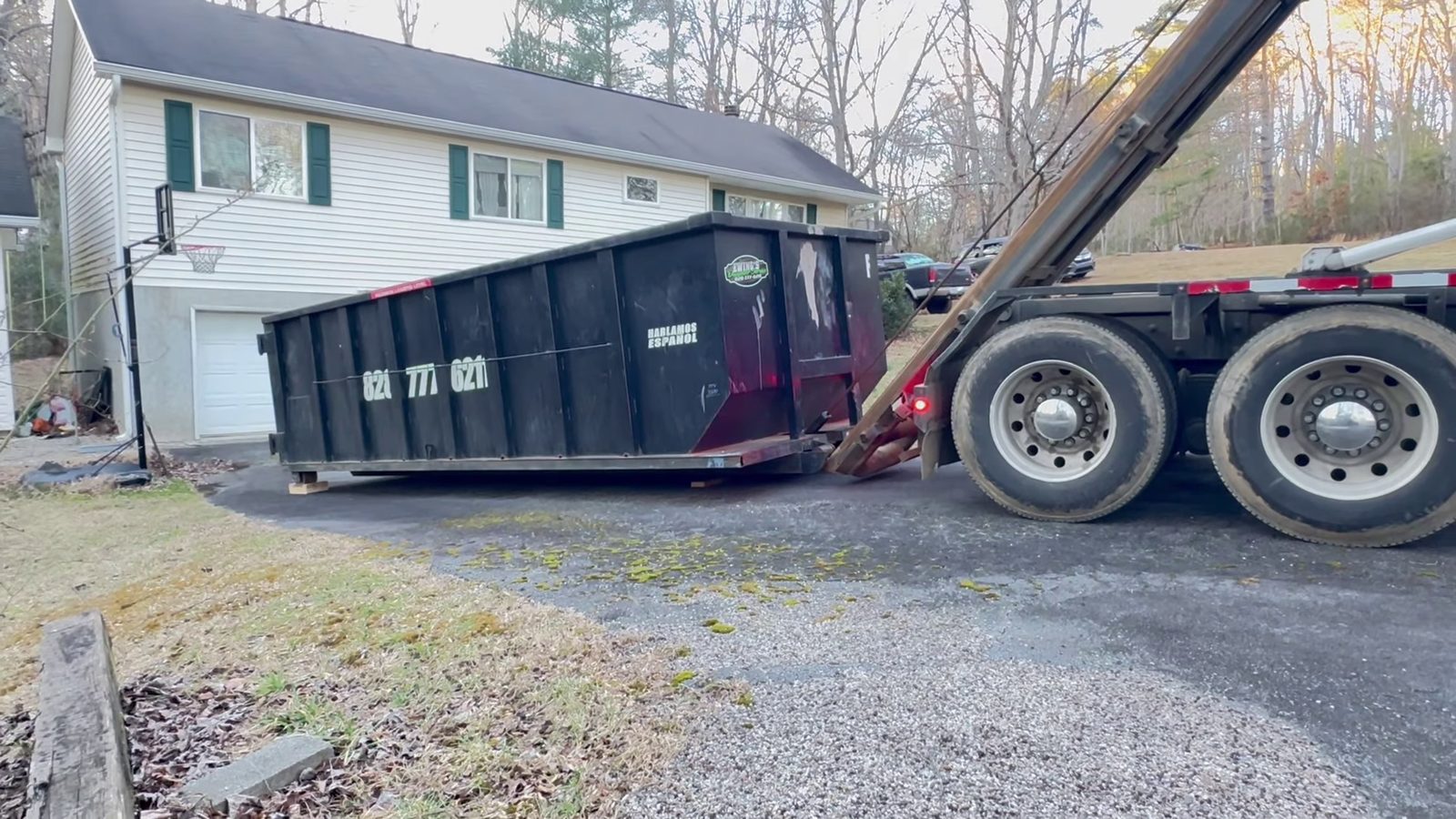
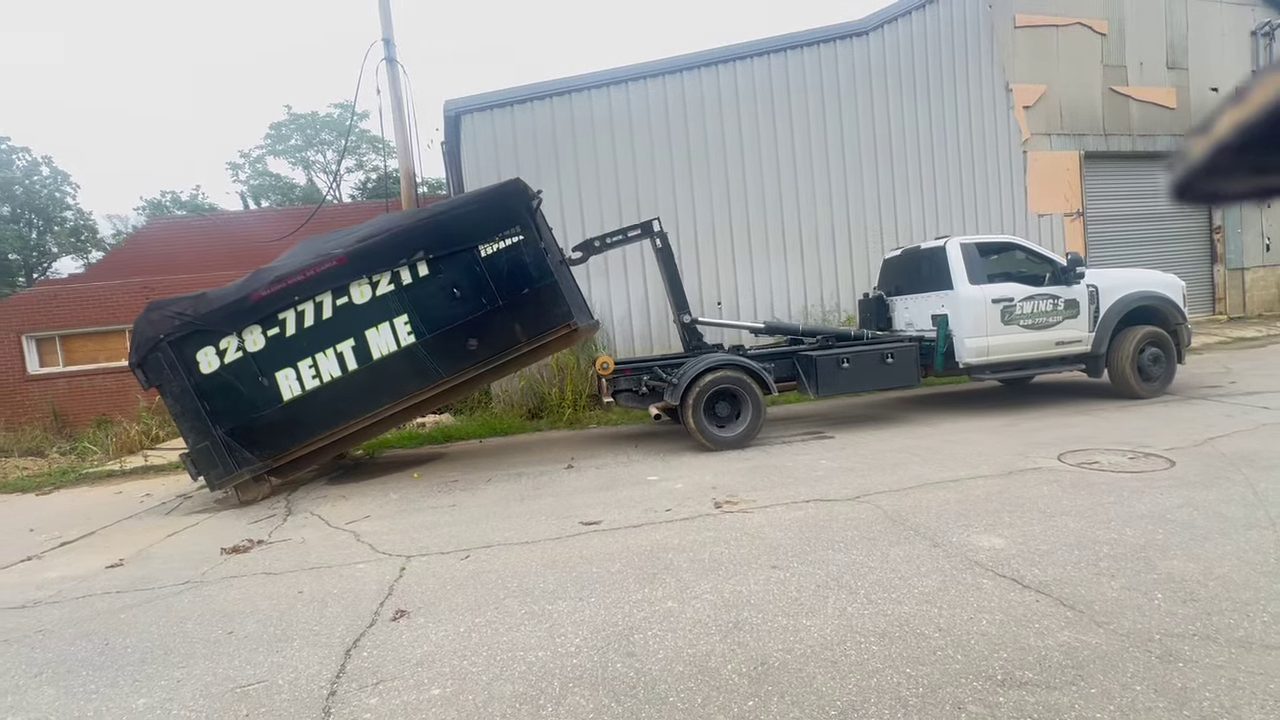
Swannanoa Valley properties and the ridge neighborhoods of East and West Asheville share a characteristic that generic dumpster guides never address: the approach to the placement spot matters as much as the container size. A 15-yard roll-off is roughly 12 feet long and needs a delivery truck with a hydraulic lift arm to set it cleanly. On a switchback driveway off a hillside road, or along a narrow side-street in one of Asheville's historic neighborhoods, that swing radius is the first thing to settle.
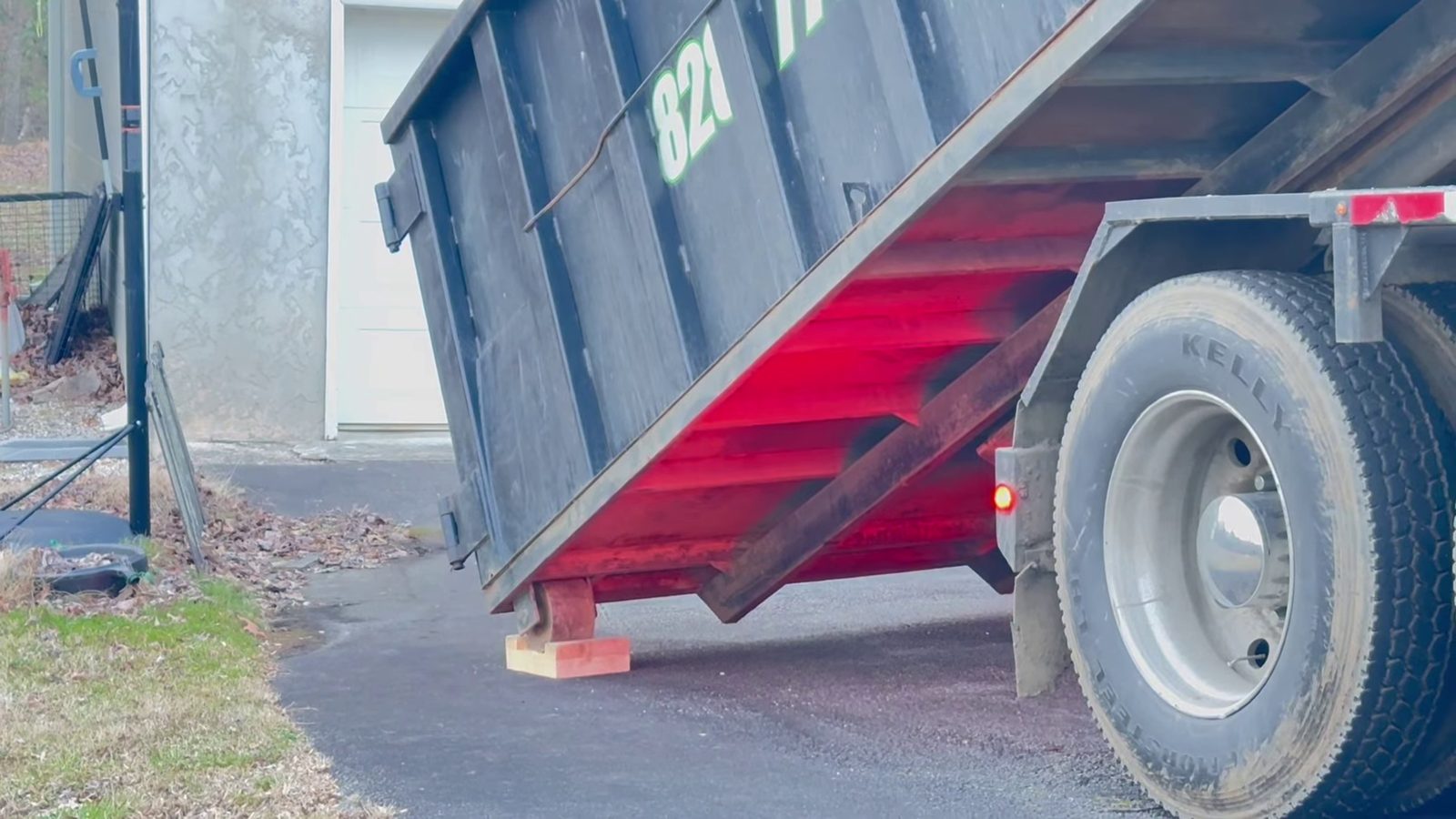
Ewing's runs Buncombe County routes regularly, which means steep lots and tight approaches are routine work. Before booking, walk your driveway and note any overhead obstructions (low limbs, utility lines, overhead doors) and check whether the pad where the container will sit is reasonably level and firm. Soft lawn edges on sloped lots and loose gravel can shift under a loaded box. That conversation happens at booking, not after the truck arrives.
The 15-yard size threads a useful needle for many Asheville-area projects: large enough to handle a full bathroom gut or a deck teardown, compact enough to reach driveways that would turn away a larger roll-off. Homeowners working on the pre-1980 Craftsman and bungalow housing stock common from West Asheville to Swannanoa — plaster removal, hardwood subfloor replacement, cast-iron fixture swap-outs — frequently land here. For smaller scope, the 10-yard dumpster rental is a natural fit. Larger demolitions belong in the 17-yard dumpster rental.
Matching the container to the job
A 15-yard container holds roughly six to seven standard pickup truck loads of debris, right for most single-room renovations, a deck demolition, or a full household cleanout. Common fits include:
- Kitchen or bathroom remodel: cabinets, flooring, drywall, fixtures
- Deck or screened porch teardown
- Whole-house furniture and household goods cleanout
- Roofing tear-off on a smaller footprint (see weight note below)
Weight is a separate variable from volume, and it matters more in mountain renovation work than most guides acknowledge. The fieldstone foundations, brick chimneys, and thick plaster walls common in older Asheville construction add pounds quickly. Asphalt shingles are deceptively heavy; a full layer on a modest roof can approach the 1-ton base allowance on its own. The EPA's guidance on managing construction and demolition materials outlines what can be diverted to recyclers — separating out clean metal, wood, and drywall is one practical way to manage total weight on a heavy job.
What you pay and what shifts the total
Ewing's posted rate for a 15-yard dumpster is $280, which covers delivery, pickup, 1 ton of debris, and up to 7 days on-site, depending on location within the service area. Most residential projects in Buncombe County fit within that base rate. The variable is weight: jobs with heavy debris categories can exceed the included ton before the box is visually full.
| Job type | Typical debris weight | Expected total |
|---|---|---|
| Bathroom remodel (tile, drywall, fixtures) | Under 1 ton | $280 base |
| Kitchen gut (cabinets, flooring, countertops) | Under 1 ton | $280 base |
| Whole-house cleanout (furniture, household goods) | Under 1 ton | $280 base |
| Deck demolition (lumber, hardware) | Near 1 ton | $280 base |
| Roofing tear-off (asphalt shingles) | May approach or exceed 1 ton | $280 + per-ton overage |
| Stone, brick, or masonry debris | Likely exceeds 1 ton | $280 + per-ton overage |
Buncombe County has seen 19 federal disaster declarations across 1973-2026, many tied to flooding and storm events. After those events, demand for debris containers spikes and lead times can stretch — booking ahead during cleanup seasons is worth factoring in. The dumpster rental cost page covers how overages are calculated and what factors affect total job cost.
What cannot go in the box
A roll-off container handles general renovation and cleanout debris, but not everything. Certain categories are prohibited under state rules and federal solid waste law regardless of container size.
- Household hazardous waste — paints (other than dried latex), solvents, pesticides, motor oil, and batteries. The EPA's household hazardous waste guidance covers correct disposal routes for these materials.
- Electronics — televisions, computers, monitors
- Appliances containing refrigerants — refrigerators, window AC units, dehumidifiers
- Tires
- Wet concrete, large quantities of fill dirt, or clean soil
- Asbestos-containing materials — requires separate licensed disposal
Asbestos deserves particular attention in Buncombe County renovation work. Homes built before 1980 in Swannanoa, West Asheville, and East Asheville may contain asbestos in floor tile adhesive, pipe insulation, or textured ceiling coatings. A roll-off is not the right container for abatement waste; that material stream requires a licensed contractor and a separate disposal chain. The NC DEQ Solid Waste Section maintains the current list of what North Carolina landfills cannot accept — a useful reference before any renovation that may surface legacy materials in an older home.
Permits, right-of-way, and placement on public roads
Placing a dumpster on private property — a driveway or yard — generally does not require a permit in Buncombe County. Placing one on a public road, in a parking lane, or partly in a right-of-way is a different question.
The NC Department of Transportation oversees encroachment permits for state-maintained roads. For placements within Asheville's city limits, the City of Asheville is the starting point to confirm whether a right-of-way permit applies. Street-side placements come up most often in the denser blocks of East and West Asheville and in Swannanoa neighborhoods where off-street access is limited or driveways are set far back from the curb. The practical rule: if the container will occupy any part of a paved public roadway, sidewalk, or parking lane, confirm permit requirements before booking. A container placed without a required permit creates liability for the property owner. Settling placement specifics at booking time means the driver knows exactly where to set the box and there are no surprises on delivery day.