Why placement — not the rental itself — is Asheville's permit trigger
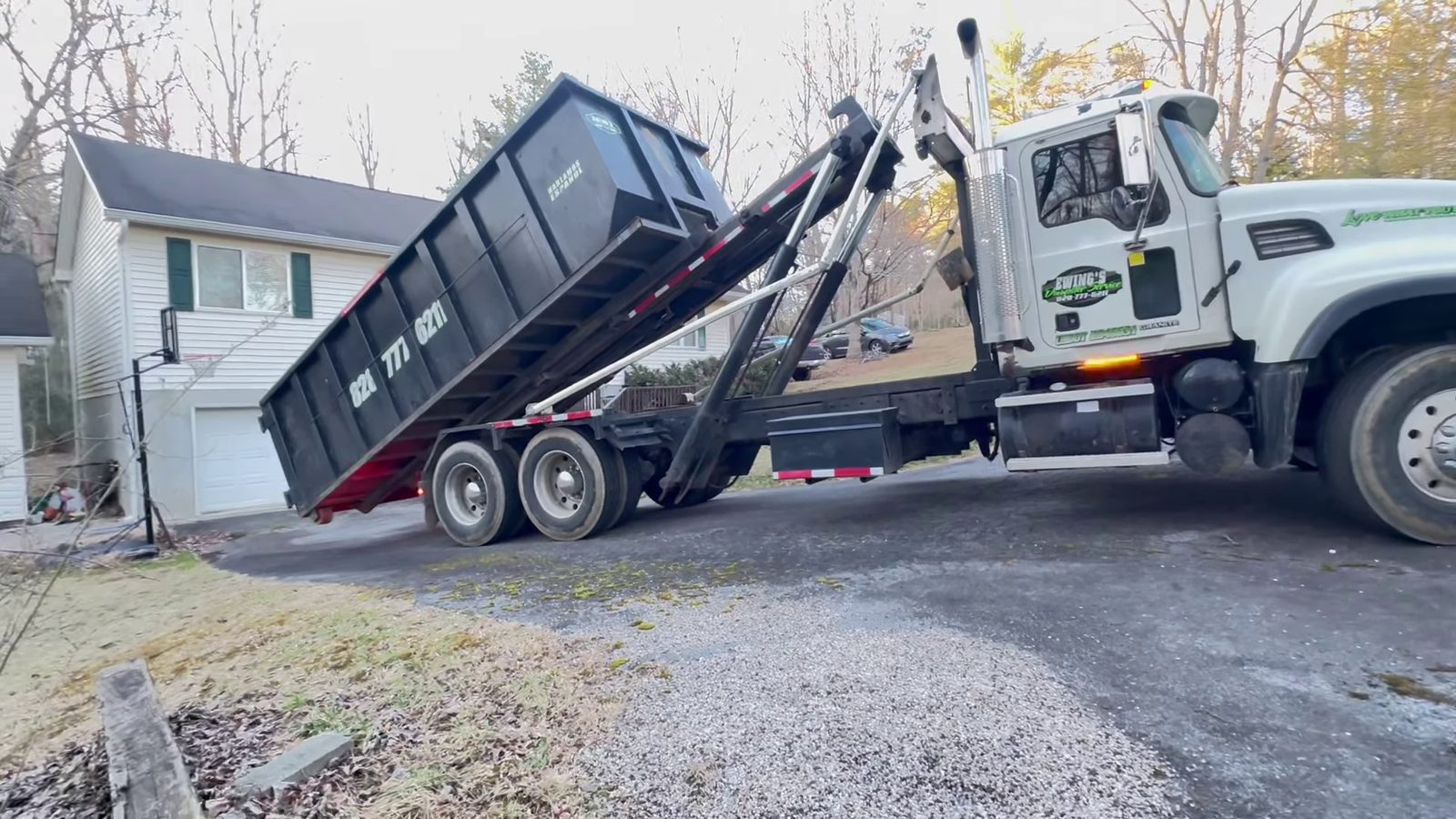
Buncombe County climbs from river flats to Blue Ridge ridgelines within a few miles, and that elevation change shapes the layout of every older Asheville neighborhood. Montford, West Asheville, Kenilworth, the North End — these are grid-street neighborhoods built on slopes where a driveway can pitch steeply, curve around a retaining wall, or end in a space too tight for a 22-foot roll-off truck to back into. When a driveway is inaccessible, the dumpster lands in the curb lane. That one decision — property versus street — is what determines whether a permit is required.
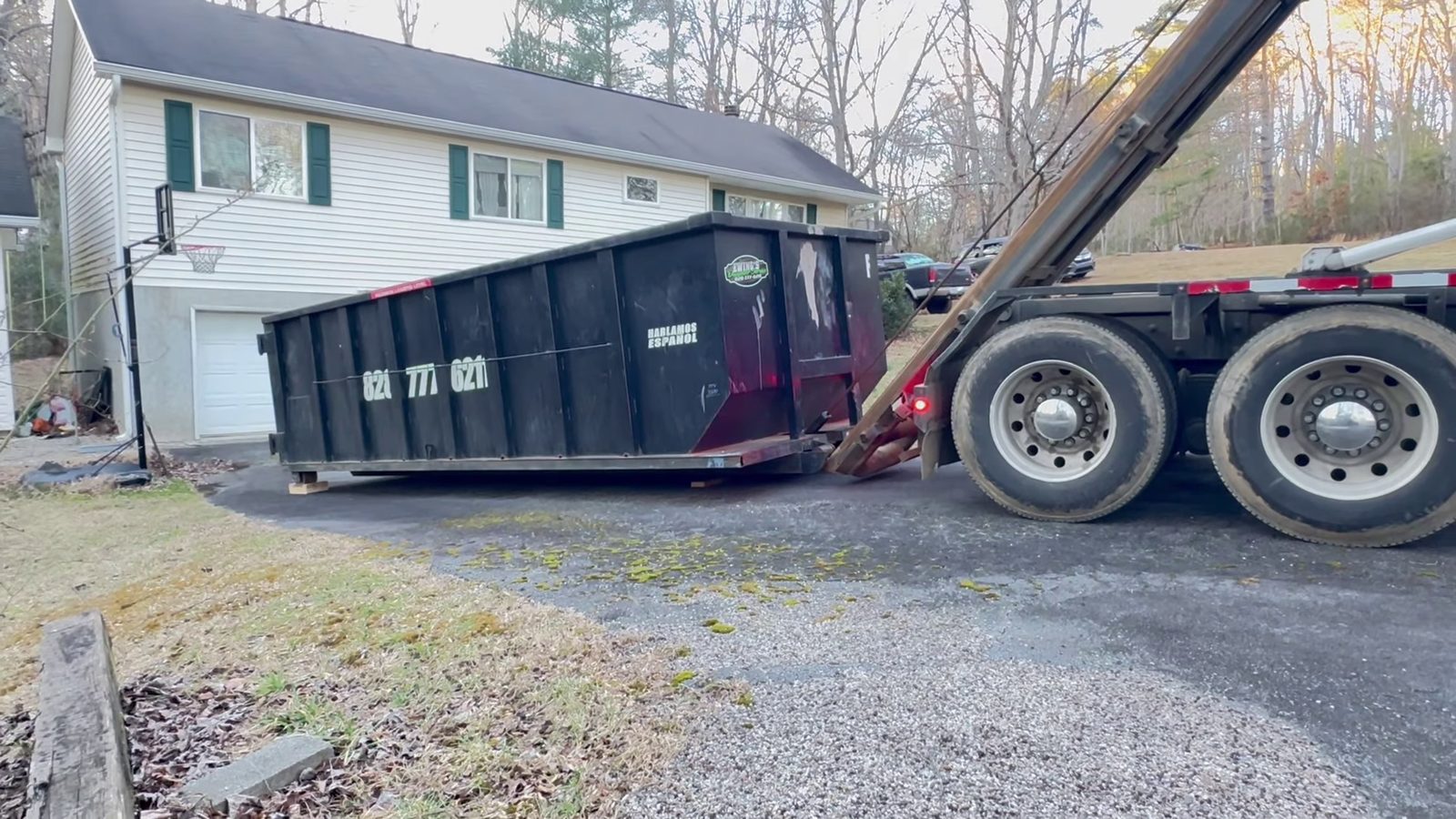
Asheville also runs one of the most active renovation economies in western North Carolina. Gut rehabs, roof tearoffs, full-kitchen demo projects, and landlord turnovers that generate a dumpster's worth of debris happen across the city at a consistent pace, and many of those sites sit in dense, walkable neighborhoods where "put it in the driveway" is not a simple option. If your site has a grade or access issue, see options for steep or narrow driveways before assuming the street is the only landing spot, and what driveway placement involves if the approach looks workable. Getting the placement right usually saves both time and paperwork.
The permit matrix: when you need one and when you don't
North Carolina has no single statewide dumpster permit law. The rules come from two layers: the city, for city-maintained streets and right-of-way, and NC Department of Transportation for state-maintained roads. Most streets inside Asheville city limits are city-maintained, but many roads in unincorporated Buncombe County fall under NCDOT jurisdiction. If you are unsure which applies to your address, your rental company should know — or the city's public works line can confirm before you book.
| Placement | Permit Required? |
|---|---|
| Dumpster fully on private property (driveway, parking lot, side yard) | Generally no |
| Dumpster in curb lane or on a city-maintained street within Asheville city limits | Yes — City of Asheville ROW use permit required |
| Dumpster on shoulder of NCDOT-maintained road | Yes — NCDOT encroachment permit via ncdot.gov |
| Commercial project in a downtown or high-pedestrian corridor | Likely yes; may also require zoning or development services sign-off |
| Any placement blocking a fire lane, hydrant, or ADA access point | Prohibited regardless of permit status |
A rental company doing regular work in Buncombe County knows these rules and can tell you in a minute whether your address triggers a permit. For what a standard rental includes and what placement options exist by project type, see roll-off dumpster rental.
Getting the permit: city streets and state roads
For a city street in Asheville, the permit process runs through the City of Asheville. The application typically requires the placement address, the dumpster dimensions, the planned rental dates, and a brief project description. The city sets the fee; ask when you apply.
For a state-maintained road, the permit is an encroachment permit through NC Department of Transportation. The NCDOT process was designed primarily for contractor corridor work, but individual homeowner applications are accepted. In practice, if your placement is on a city street, the city path is significantly faster for a one-time residential rental.
Build at least a few business days between application and your planned delivery date into the project schedule. Permit offices do not process same-day, and delivery crews cannot legally set a container in the ROW without documentation. Some rental companies handle permit applications as part of their service; others expect you to manage it. Clarify this at booking and confirm in writing — delivery day is not the time to discover each party thought the other handled it. The permit is tied to the address and the date range, so a schedule change may require an amendment.
What goes in and what NC won't let you throw away
The ROW permit governs where the container sits. What goes inside it is a separate regulatory question. The NC DEQ Solid Waste Section prohibits certain materials from entering the standard municipal solid waste stream, and those restrictions apply to everything that exits your dumpster at a licensed disposal facility. Common exclusions:
- Paint, solvents, pesticides, and pool chemicals — governed by EPA household hazardous waste rules
- Tires, above a small homeowner threshold
- Electronics and fluorescent bulbs (e-waste rules apply statewide)
- Liquids of any kind
- Medical or biohazardous waste
- Asbestos-containing materials, which require licensed abatement and a separate disposal path
For renovation and demo projects — the most common dumpster use in an older city like Asheville — the EPA's guidance on construction and demolition materials outlines what qualifies as standard C&D waste. Pre-1980s Asheville homes may contain lead paint or asbestos in materials being removed; those require a separate disposal plan, not a standard roll-off. Your rental company should walk through exclusions at booking, but the legal responsibility for what goes into the bin rests with the person who loaded it.
What skipping the permit actually costs
Three problems surface when a street-placed dumpster lacks a permit. First, the city can issue a notice of violation and require immediate removal at your cost — potentially before the project is finished. Fines for unpermitted right-of-way use can accrue by the day; the administrative disruption alone is worth more than the permit fee.
Second, liability. A dumpster in a public street without documentation is an unlicensed obstruction. If a vehicle strikes it after dark, the question of who bears responsibility becomes complicated quickly. A permitted placement puts a city ROW record behind the placement; an unpermitted one leaves the liability chain ambiguous, and standard homeowner's insurance may not cover incidents involving an unpermitted structure in the roadway.
Third, neighbor and contractor friction. Asheville's dense older neighborhoods are close enough that an unexpected container in the street draws attention. A permit does not make neighbors enthusiastic, but it provides a record for the city to reference when they respond to a complaint — and it gives your contractor clean documentation if the project is inspected.
Buncombe County has accumulated 19 federal disaster declarations over 1973-2026, and storm-driven debris cleanouts have been among the highest-demand periods for roll-off rentals in the area. During and after major weather events, ROW enforcement is more active, not less — city and county crews are already deployed and containers without permits are visible. Getting the permit in advance removes one variable from an already pressured project timeline.