Mountain homes, heavier loads
West Asheville bungalows and Montford Victorians are being gutted at a steady pace, and remodel debris removal in Buncombe County runs heavier than most homeowners expect. Pre-1960 construction across much of Asheville relied on hard plaster walls that outweigh modern drywall by two to three times. A single 1940s bathroom gut can fill a 10-yard container with tile, cast iron plumbing, plaster lath, and original hardwood before you have touched the second room.
The mountain terrain adds its own wrinkle. Steep driveways common on Asheville's ridge neighborhoods restrict where a container can land, and the narrow roads threading through West Asheville and the neighborhoods north of downtown can limit truck approaches. These are not problems on a Charlotte subdivision job. Here they show up on nearly every call.
A little upfront planning resolves most of it: right container size, right placement, right understanding of what goes in. The sections below work through each piece.
The Buncombe County cost picture
Most Asheville-area remodel projects fit a 10 or 15 yard dumpster, $199 or $280 from Ewing's, depending on volume and material weight. Plaster walls and cast iron fixtures push any job toward the top of its range; light drywall scraps and carpet sit at the bottom. The table below maps common renovation scopes to realistic container sizes and price ranges for this market.
| Renovation scope | Container size | Ewing's price |
|---|---|---|
| Single bathroom gut (tile, vanity, plaster or drywall) | 10-yard | $199 |
| Kitchen teardown (cabinets, countertops, flooring) | 15-yard | $280 |
| One-room flooring and wall replacement | 10-yard | $199 |
| Two- to three-room renovation with fixtures | 15-yard | $280 |
| Multi-room gut or addition teardown | 30-yard | $480 |
Overweight loads cost more. Buncombe County's older housing stock trends heavy, so check weight limits before you load if the project involves plaster, tile, or cast iron. The 15-yard container is the right starting point for most kitchen or multi-bathroom projects in this market.
What goes in and what does not
Standard remodel materials (drywall, lumber, flooring, tile, cabinets, fixtures, insulation) go in a roll-off dumpster without issue. Some renovation byproducts do not, and Asheville's older housing stock introduces a few specific concerns worth knowing before you start loading.
Lead paint is present in a meaningful share of pre-1978 homes across Buncombe County. Painted debris from these homes is not automatically prohibited from a standard dumpster, but large quantities of lead-contaminated material can create problems at the transfer station. The EPA's household hazardous waste guidance explains what qualifies as regulated material and what local collection programs handle separately.
Asbestos is a harder line. Certain floor tile, pipe insulation, and ceiling textures common in mid-century Buncombe County homes may contain asbestos and must be tested and disposed of through licensed abatement channels, not in a rental dumpster. The NC DEQ Solid Waste Section governs what can and cannot enter North Carolina landfills; asbestos and certain construction chemicals appear on the prohibited list. For the rest of the pile, the EPA's construction and demolition materials guidance is a useful reference if you plan to sort recyclable lumber or metal before the container arrives.
Where the dumpster goes on a steep Asheville lot
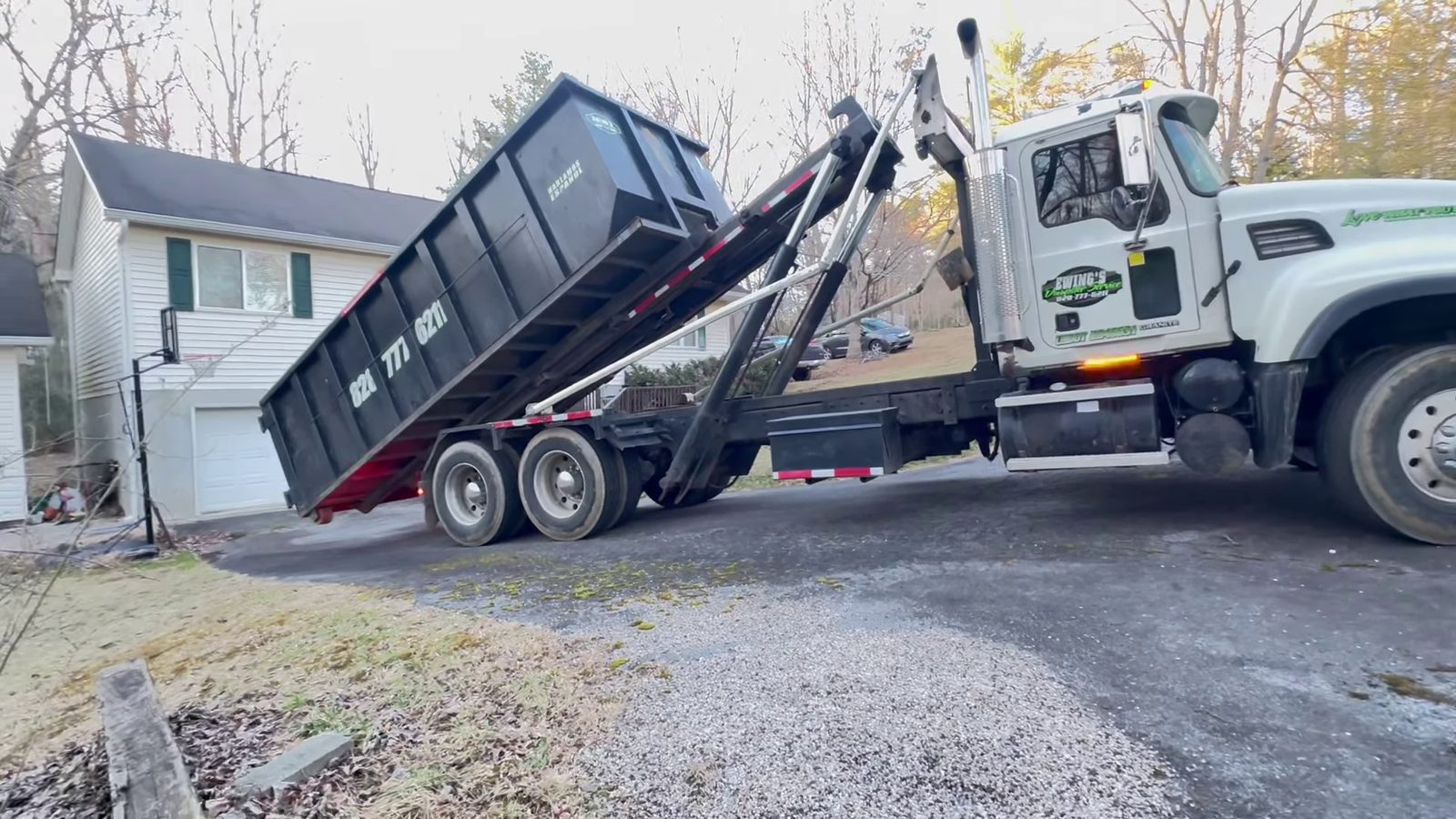
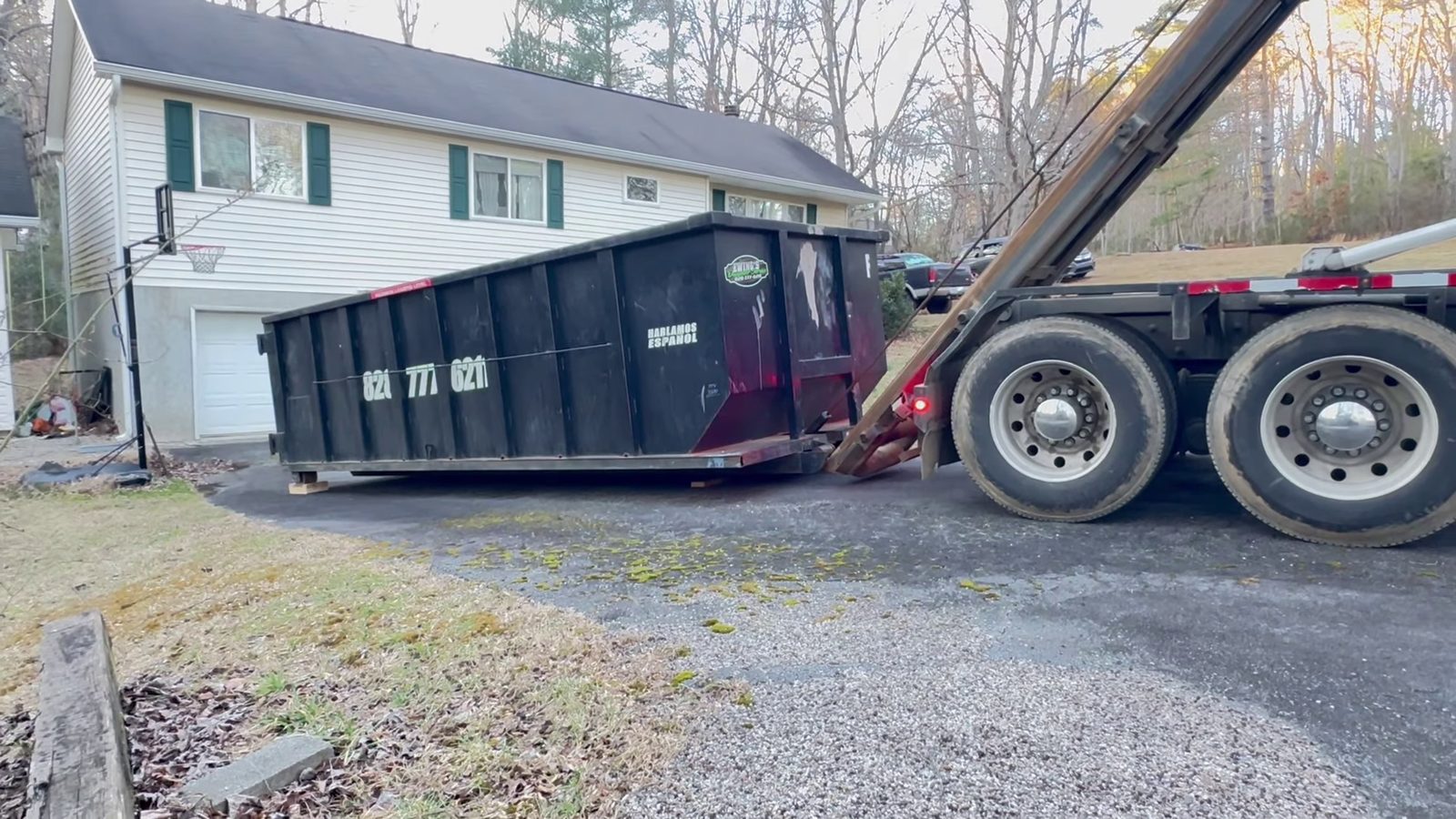
Placement is the question that catches most Asheville homeowners off guard. A flat driveway takes a container easily. The steep, narrow driveways on Kenilworth's hill streets, the ridge roads off Town Mountain, and the tight lots in Montford often do not. When the driveway will not work, the container goes on the street, and that requires a permit.
Containers placed in the city right-of-way fall under City of Asheville guidelines. Containers on state-maintained roads require an encroachment permit from NC DOT. Neither is complicated to obtain, but neither is automatic, and skipping it puts both homeowner and hauler at risk of a citation. We handle permit coordination as part of the drop.
Buncombe County has seen 19 federal disaster declarations over 1973-2026, most of them storm or flood events. Homes that took water damage are common candidates for gut renovations, and storm-damaged driveways or washed-out aprons add one more variable to placement planning. If your lot sustained any flood or storm damage, flag that detail when you book.
Moving the pile out in one trip
The fastest remodel debris removal moves in one container, one pickup. How you load matters: heavy materials like tile and plaster go on the bottom, lighter lumber and drywall on top. Never fill above the container lip; loads that exceed the rail cannot legally travel on Buncombe County roads and get rejected at the transfer station, sending you back for a second trip at added cost.
If the project is still active, a renovation dumpster rental with a scheduled swap keeps the site clear and prevents the pile from spreading across the yard. Mid-project piles that sit more than a week in mountain weather absorb moisture and get heavier, which is another reason Asheville jobs benefit from moving debris on a tighter schedule than drier climates require. For projects with mixed material worth separating before disposal, the EPA's sustainable materials management framework outlines what is worth pulling out before the container goes.