Terrain determines placement before size ever comes up
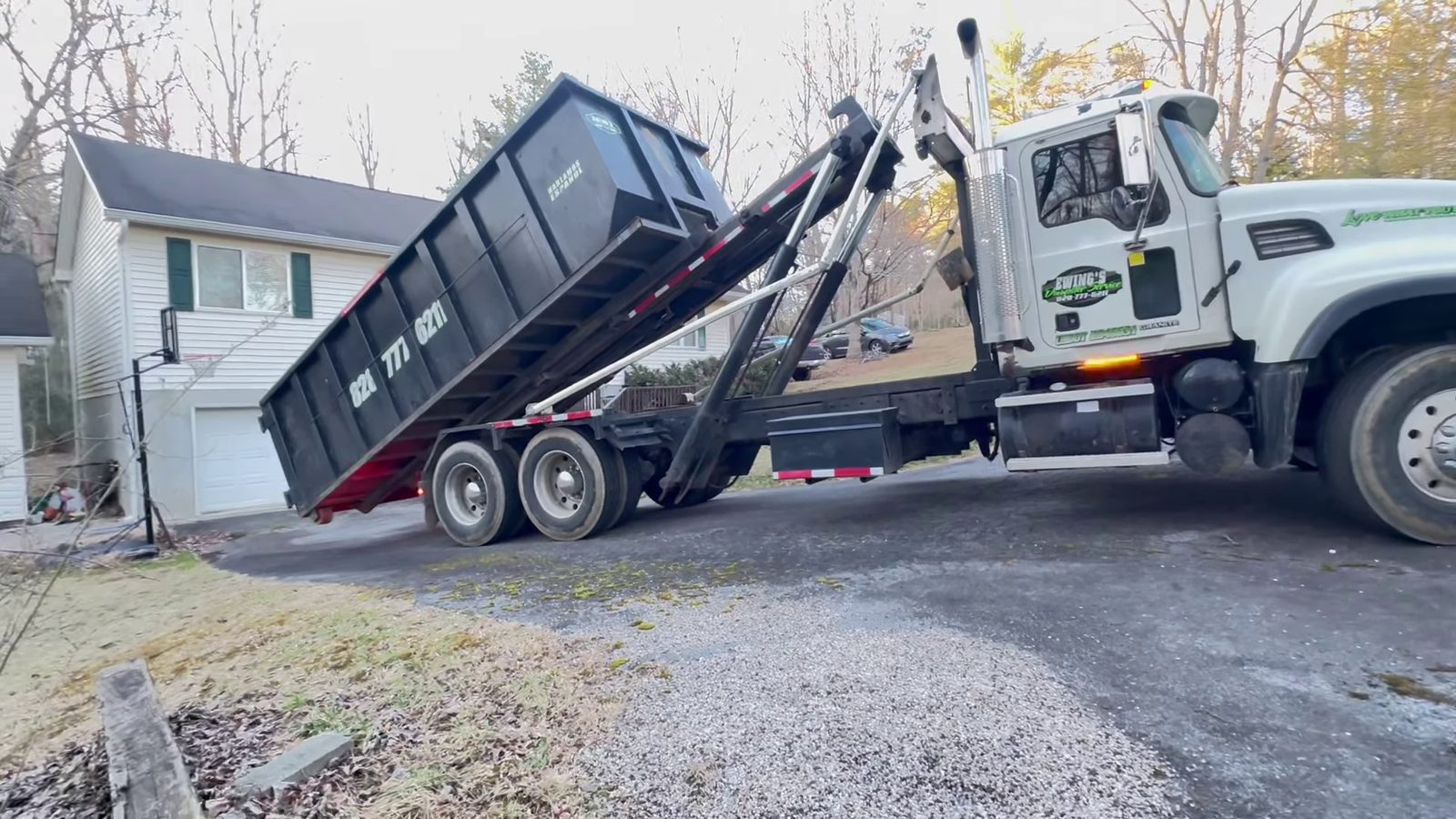
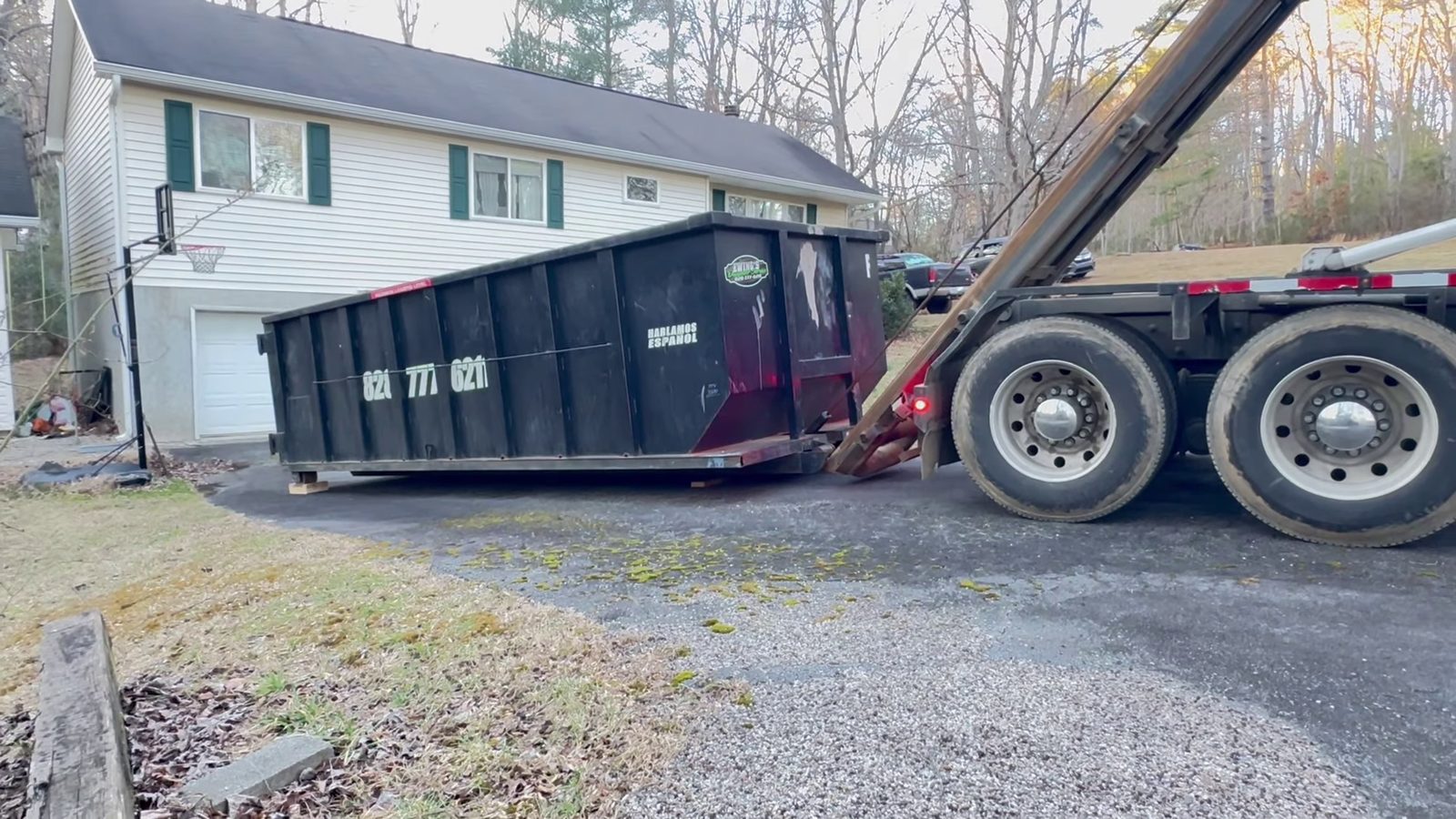
Buncombe County is not an easy place to drop a box. The dense Craftsman bungalow blocks of West Asheville were built decades before driveways were standard; many of them sit directly on street grade with no room for a truck to back in cleanly. Kenilworth's layered hillside streets have grade changes steep enough to challenge any delivery vehicle. The rural hollows running east through Swannanoa toward Black Mountain can put the only practical placement spot thirty feet off the road, on ground that slips in wet weather. These are exactly the neighborhoods that generate the most dumpster work in this county, and also the ones where placement logistics matter most.
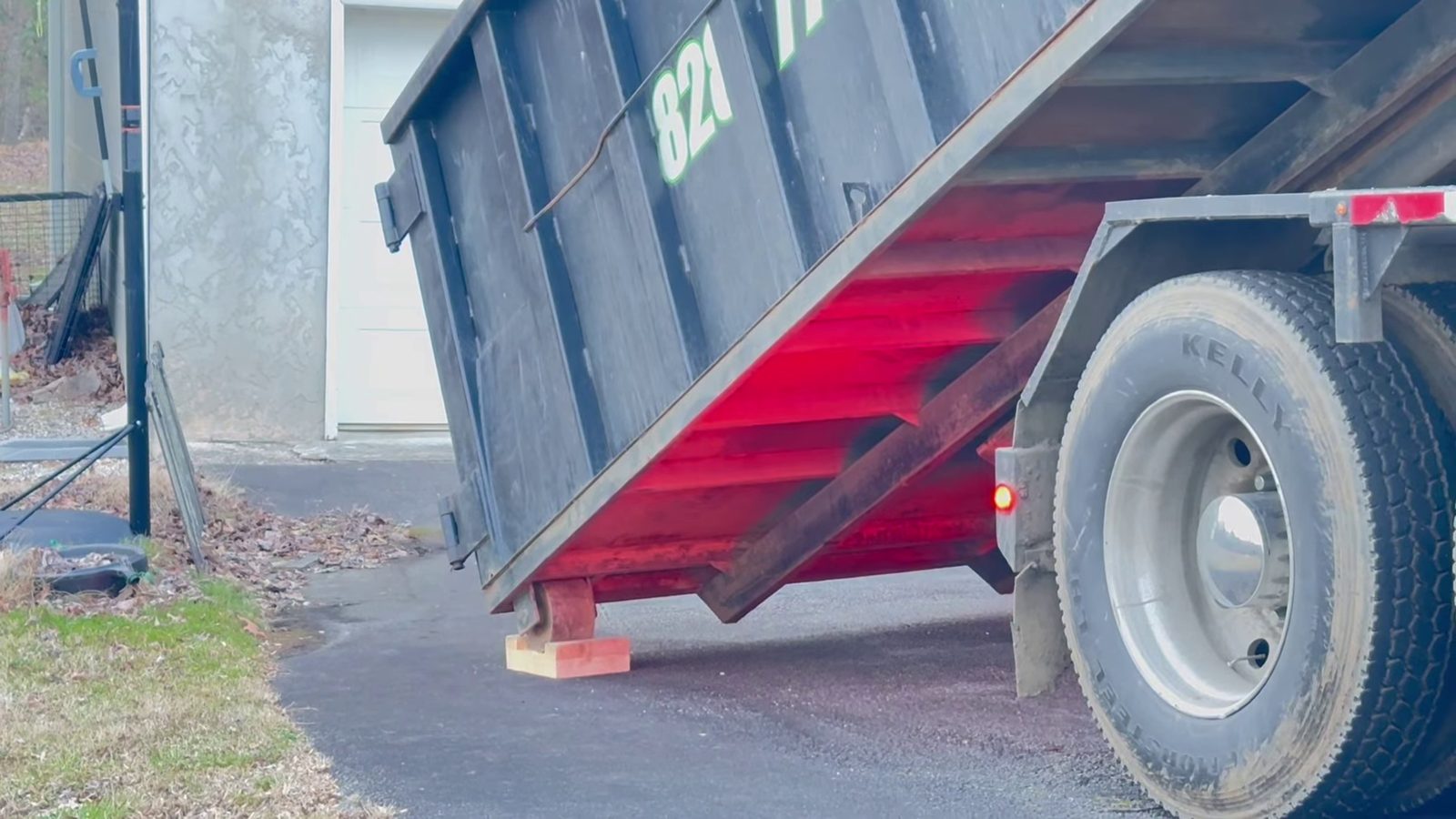
A 30-yard container on a 12-percent-grade driveway behaves differently than the same box on a flat suburban lot. If the driver cannot set it safely, the job stalls and the customer pays for a swap that good preparation would have avoided. Placement is part of the scheduling conversation with Ewing's — not an afterthought resolved when the truck pulls up. When you book, describe your driveway grade, the access width, and whether the road out front is wide enough to stage the truck. Those details travel with every order and determine whether the job runs clean from day one.
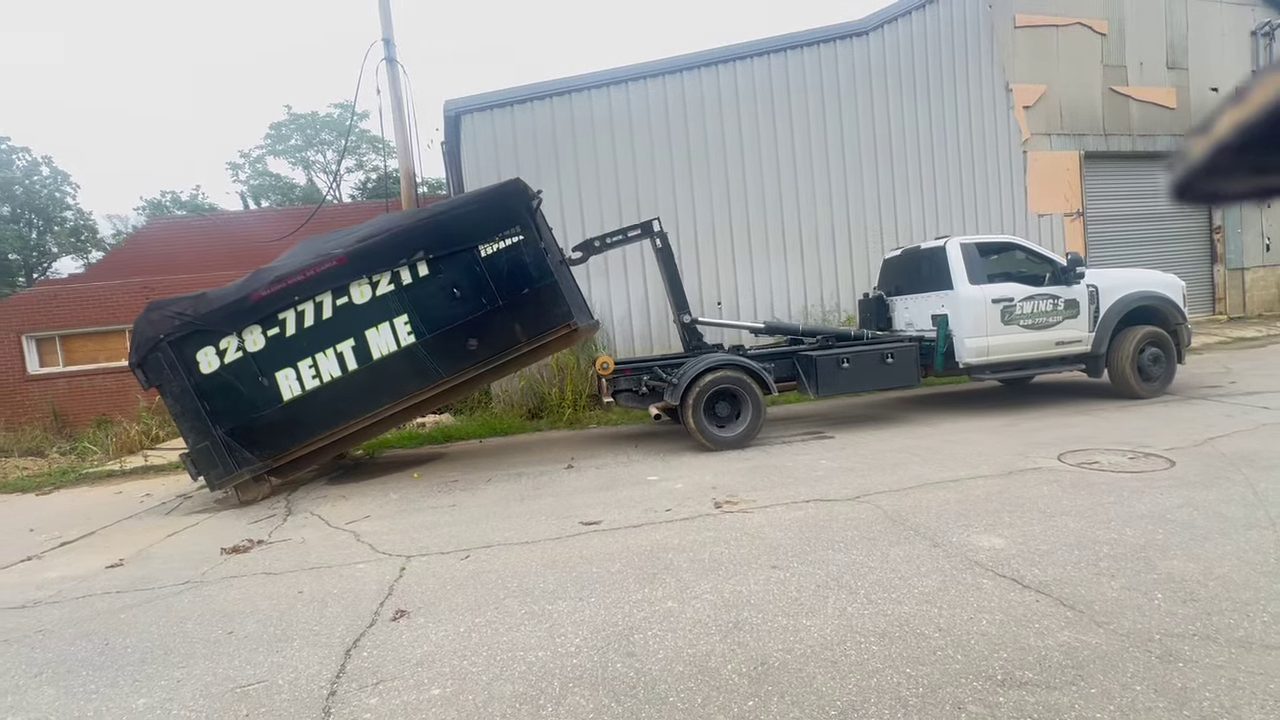
Jobs in Swannanoa and Black Mountain often have more physical space than the dense city core, but longer service distances and unpaved or narrow access roads introduce their own wrinkles. The terrain factor shapes every roll-off dumpster rental across this service area in ways that a provider working the flatlands won't anticipate.
Matching container to project
Getting the size right upfront costs less than swapping a filled bin mid-job. The table below maps common Buncombe County project types to the right container and Ewing's published January 2026 pricing. All prices include delivery and pickup.
| Project type | Container | Price |
|---|---|---|
| Single-room cleanout, small yard debris | 10 yard | $199 |
| Garage, attic, or estate cleanout | 15 yard | $280 |
| Kitchen or bath gut-renovation | 15–17 yard | $280–$325 |
| Roofing removal (up to ~2,000 sq ft) | 17 yard | $325 |
| Full gut renovation or large addition | 30 yard | $480 |
| New construction debris | 30 yard | $480 |
Weight matters as much as volume when debris is dense. A 10-yard bin loaded with asphalt shingles hits its weight limit before it looks full; the same bin loaded with mattresses and furniture has room to spare. The dumpster size guide walks through debris density by material type — the right starting point when you are choosing between a 15 and a 17. Asheville has been in a sustained renovation cycle, with bungalow conversions and investor flips generating steady construction debris; the 15 and 17 yard sizes absorb most of that work. For tight city lots where a larger bin physically will not fit — a real constraint in older grid neighborhoods — the 10-yard container page covers footprint dimensions and weight limits in detail.
What shifts the price past the base rate
Ewing's published rates run $199 for a 10-yard to $480 for a 30-yard, delivery and pickup included. Those are the prices; here is what moves a specific job toward the high end of its size range: weight overages when debris is unusually dense, extended rental periods past the standard window, and placement logistics on difficult terrain. A steep driveway that needs plywood protection to avoid cracking, a street placement that requires safety cones, or an access route that takes extra maneuvering — those are real cost factors in the mountains that wouldn't appear on a flat-market quote.
Buncombe County has accumulated 19 federal disaster declarations over 1973-2026, and storm-season cleanouts — tree debris, saturated insulation, water-damaged drywall after a wet fall — are the jobs most likely to underestimate volume. If you are cleaning out after a major weather event, size up from your first instinct. A second swap costs more than upgrading upfront. The full range of pricing factors, including how extended rental periods are calculated, is on the dumpster rental cost page.
What North Carolina rules keep out of every bin
Roll-off containers in North Carolina cannot accept all waste. The NC DEQ Solid Waste Section maintains the state's prohibited materials list, and the federal Resource Conservation and Recovery Act (RCRA) establishes the hazardous waste framework that applies in every state. The items that come up most often in Buncombe County residential and renovation jobs:
- No hazardous liquids — paint, solvents, motor oil, pesticides, and pool chemicals are prohibited in any container.
- No household hazardous waste — the EPA's HHW program defines what qualifies and identifies community collection options; Buncombe County holds periodic drop-off events for these materials.
- No tires, batteries, or refrigerants — each has a separate regulated recycling pathway.
- No medical waste or asbestos-containing materials — these require licensed handlers and specialized disposal, not a roll-off container.
Construction and demolition debris — lumber, drywall, shingles, concrete rubble — is generally accepted. The EPA's C&D materials guidance outlines recycling pathways for clean wood, masonry, and concrete. If you have a large volume of a single clean material, asking whether a recycler rather than a landfill is the right destination can reduce disposal costs and reduce what ends up in the county waste stream.
Permits and right-of-way rules for street placements
Asheville's older neighborhoods — the flat-lot-free blocks of North Asheville, the narrow grid streets near downtown, and sections of West Asheville without off-street parking — regularly require placing a bin on a public road. That triggers a permit step, and which permit depends on who maintains the road. Any container landing on a state-maintained road or shoulder goes through the NC Department of Transportation's encroachment permit process. For streets maintained by the city rather than the state, the City of Asheville handles right-of-way permitting through a separate process. The two systems are distinct, and which applies depends on the specific road — not every street within city limits is a city-maintained street.
Private driveway placements skip all of that. Where terrain and access allow, staging on private property is simpler, faster, and requires no permit. When you schedule with Ewing's, let us know whether a street placement is likely — that determines whether a permit needs to be in hand before the driver shows up, and it is easier to build that lead time into the order than to hold a job waiting for approval after the truck is dispatched.