Steep lots and tight approaches: what Buncombe County terrain means for a dumpster drop
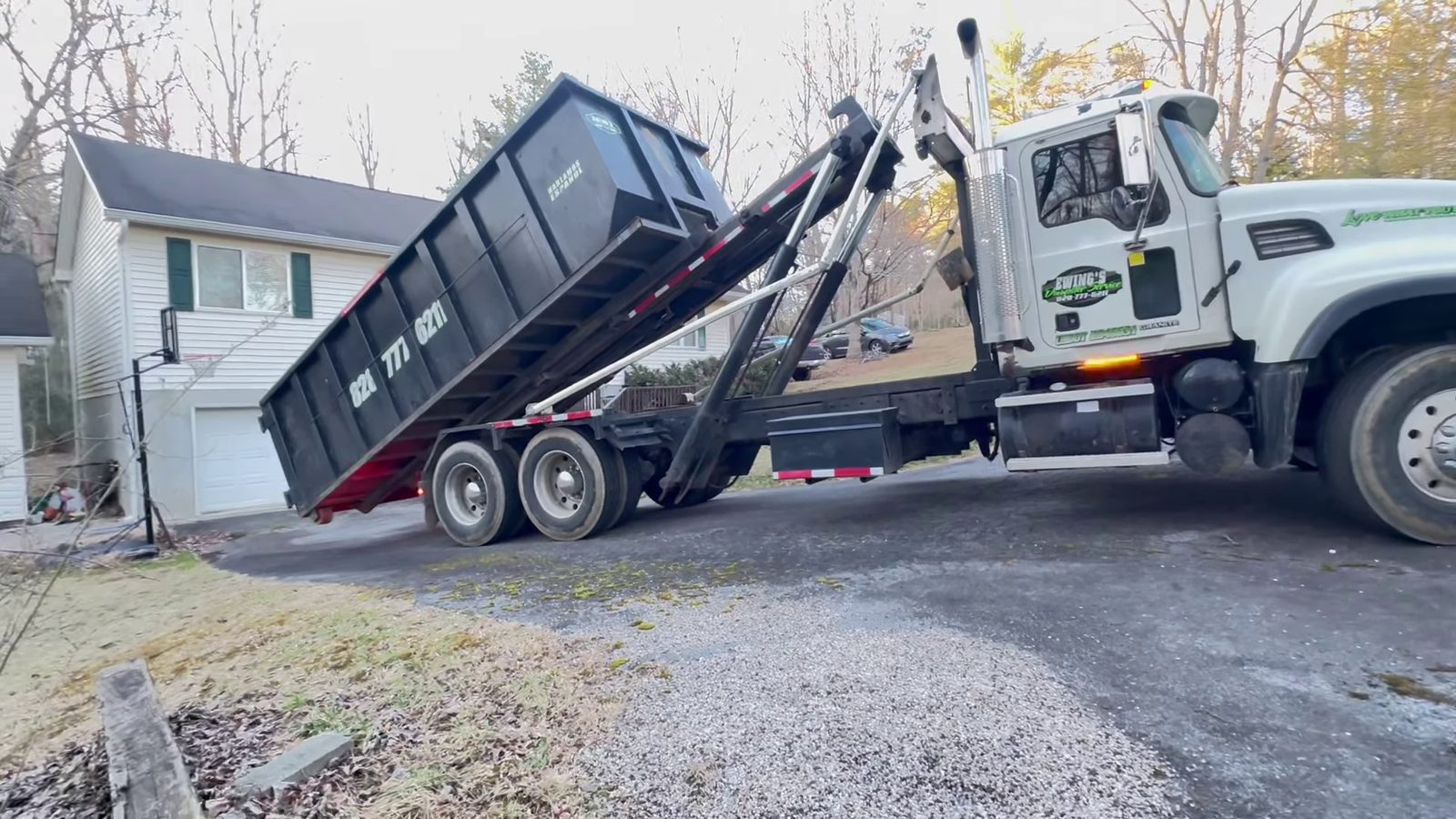
Buncombe County sits in a fold of the Southern Appalachians where genuinely flat ground is rare. Asheville's older neighborhoods — the terraced streets of Montford, the sloped lots throughout West Asheville, the hillside blocks climbing through North Asheville — run steep enough that a standard roll-off truck needs a careful approach evaluation before any box hits the driveway. Swannanoa follows its river valley, but the side hollows feeding it gain elevation fast. The terrain here is not incidental to a dumpster rental; it shapes where the container can land, what surface protection the driveway may need, and whether a street permit enters the picture.
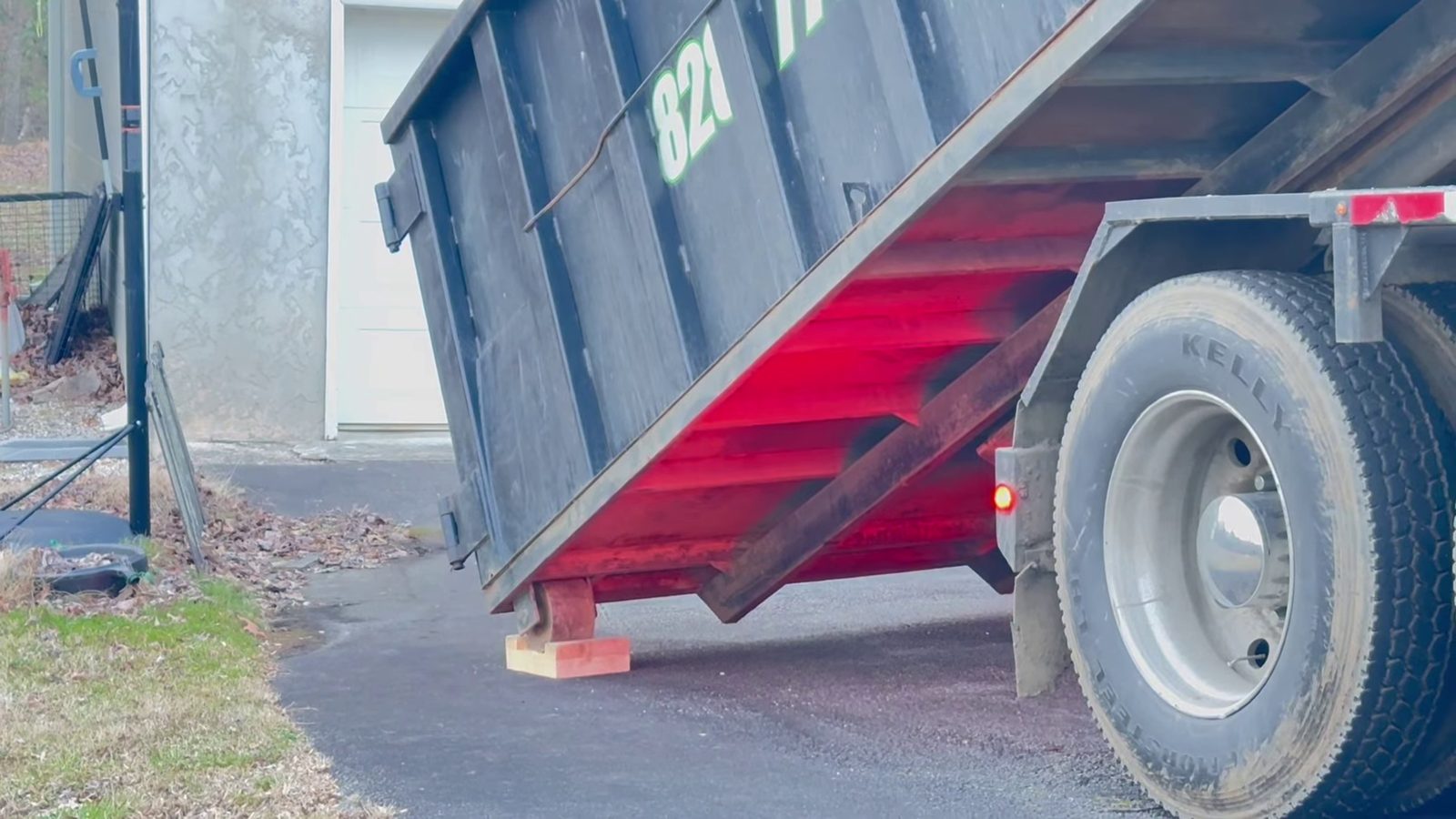
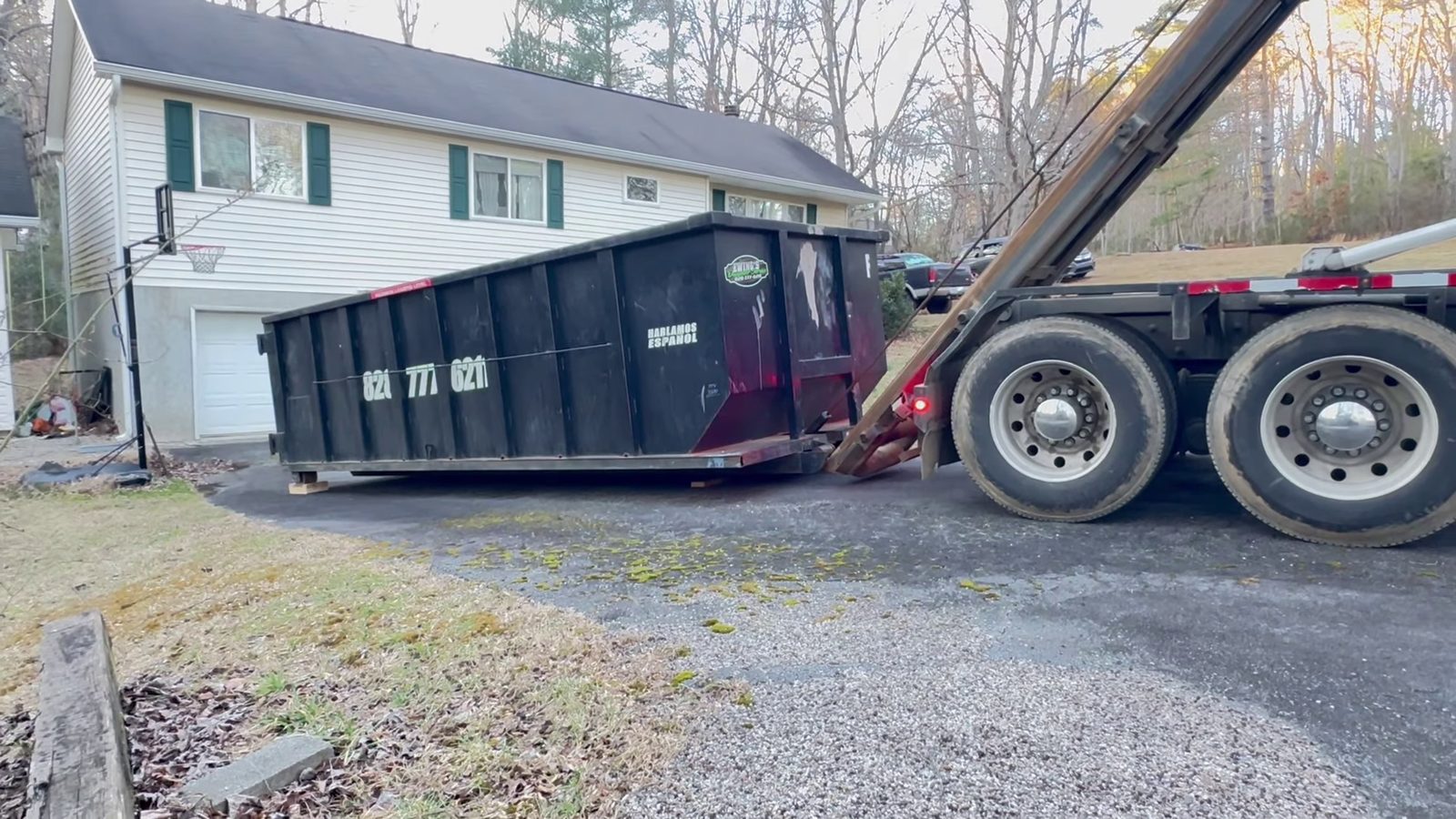
A 30-yard roll-off is 22 feet long, 8 feet wide, and roughly 6 feet tall. The truck delivering it needs about 60 feet of clear, reasonably level run-in, plus overhead clearance for the power and cable lines that frequently cross residential approaches in older Asheville neighborhoods. Gravel drives, low canopy, retaining walls near the apron, and hairpin turns each shrink the window. Describe your approach honestly when you call — a site that takes extra time to place costs everyone something. If the driveway will not work, the container goes at the street, which triggers a right-of-way permit requirement covered below. The weight and placement guide on this site includes a checklist for marginal approaches.
What 30 cubic yards actually handles on a real project
Thirty cubic yards holds roughly 9 full pickup-truck loads of debris — a volume threshold that fits several common Buncombe County project types cleanly. It is enough for a full kitchen gut and rough-in, a bathroom and two-bedroom renovation combined, an attic-to-crawl-space whole-house cleanout, or a roofing job on a home up to roughly 2,000 square feet. It is also the right size for storm debris cleanup: Buncombe sits in a region with 19 federal disaster declarations spanning 1973-2026, and high-water events generate mixed debris loads that fill a container fast.
Where sizing gets complicated in this market is Asheville's older housing stock. Pre-1960s construction in Kenilworth, Montford, and throughout West Asheville tends toward plaster-over-lath rather than drywall, with solid-wood structural members and cast-iron plumbing fixtures. That material profile is heavier per cubic yard than modern construction, which means a renovation project that looks like a volume job can quietly eat through the included 2-ton weight allowance before the container is visually full. If your project involves plaster walls, cast iron, or any masonry, review the weight limits page before committing to a single load — the difference between a full container and an overweight one matters at pickup. For multi-phase construction buildout rather than teardown, the construction dumpster guide covers swap schedules and how to coordinate containers when trades are sequenced across weeks.
What it costs and what moves the number
Ewing's posted rate is $480 for a 30-yard container, covering delivery, pickup, up to 2 tons of debris, and 10 days on-site. That flat structure makes most residential jobs easy to budget. What moves the final number is primarily debris weight relative to the included allowance — specifically on projects with dense material like roofing shingles, plaster, or concrete block. The full cost breakdown page covers how tonnage overages are calculated and which project types are most likely to push into them.
| Project type | Typical volume | Weight risk | Notes |
|---|---|---|---|
| Single-room renovation (drywall, flooring) | 8–12 cu yd | Low | Well within 2-ton allowance |
| Full kitchen gut | 12–20 cu yd | Low–medium | Cast-iron fixtures add weight; flag them at booking |
| Whole-house cleanout | 20–30 cu yd | Low | Volume-heavy, rarely weight-heavy |
| Roofing job (1,500–2,000 sq ft) | 20–25 cu yd | Medium–high | Shingles are dense; monitor fill level |
| Plaster or masonry demolition | 15–25 cu yd | High | May hit weight ceiling before volume ceiling |
The 10-day on-site window covers most residential projects comfortably. Jobs that run longer — a phased renovation waiting on permits, or a contractor schedule that slips — can extend day-to-day. Flag that possibility at booking rather than on day nine when the truck may already be routed elsewhere.
What stays out of the container
A 30-yard container accepts almost any household or construction debris, but several categories require a separate disposal path. Understanding the line upfront prevents a rejected load at the transfer station.
The broadest category is household hazardous waste: paint cans with wet paint, pesticides, cleaning solvents, motor oil, batteries, and propane tanks. The EPA's household hazardous waste guidance explains why these materials are excluded from standard solid-waste streams — they require handling infrastructure the standard landfill does not have. Buncombe County holds periodic HHW collection events; that is the right path for those items, not the dumpster.
On the construction side, NC DEQ's Solid Waste Section governs what North Carolina landfills can and cannot accept. Tires, fluorescent tubes, appliances containing refrigerant, and asbestos-containing materials all require specific handling. The last item is especially relevant in this market: a gut renovation on a pre-1980s Asheville home may involve asbestos-containing flooring, pipe insulation, or ceiling tiles. Test before you demo — that is a material abatement question, not a dumpster question. The EPA's construction and demolition materials guidance provides a useful framework for thinking through what your project is generating and where each category needs to go. Loose soil and clean concrete can go in a dumpster but add weight fast, which circles back to the weight-allowance question for heavier demolition work.
Street placement, right-of-way, and permits
When a driveway is too steep, too narrow, or finished with asphalt you would rather not risk, placing the container at the curb or in the street becomes the working plan. That placement triggers permitting requirements that vary by jurisdiction — and in Buncombe County, the jurisdiction question matters because city-limit boundaries here are irregular. A parcel that feels urban may sit outside Asheville city limits, and one that feels rural may fall within them.
Within Asheville city limits, right-of-way use is managed by the City of Asheville; a container blocking a travel lane or curbside parking may require a temporary encroachment permit depending on duration and placement. Outside city limits, containers placed in the state road right-of-way fall under NC Department of Transportation encroachment permit requirements. Either way, a street-placed container ordered the day before you need it may not have time for the permit to clear. Build several days of lead time into the schedule, confirm the jurisdiction for your specific address before booking, and note that the permit obligation belongs to the homeowner or contractor — Ewing's can advise on what is typically required, but the permit itself is yours to pull.