Asheville's terrain makes placement the first decision — not duration
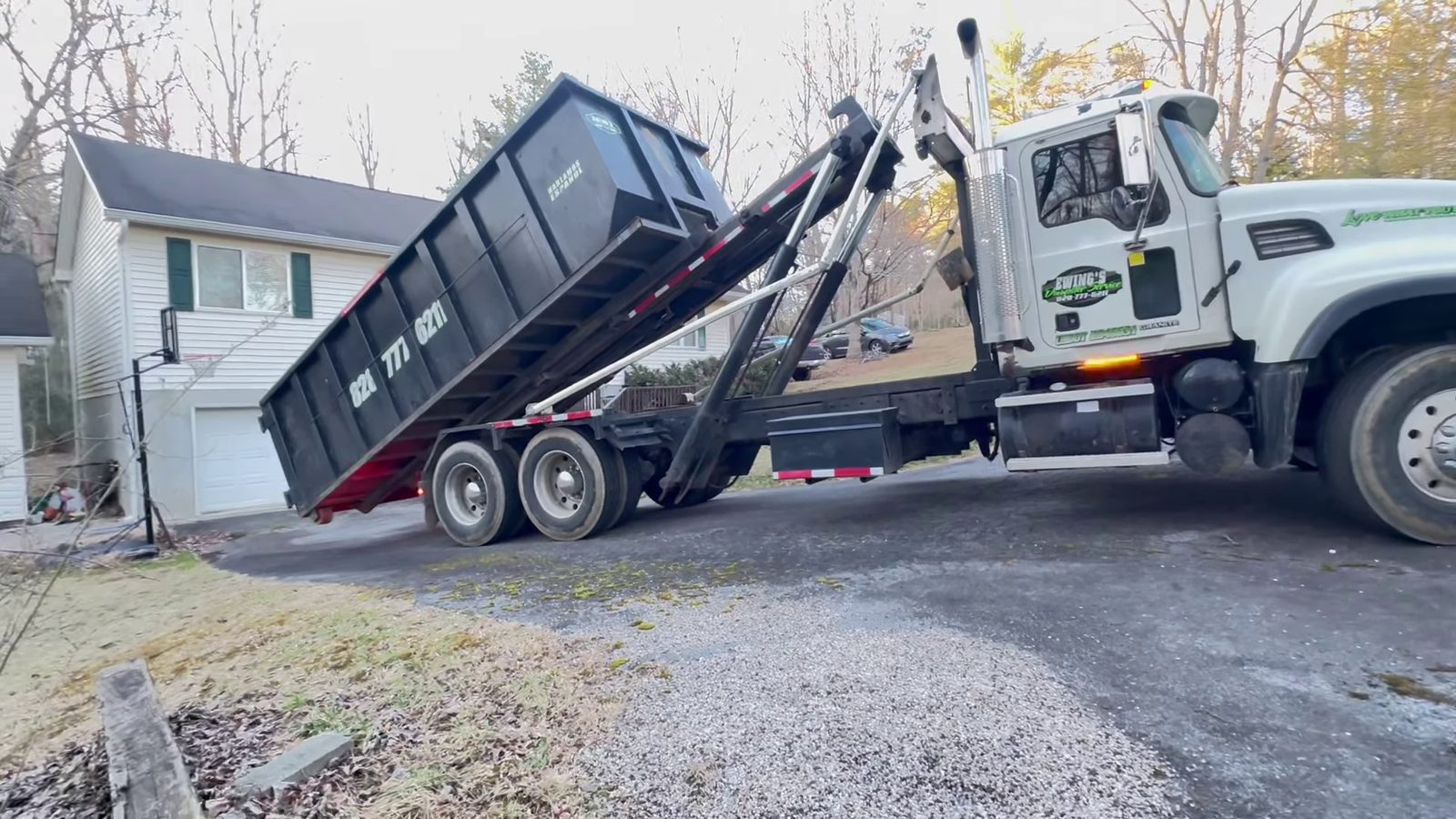
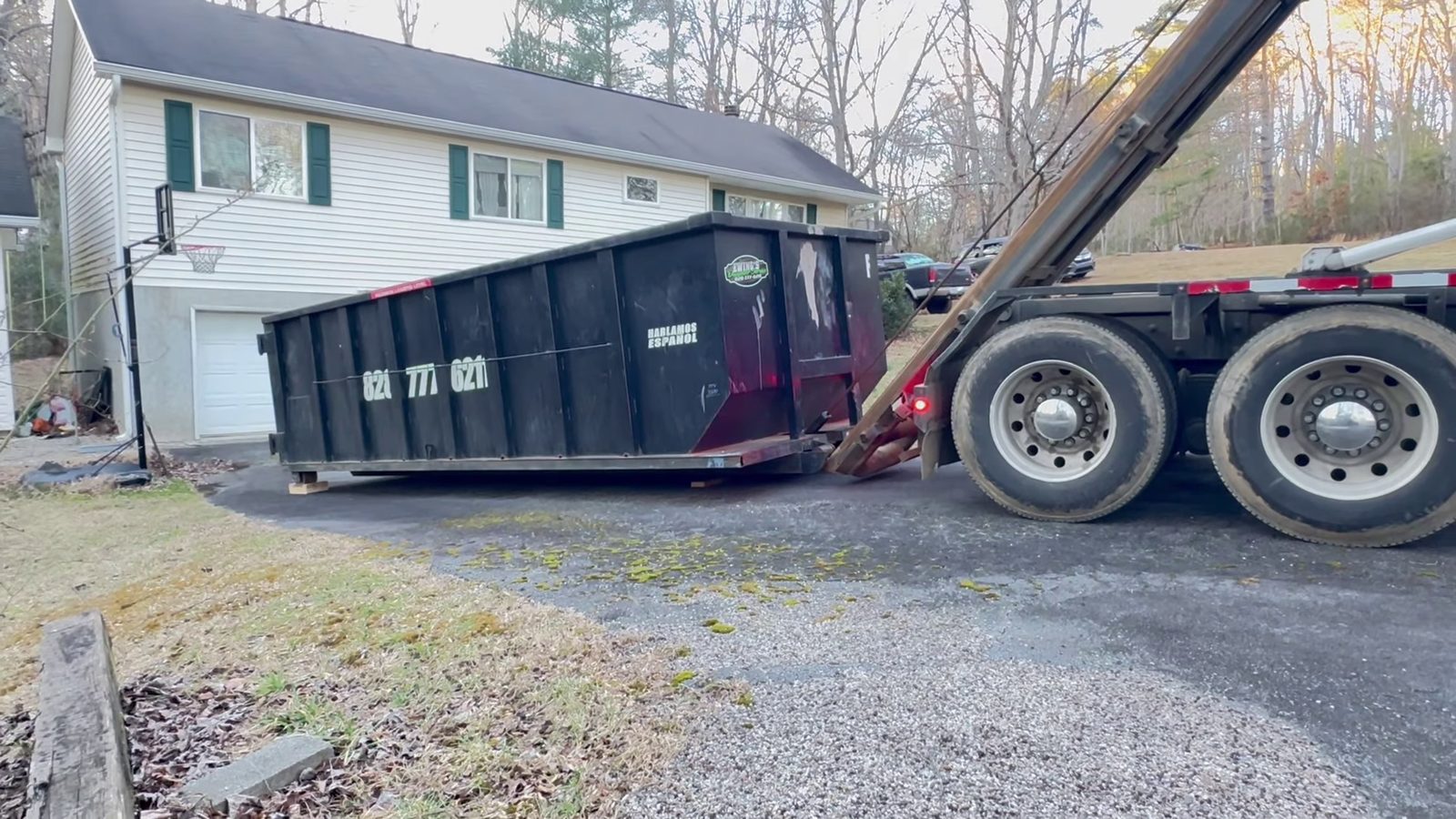
Buncombe County's housing stock concentrates a lot of pressure into small lots. Craftsman bungalows packed onto the hillside streets of Kenilworth and Montford, postwar ranches on narrow West Asheville blocks, and newer construction on steep mountain-facing grades often leave little flat ground to work with. When a driveway pitches steeply enough that staging a loaded 15- or 17-yard container becomes unsafe, the street becomes the only option. That single placement choice moves you from the rental agreement's terms into a permit system with its own time limits.
Ewing's standard window is 7 days, included in the base price on every 10, 15, and 17 yard container. Projects that run longer pay $3 per extra day — a predictable overage that scales evenly however long the job takes. The daily rate breakdown shows how that adds up across different project timelines. What most customers don't realize is that the per-day meter and the permit expiration date are two separate clocks, and on a street placement, the permit clock can run out first.
That's the wrinkle specific to Asheville's dense in-town neighborhoods: where parking is tight and roads are narrow, a street permit is both more likely to be necessary and more likely to have a shorter approved window than the project itself. Confirming placement before delivery is worth more than any duration calculation.
Where the box sits — and what rules each placement triggers
Three placement types cover most Buncombe County dumpster rentals, and each carries a different regulatory frame:
| Placement type | Permit required | Who issues it | Duration governed by |
|---|---|---|---|
| Private driveway or yard | None for most residential work | — | Rental agreement and local nuisance ordinance |
| City street or public ROW (Asheville city limits) | Yes — right-of-way permit | City of Asheville | Permit term; request your needed duration at application |
| State-maintained road or highway shoulder | Yes — encroachment permit | NC Department of Transportation | Permit term set by NCDOT district office |
| HOA-governed community | HOA written approval typically required | HOA board | CC&Rs; often 7–14 days maximum |
Asheville city streets are handled by the City of Asheville Public Works department; apply for the ROW permit before your delivery date and confirm the approved duration covers your project length. Extensions are easier to request before the original term expires than after. For state-maintained roads — US highways and NC routes that cut through Buncombe County — the permit authority shifts to NCDOT, which administers encroachment agreements for any obstruction in the state right-of-way. That process takes more lead time than a city permit; plan accordingly if your property fronts a state route.
What cannot go in — and how prohibited materials affect your pickup
The NC DEQ Solid Waste Section governs what North Carolina landfills can and cannot accept. Prohibited materials in a load can cause it to be rejected at the disposal facility — which translates to extra charges and a delayed pickup that extends your rental period whether you wanted that or not.
Materials that come up most often in Buncombe County residential cleanouts and renovations:
- Paint — latex paint must be fully dried and solidified before disposal; oil-based paint is classified as household hazardous waste and cannot go in a standard dumpster under any circumstances
- Asbestos-containing materials — a real concern in Asheville's older housing stock; pre-1980 homes may have asbestos in floor tile, pipe insulation, and textured ceilings
- Electronic waste — computers, televisions, monitors
- Batteries and fluorescent tubes
- Tires
- Household hazardous waste — solvents, pesticides, pool chemicals, aerosol cans
The US EPA's household hazardous waste guidance outlines proper disposal channels for these items; Buncombe County holds periodic HHW collection events. Sort prohibited materials before the dumpster arrives — a contaminated load takes longer to resolve than a simple overage, and the resolution cost has nothing to do with the $3/day rate.
For renovation debris — demo waste, drywall, framing lumber, roofing material — the EPA's construction and demolition materials guidance addresses C&D waste management. The renovation rental guide covers sizing and load planning for remodel projects specifically.
When holding it longer than 7 days makes sense — and when it costs more than the daily rate
The $3-per-day overage structure is predictable by design. For projects that naturally stretch — a weekend-pace estate cleanout, a renovation held up by subcontractor scheduling, or a staged demo — extending the rental beats paying a second delivery fee. Compare the daily rate against what a second trip would cost, then add buffer if weather is a factor.
Asheville's mountain weather creates genuine schedule uncertainty. Buncombe County has seen 19 federal disaster declarations over 1973-2026, and heavy rainfall can delay both project work and dumpster swap logistics — delivery trucks cannot navigate flooded or debris-covered mountain roads safely. During spring and fall, building a day or two of buffer into your estimate is cheaper than an emergency extension call.
Three scenarios where holding the box longer costs more than the daily rate alone suggests:
- Expired street permit — an ROW permit that lapses while the box is still on the street can result in a citation from the city; removal may be required faster than your project allows
- HOA fines — some Buncombe County communities specify a maximum display period in their covenants; fines accrue on the association's schedule, not the rental company's
- Overweight loads — a heavy demolition (concrete slabs, full kitchen teardown) can hit the included 1-ton weight limit before the box looks full; overweight runs $65 per additional ton, and the full cost guide covers size-and-weight planning in detail
None of these is hard to avoid. The fix is consistent: get placement confirmed, permit applied for, and duration estimated before delivery — not after the box is already on the street.
How different project types map to rental duration
Project type gives a useful starting frame for duration, though Asheville's older housing stock and terrain introduce variables that flat suburban markets don't see as often.
Single-room cleanouts and junk removal typically complete in a day or two; the 7-day included window provides ample cushion. These jobs most often surface unexpected household hazardous waste — sort paint cans, cleaners, and batteries before loading the box.
Kitchen and bathroom renovations vary by contractor schedule. A project where your contractor works continuously might wrap demo in three days; one that sequences a plumber and electrician separately can stretch two weeks. Build a few extra days in, since the per-day overage is cheaper than a rushed demo schedule that leaves no room for the unexpected.
Full-house renovations and additions frequently run in phases — demo, rough-in, finish — and a continuous rental is usually more cost-effective than multiple deliveries. These projects also generate the most varied waste streams: demo debris, packaging, and leftover materials. The renovation rental guide addresses sizing and load sequencing for these jobs.
Estate cleanouts and downsizing regularly stretch past 7 days when the pace is set by family availability rather than a contractor schedule. Weekend-only work means a job that could physically complete in two active days stretches across two or three weekends. The daily rate page shows the cumulative cost across common timelines, so you can decide between an extended hold and a second delivery.