Asheville's older roofs and the layers that change the math
A lot of Asheville's residential housing dates to the early-to-mid twentieth century. Craftsman bungalows in Kenilworth, brick foursquares in Montford, wood-frame colonials spreading up into West Asheville and North Asheville — many of those roofs have been re-covered rather than fully stripped over the decades, meaning a tear-off here often comes up two or three layers deep. That is not a cosmetic detail. Each additional layer roughly doubles the debris weight per roofing square, so a 10-yard container that handles a newer home's single-layer strip can hit its weight limit less than halfway up the bin on an older multilayer job.
This is the one local factor that reshapes the dumpster conversation for Buncombe County specifically. Homeowners in newer subdivisions can book by volume; homeowners in Asheville's historic neighborhoods need to book by layer count first. Identifying layer count is straightforward for a roofer during an estimate, usually confirmed at the drip edge or in the attic. Ask before choosing a container size, because that number matters more than the roof's square footage. Buncombe County has recorded 19 federal disaster declarations over 1973-2026, most tied to weather events that accelerate roofing wear; when demand spikes after an active storm season, booking early is the practical answer whether the job is insurance-driven or long overdue.
Which container matches which roofing scope
Three container sizes cover the full range of residential roofing jobs in this region. The table below maps scope to container and the delivered price, delivery and pickup included at every tier:
| Roofing Scope | Container | Delivered Price |
|---|---|---|
| Detached garage or small addition, single layer | 10 yard | $199 |
| Standard reroof up to ~2,000 sq ft, single layer | 15 yard | $280 |
| Larger home or any multilayer tear-off | 17 yard | $325 |
| Large estate, commercial flat roof, or multiple structures | 30 yard | $480 |
The 15-yard container at $280 is the most common booking for a standard Buncombe County reroof. It fits the debris from most single-layer tear-offs on a mid-size home without approaching the weight ceiling. When the roofer reports more than one existing layer, or when the home exceeds roughly 2,000 square feet, the 17-yard at $325 provides the needed margin. For a full scope-by-scope estimate including logistics notes for mountain terrain, see the roofing dumpster cost page. The 10-yard at $199 is the right call only for genuinely small jobs: a detached garage, a shed, or a compact addition where both volume and weight stay modest. Booking the smallest container to save $80 on a full-size job produces an overage situation that costs more than the upgrade.
What goes in a roofing dumpster and what cannot
Asphalt shingles, torn-off underlayment, valley flashing, old ridge caps, and rotten decking boards are all standard roofing dumpster material. What cannot go in the bin matters more for older Buncombe County housing stock than in newer-build markets: homes built before the mid-1980s may have asphalt shingles containing asbestos fibers, which require a separate regulated disposal process rather than a standard roll-off. Have your roofer identify any suspect materials during the estimate, before the tear-off begins. A prohibited material loaded into a bin and later flagged at the facility creates a problem that is expensive and slow to resolve.
The NC DEQ Solid Waste Section maintains the state's restricted materials list for solid waste facilities; no hazardous materials, liquids, or regulated waste can enter a standard roll-off container. The EPA's guidance on construction and demolition materials sets the federal framework: clean, dry roofing material (shingles, felt, metal flashing) is classified as ordinary C&D debris and is straightforward to dispose of. Aerosol cans, paint cans, chemical containers, and anything with a hazardous materials label are not. Understanding the classification also matters because it determines where the material goes after the bin leaves your property; materials that cross into regulated territory require a licensed specialty hauler and carry additional costs that dwarf a dumpster rental.
Steep lots, narrow streets, and placing the bin
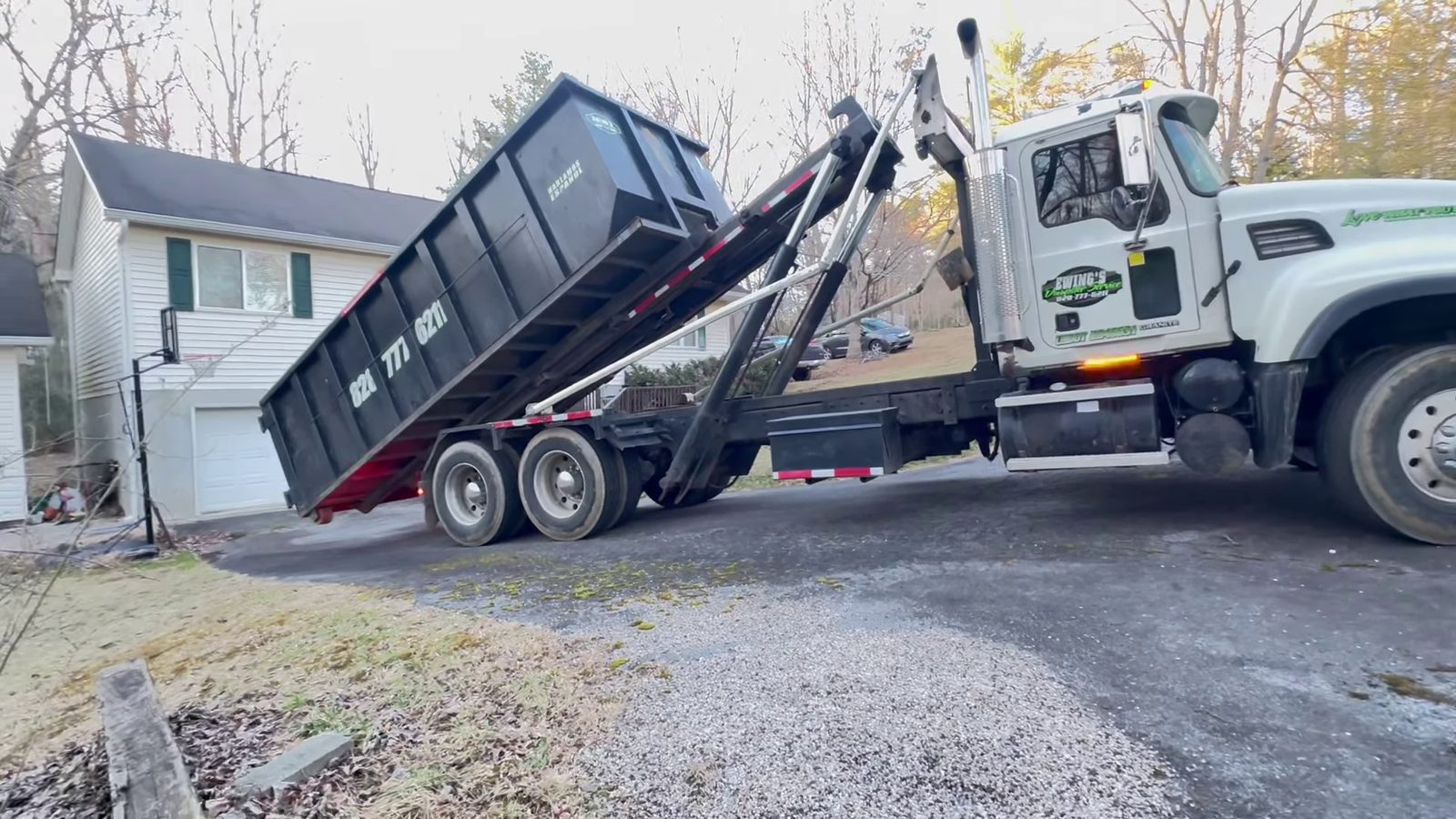
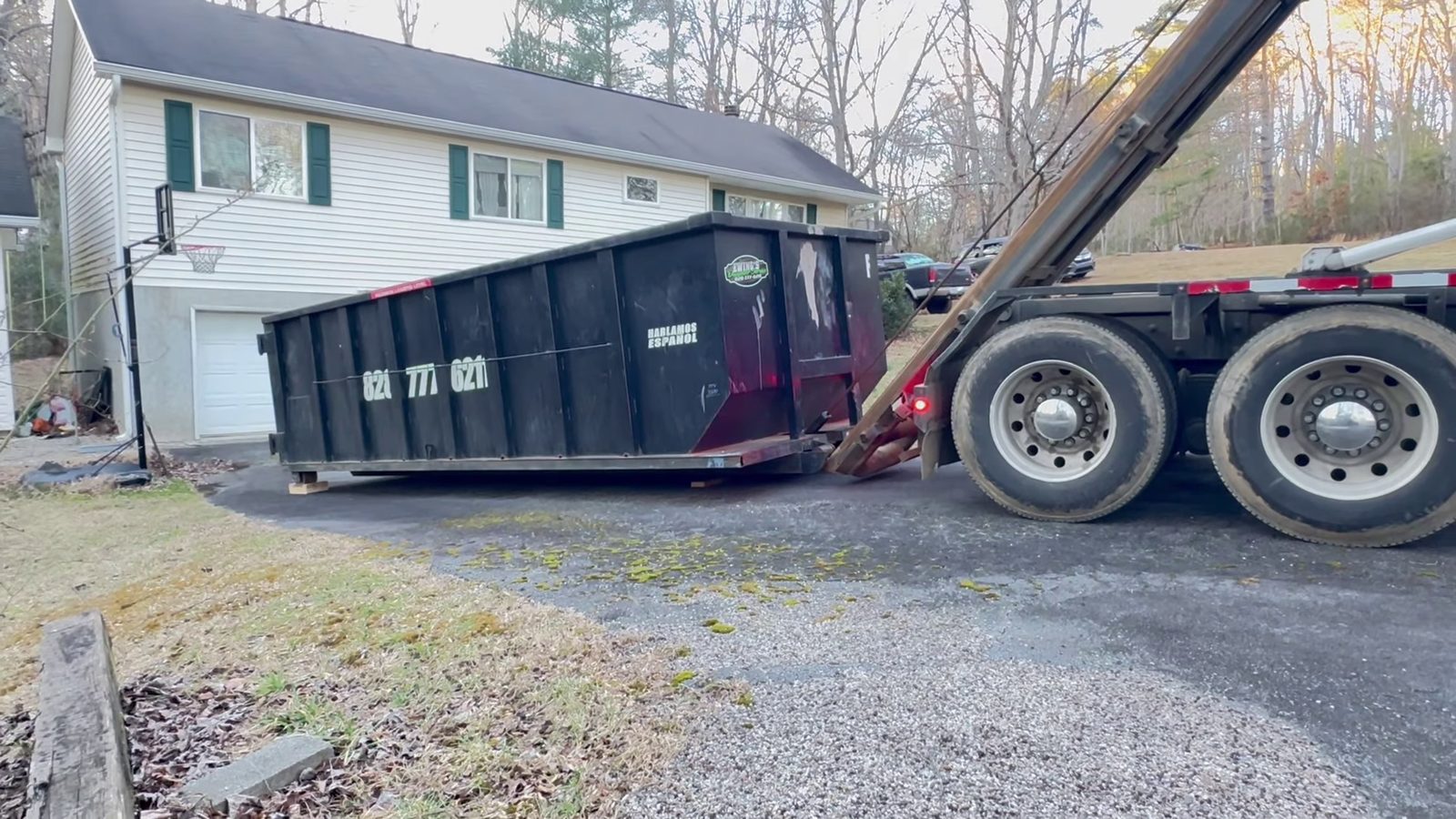
Dumpster placement is more complicated in Buncombe County than in a flat-terrain market. Many properties in Asheville's hillside neighborhoods, from the streets rising above Merrimon Avenue to the lots behind West Asheville's commercial corridor, have driveways too steep for a loaded roll-off truck to safely navigate. Street placement is often the only workable option, and street placement requires a permit.
For placements on state-maintained roads, the NC Department of Transportation handles encroachment and right-of-way permits. For city streets within Asheville, the City of Asheville operates its own right-of-way permitting process. Confirm which authority governs your street before the scheduled delivery date, and allow enough lead time to have the permit in hand before the driver arrives — the permit process is not onerous, but it has a lead time that can push the roofer's schedule if ignored. A container placed on a public road without the appropriate permit creates a liability problem for the property owner, not just a logistics problem for the hauler. If driveway access is possible, discuss bin positioning with the driver: on a slope, distributing debris evenly across the container rather than piling toward one end reduces the risk of shifting during pickup, a practical concern on the grades that are routine throughout this county.
Weight, tonnage, and what actually moves the final number
Shingles are among the densest residential construction materials by volume. Standard three-tab asphalt shingles run roughly 230–300 pounds per roofing square (100 square feet); architectural shingles run heavier. A mid-size Buncombe County home with 20–25 roofing squares can generate 5,000–7,500 pounds of shingles on a single-layer strip alone, before underlayment and decking. Every container has a weight limit, and exceeding it means overage charges calculated per ton. The dumpster weight limit guide covers the specific ceiling for each container size and what overage typically adds to the final bill.
The variable that moves total cost most on roofing jobs is layers, not square footage. A 1,500-square-foot roof with three layers can generate more tonnage than a 2,500-square-foot roof with one, and in a mountain county where housing stock runs old, the multiple-layer scenario is the norm in established Asheville neighborhoods. Get the layer count from your roofer before booking, match it to the scope table above, and book one size up if the count is uncertain. Overage fees on an undersized container almost always cost more than upgrading at the time of booking.