Western Buncombe roads change every delivery
Candler occupies a belt of western Buncombe County where the French Broad River valley starts to widen and the terrain shifts fast. Commercial strips along Smoky Park Highway give way within a mile to older residential roads that curl back into hollows and ridge bases, with driveways ranging from wide paved aprons to narrow gravel tracks set 400 feet off the road. That gap in site conditions is what makes dumpster rental in Candler NC a logistics question before it's ever a size question.
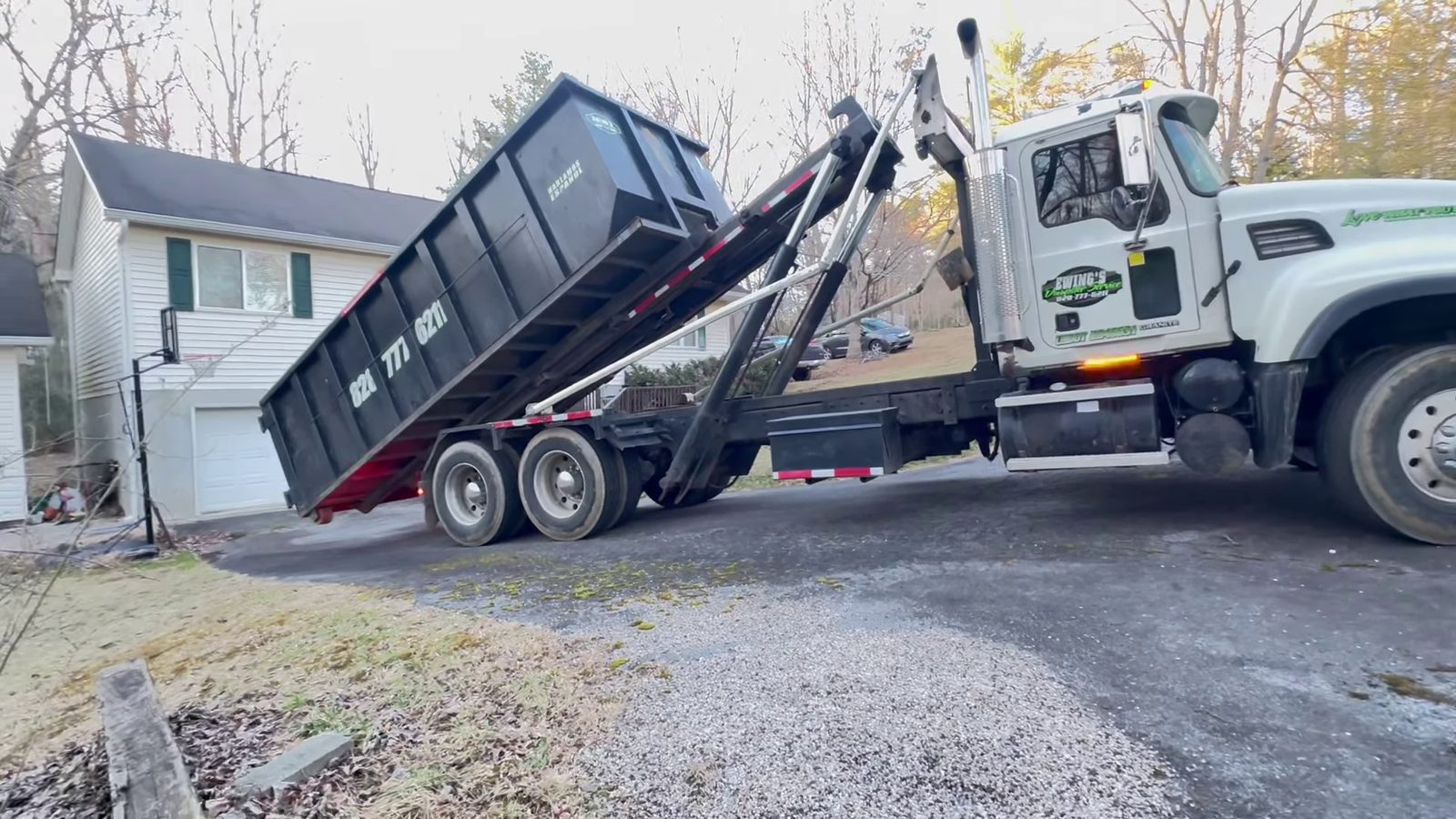
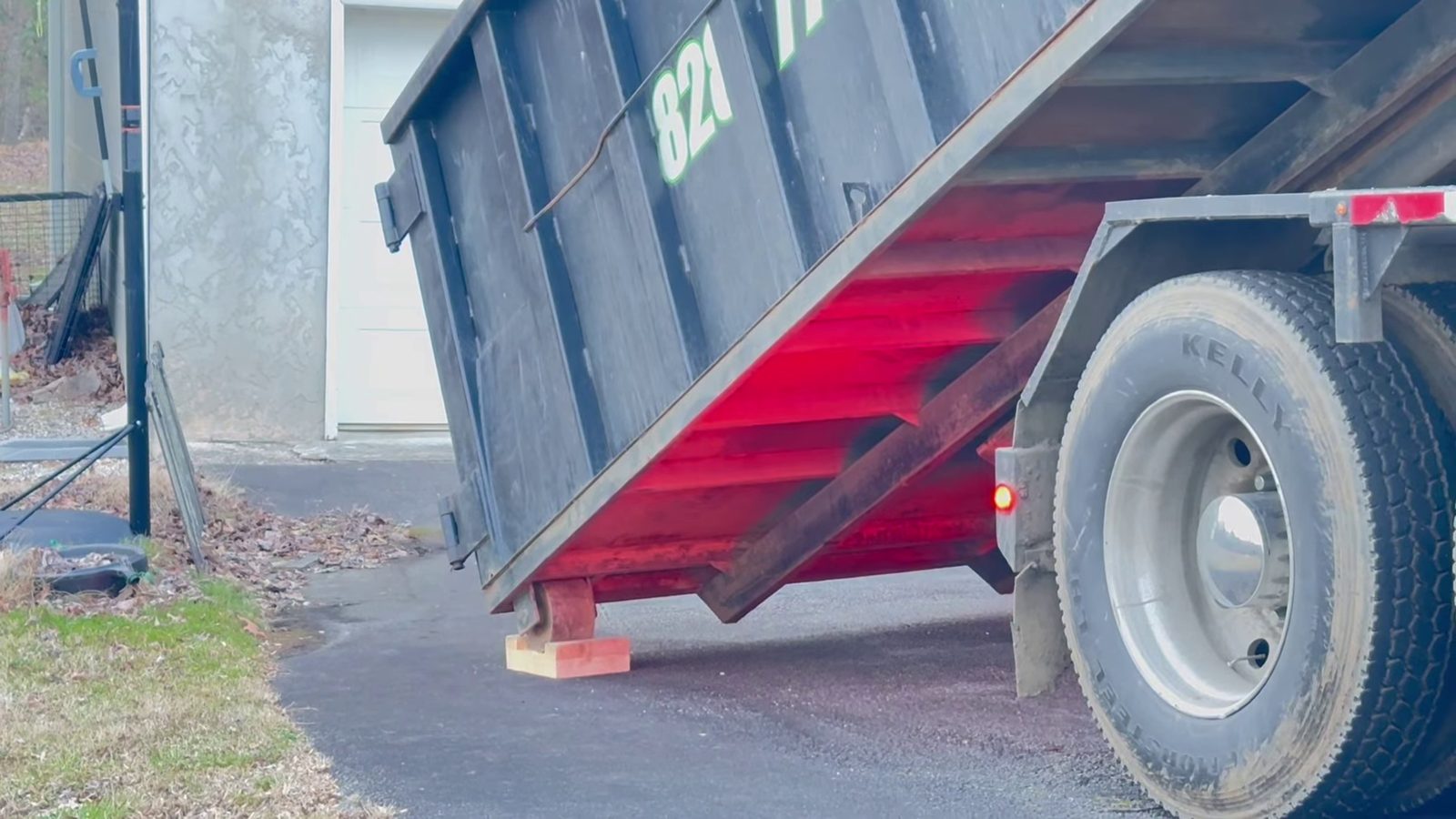
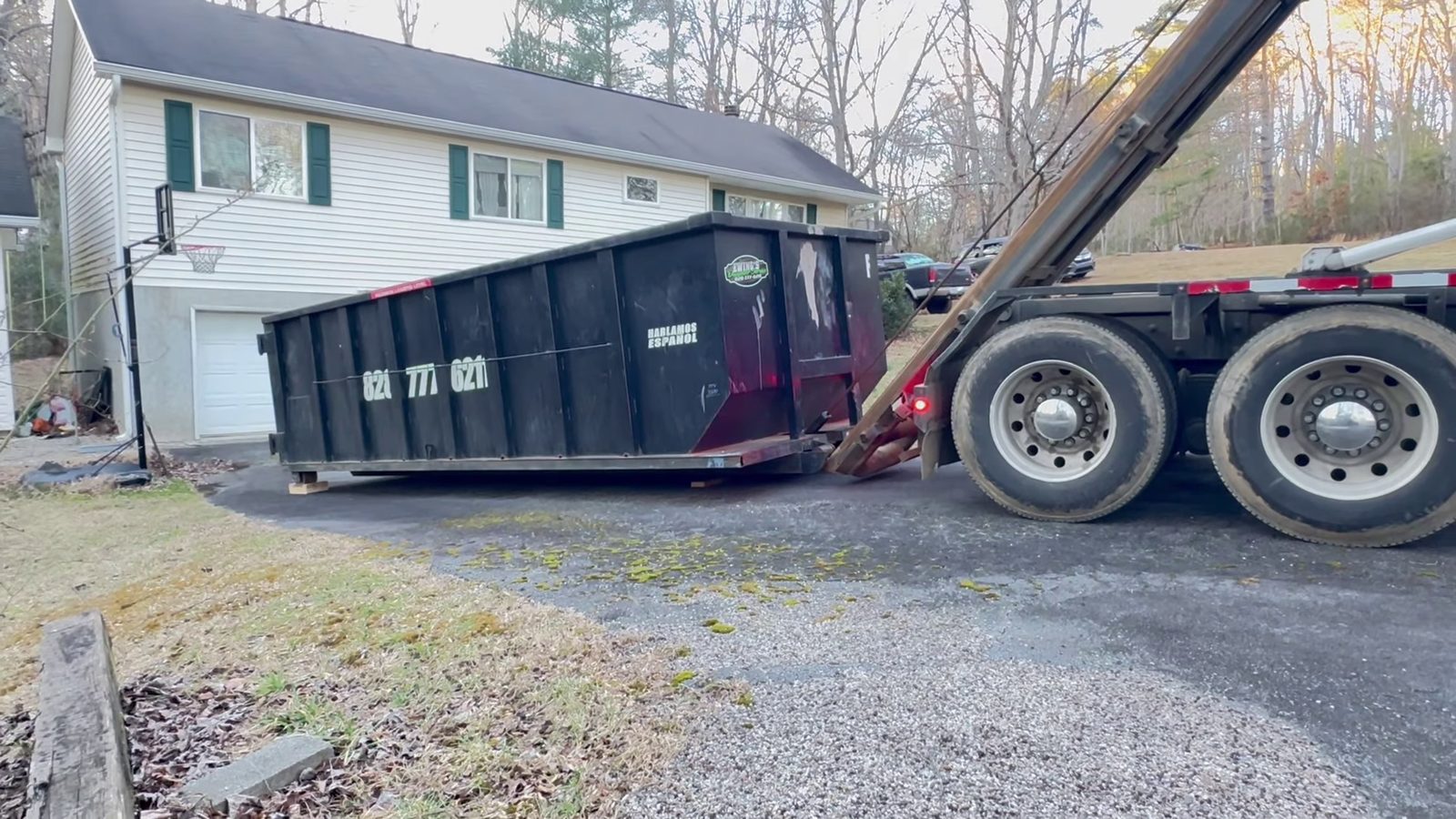
A 30-yard bin fully loaded runs above 60,000 pounds. Roads that handle pickup trucks without complaint can fail under that weight, and a gravel driveway with a culvert crossing at the entrance will announce that the moment a delivery truck tries to back in. Ewing's runs routes into western Buncombe County daily and knows the access picture along these roads — but the job goes smoother when site conditions are confirmed at booking rather than discovered at the driveway. When you call or submit the form, describe what the truck will be driving on: surface type, estimated grade, overhead clearance, and how far your site sits off the main road. That 90-second conversation is the most useful one you'll have before the bin arrives.
For properties where driveway placement isn't possible and the bin has to sit closer to the road, the permit section below covers what applies before you assume the shoulder is free to use.
Matching the right bin to your job
The right container depends on what you're clearing and how it was built. Storm-damaged material — saturated insulation, bloated cabinetry, rot-softened subflooring — compresses less than dry household debris and weighs more per cubic foot. A load that visually looks like a 15-yard job may require the 17 once the material is wet. Before booking, the sizing guide walks through estimation by material type, or call and describe what you're pulling out to get a recommendation directly.
The table below maps common Buncombe County residential and renovation scopes to the bin that handles them. Prices are Ewing's posted rates as of January 2026, delivery and pickup included, for Candler area delivery.
| Scope | Bin size | Price |
|---|---|---|
| Single-room cleanout, small furniture haul | 10 yard | $199 |
| Garage or basement cleanout, minor renovation | 15 yard | $280 |
| Multi-room remodel, deck teardown, large cleanout | 17 yard | $325 |
| Whole-house cleanout, roofing job, full C&D load | 30 yard | $480 |
For a full breakdown of what moves cost on jobs in this county — weight, rental duration, and material type — the dumpster rental cost guide covers each line item. What you're hauling matters as much as how much of it there is.
What fills a Candler bin and what has to go separately
Household furniture, renovation debris, roofing shingles, lumber, yard waste, and most appliances fill Candler bins without issue. What can't go in is determined by federal and state rules, not by Ewing's preference. Under EPA's Resource Conservation and Recovery Act, hazardous waste — including certain paints, solvents, treated wood, and chemical containers — requires separate handling and can't legally enter a roll-off destined for a standard solid waste facility.
The NC DEQ Solid Waste Section maintains the list of materials Buncombe County landfills cannot accept, and that list governs what comes off your bin at the facility. Items that consistently cannot go in include motor oil, propane tanks, fluorescent tubes, asbestos-containing materials, and tires beyond small-count exceptions. If your cleanout involves pre-1980 construction, outbuildings with aging insulation, or automotive debris, flag those materials when you book so the right plan is confirmed before the bin arrives.
For household hazardous waste that doesn't belong in the bin, the EPA's household hazardous waste guidance points to county collection programs. Buncombe County runs periodic collection events that handle the items a roll-off rental can't take.
Permits and right-of-way in Buncombe County
Most Candler dumpster placements land on private property — a driveway, a yard, a construction site — and require no permit. The situation changes when the bin has to sit in a road shoulder, a cul-de-sac, or any portion of a public right-of-way.
Under North Carolina rules, objects placed in a state road right-of-way require coordination with the NC Department of Transportation, which manages encroachment and ROW permits for roads under its jurisdiction. If your property sits off a secondary NCDOT-maintained road — common on the rural side of western Buncombe County — and the only viable placement involves the shoulder, the permit question applies. Ewing's can advise on what's needed for your specific address based on road classification and how long the bin will sit.
Properties served by roads maintained by Buncombe County, by an HOA, or under a private road agreement may fall under different rules. When in doubt, verify with your local road authority before the truck arrives — moving a bin after drop costs more than a brief phone call beforehand.
Storm debris hauls along the French Broad corridor
Buncombe County carries 19 federal disaster declarations across 1973-2026, nearly all in the storm and flood family. Communities in the French Broad River valley — Candler among them — absorb a disproportionate share of that damage history given how water moves through the hollows that drain into the river. Debris cleanup after a significant weather event works differently than a planned renovation haul, and the differences matter when you're scheduling a bin.
Storm cleanup typically pulls material out in remediation sequence: structural debris first, waterlogged contents next, then salvageable items sorted to insurance or assistance program timelines. A single bin may not complete a full damage cleanup if the job runs across multiple weeks or inspection holds. The roll-off dumpster overview covers how bin rental works for extended cleanup projects, including when a second pull or a mid-job swap makes more sense than overpacking one container.
For jobs that generate large volumes of construction and demolition material, the EPA's C&D materials guidance outlines which categories can be diverted from landfill — information that matters when volume is high enough for Buncombe County diversion programs to apply.