Mill town at the foot of the escarpment
Old Fort sits at the last flat ground before I-40 climbs the Blue Ridge toward the Eastern Continental Divide. The town built up around the railroad and the cotton mills, leaving a housing stock that runs from worker cottages near the old rail right-of-way to mid-century ranches along NC-70 to creek-side and ridge lots that earlier residents left unbuilt. That layered history shapes what ends up in a dumpster here: a mill house going through its first gut renovation in decades generates dense loads of lath, plaster, and old lumber; a vacation-rental flip produces carpet, fixtures, and years of accumulated clutter; new construction on a McDowell County ridge lot adds concrete, excavated fill, and engineered lumber scraps. The mix is different from what you find in a newer subdivision, and it changes how you plan the job.
Flood history runs through it as well. McDowell County has recorded 19 federal disaster declarations over 1973-2026, most of them water events that reach Old Fort Creek and Mill Creek. Recovery cleanouts from those events move on a tight schedule, and the time from first call to container delivery matters as much as the price when walls are open and drying out.
What jobs come up in this corridor
The highest-volume work around Old Fort falls into three groups. First is the aging housing stock: homes that passed through estates or long rental periods arrive at renovation with decades of accumulated material — insulation, subfloor layers, old fixtures, and whatever the previous owner left behind. Using the size guide before booking pays off here, because a full-house cleanout and a room-by-room renovation generate the same debris type at very different volumes, and an undersized container means a second trip.
Second is the vacation-rental corridor along I-40 east of Black Mountain. Owners refreshing properties between booking seasons need fast turnaround: a container dropped Monday, loaded by Wednesday, picked up before the weekend. The roll-off rental overview covers the scheduling details that keep those tight windows workable.
Third is new construction and larger renovation on rural McDowell County tracts. Construction and demolition debris from these jobs falls under federal solid waste guidelines — the EPA guidance on C&D materials defines what can go to a standard landfill versus what requires a separate diversion path. Knowing that before the box is loaded avoids rejection fees at the transfer station.
Container sizes and what they cost
Ewing's posted prices as of January 2026 run from $199 for a 10-yard to $480 for a 30-yard, delivery and pickup included. Distance within McDowell County can move a job toward the top of the range. The cost breakdown page explains the variables in detail.
| Container | Typical use around Old Fort | Price |
|---|---|---|
| 10 yard | Single-room cleanout, small deck demo, attic clear-out | $199 |
| 15 yard | Full house cleanout, flooring replacement, mid-size renovation | $280 |
| 17 yard | Kitchen or bath gut, sheathing and framing demo | $325 |
| 30 yard | Full renovation haul-out, new construction debris, whole-property demo | $480 |
These are posted price prices with no separate delivery or pickup charges. The main cost variable is prohibited material: anything that cannot go to a standard transfer station requires a separate arrangement that adds time and cost to the job.
What goes in and what does not
Standard residential and construction debris is accepted: wood, drywall, roofing material, concrete and masonry, metal, furniture, carpet, and yard waste. The boundary is hazardous material, and it is a more practical concern in older McDowell County housing stock than many homeowners expect. Pre-1980 houses in Old Fort may have lead paint on wood trim and millwork, asbestos-containing floor tile or pipe insulation, and in some cases old fuel storage tanks on the property. Those materials require a separate disposal path before other renovation work starts — they cannot go into the box, and arriving at the transfer station with them in the load creates a problem that costs more and takes longer to resolve than a quick call before you begin loading.
The EPA household hazardous waste guidance defines what qualifies and points to local collection programs. The NC DEQ Solid Waste Section governs what North Carolina permitted facilities can accept — tires, electronics, appliances with refrigerant, and lead-acid batteries each have their own handling requirements outside the standard disposal stream. If there is any question about a specific item, ask before it goes in.
Street drops and right-of-way in Old Fort
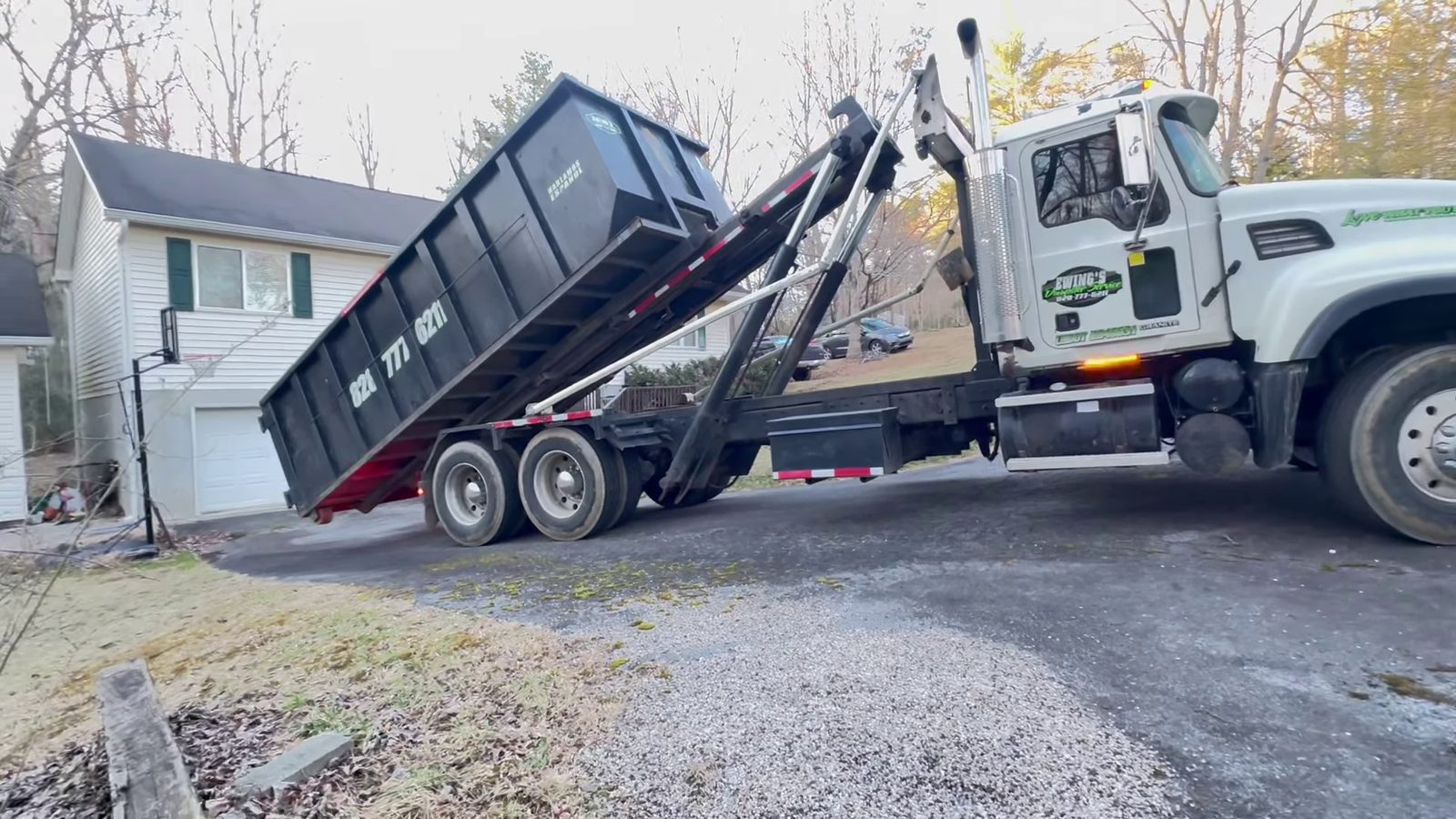
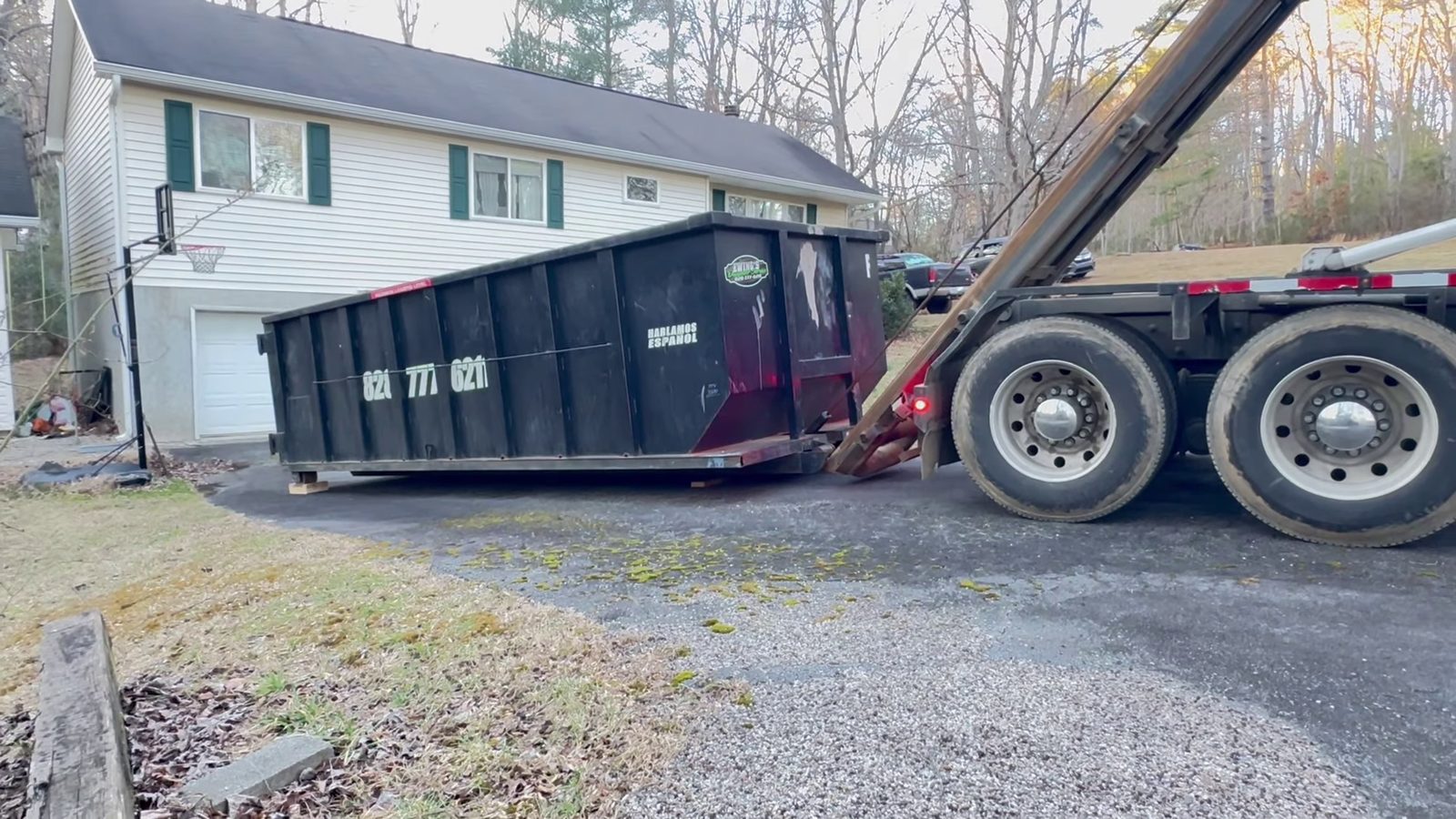
Many of Old Fort's older lots have narrow driveways that cannot accommodate a roll-off without tight maneuvering or a street placement. When a container sits in a public right-of-way or on a road shoulder maintained by the state, an encroachment permit from the NC Department of Transportation is typically required before delivery. County-maintained roads may require a separate McDowell County sign-off. Permit requirements depend on the road classification and specific location — confirm before scheduling if the planned drop is anything other than a private driveway or parking area.
Containers placed on a public street must be visible and marked. Reflective tape and cones are the standard requirement. The drop point should leave clearance for passing traffic and must not block fire hydrants, utility access, or sight lines at intersections. Working through placement specifics at booking is easier than repositioning a loaded container after delivery.