What mountain-town dumpster rentals actually cost
Asheville is not a flat-grid city. The neighborhoods that drive most renovation and cleanout work — Montford's historic bungalows, West Asheville's mid-century blocks, the ridge lots above Kenilworth, the craftsman-era streets around Lakeview Park — sit on grades that affect what a truck can deliver, where a box can land, and how full it can safely be on pickup day. That terrain is the detail most national price guides never account for, because they were not written for a city built into the side of a mountain.
| Project type | Recommended size | Price (delivery & pickup included) |
|---|---|---|
| Single-room cleanout, small deck demo | 10 yard | $199 |
| Whole-house cleanout, kitchen remodel | 15 yard | $280 |
| Roof tear-off, mid-size renovation | 17 yard | $325 |
| Full renovation staging, new construction debris | 30 yard | $480 |
Every price covers delivery and pickup — there is no haul fee added at the end. The range, $199 to $480, holds for most residential and light commercial jobs in Buncombe County. What pushes a project toward the top is not always a bigger debris pile; sometimes it is a steeper driveway that limits which box a truck can safely place, turning a one-box job into two trips.
Storm seasons add their own pressure. Buncombe County has accumulated 19 federally declared disasters over 1973-2026, most of them storm and flood events that push debris volumes well beyond what a planned cleanout generates. Post-storm demand — downed trees, waterlogged insulation, ruined flooring, damaged decking — arrives in concentrated bursts. Knowing your size options and site constraints before the event is what puts you ahead of the rush when a mountain weather system brings out the whole neighborhood at once.
When the driveway decides the box
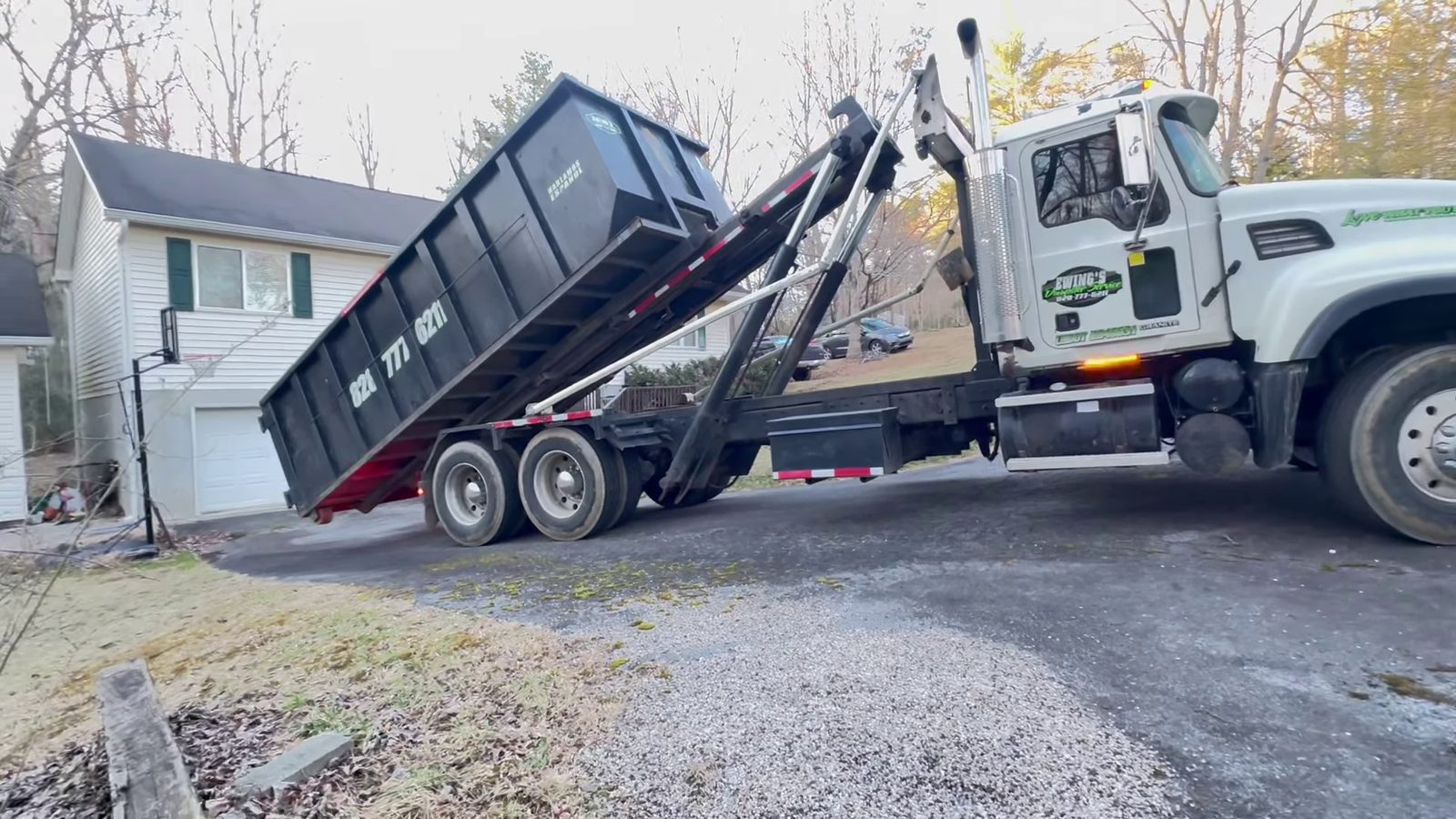
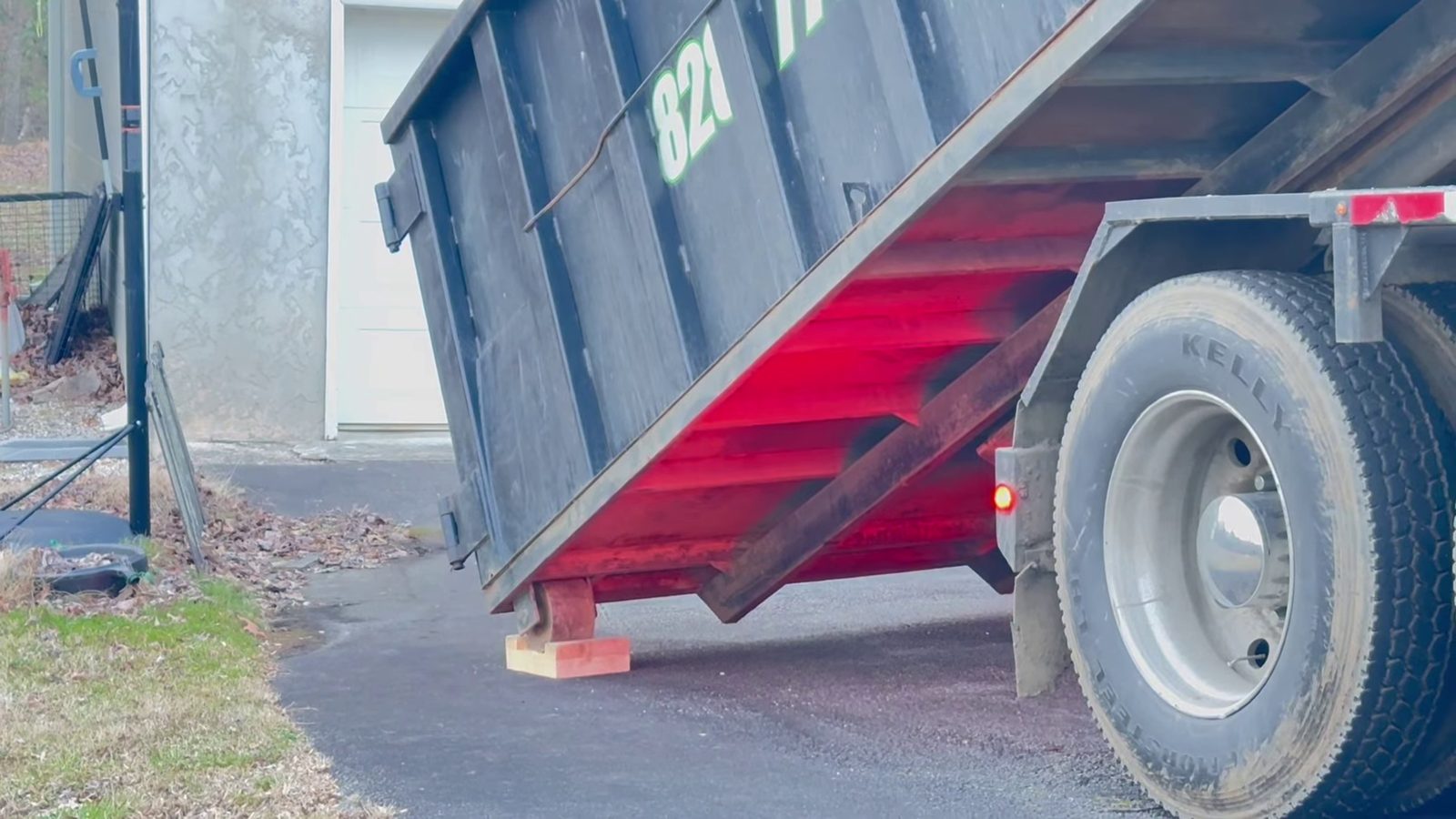
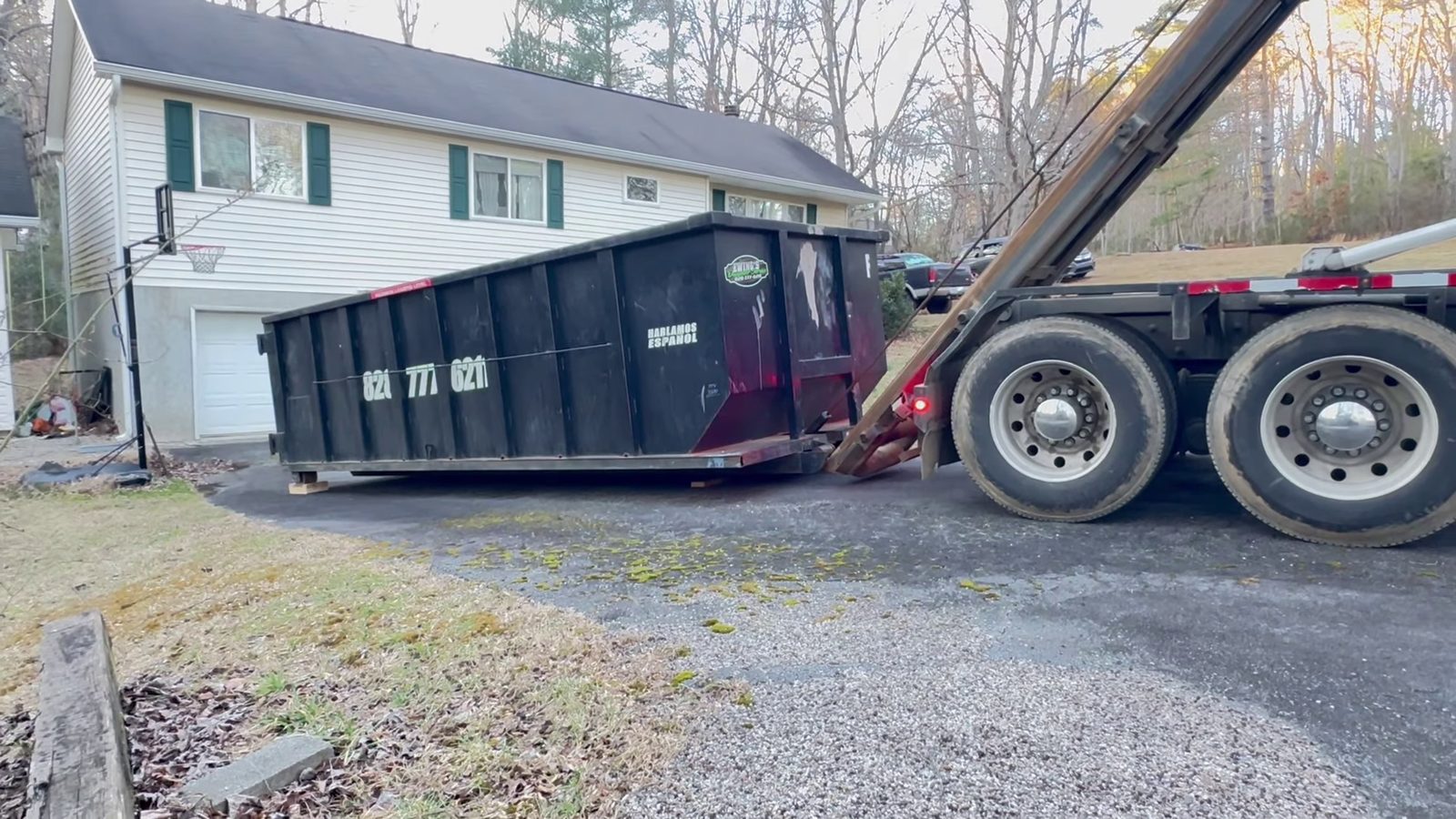
A 30-yard container runs about 22 feet long. On a Montford driveway that curves before it levels, or a hillside lot with a switchback approach, that length becomes a constraint before it becomes a price. A box overhanging the public street is an encroachment problem; a delivery truck that cannot approach at a safe grade may not complete the drop-off at all.
In practice, steep driveways tend to push Asheville jobs toward the 10- or 15-yard sizes, even when the debris volume might support a 17. The 10-yard fits most single-car parking areas with maneuvering room for the truck; the 15-yard handles most two-car driveways. The 17- and 30-yard boxes need a flatter, longer run — more common on newer construction lots in the county's outer areas than in the historic neighborhoods that generate the heaviest renovation demand.
Weight behaves differently on a grade. A box loaded with concrete, ceramic tile, or roofing shingles distributes load unevenly on a slope and shifts during pickup in ways it does not on flat ground. The weight limits guide explains how material density interacts with box size — read it before loading heavy demolition debris, because dense materials reach the weight cap long before they reach the visual brim of the box.
If your access is complicated — a shared lane, a tight bend, or street-only placement — mention it when booking. The delivery crew plans the approach differently than they would for a flat suburban lot, and that conversation is easier before the truck is at the end of your road than after.
What the box can and cannot hold
Standard household and construction debris goes in without issue: furniture, drywall, lumber, roofing material, old appliances stripped of refrigerants, yard waste, concrete, and general cleanout material. The EPA's guidance on construction and demolition materials defines what qualifies as ordinary solid waste and what requires separate handling — that distinction matters because mixing in prohibited material can mean surcharges or a load rejected at the transfer station.
North Carolina maintains its own list of what landfills cannot accept. The NC DEQ Solid Waste Section publishes the current statewide restrictions, which cover tires, lead-acid batteries, certain electronics, and unprocessed yard waste in designated jurisdictions. Those bans apply whether the debris ends up in a residential dumpster or a commercial roll-off container.
Household hazardous waste is a separate category entirely. Paint with liquid remaining, pesticides, motor oil, pool chemicals, and solvents cannot go in a roll-off. The EPA's household hazardous waste guidance details the disposal routes that do apply. Buncombe County and the City of Asheville maintain collection options for these materials — mixing them into the box and expecting them to sort out downstream creates liability for the renter, not just inconvenience for the hauler.
Mattresses and large appliances sometimes carry a handling surcharge and may need to be flagged at booking. If your cleanout includes either, mention it when scheduling so the crew is prepared on delivery day.
Street placement, encroachment permits, and the right-of-way
A dumpster on a private driveway or in an off-street parking area generally requires no permit. The same box placed in a public street or the right-of-way is a different matter. For city-maintained roads in Asheville, temporary street encroachment for a container goes through the City of Asheville permitting process. For state-maintained roads that run through the county — a category that covers more of Buncombe's roads than many homeowners expect — the authority is the NC Department of Transportation, which issues encroachment permits for obstructions in the state highway right-of-way.
The practical point: know whether your street is city- or state-maintained before the truck leaves the yard. The permit process differs for each, and the liability for an unpermitted street obstruction falls on the property owner, not the hauler.
Fire and building codes add a separate layer for placement near structures. The International Code Council's codes — adopted in modified form across North Carolina — address temporary waste containers on construction and renovation sites, including required clearances from buildings and whether egress paths can be blocked. Asheville's historic districts leave less physical margin than a newer subdivision, and placement that fits geometrically may still need a second look for code clearance on a narrow lot where the box would sit close to the structure.
Matching the box to the project before you book
The most common mismatch is the undersized box. A homeowner books a 10-yard expecting a modest cleanout and discovers midway through that the attic alone would fill it. A second delivery fixes the problem but adds both a fee and a gap in the work while the truck is routed back. Walking the full scope — attic, garage, any demolition material, yard debris — before booking is the step that prevents it.
For a standard Asheville home cleanout, the 15-yard handles most two- to three-bedroom houses without strain: furniture, general junk, some yard waste, and miscellaneous debris. Add a partial roof tear-off or a bathroom gut and the 17-yard becomes the right call. Full renovation staging or new-construction debris in Buncombe County lands in 30-yard territory, access permitting.
A roll-off rental starts with a size conversation — the right box is the one that holds your load without exceeding the weight cap or running short on cubic yards first. For renovation work heavy in roofing shingles, concrete, or ceramic tile, the weight limits guide shows thresholds by material and box size; those materials fill weight capacity long before they fill the visual space of the box, and knowing that number before loading is the difference between a clean pickup and an overage charge.
If your project runs longer than expected, the per-day cost breakdown explains how extended rental windows are priced and when requesting a longer term upfront saves money compared to a mid-project extension request.