Mountain terrain changes the first question
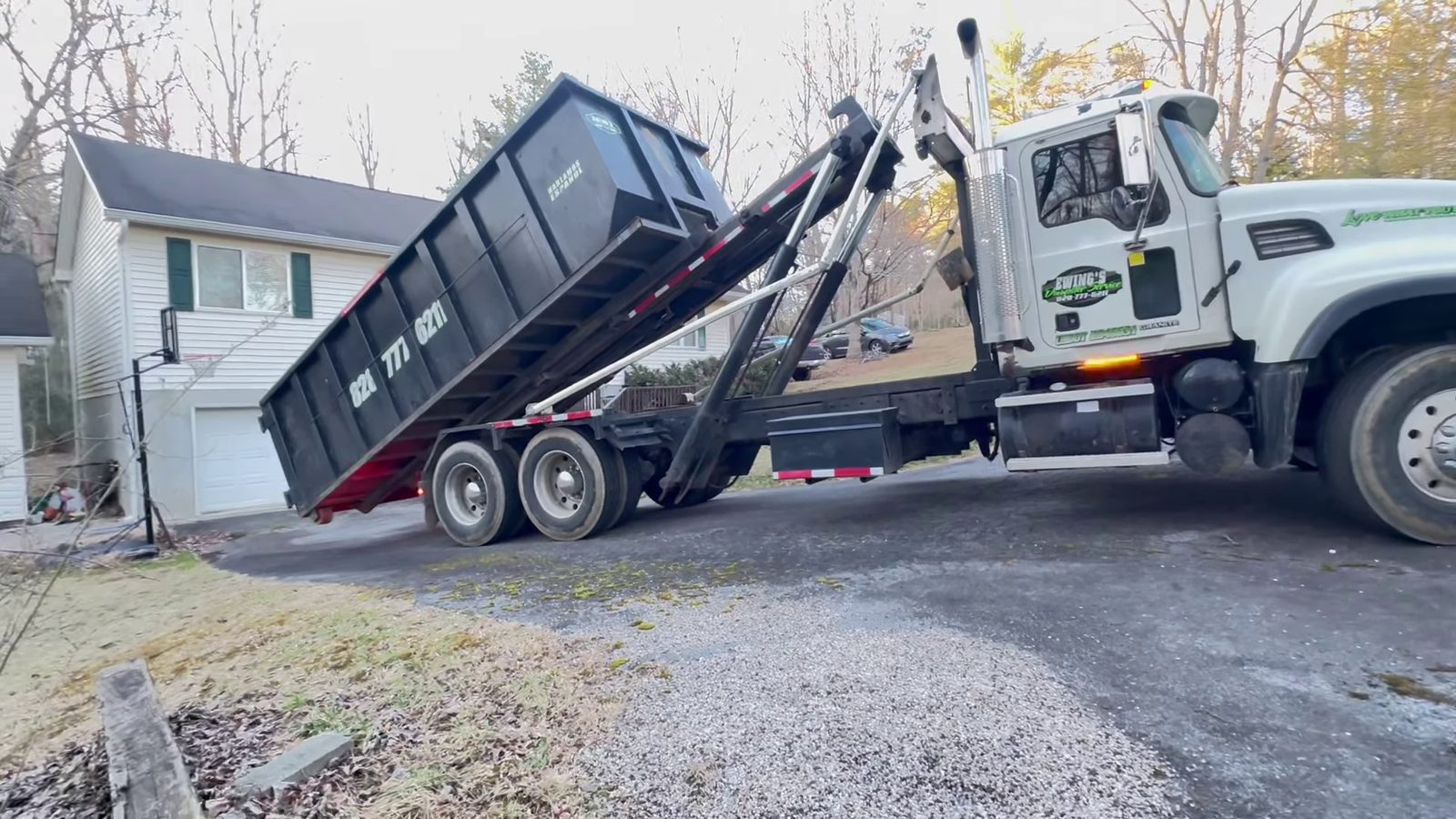
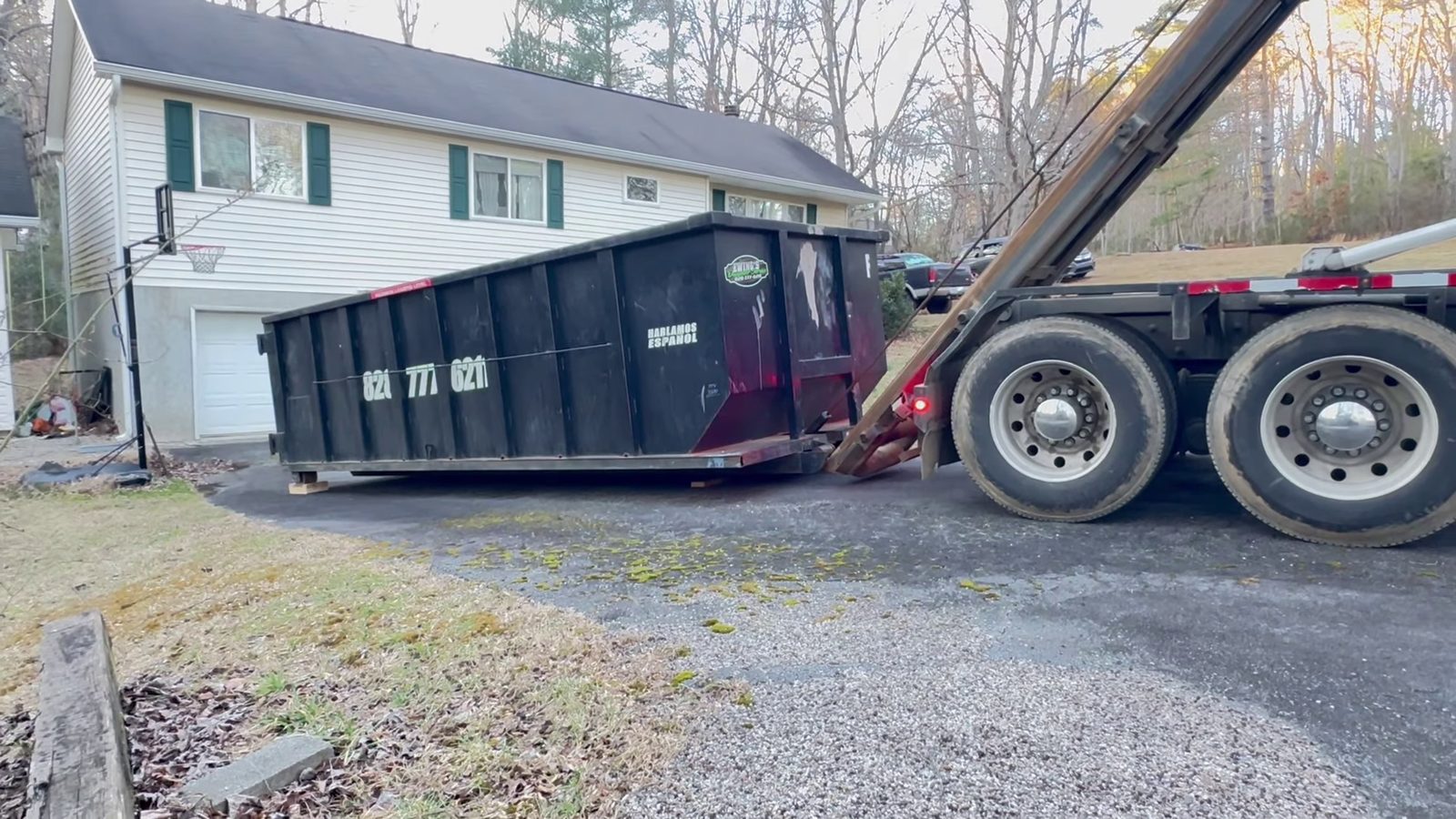
Asheville is not a flat-town dumpster job. The same topography that makes Linden Avenue and the streets above Kenilworth scenic makes them narrow, and a 30-yard container that drops cleanly on a suburban driveway in the piedmont may not clear the turnaround on a ridge lot off Town Mountain Road. Before size, the first question for most Buncombe County jobs is where does it land — whether the driveway grade, overhang clearance, and street width can accommodate both the bin and the truck that delivers it.
That access question is worth answering before you book. The roll-off rental overview covers placement basics that apply everywhere; this page covers what changes in a mountain town with a historic core, steep residential lots, and a street grid laid out before containers existed. For most city-side Asheville addresses, driveway placement is straightforward. For steep-access lots, narrow historic blocks in Montford or West Asheville, or anything requiring a public right-of-way, there is more to coordinate — and knowing that before booking avoids a same-day problem when the truck arrives.
What Asheville jobs actually cost — scope and size table
Ewing's pricing is posted and covers delivery and pickup in a single posted price. Most Asheville jobs fall into one of four containers:
| Project type | Suggested size | Ewing's posted price |
|---|---|---|
| Single-room cleanout, small deck demo | 10 yard | $199 |
| Kitchen or bath renovation, mid-size yard debris | 15 yard | $280 |
| Roofing tearoff, full-room addition cleanout | 17 yard | $325 |
| Whole-house cleanout, large construction demo | 30 yard | $480 |
Location within Buncombe County can affect delivery rates; the figures above reflect Asheville-area service as of January 2026. If your project is on the heavier side — roofing shingles, concrete rubble, soil — weight matters as much as volume. An oversized bin you fill halfway may not save money over the right-sized one filled to the rail. The full cost breakdown covers weight factors and what drives quotes toward the high end of any range.
Street placements and when a permit enters the picture
A dumpster on a private driveway in Asheville needs no permit — it is your property, your call. The rules change the moment a container touches a public street or sidewalk, which happens often in older city neighborhoods where driveways are short, steep, or absent entirely. Placing a roll-off on a city right-of-way requires a permit from the City of Asheville; for jobs on state-maintained roads — which include many arterials through Buncombe County — the right question goes to NC DOT's encroachment and right-of-way permit process. Neither requirement is a barrier to getting the work done, but skipping it creates liability if the container is struck or blocks an emergency or utility crew.
For Asheville's older blocks — the River Arts District, streets near downtown, sections of the Historic District — a container on a narrow right-of-way may also need traffic cones and reflective markings during placement hours. Flag any street-placement situation when you book so delivery can be scheduled after the permit window opens rather than before it is approved.
What cannot go in the bin
The list of prohibited materials is set by state disposal rules and federal statute, not by any one hauler. NC DEQ's Solid Waste Section governs what North Carolina landfills can and cannot receive; anything that cannot be landfilled cannot go in a roll-off that feeds one. The practical no-go list for Asheville-area jobs includes tires, lead-acid batteries, motor oil and other liquid petroleum products, appliances containing refrigerants, and any material regulated as hazardous under federal solid waste law.
Paints, pesticides, and household cleaning chemicals fall under EPA's household hazardous waste guidance and go to a designated collection event or facility, not a roll-off. Renovation debris from older Asheville homes is worth a quick check: pre-1978 construction may contain lead paint or asbestos-containing materials that require a separate handling step before the general cleanout bin arrives. Describing the home's age and what you plan to remove when you call gets you a straight answer before the bin lands.
Storm debris and the Buncombe County weather record
Buncombe County has accumulated 19 federal disaster declarations over 1973-2026 of record, overwhelmingly storm and flood events that push tree debris, damaged roofing, and storm-soaked insulation into driveways across the county. After a significant event, demand for containers spikes quickly and delivery windows compress. Booking early and staying flexible on timing matters more than anything else in those weeks.
Asheville's tree canopy is dense by any regional comparison, and storm cleanouts here often involve large-volume woody debris that weighs less per cubic yard than renovation material but fills a bin fast. A 15- or 17-yard bin handles most single-property storm loads; a whole-lot tree job or a damaged outbuilding may push you to the 30-yard. The sizing guide walks through how to estimate debris volume before you book, which is especially useful when you are working a cleanup timeline against an adjuster visit.
Renovation weight in Asheville's older housing stock
Asheville has been in a sustained renovation cycle, driven partly by growth, partly by short-term rental conversions, and partly by the region's broader housing turnover. Craftsman bungalows in Kenilworth, mid-century ranches in Oakley, and two-story colonials near the university are turning over at a pace that keeps containers moving through residential streets year-round.
Older homes accumulate generations of dense material: plaster walls over wood lath, old-growth dimensional lumber, cast-iron plumbing, and original masonry. These materials are heavy relative to their volume. A 10-yard bin full of plaster debris weighs materially more than a 10-yard bin full of modern drywall scraps, and hitting a weight limit on a bin you thought was correctly sized is an avoidable surprise. Describing what you are removing — not just estimating volume — when you book is the step that closes the gap between the quote and the final charge.