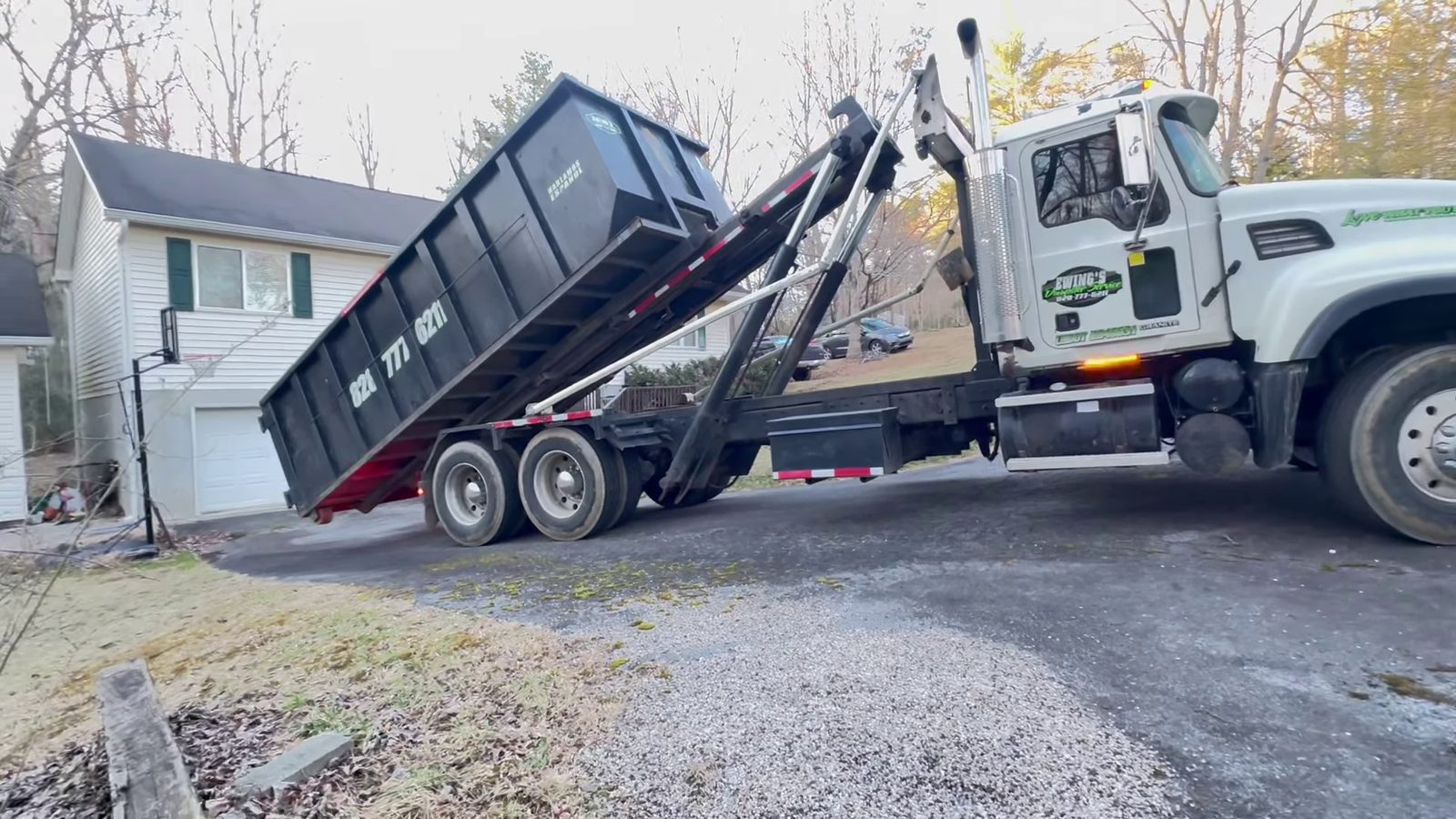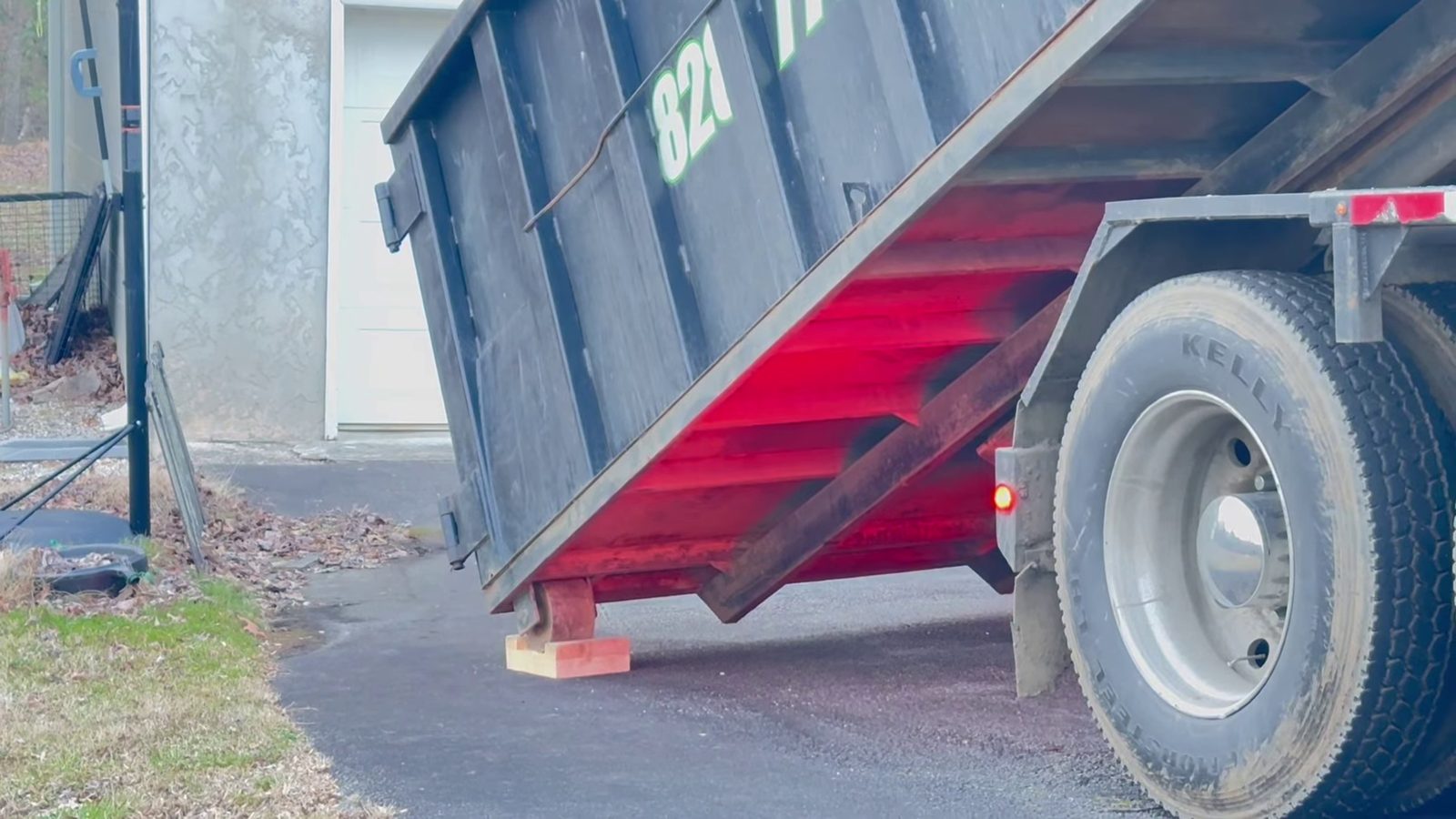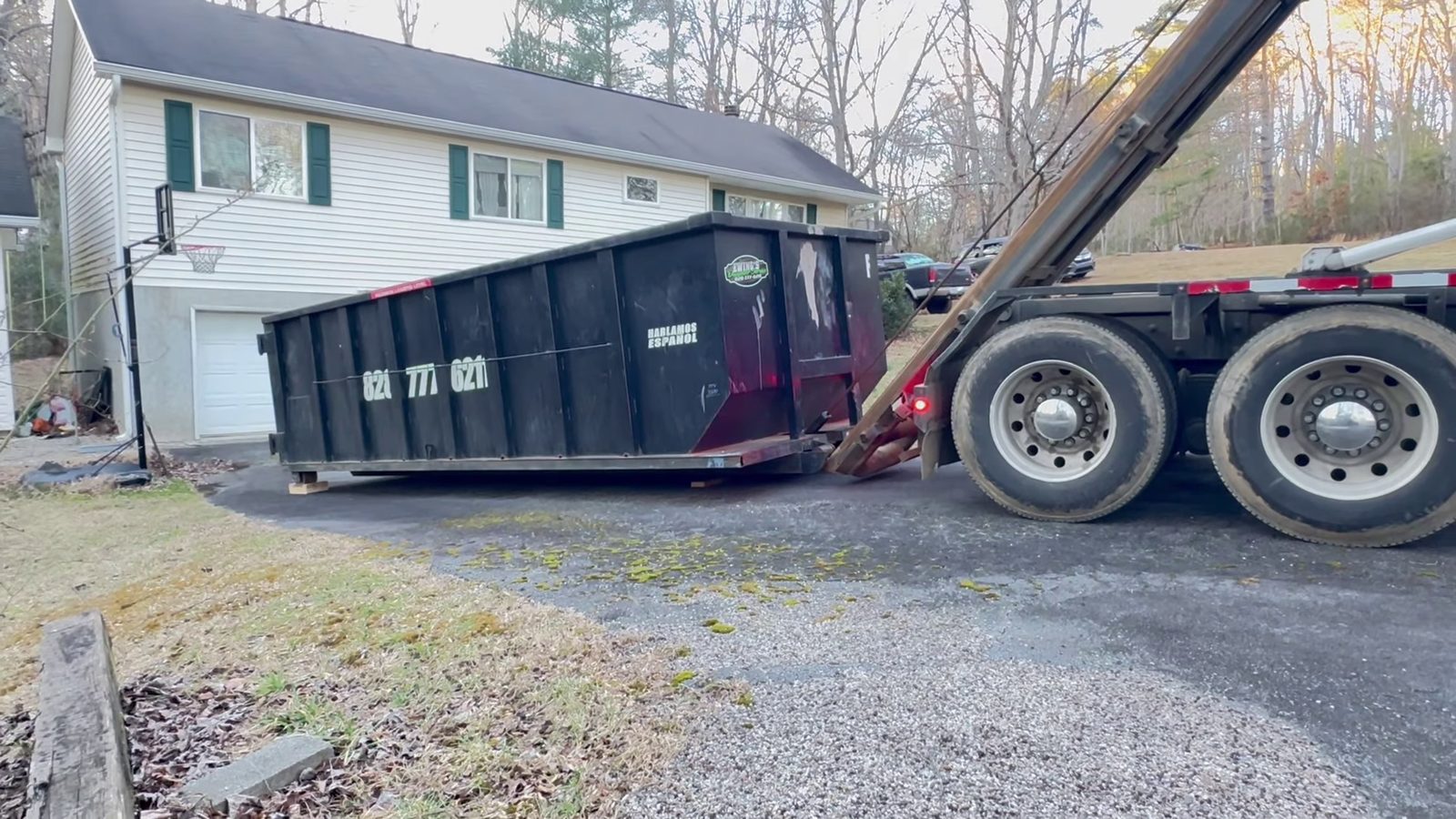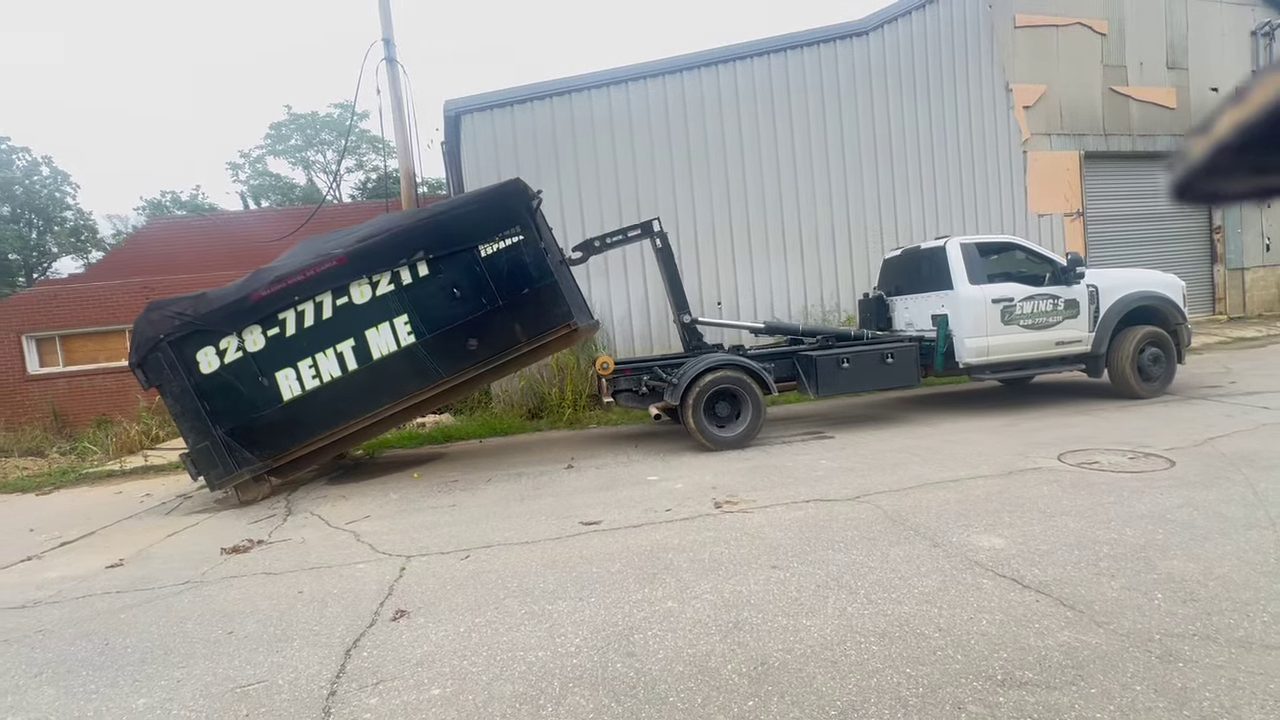
The access question that shapes every Fairview delivery
Fairview is unincorporated Buncombe County, about ten miles east of Asheville along US-74: farm country and cabinet lots pressed into rolling mountain terrain, where driveways climb at real grades and gravel lanes narrow between old fence lines. That terrain makes every dumpster delivery different from a flatland suburban job, and it is the first thing worth working through before you schedule.
A standard roll-off truck needs roughly 60 feet of clearance, a surface that will not sink under loaded weight, and a turnaround or straight-line exit. On a paved driveway with a flat apron, that is straightforward. On a steep gravel approach with a sharp turn at the top, it matters whether you are ordering a 17-yard bin or a 30-yard container. The 30-yard is longer and heavier when full, and on the wrong driveway it cannot be safely set or retrieved. Describing your access when you book avoids a wasted trip and a delayed project start.
Fairview being unincorporated changes the permit picture. There is no city of Fairview to issue a placement permit for bins on private property; Buncombe County zoning covers land use here. Where it becomes more involved is if the bin has to sit alongside a state-maintained road: NC Department of Transportation encroachment rules govern the right-of-way, and roadside placement on any state road requires advance coordination. The majority of residential jobs in Fairview keep the bin on private property and never raise that question.
Matching bin size to the scope of work
Most Fairview construction projects fit into a predictable set of scopes. The table below maps typical project types to container size and the posted price, delivery and pickup included, for Fairview and surrounding Buncombe County locations.
| Project scope | Bin size | Price (Jan 2026) |
|---|---|---|
| Single-room gut-out (kitchen, bath, or bedroom) | 17 yard | $325 |
| Multi-room renovation or full-floor flooring replacement | 17 or 30 yard | $325–$480 |
| Roofing tear-off on a standard residential roof | 17 yard | $325 |
| Whole-house demo or major addition cleanup | 30 yard | $480 |
| New construction rough framing and site debris | 30 yard | $480 |
One variable that matters alongside volume: material density. Roofing shingles, concrete, and ceramic tile hit weight limits before they fill the bin visually. The weight limits guide explains how dense-material jobs load differently and how to avoid overage surprises. For projects generating debris across several days, one bin staged on site through the full project duration is usually more efficient than multiple swaps.
What the bin accepts and what it cannot
Standard construction and demolition debris goes in without issue: framing lumber, drywall, roofing shingles, insulation, flooring, doors, windows, and mixed demo material from a renovation or tear-down. The limits on what cannot go in come from state and federal regulation, not hauler policy.
North Carolina's DEQ Solid Waste Section defines what C&D material can enter a licensed landfill. Asbestos-containing materials, chemically contaminated soil, and certain regulated demolition components require separate collection and disposal outside the bin. This matters more in Fairview than in newer development corridors: older farmhouses, rural cottages, and structures built before the 1980s are more likely to have asbestos in floor tile, pipe insulation, or roofing products. If your project involves those assemblies, the regulated material needs to be identified and segregated before the bin arrives on site, not sorted out after demo is underway.
Household chemicals are a separate category entirely. Paint cans, solvents, pesticides, and similar items are household hazardous waste under EPA guidance and have their own disposal path. The EPA's C&D materials guidance provides a clear overview of what qualifies as construction waste versus what requires regulated handling. If there is any doubt about a specific material, check before you load rather than deal with a rejected bin at the landfill gate.
Fairview's older housing stock and what it adds to a demo job
The housing mix in Fairview tilts older than many of Buncombe County's newer development corridors. Rural structures in this part of the county range from mid-century farmhouses to cabins on inherited land, alongside more recent construction on carved hillside lots. The older the structure, the more likely a renovation uncovers unexpected material: multiple layers of flooring, non-standard framing dimensions, and components that need attention before they go in the bin.
New construction on steep lots generates a different debris profile. Sites where grading creates a flat building pad surrounded by cut slopes produce more soil, rock, and form material during the foundation and rough framing phases. That material needs its own disposal path; it does not go in a standard C&D bin, and in quantity it hits weight limits fast. Plan the construction dumpster for clean framing and finish debris, and route site material separately.
For an overview of how to organize debris across a full build or renovation project, the construction dumpster rental page covers how the full range of Buncombe County project types are typically handled and what size container fits each phase.
Timing the delivery around the actual work
The two most common scheduling errors on a renovation job are ordering the bin too early and ordering it too late. Too early: it fills with packaging and miscellaneous junk before demo even starts, and you are calling for a swap before the real work begins. Too late: the bin is not on site when debris starts accumulating, and material piles up in ways that slow the crew. The right window is delivery the morning before demo starts, with pickup or swap scheduled when the bin reaches capacity.
Fairview's rural, unincorporated character means there is no city code enforcement on bin placement duration and no municipal complaint line for how long a container sits in a driveway. What does apply is Buncombe County's basic nuisance framework; a bin that sits for weeks beyond the project becomes a liability for weather exposure and debris scatter. Match the rental period to the actual work timeline.
Buncombe County has experienced 19 federal disaster declarations over 1973-2026, most of them involving storm and flood events. Post-storm cleanup in Fairview generates a different debris mix than a planned renovation: saturated insulation, water-damaged drywall, and flood-affected materials that may qualify as regulated waste depending on contamination level. If the project is storm recovery rather than scheduled renovation, flag that when you call so the right container and disposal path is established from the start.