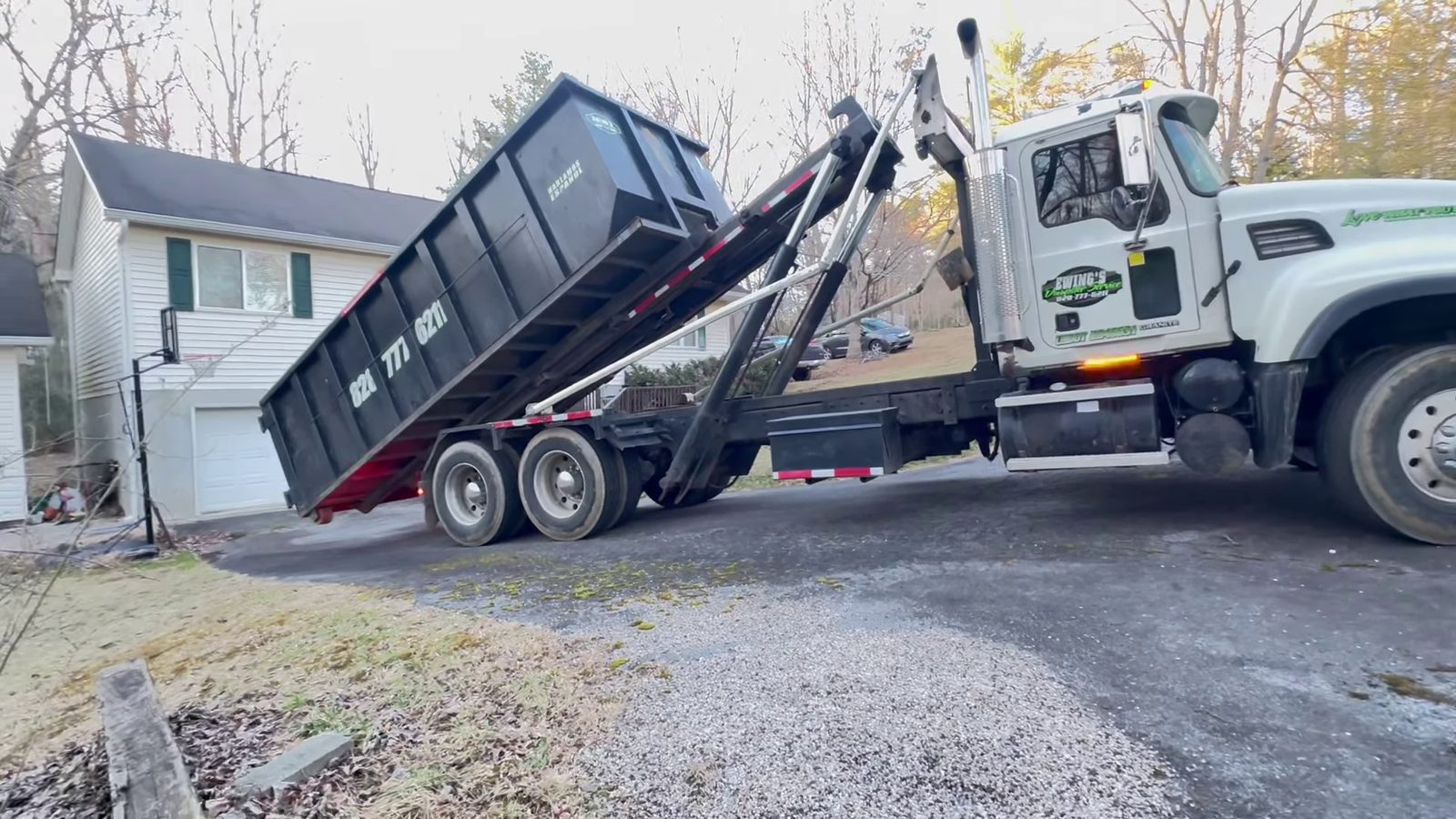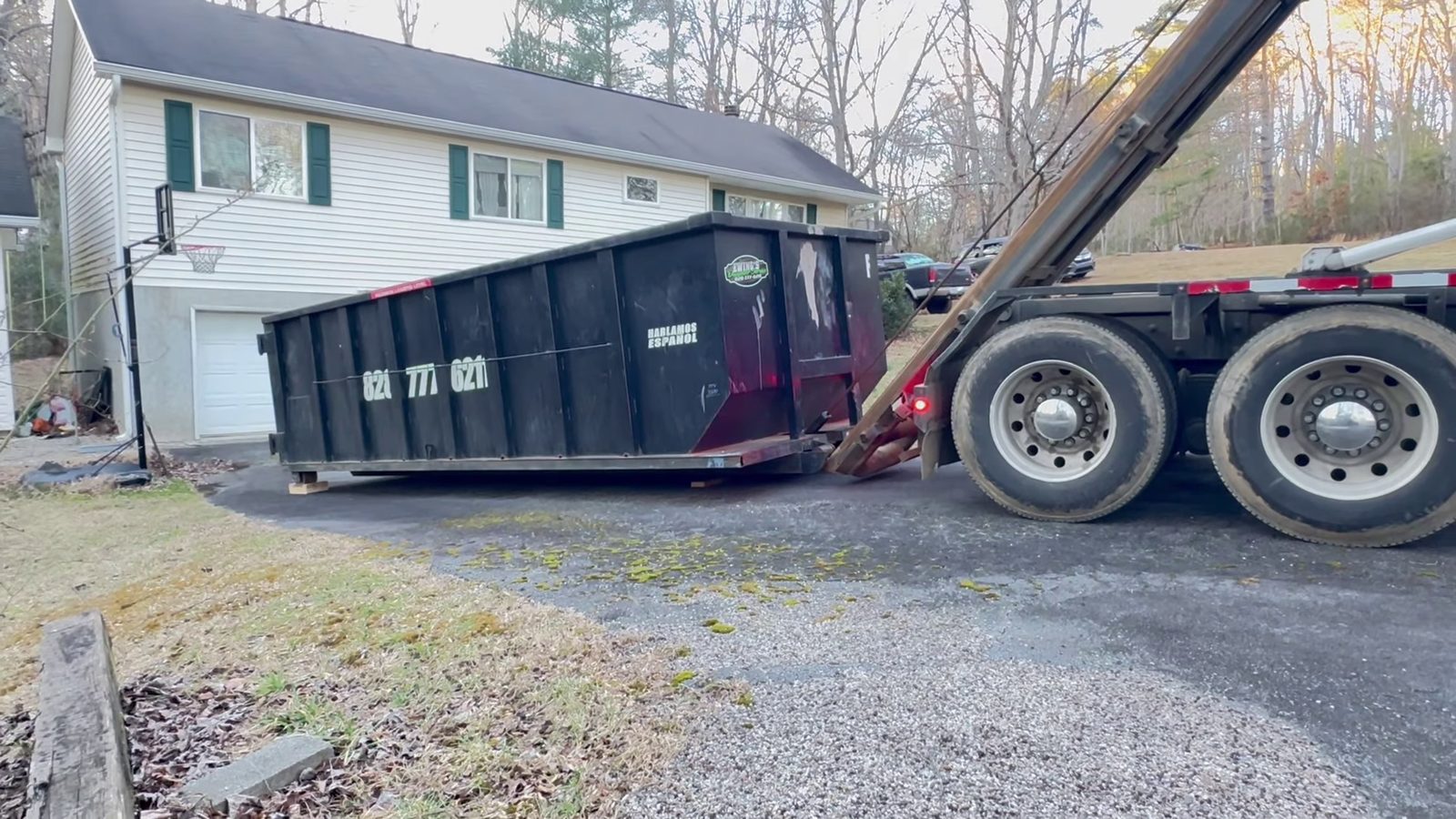
Henderson County agriculture sets the terms
Mills River doesn't function like a suburb, and its dumpster rental jobs don't work like suburban hauls. The community sits in an agricultural valley floor in Henderson County, flanked by apple orchards, heritage vegetable farms, and working farmsteads that have accumulated decades of outbuilding debris, old machinery, and salvaged materials. A cleanout here — a 1960s dairy barn, a hillside property that's changed hands twice, an orchard operation being retired — involves material density and mix that suburban pricing models rarely account for.
Old metal roofing, hand-poured concrete, reclaimed timber, and orchard irrigation hardware fill roll-off containers in unpredictable ways. The result is that a Mills River project often comes down to material type as much as volume. Someone clearing a 400-square-foot outbuilding full of old iron equipment may need a larger container for the weight, not the cubic feet. For projects with any significant weight-dense material, the size selection guide explains how to match container to load before you book.
Mills River falls under Henderson County jurisdiction, not the City of Asheville or Buncombe County. That matters for where debris is processed, which road-placement permits apply, and which solid waste rules govern your haul. Ewing's serves the full Henderson County area, and the prices below reflect the January 2026 rate schedule with delivery and pickup included.
Current prices and what each container handles
Ewing's posts four container tiers for the Henderson County service area. The table below maps each to typical project types in Mills River. Delivery and pickup are included across all tiers. For a detailed look at how scope, material weight, and rental duration affect the final number, the dumpster rental cost page covers each line item.
| Container | Price (Jan 2026) | Typical Mills River project |
|---|---|---|
| 10 yard | $199 | Single-room cleanout, small yard debris, minor renovation scraps |
| 15 yard | $280 | Multi-room cleanout, roofing tear-off on a small structure, outbuilding clear |
| 17 yard | $325 | Full interior gut, barn contents, mid-size renovation debris |
| 30 yard | $480 | Large farm property cleanout, full house renovation, construction debris haul |
Most residential and rural property cleanouts in Henderson County fall in the $199–$325 range. The 30-yard becomes the practical choice when volume is high and two smaller pulls would otherwise be needed; at $480, a single large container is almost always cheaper than two separate hauls. If you're unsure which tier fits your project, the size guide maps common project types to container tiers and explains how to handle mixed-material loads.
What goes in and what Henderson County landfills won't take
Every roll-off rental in North Carolina operates under state solid waste rules that restrict what can go to the landfill. The NC DEQ Solid Waste Section maintains the current prohibited materials list: tires, batteries, liquids, and certain construction byproducts require separate handling. For farm and rural properties in Henderson County, the most common surprises are old motor oil in barn drums, pesticide containers from orchard operations, and propane tanks from outbuildings. None of those go in the box, and discovering them mid-job adds time and cost.
Items that fall under household hazardous waste — paint cans, solvents, pool chemicals, and old pesticides — follow separate rules. The EPA's household hazardous waste guidance explains what qualifies and where these materials should go instead of a roll-off. Placing prohibited items in a container can result in a contamination surcharge, a rejected load at the transfer station, or both.
Weight limits are the other constraint worth knowing upfront. Concrete, soil, and gravel fill a 10-yard container's weight allowance well before the volume looks full. For heavy demolition debris, sizing up to distribute weight across a larger container is usually cheaper than a mid-job swap. The roll-off rental overview covers standard load rules and what to expect from drop-off to pickup.
Placement on rural roads and Henderson County logistics
Most Mills River properties have enough driveway, yard, or gravel apron to keep the container off the public road entirely, which simplifies the job. When a site requires placement on the road shoulder or in a travel lane, common on Henderson County's rural routes where paved shoulders are sparse, an encroachment or right-of-way permit from NCDOT may be required before the container goes down. The permit type and lead time depend on road classification and how long the container will occupy the space. The permit obligation runs with the customer under state rules; Ewing's can advise on what local norms look like for a given route.
Unpaved farm lanes and steep terrain add a ground-bearing consideration that flat suburban lots don't face. Soft ground after a rain event can shift a loaded container or damage the lane surface. Plan to place on firm, level ground, and flag any access concerns when you book so the driver arrives with accurate expectations about the approach.
Storm cleanup and the French Broad River corridor
Henderson County's federal disaster record is relevant background for anyone planning a large cleanout in the Mills River area. 16 declared disasters on record (1978-2026) have affected this county, most of them storm and flooding events that track up the French Broad River valley, the same valley where Mills River sits. When a flooding event moves through, it leaves behind water-logged furniture, damaged drywall, saturated flooring, and exterior debris that needs to move quickly, often within the window where insurance documentation still matters.
The EPA's guidance on construction and demolition materials recommends sorting debris where practical to recover recyclable materials and reduce landfill weight. On a larger flood cleanout, separating metals, clean wood, and salvageable concrete can meaningfully reduce the overall haul cost. If you're scheduling after a storm event, lead time is worth factoring in; availability during active disaster recovery periods fills quickly, so book as soon as you have a scope and flag the event context when you call.