Mountain lots reshape the delivery plan
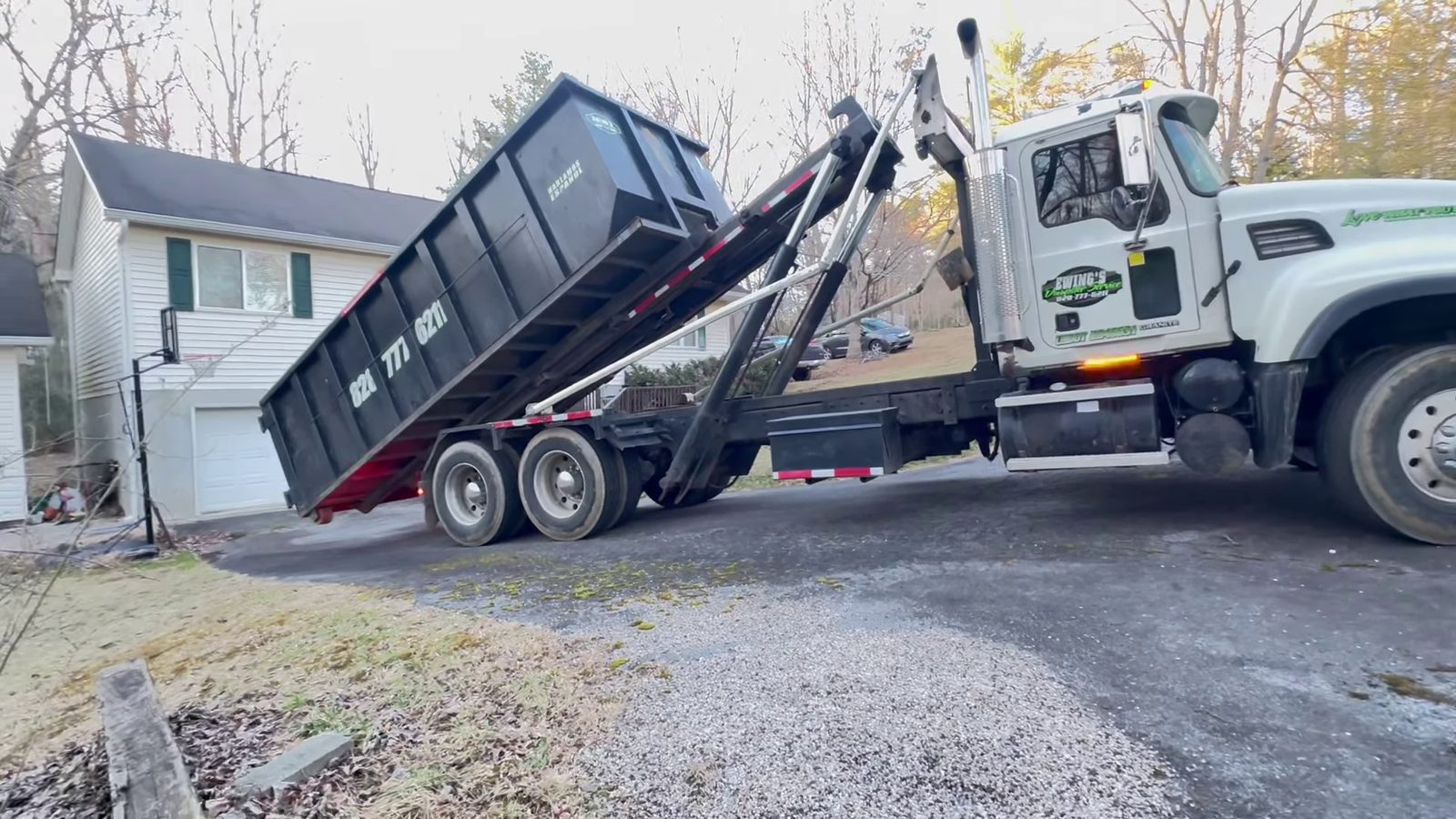
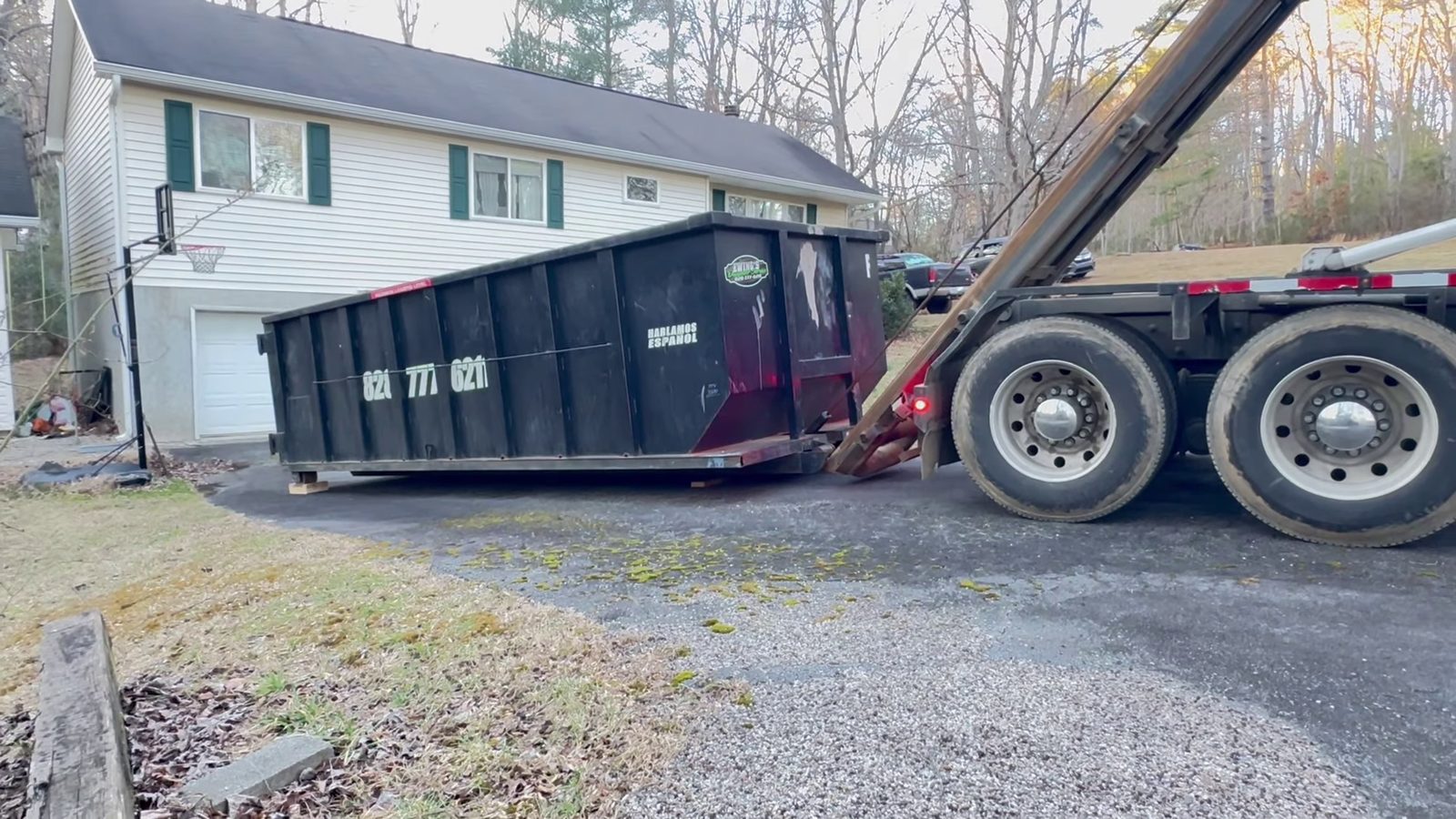
An Asheville construction site might be a craftsman bungalow in Montford with twelve feet between the curb and the porch steps, a split-level in Kenilworth where the driveway climbs uphill at a grade that changes where a roll-off can sit safely, or a newer build on a cut lot above the Parkway where a standard truck needs a full turn radius the cul-de-sac does not have. All three are real placement problems, not scheduling ones.
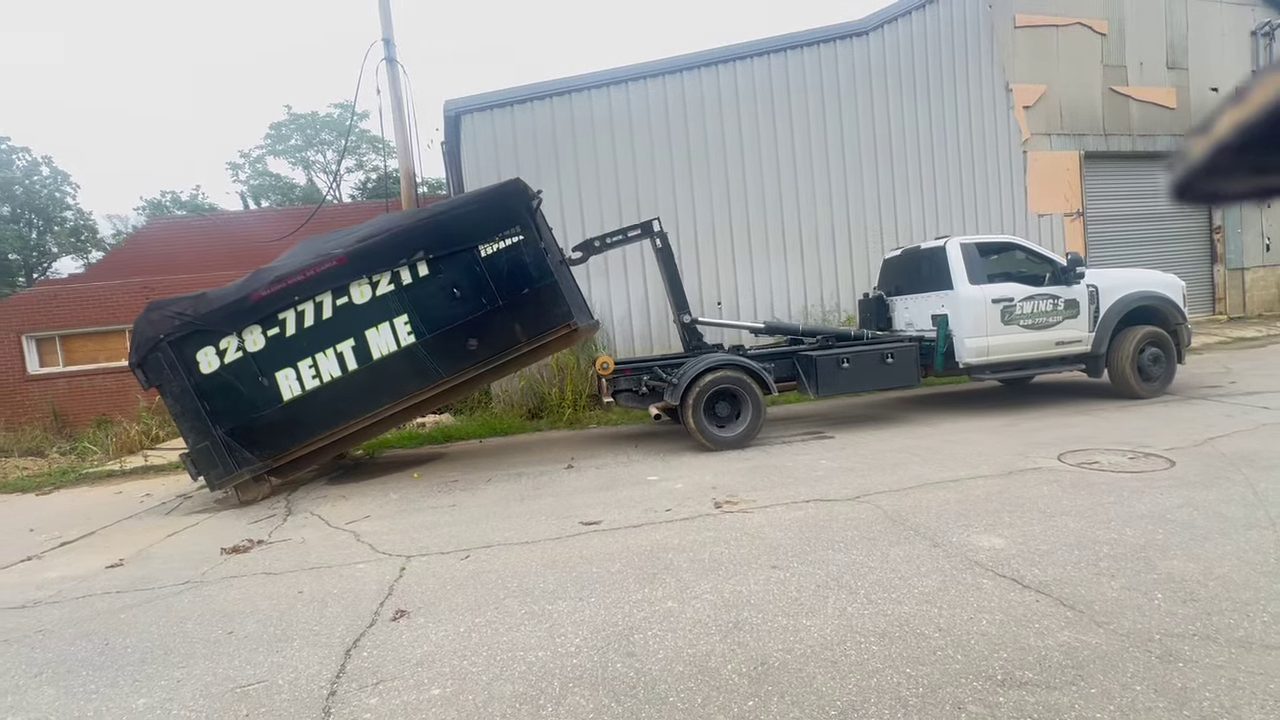
Getting this right starts at booking, not on delivery day. The two questions that matter: what size container the job actually needs, and whether the driveway or staging area can accept it. A 30-yard bin fits a full interior demo or a large roofing job; on a lot where the driveway will not take it level, a 17-yard covers most of the same scope and fits tighter. See the full construction dumpster rental overview for placement details and what to have ready when you schedule.
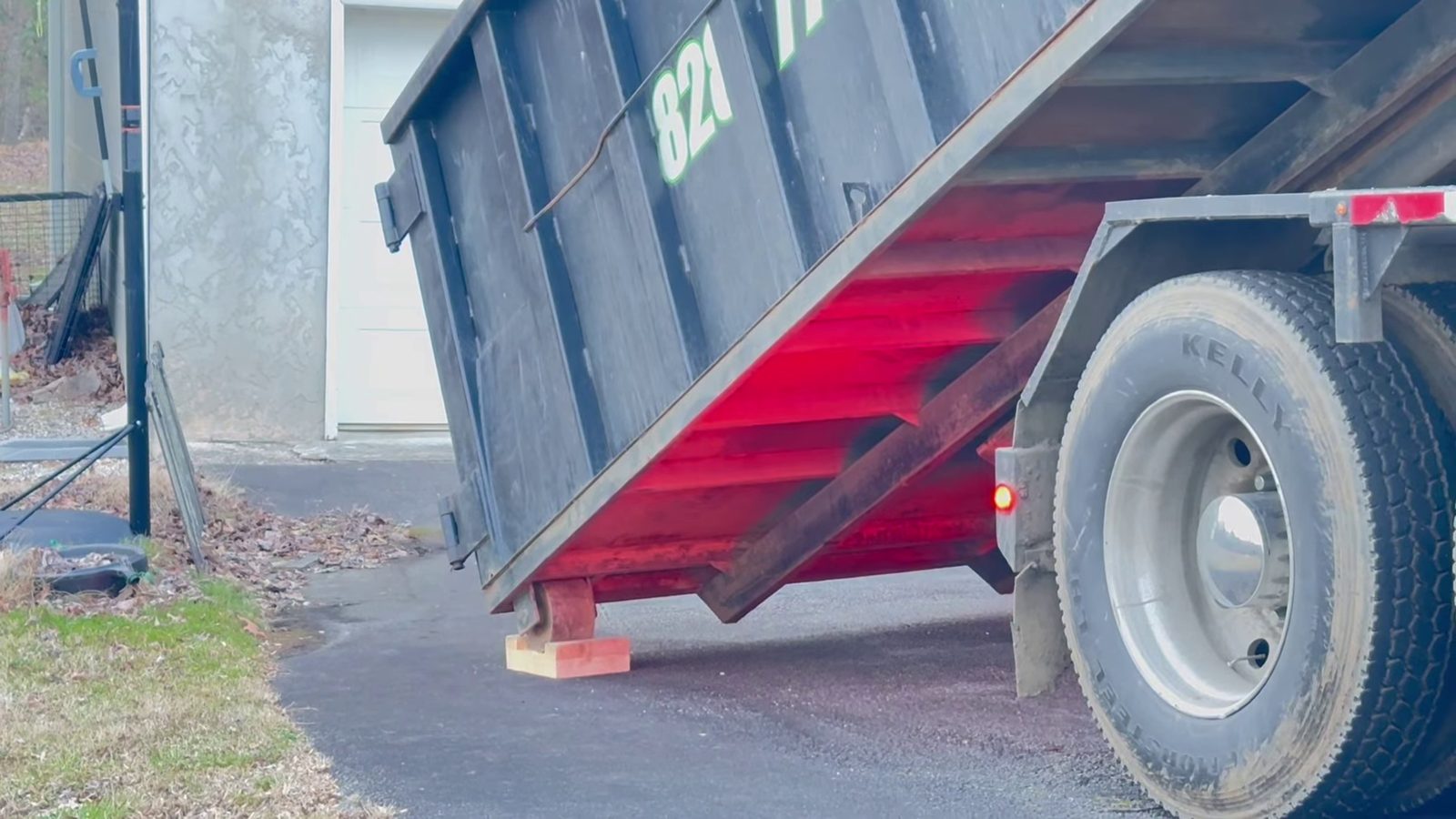
Buncombe County's topography adds a layer most flat-terrain markets skip entirely. Asheville sits in a bowl formed by ridge lines to the east and southeast, with neighborhoods built at every elevation from the French Broad River corridor up through the ridge roads above Merrimon Avenue and Lakeview Park Drive. That means a single service area spans river-flat lots where a full-size truck maneuvers easily and steep ridge sites where even a shorter bin requires a level set before it's safe to load. The difference between those two delivery types is not visible from an address alone. A short description of the driveway at booking closes that gap before it becomes a wasted trip.
Matching container size to what you're actually hauling
Construction debris in Asheville renovation projects runs heavier per cubic foot than typical household junk. Tile tearouts, old plaster walls, hardwood flooring from pre-war bungalows, and roofing shingles fill a bin faster than their volume suggests. Size the bin to the job scope, then confirm the placement spot can hold it. Check the weight limits page before loading a tile-heavy or concrete-heavy job — material density can cap a load before the bin looks full.
| Job scope | Recommended size | Typical price |
|---|---|---|
| Single-room remodel, drywall, light flooring | 17-yard | $325 |
| Kitchen gut or bathroom remodel with subfloor work | 17–30 yard | $325–$480 |
| Roofing strip on a standard residential roof | 17–30 yard | $325–$480 |
| Full interior demo, addition framing debris, whole-house cleanout | 30-yard | $480 |
Prices are Ewing's posted rates for January 2026, delivery and pickup included; exact pricing can vary by location within the service area. The 30-yard rental page has load dimensions if you're gauging whether the bin fits your driveway or staging area.
Asheville's renovation market leans toward older structures. Neighborhoods like West Asheville, Oakley, and East Asheville are dense with bungalows and two-stories built through the first half of the twentieth century, using construction methods that produced significantly heavier debris per square foot than modern builds. True-dimension lumber — full two-by-fours rather than today's nominal size — adds up quickly in a demo. Plaster walls backed with wood lath weigh more and compact differently than gypsum drywall. Original hardwood subfloors in pre-war homes are often two layers deep. All of this means a job in an older Asheville home frequently fills a bin's weight limit before it fills its volume, which is why the weight limits page matters as much as getting the cubic yards right.
What stays out of a construction bin
Buncombe County's housing stock includes some of the oldest residential construction in western North Carolina. Demo projects in older Asheville neighborhoods — West Asheville, Chestnut Hill, Oakley — regularly turn up materials that cannot go in a standard construction dumpster. The NC DEQ Solid Waste Section maintains the state prohibited materials list: hazardous waste, liquids, and anything confirmed to contain friable asbestos require regulated disposal, not a roll-off. The federal framework comes from the EPA's RCRA, which sets the nationwide floor for what goes to a standard C&D facility.
Day-to-day stops on a construction job: paint cans with liquid paint still in them, solvents and aerosols, batteries, tires, and anything on the EPA's household hazardous waste list — materials found in most pre-1980 Asheville homes. Drywall, roofing shingles, framing scraps, concrete, and plumbing fixtures are all fine. If you're sorting demo material for salvage or diversion before disposal, the EPA's C&D materials guidance outlines what's diverted most efficiently. When a material is borderline, ask before loading it.
A large share of Asheville's established neighborhoods — Montford, Lakeview Park, Chestnut Hill, and much of West Asheville's bungalow stock — includes homes built before 1978, the federal cutoff year for lead-based paint in residential construction. Renovation work that disturbs painted surfaces in those homes falls under regulations separate from general C&D disposal rules. The NC DEQ Solid Waste Section is the right starting point when a demo turns up something that may need separate handling rather than the bin. Flagging uncertainty before loading is always the simpler path.
When a bin on a public road needs a permit
A bin on private property — a driveway or backyard staging area — typically requires no permit. The question comes up when the site has no viable off-street placement: a lot with no driveway depth, a grade too steep for a level set, or a job in Montford or Oakley where the curb is the only realistic option. At that point, the road type determines who issues the permit.
City streets in Asheville fall under city jurisdiction; the City of Asheville handles encroachment permits for containers in those rights-of-way. State-maintained roads, including many arterials through older Asheville neighborhoods, require a permit from NC DOT. These are two distinct permit paths, and misidentifying the road type adds delay. Determine which applies before booking if street placement is a possibility. Flagging a constrained access situation at scheduling avoids a wasted delivery trip.
Street placements come up most often in three scenarios around Asheville: narrow historic lots in Montford and Chestnut Hill where the driveway is too short or too steep for a safe set, renovation projects in the River Arts District where off-street staging is limited, and corner lots where the best access to the work area faces the street rather than the driveway. Each requires a permit, and each requires identifying the correct jurisdiction first. Buncombe County's GIS mapping tool can confirm road ownership when the responsible agency is not obvious from the street type alone — a quick check that avoids contacting the wrong office and losing a day of lead time before work starts.
Timing the bin around Asheville's weather window
Buncombe County has accumulated 19 federal disaster declarations over 1973-2026, most of them storm and flood events that move through the southern Appalachians. For construction projects that expose a structure to weather — roofing work, exterior demo, foundation access — the timing of the dumpster matters. A bin sitting through a heavy rain event on a sloped mountain driveway can shift; construction debris also absorbs water and gains weight fast in an open bin over a storm weekend, which can push a load toward its weight limit before the bin looks full.
Book the bin for the days debris is actively moving, not as a standing fixture for a multi-week project. For phased work — a bathroom demo followed by a kitchen gut — a swap keeps the bin on-site only while material is being generated. Flag your project timeline at booking so the schedule fits the work, not a worst-case buffer.
Fall is a high-demand season for construction dumpsters across Buncombe County, as contractors and homeowners push to close out roofing and exterior projects before mountain weather turns unpredictable. That concentrated demand is real, and it means lead time for bin delivery during peak fall weeks can stretch compared to spring or early summer. For projects with a firm start date — a permit that just cleared, a subcontractor arriving on a specific day — booking the bin at the same time you confirm the trade schedule prevents a gap at the worst moment. For jobs that span a weather transition, knowing your load's weight before a wet weekend arrives is worth building into the project checklist; water-saturated debris in an open bin can hit the weight limit well before the bin looks full from volume alone.