What the terrain actually means for your rental
Leicester sits along US-63 in western Buncombe County, where the Newfound Creek corridor mixes river-bottom farms, mid-century homesteads, and newer construction cut into the same Appalachian slopes that run toward the Tennessee line. Asheville, the county seat, is about fifteen miles east: close enough to share a service area, far enough that site logistics here read differently than a city lot. Properties along this corridor trend toward rural scale: long driveways, outbuildings, parcels carved from original farmland, and grades that flatten only where someone graded a pad. Estate clearances, barn demolitions, and post-storm cleanup cycle through this market regularly.
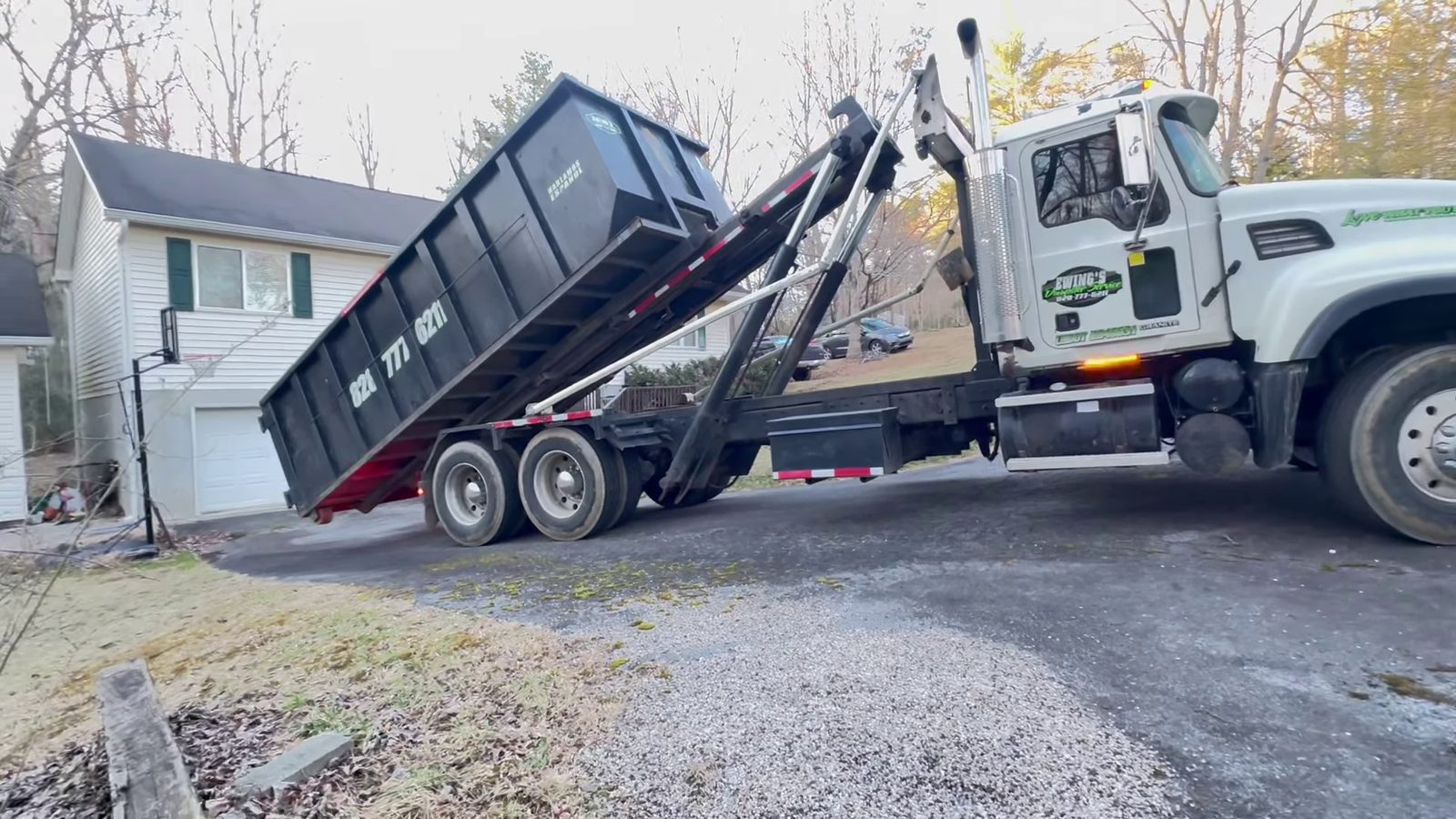
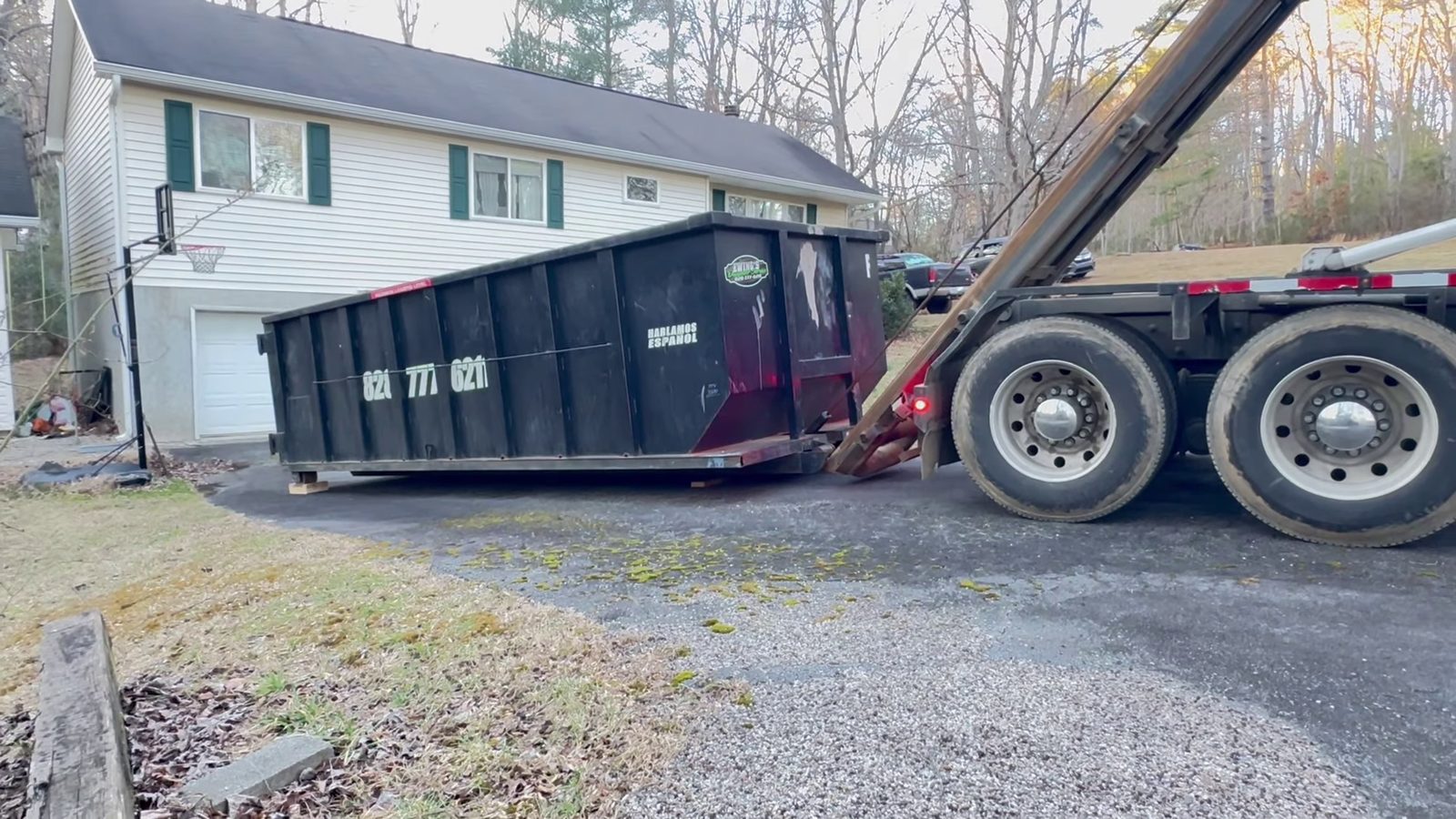
A roll-off truck is thirty feet of steel on paired rear axles. When the driveway is gravel, steep, or long (which describes a good share of Leicester addresses), the question isn't whether we can deliver, it's where the bin sits and how we position for the driver's exit. Tell us the surface type, the grade, and any overhead line clearance when you book. We sort the placement logistics before the truck leaves the yard, and that is what makes the first trip the only trip.
Sizes and what each one handles
Ewing's runs four container sizes, each priced delivery-and-pickup-included for the Leicester area. The 10-yard bin handles a single-room gut, a full garage cleanout, or a moderate yard debris haul. The 15-yard covers a kitchen or bathroom remodel, a small deck teardown, or a heavily loaded outbuilding. The 17-yard is the rural workhorse: enough for a whole-house cleanout, a large deck-and-fence combination, or a shed demolition, and compact enough to place on the tighter pads that ridge-lot properties often provide. The 30-yard container handles structural teardowns, estate cleanouts, and commercial renovation volumes; on soft or steep driveways, the 17 often does the same work with fewer placement constraints. The size guide walks through each scenario with load illustrations if you are between two options.
| Project type | Suggested size | Price (delivered & picked up) |
|---|---|---|
| Single room, garage cleanout, yard debris | 10 yd | $199 |
| Kitchen or bath remodel, small deck | 15 yd | $280 |
| Whole-house cleanout, large deck, shed demo | 17 yd | $325 |
| Structural teardown, estate cleanout | 30 yd | $480 |
Prices as of January 2026; location within our delivery area may affect the final rate. See the full dumpster rental cost breakdown for weight-overage rates and extended-rental terms.
What loads in and what doesn't
Standard residential and construction debris loads in without issue: furniture, appliances without refrigerant, demo framing, roofing shingles, drywall, moderate quantities of concrete, and yard waste. What the bin cannot accept reflects state and federal disposal rules, not arbitrary policy. The NC DEQ Solid Waste Section maintains the full list of materials prohibited from NC landfills — tires, lead-acid batteries, liquids, paint, and unencapsulated asbestos are all on it. Placing any prohibited material in a rented container creates a disposal violation that runs back to the account holder.
Household chemicals — old pesticides, motor oil, cleaning solvents, pool chemicals — fall under EPA household hazardous waste guidelines and must route through Buncombe County's collection events rather than a roll-off bin. If you are clearing a farm shop or a basement that accumulated chemicals over decades, that sorting step belongs before the dumpster arrives. For projects with a construction component, the EPA's C&D materials guidance explains what qualifies as recyclable versus landfill-bound — separating recyclable material before loading can reduce your per-ton overage cost on heavy jobs.
Private placement versus public road — the permit question
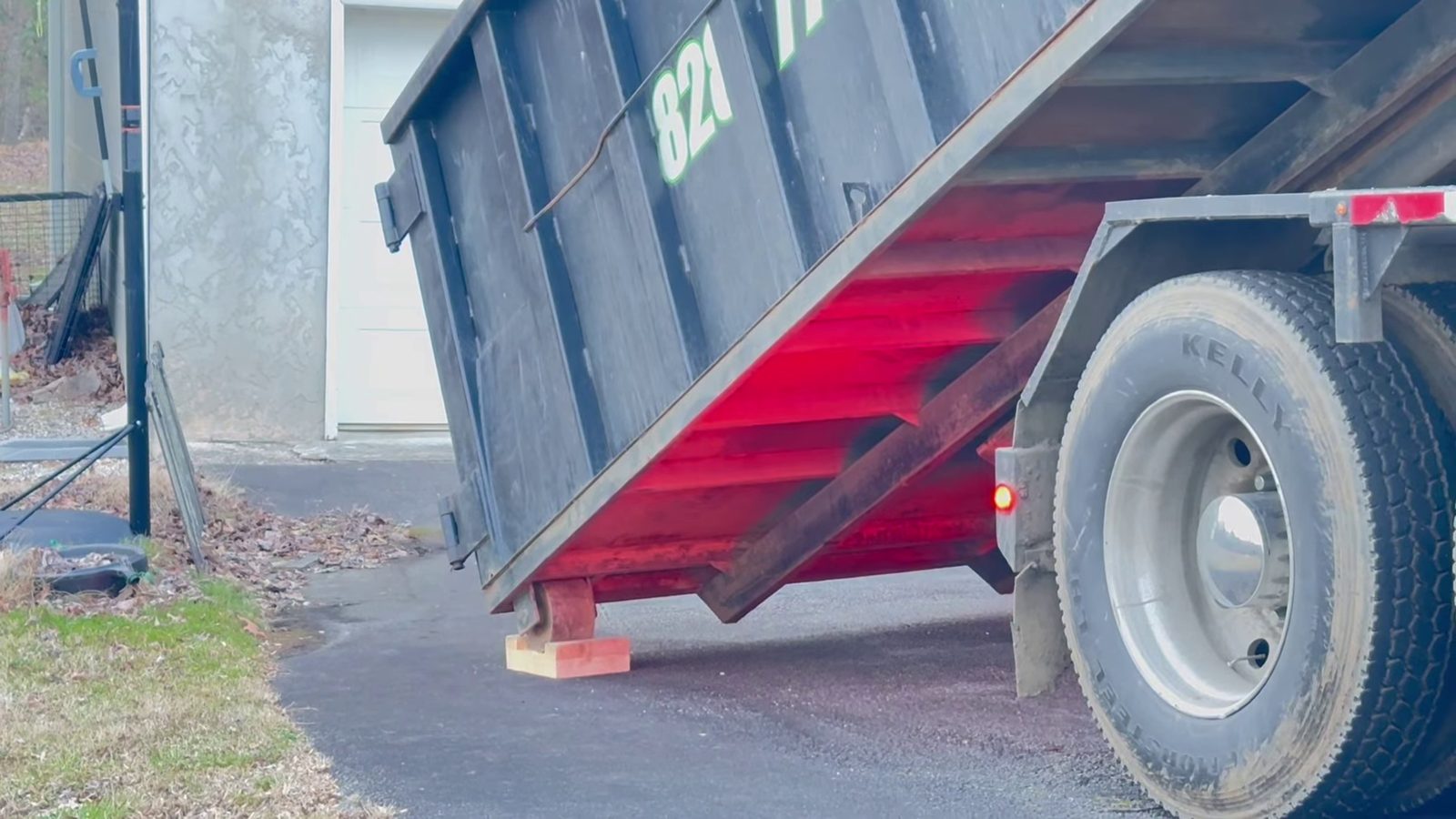
Most Leicester rentals land on private property — gravel driveways, paved pads, turnarounds beside outbuildings — and private placement requires no permit. When the site layout requires the container to sit on a Buncombe County road shoulder or along any state-maintained route, including sections of US-63 (Leicester Highway), an encroachment or right-of-way permit from NCDOT is required before the bin touches the pavement. That process runs through NCDOT's district office and must happen in advance; it cannot be resolved at delivery. For most Leicester addresses, private gravel placement is the practical path, which puts the focus back on surface preparation: soft ground after wet weather may need planks under the bin feet to prevent rutting, and a slope above a moderate grade needs to be called out at booking so we can position safely.
For any container that sits overnight near a traveled roadway, reflectors and visibility markings are required under the ICC codes governing on-site containers. That is already standard on every Ewing's delivery regardless of placement type, so it is one less item to track when you are managing a job on a tight timeline.
Storm debris and western Buncombe cleanup loads
Buncombe County carries 19 federal disaster declarations across 1973-2026, most of them storm and flood events that move up the river corridors running through Leicester township. Storm cleanup loads differently than renovation debris: a mature oak with its root mass fills a 17-yard container faster than most homeowners expect, wet material runs heavier per cubic yard than dry demo framing, and when a weather event hits western Buncombe, multiple households in the same area need containers at once. Book early after a storm, and when you call, distinguish between predominantly tree debris and structure debris — the weight projections differ and can affect whether one container is enough.
The roll-off dumpster rental overview covers capacity planning for storm-debris and other high-volume loads. For renovation and cleanout projects running longer than a standard rental window, the cost guide explains how extended rentals and weight overage are priced — both matter more when a project stretches past its original timeline.