The valley floor changes the job
Fletcher sits at the low end of the French Broad River corridor, pressed between the Blue Ridge foothills to the east and the Asheville metro to the north. That geography does two things at once: it draws residential growth because the land is flatter and more buildable than the surrounding ridges, and it concentrates flood exposure in a way most of Henderson County's hillside communities don't experience. The area has recorded 16 federal disaster declarations over 1978-2026, the majority tied to storm and flood events along the French Broad drainage.
For dumpster rental, that history has a practical effect. Flood-damage cleanup generates debris that fills a bin differently than a standard renovation: soaked drywall, waterlogged insulation, ruined cabinetry, and saturated floor framing add weight fast and mix materials that can complicate disposal if they aren't separated correctly. A cleanout that fits a 15-yard bin under normal conditions can easily push into 17-yard territory after a water event. If you're sorting through that kind of job and aren't sure where to start, the size guide works through the estimate by room type and debris category.
Away from the flood-prone valley bottom, Fletcher's growth pattern adds a second layer: newer subdivisions off I-26 and US 25 are going through their first rounds of renovation, while older ranch homes on larger lots are getting gut-renovated or cleared for rebuilds. Both produce substantial debris loads that the right bin size handles cleanly.
Sizes and prices for the most common jobs
Ewing's prices below are as of January 2026 and include delivery and pickup — no separate fuel charge, no haul fee added at pickup. The right size usually comes down to two questions: how many rooms, and what kind of debris. Most Fletcher residents who've done the job before will tell you the same thing: they wish they'd sized up, especially on flood-related cleanouts where the full scope of damage isn't visible until demo begins.
| Job type | Bin size | Ewing's price |
|---|---|---|
| Single-room cleanout, small estate haul | 10 yd | $199 |
| Whole-home declutter, small renovation debris | 15 yd | $280 |
| Kitchen or bath gut, mid-size renovation | 17 yd | $325 |
| Full gut-out, roofing job, or large flood haul | 30 yd | $480 |
Heavier materials — concrete, tile, roofing shingles, wet lumber — compress the effective volume of any bin. A 10-yard bin loaded with broken concrete fills its weight limit well before its volume limit. If your job mixes heavy demo debris with lighter household goods, sizing up tends to cost less than a second delivery trip. The full cost page explains weight limits and what triggers a size upgrade in plain terms.
Placement: driveways, rights-of-way, and steep lots
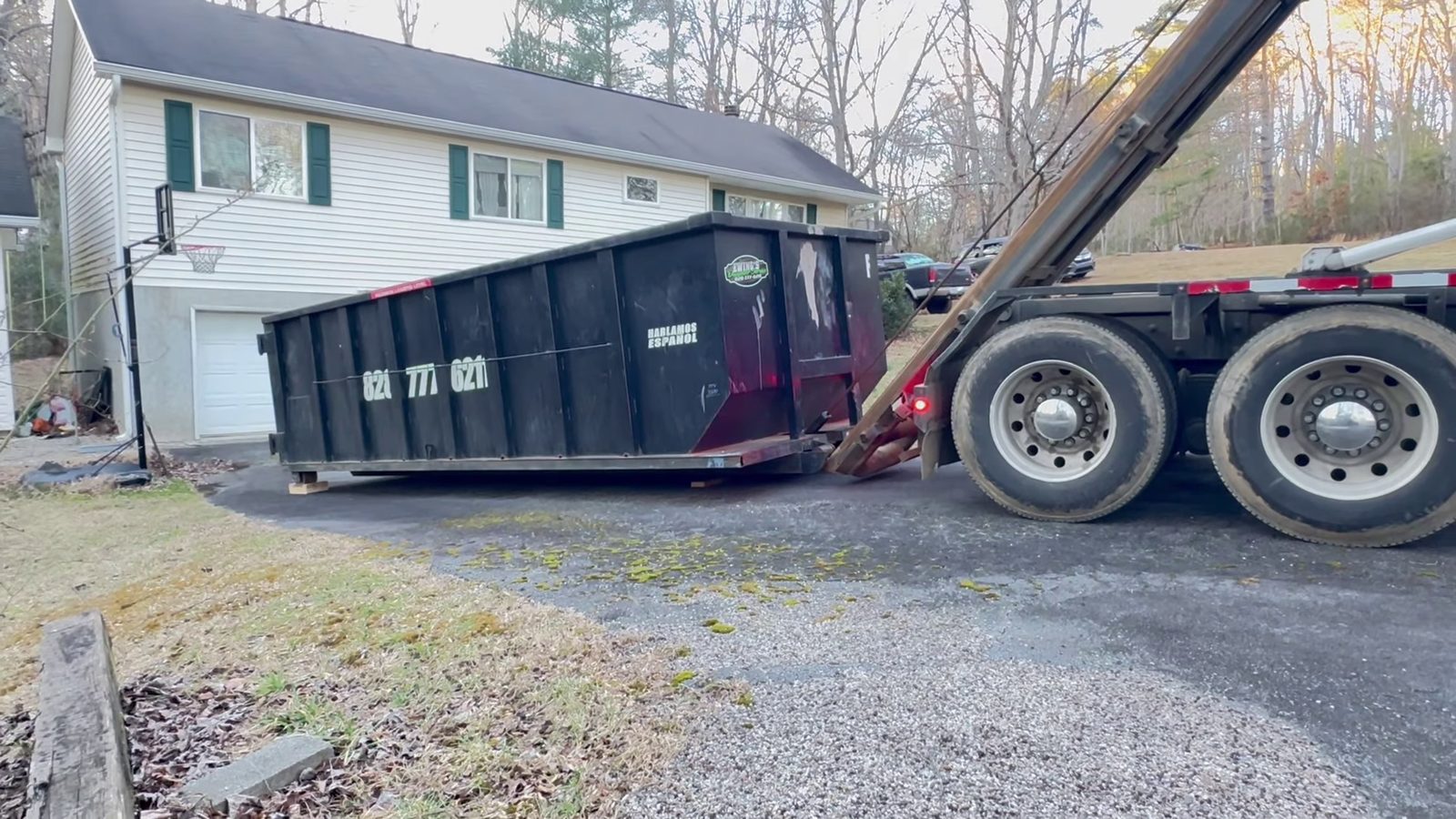
Henderson County's terrain means placement questions come up more often than they do in a flat market. Most Fletcher jobs land the bin on a driveway or paved surface, which requires no permit and suits most residential lots. That changes if the bin needs to sit in a public right-of-way or on a street shoulder: state-maintained roads require a road encroachment permit from the NC Department of Transportation, and Fletcher's locally maintained streets fall under town jurisdiction. If you're not sure which applies to your address, confirm with the town before scheduling delivery.
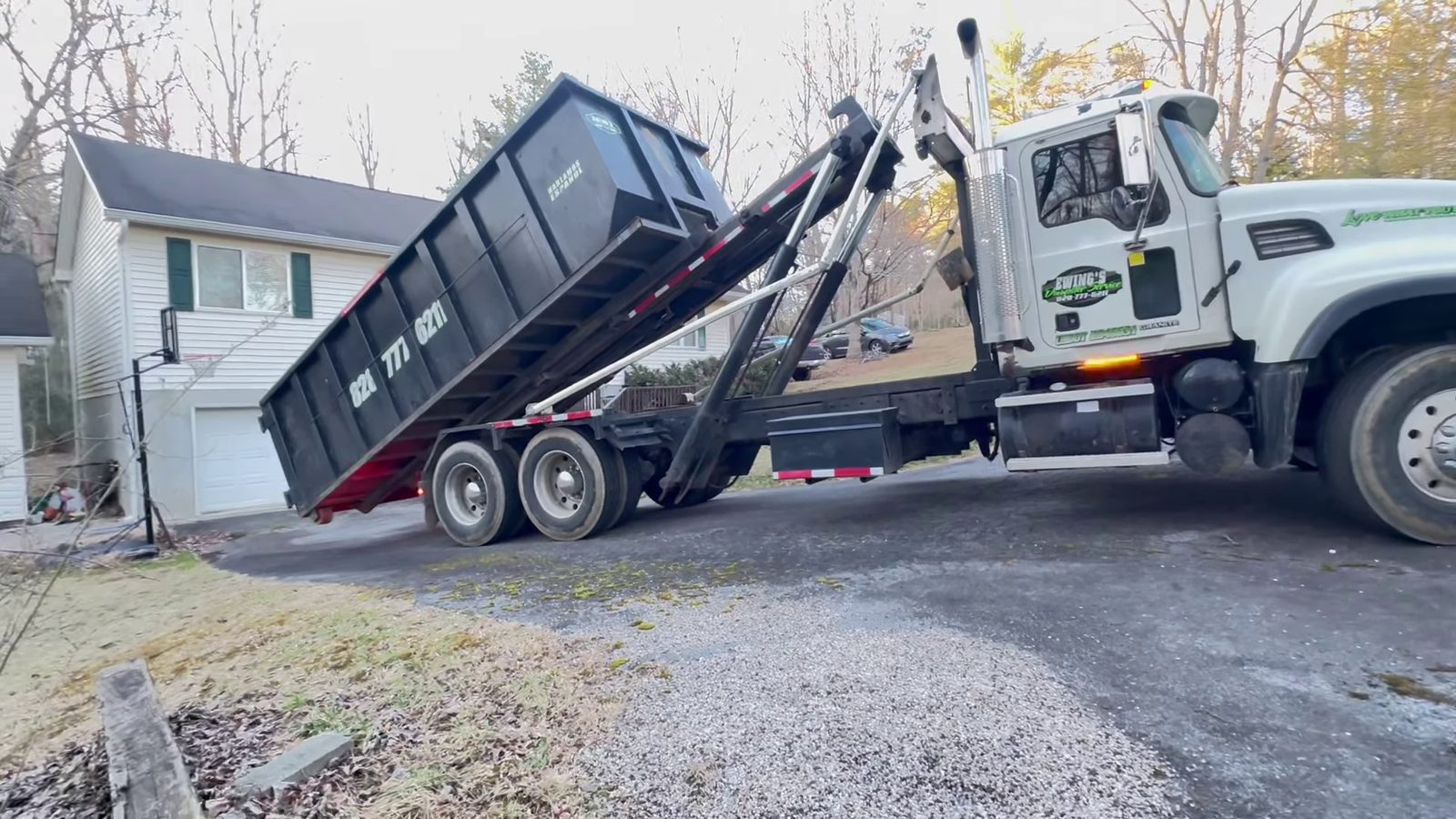
Steep driveways are the other local variable. Neighborhoods that climb off US 25 toward the ridgeline — and several of Fletcher's newer subdivisions do — can limit where a roll-off truck can safely position the box. When you book, describe the driveway grade, any low-hanging branches or power lines, and any paved surface you need the driver to avoid. Most placements work out with a brief conversation; the ones that don't surface early enough to adjust the approach.
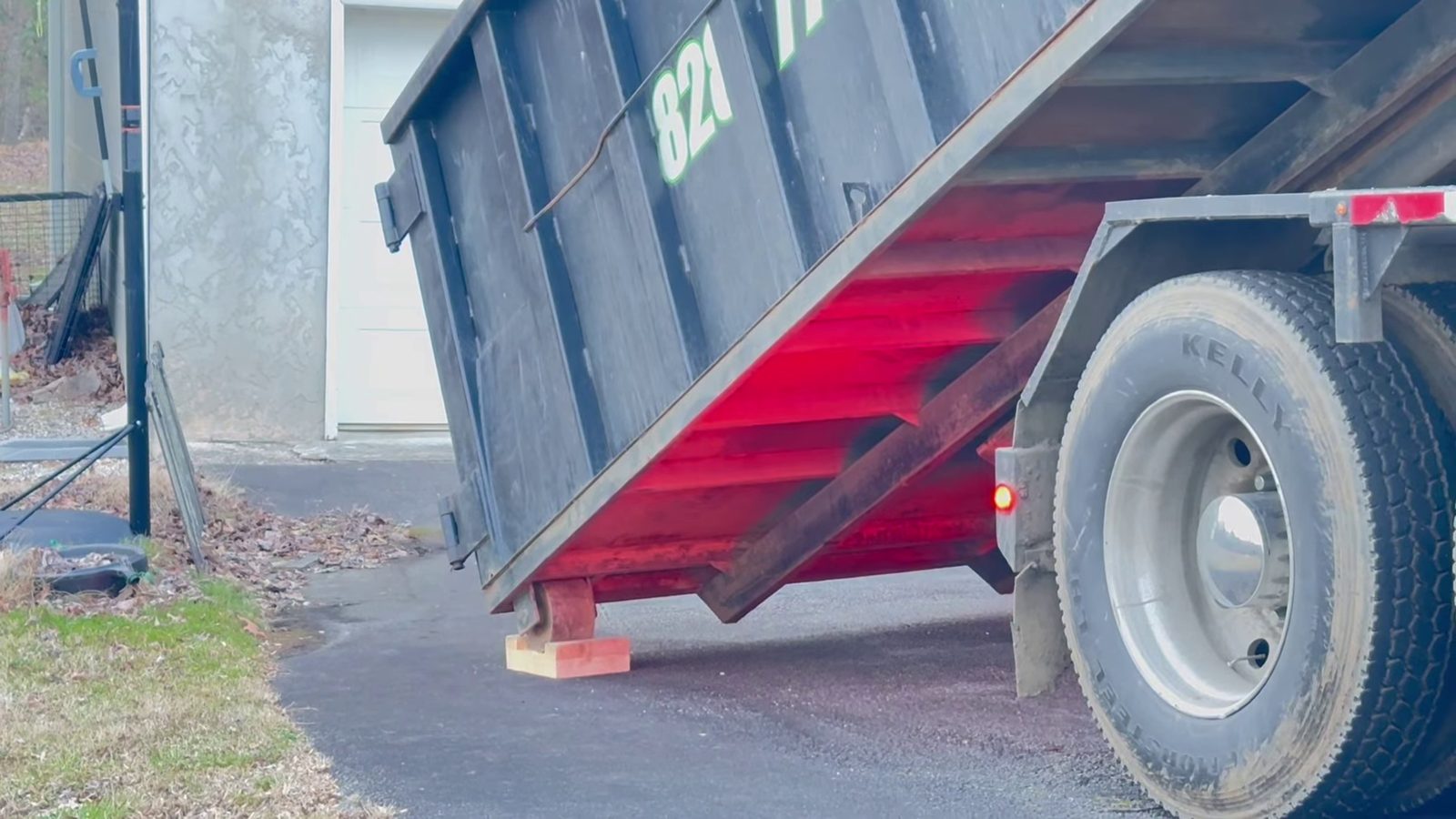
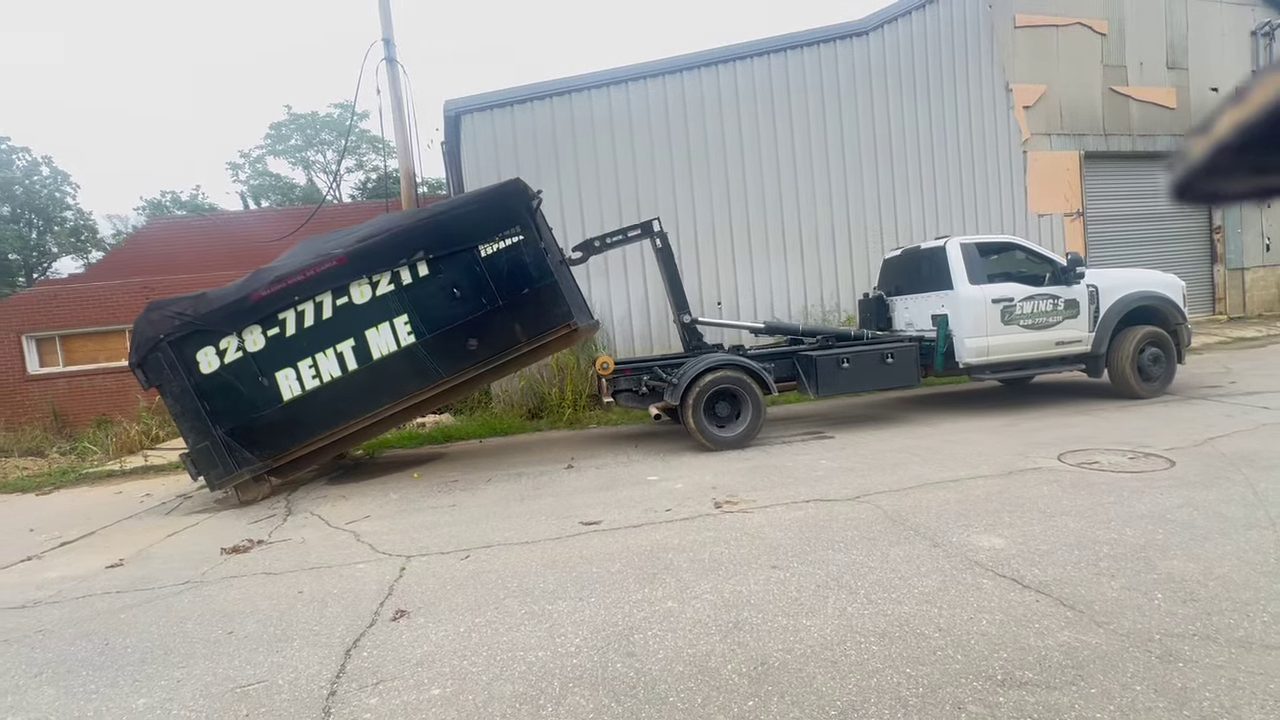
For a walkthrough of exactly how the delivery and pickup sequence works — what to expect when the truck arrives, how long you keep the bin, and when to call for an early swap — the roll-off rental overview covers the full process.
What the bin can't hold
North Carolina's solid waste rules, administered through the NC DEQ Solid Waste Section, define what can and cannot go to a licensed transfer station or landfill. Prohibited materials include tires, lead-acid batteries, motor oil and other automotive fluids, paint cans with liquid remaining, pesticides and herbicides, and anything marked flammable or corrosive. These fall under EPA household hazardous waste guidance and require a separate drop-off, not a dumpster load.
Flood cleanups raise a specific concern: outbuildings and garages often store chemicals, fuel containers, fertilizers, and similar materials that absorbed water and are now mixed into the debris pile. Those items need to come out before the bin loads the rest. If a load gets flagged at the transfer station, the bin comes back to you and you're responsible for removing the prohibited items before it can be disposed of properly. The logistics cost of a second trip and additional sorting adds up faster than the modest effort of handling hazardous materials separately from the start.
Construction and renovation hauls along the US 25 and I-26 corridors
Fletcher's position at the junction of US 25 and I-26 makes it a steady source of construction and demolition activity — commercial remodels, tract-home renovations, and teardown-rebuilds on older residential lots all generate debris that needs somewhere to go. The EPA's guidance on construction and demolition materials notes that clean concrete, wood framing, and unpainted drywall can often be diverted from landfill disposal entirely when separated cleanly at the job site. If your project produces a significant volume of any single heavy material, it is worth asking whether a separated load opens up better disposal options.
For most single-trade renovation jobs in Fletcher — a roofing replacement, a bathroom gut, a deck tear-off — the 17-yard bin at $325 handles the work without overfilling or pushing into 30-yard territory. The 30-yard earns its place on multi-room gut-outs, full-floor renovation sweeps, or any job where the scope expanded after demo began. When a job runs longer than expected, most rentals can be extended; ask when you book rather than scrambling at the end of the rental window.