Valley floors, steep driveways, and why placement matters here first
Swannanoa sits in a narrow river corridor hemmed by ridgelines; most of Asheville spreads across steep grades where a standard driveway approach would stall delivery trucks that handle flat-land jobs without a second thought. That terrain is the first thing a dumpster rental in this area requires you to think about — not because it makes the job impossible, but because it changes where the container safely lands and how long it can stay.
Valley-floor neighborhoods in Swannanoa and western Buncombe County carry meaningful storm history: 19 federal disaster declarations spanning 1973-2026. Homeowners clearing flood-damaged material face a compounded placement question — a dumpster set in a low-lying spot may face the same risk the house just survived. Confirm the drop zone before the truck arrives, and in tight situations ask about staging on higher ground with a planned reload rather than a single stationary placement.
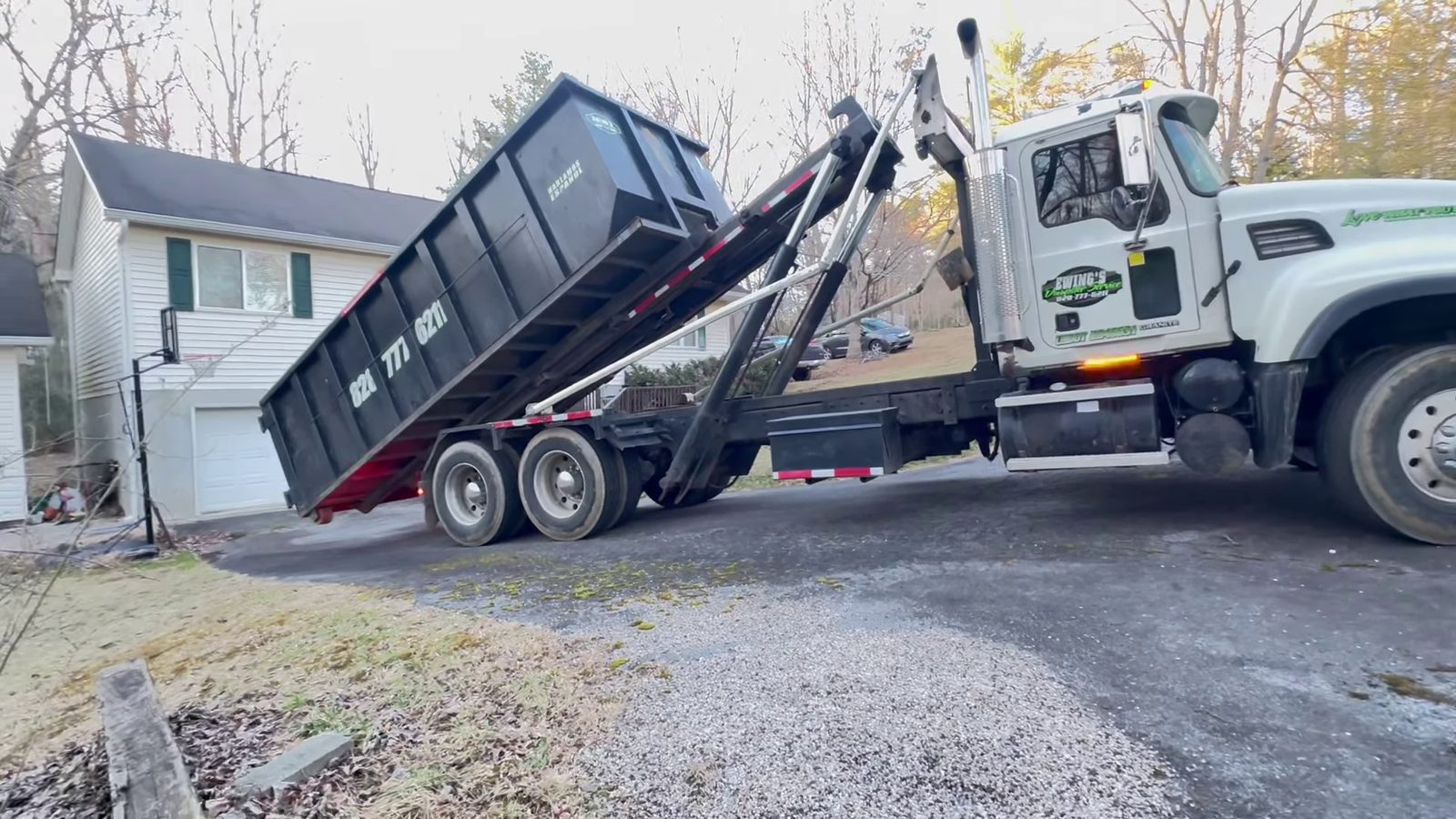
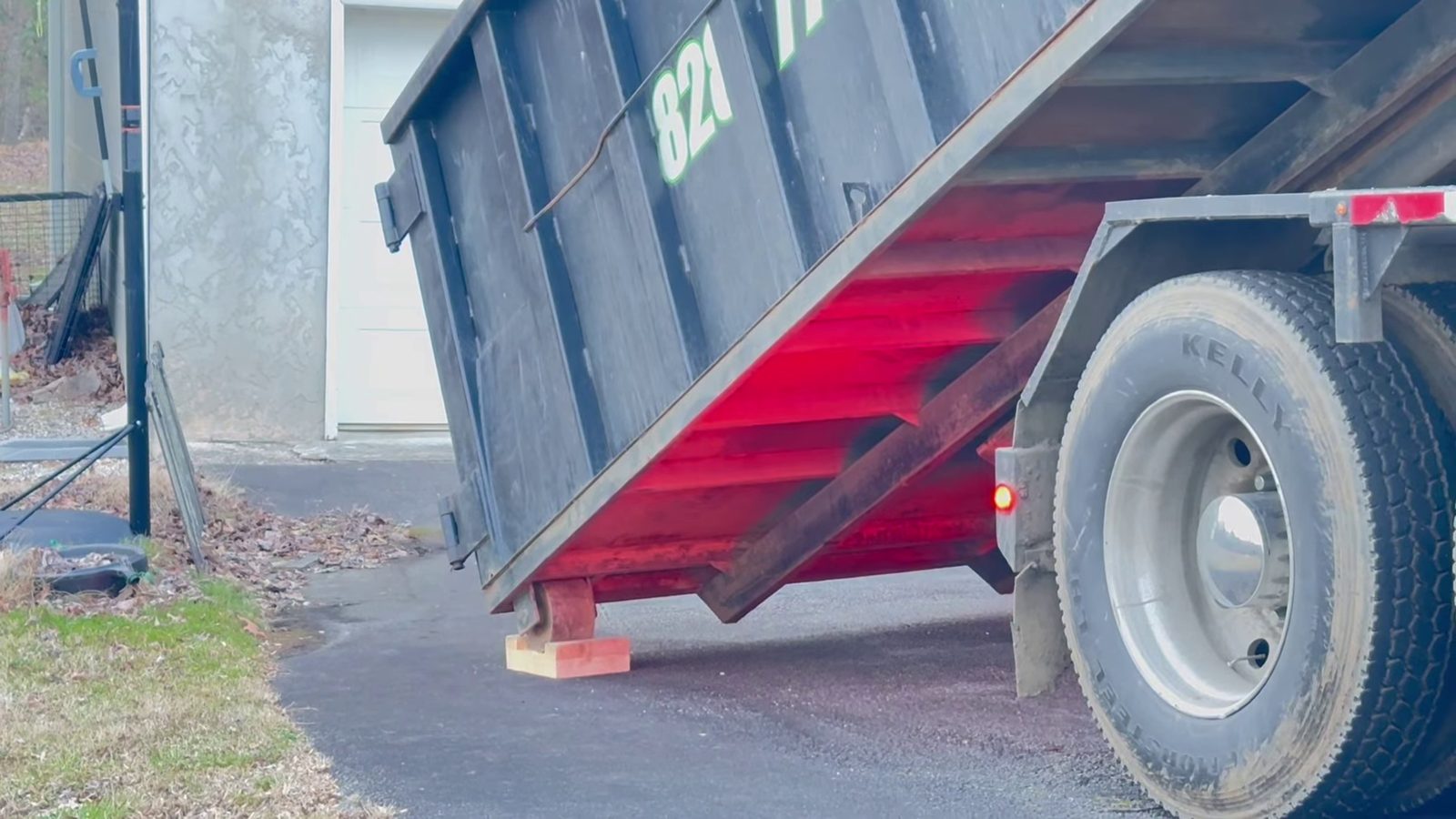
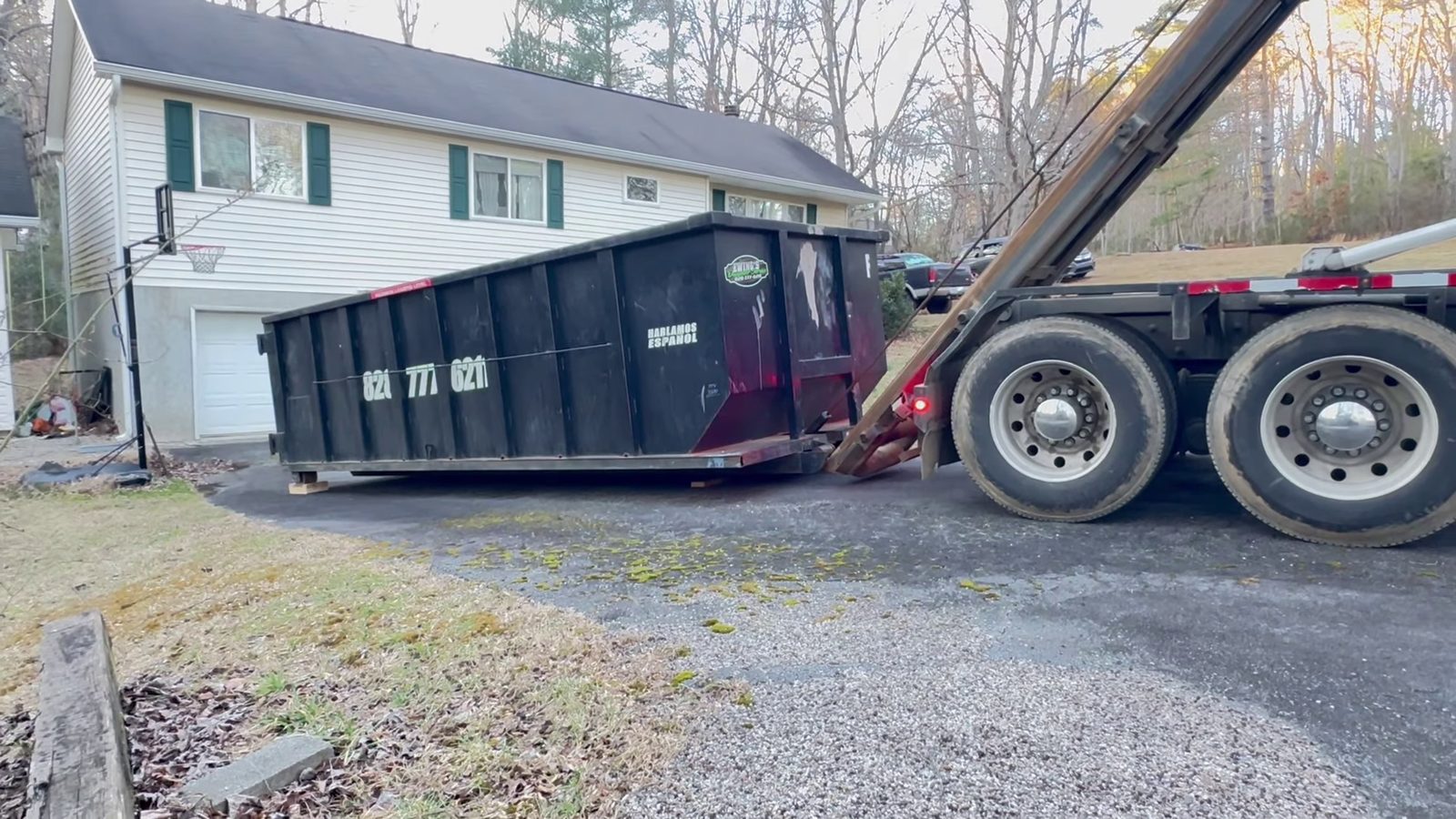
Steep-lot driveways — a staple of Asheville's neighborhood character — sometimes cannot support a loaded dumpster without damage to the paving surface. Wood under the rails protects paving and helps the driver set a level container on a sloped approach. It is a simple step that matters far more in this market than it does on a flat suburban lot outside the mountains.
What a 10-yard bin holds — and when it stops being enough
A 10-yard dumpster handles the debris from most contained residential jobs: a bathroom gut, a single-room remodel, a deck teardown, a basement cleanout, or a medium-scale junk removal. Volume-wise it is roughly equivalent to three full pickup-truck loads, which covers more ground than most homeowners expect — until they start loading dense material.
The weight ceiling is the real variable in this market. Buncombe County's housing stock runs toward older construction — bungalows, farmhouses, mid-century builds — with solid hardwood floors, masonry fireplace surrounds, concrete board, and in flood-affected rooms, structural sheathing that can double in weight when saturated. Those materials push the included ton limit well before they fill the bin by volume. The size guide on this site breaks down weight-versus-volume trade-offs by material type, which is worth checking before committing to a 10-yarder on a job that involves tile, masonry, or anything that got wet.
When a renovation spans multiple rooms, includes roofing material, or mixes heavy masonry with general debris, the 15-yard option often costs less than scheduling two 10-yard pulls — you save a service trip and reduce the chance of an overage charge on the first load.
What it costs and the jobs where the number changes
Ewing's posts a flat $199 for a 10-yard dumpster, effective January 2026, with delivery, pickup, 1 ton of debris, and up to 7 days on-site included. For most jobs in Swannanoa and the Asheville area, that is the number. What moves your total cost is project scope — specifically whether the debris fits one bin or the job realistically needs more than one pull.
| Project type | One 10-yd sufficient? | Weight note |
|---|---|---|
| Single-room junk cleanout | Yes, typically | Light debris; well under the ton ceiling |
| Bathroom gut (tile, drywall, fixtures) | Usually yes | Tile and thin-set add weight quickly — monitor fill |
| Deck removal (pressure-treated wood) | Yes | Bulky but light; volume is the limit, not weight |
| Kitchen remodel (cabinets, flooring, drywall) | Often one, sometimes two | Solid cabinets and appliances are dense |
| Whole-house cleanout | Often two pulls needed | See the 15-yard option to cut haul count |
| Flood or storm debris (saturated materials) | Monitor weight, not volume | Wet sheathing and insulation weigh far more than dry equivalents |
The cost breakdown page goes deeper on overage rates and how to load heavy mountain-renovation debris without exceeding the included ton.
What can and cannot go in the dumpster
Most renovation and cleanout debris loads without issue: wood framing, drywall, carpet, furniture, roofing shingles, general household goods. What you cannot legally put in a roll-off in North Carolina is defined by the NC DEQ Solid Waste Section, and the list catches people more often in older mountain homes than in newer construction.
The categories that most commonly trip up Asheville-area jobs:
- Household hazardous waste — liquid paint, solvents, pesticides, motor oil, fluorescent bulbs, and batteries are excluded from roll-offs. The EPA's household hazardous waste guidance covers disposal alternatives; Buncombe County holds periodic collection events that accept these materials at no charge to residents.
- Asbestos-containing materials — a genuine concern in Asheville's older housing stock, where floor tile, pipe wrap, and textured plaster may contain asbestos. Demolition requires testing first; disposal follows a separate regulated stream that sits entirely outside the roll-off process.
- Tires, refrigerants, and propane tanks — prohibited under state solid waste rules regardless of condition.
- Large quantities of concrete, brick, or soil — accepted in limited amounts, but loads that push past the included ton incur overage charges.
Construction and demolition materials broadly fall under EPA's C&D materials framework, which also covers diversion and recycling options for projects where minimizing landfill contribution is a goal.
Placing a dumpster in a right-of-way or on a public street
Most Swannanoa and Asheville residential jobs have room for a dumpster on the driveway or on private property — but not all. Dense city neighborhoods, historic-district lots with shallow setbacks, and steep properties where the driveway cannot safely hold a loaded container sometimes require street or curb-lane placement. That is a different category of job from a permitting standpoint.
Dumpsters placed in a public right-of-way on a state-maintained road fall under NC Department of Transportation encroachment permit requirements. For streets maintained by the city rather than the state, the City of Asheville handles its own permits and requirements. The two processes differ in fees, timelines, and what documentation they require — confirm placement needs before booking the delivery date, not on the morning the truck is scheduled to arrive.
In practice, staging a dumpster on a driveway for the bulk of a job and moving it to the street only when necessary often reduces permit exposure. For jobs on street-only lots in tight Asheville neighborhoods, coordinating a half-day placement window is easier to permit and less disruptive than a week-long curb block.