Driveway grade is the first question on most Black Mountain jobs
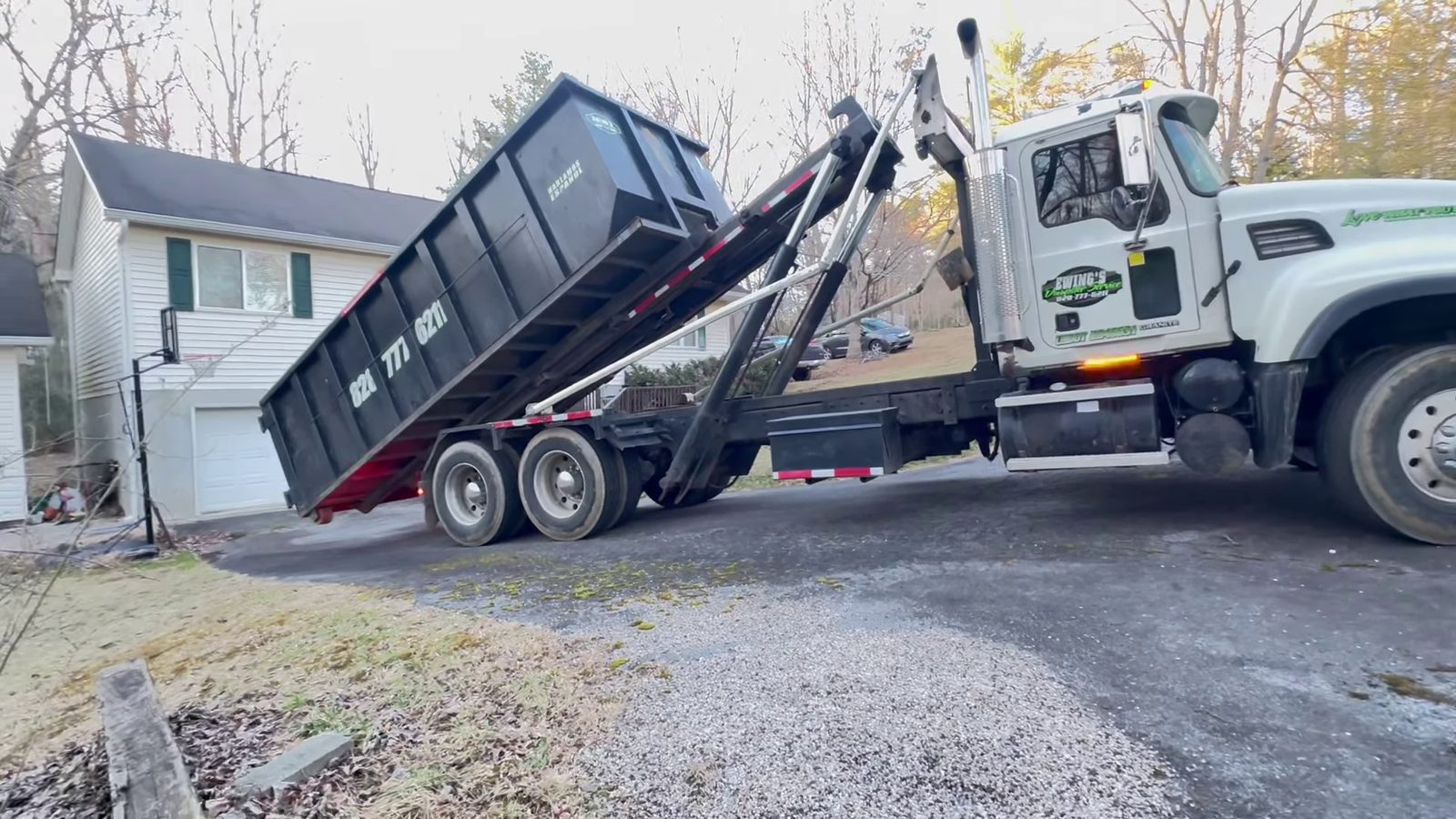
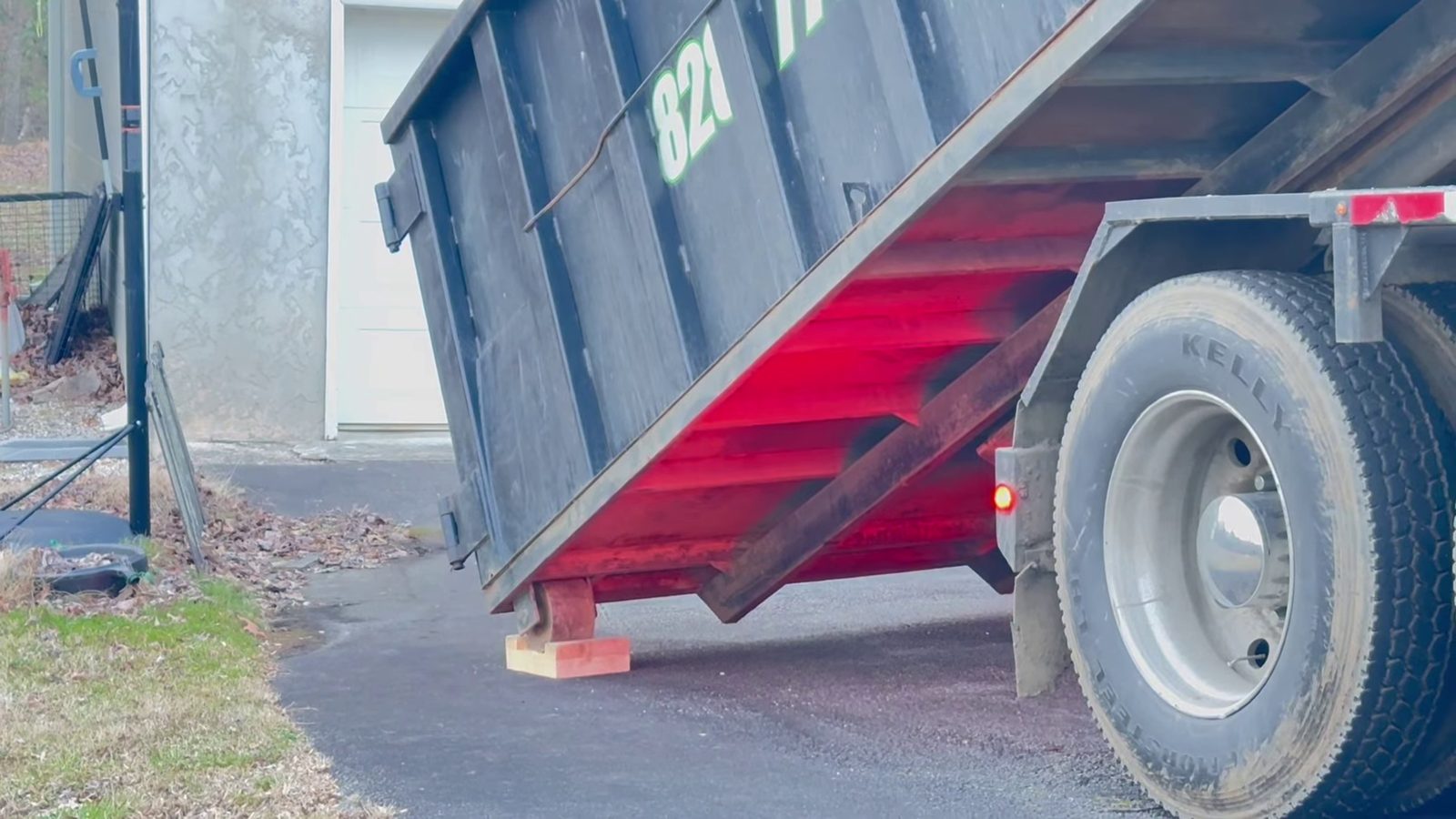
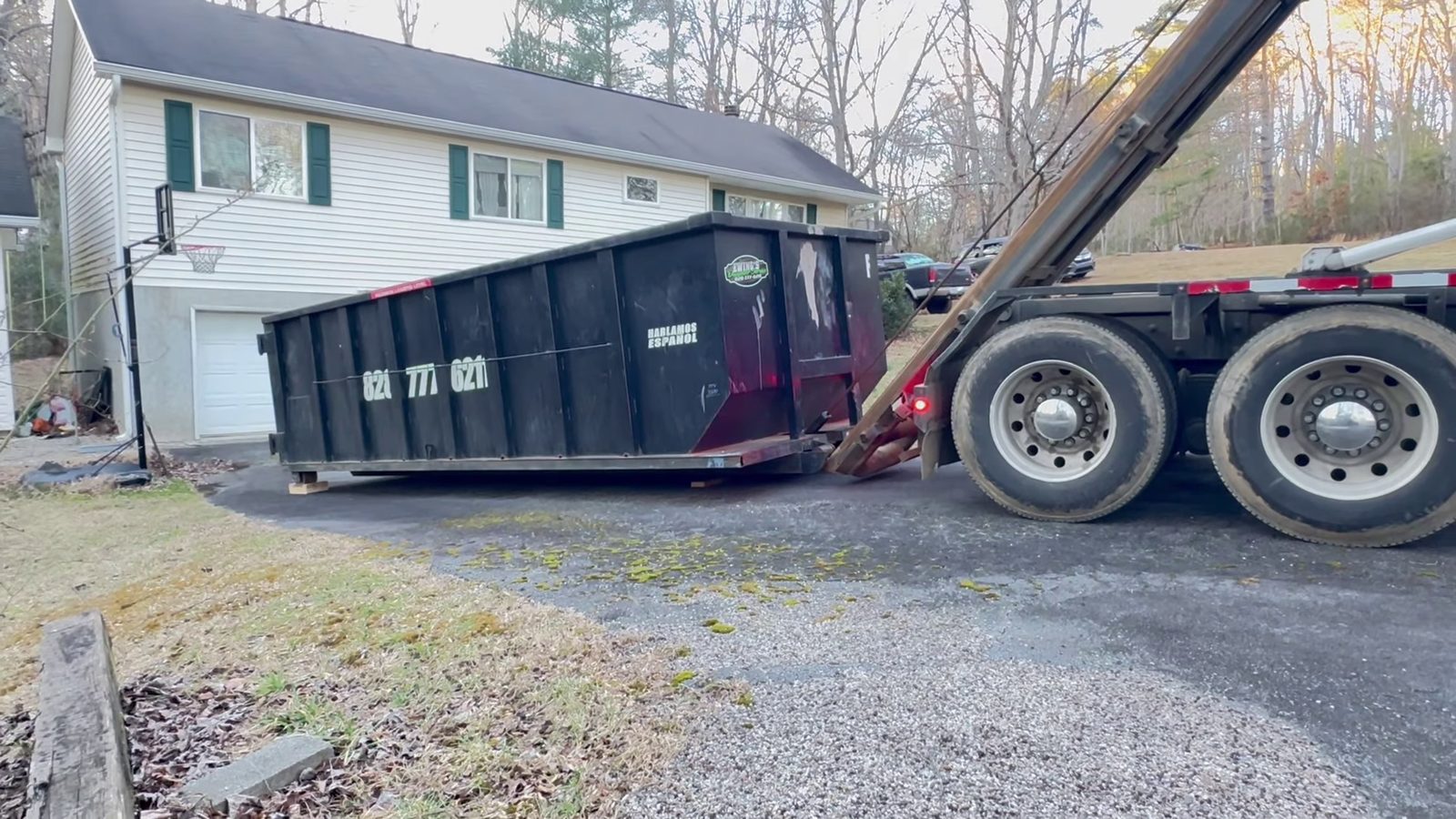
Black Mountain sits at the foot of the highest peaks east of the Mississippi, and the neighborhoods that ring the downtown carry it in their driveways. The camp-era cottages above Old Fort Road, the bungalows along Cherry Street, the vacation rentals climbing the ridges past the Blue Ridge Assembly — many of them sit on approaches where a standard roll-off truck reaches the edge of its safe operating grade before it reaches the pad. That is not a reason to skip the container; it is a reason to call and describe the driveway before you book.
A 10-yard or 15-yard unit fits where a 30-yard cannot safely turn around, and for most Black Mountain cleanouts and smaller renovations the smaller container is the right tool regardless of terrain. Matching delivery reach to container size is what the size guide covers in detail — start there if your driveway has any grade or width constraint before you settle on a number.
Scope and posted price at a glance
Ewing's posted prices (January 2026) cover delivery and pickup in a single number. The table below maps project type to the container that typically fits it and what that container costs around Black Mountain. Location within the service area may move a quote toward the top of its range, but prices stay within what is posted. For a full breakdown of what affects the final number, see the cost breakdown page.
| Project type | Container size | Posted price |
|---|---|---|
| Single-room cleanout, small deck or porch removal | 10 yard | $199 |
| Full house cleanout, single-bathroom gut renovation | 15 yard | $280 |
| Kitchen and bath remodel, full landscaping removal | 17 yard | $325 |
| Whole-house renovation, addition demo, or large roofing job | 30 yard | $480 |
Estate cleanouts in older Black Mountain cottages often run larger than homeowners expect — decades of accumulation in a seasonal mountain property adds up faster than it looks. When the load is mixed (furniture, appliances, construction debris), size up early rather than manage an overflow mid-project.
Storm cleanup and the compressed booking window
Buncombe County carries 19 federal disaster declarations across the 1973-2026 record, most of them tied to storm and flood events that follow the Swannanoa River corridor straight through Black Mountain. When a weather event moves through, cleanup demand spikes fast and container availability compresses. If your project follows a flooding or wind event, book as early as the site is safe to access — containers that are available one week may be committed to debris crews the next.
Storm cleanup loads behave differently from renovation debris: they tend to be heavier per cubic yard due to waterlogged wood, saturated insulation, and mixed organic material, and the volume that looks manageable in a dry yard often fills a container before the pile is gone. The roll-off dumpster overview explains how weight limits interact with container size for mixed or heavy loads, which is worth reading before estimating on any post-storm cleanup job.
What the container will not take — and where it goes instead
The prohibited materials list in a dumpster contract is not arbitrary. The NC DEQ Solid Waste Section governs what North Carolina permitted landfills can accept, and the standard exclusions — tires, liquid paint, batteries, fluorescent tubes, propane tanks — flow directly from those rules. What turns up in a Black Mountain cottage cleanout often includes more of these items than a newer build would: legacy paint stock, old outbuildings full of chemistry that accumulated over decades of summer-use ownership, appliances from before modern disposal standards.
The EPA's household hazardous waste guidance covers what qualifies and where it needs to go. Buncombe County operates a household hazardous waste collection program for residents, so paint, pesticides, solvents, and similar materials from a cleanout have a proper disposal path that keeps them out of the container and out of the landfill stream. Flag any of these before the dumpster arrives so the load plan accounts for them from the start.
Asbestos deserves its own note. Camp-era and mid-century construction common in this area frequently includes floor tile, pipe insulation, and roofing materials that predate the standard regulatory cutoffs. If your renovation touches material from before 1980, testing before demo is the right sequence.
Placing a container near the road
Black Mountain's street network mixes town-maintained roads in the historic downtown core with state-maintained routes including NC 9 and US 70. A container placed on a public right-of-way may require a permit, and the right authority depends on the road: town streets fall under town jurisdiction, while state-maintained routes go through the NC Department of Transportation for encroachment and ROW permits. Confirming that requirement before the container is set avoids the harder conversation of moving it after the fact.
Mountain road geometry adds a practical consideration beyond the permit itself. A container placed near a curve on a ridge road reduces sight distance in ways that a container on a flat street does not. Placement should keep emergency access clear and avoid blocking sightlines at intersections or bends — a brief conversation with the driver at drop-off is easier than a call about a complaint after.