The valley floor changes what you're hauling
The Swannanoa Valley runs east from Asheville along the Swannanoa River, narrow and low-lying between mountain ridges on both sides. That geography matters for a dumpster job in two practical ways: properties near the river bottom face a different debris profile than those up on the valley slopes, and site access (driveways, pull-offs, turnaround room for a delivery truck) tends to be tighter than on the flatter lots found in west Asheville or Weaverville.
The housing stock along the valley floor is a mix of older ranch homes, manufactured housing, and workers' cottages from the valley's industrial era, most of them pre-1980. Cleanouts here often run heavier than a room count suggests: plaster walls, cast-iron fixtures, water-damaged subfloor, and older insulation all pack denser than standard drywall and dimensional lumber. When you're pulling an older Swannanoa house down to the studs, the 10-yard container that handles a newer home's gut can fill to weight capacity before it's volume-full.
Buncombe County has seen 19 federal disaster declarations spanning 1973-2026, most of them flood events that hit hardest in exactly the kind of low-lying river corridor that defines this community. When a flood event moves through the Swannanoa Valley, cleanup demand across the whole neighborhood concentrates in the same short window. Booking ahead and knowing your container size before you call keeps your project from waiting on equipment.
Sizes and prices: what the job actually costs
Ewing's prices below are as posted January 2026, delivery and pickup included. The full cost breakdown explains what drives each line item, and the size guide walks through the cubic-yard math if your project type is unfamiliar.
| Job type | Container size | Ewing's price |
|---|---|---|
| Garage, storage unit, or single-room cleanout | 10 yd | $199 |
| Roofing tear-off or single-room gut | 10–15 yd | $199–$280 |
| Kitchen or bathroom renovation (dry or flood-damaged) | 15 yd | $280 |
| Multi-room renovation or large estate cleanout | 17 yd | $325 |
| Whole-house cleanout or full gut-renovation | 30 yd | $480 |
One note specific to flood-cleanup jobs in the Swannanoa area: wet materials are heavy. A 10-yard container that handles a dry kitchen renovation without issue may fill to weight capacity before it's volume-full when the load is waterlogged drywall, soaked insulation, or saturated cabinetry. For post-flood cleanouts, sizing up by one step is a reasonable default. Location within the Swannanoa Valley can push a job toward the top of a price range, but no job type here requires more than a 30-yard container.
What goes in and what stays out
The NC DEQ Solid Waste Section defines what North Carolina landfills cannot accept, and those restrictions determine what goes into a roll-off. The practical no-fly list for Swannanoa renovation and cleanout work: motor oil, liquid paint, batteries, tires, appliances containing refrigerant (window units, mini-fridges, dehumidifiers), propane tanks, and anything classified as hazardous under federal solid waste law. The EPA's household hazardous waste guidance gives a plain-language breakdown of what qualifies and where it can go instead.
For the older homes common in this valley, two categories deserve extra attention before any container work starts. Pre-1980 construction frequently contains asbestos floor tile and pipe insulation; disturbing those materials requires licensed remediation handling before general debris goes into any container. Homes from the same era commonly have lead paint on trim and windows, and sanding or demolition debris from those surfaces falls under separate handling rules as well.
What goes in cleanly: drywall, dimensional lumber, roofing shingles, concrete in reasonable quantities, general household debris, furniture, and clean construction waste from active renovation projects. The roll-off dumpster guide has the complete accepted and prohibited materials list if you're sorting through a specific debris type before you book.
Placing the container: US-70, driveways, and right-of-way
US-70 is the spine of the Swannanoa Valley, and a large share of residential properties here front it directly or access driveways via side roads close to the state right-of-way. Placing a container on a state-maintained road, or even with the rear of the box straddling a driveway apron inside the ROW, typically requires an encroachment permit from the NC Department of Transportation. For properties with enough off-road room, keeping the container fully on private ground skips that step and keeps the placement simpler for the driver.
Where local streets or driveways near public roads are involved, container placement is also governed by fire access clearance rules in the International Fire Code. The ICC codes adopted across most North Carolina jurisdictions set minimum clearances from fire hydrants and emergency travel lanes. In practice: don't cover a hydrant, don't block the road, and leave emergency vehicles a clear path through the property.
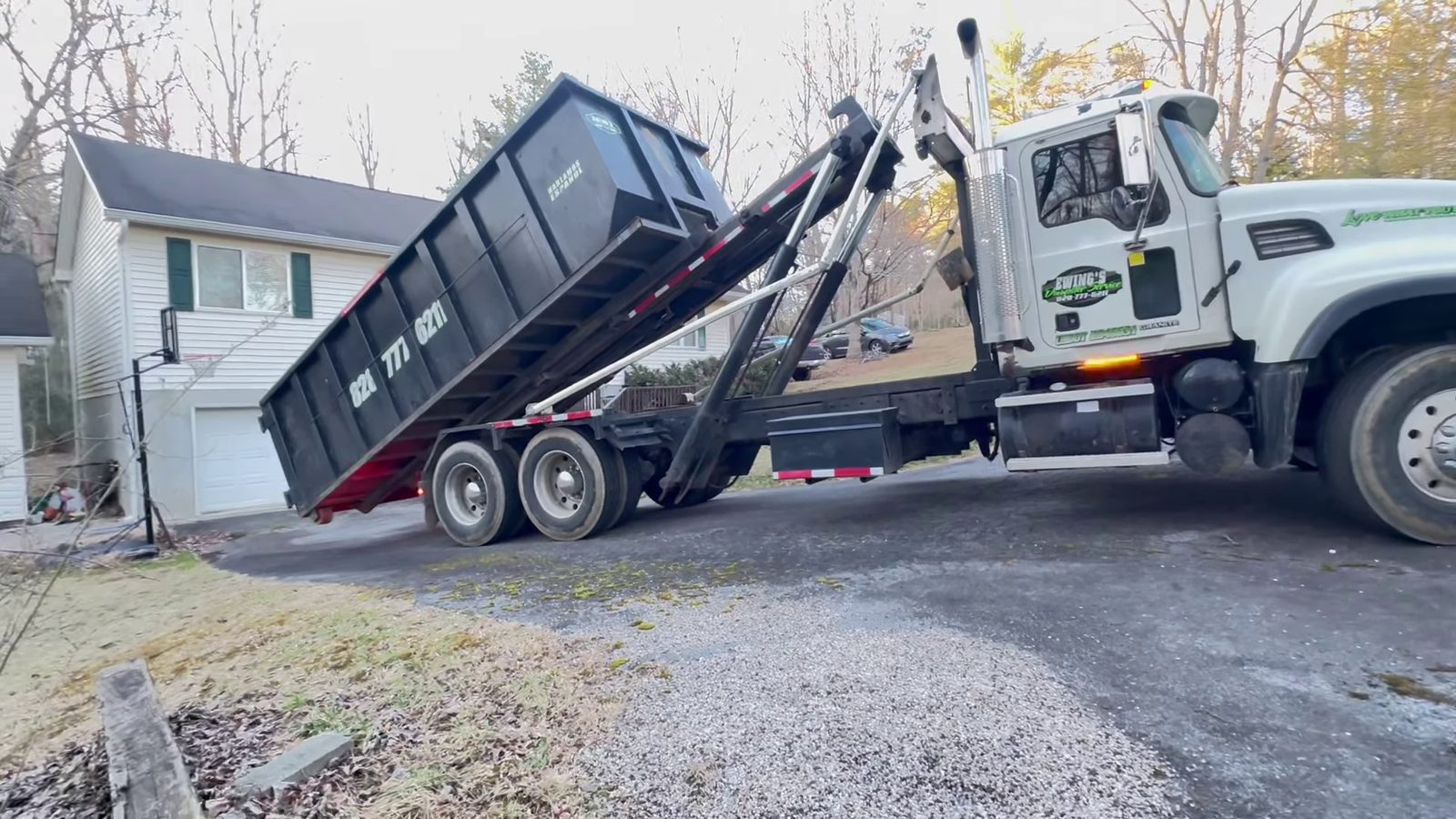
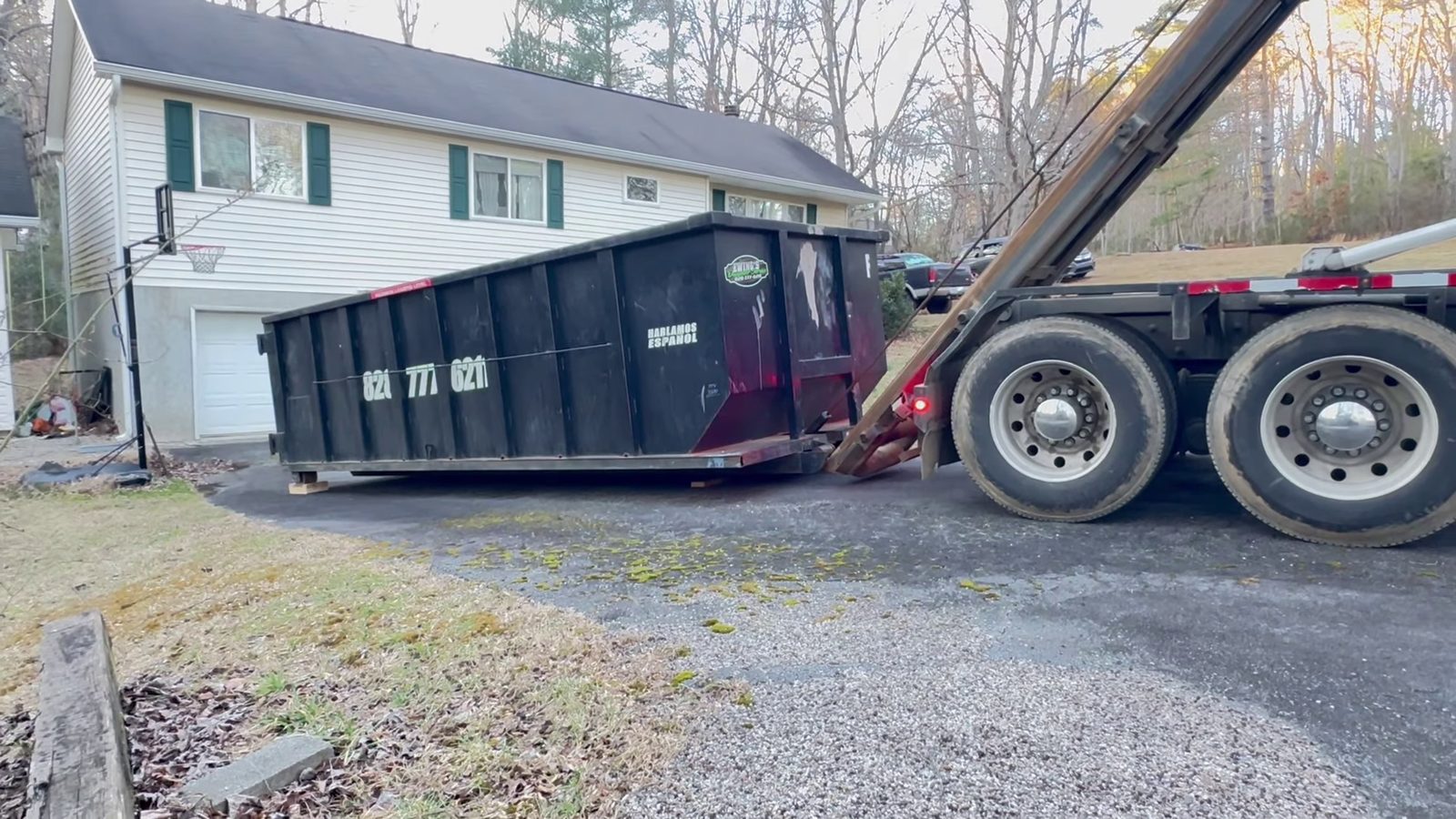
For Swannanoa jobs specifically, flag tight access when you book. Many valley driveways are short, run perpendicular off US-70 or a side road, and have limited swing room for a delivery truck. A driver note about a narrow approach is easier to handle in advance than a repositioning call after drop.
Timing, extensions, and what to have ready
Standard roll-off rental in the Swannanoa area runs on a one- to two-week period, which covers most renovation and cleanout timelines. Extensions are available; the simpler path is to arrange one before the standard period ends rather than after the driver is already dispatched for pickup. For post-storm cleanup periods, when demand across Buncombe County runs simultaneously, booking as early as the project is confirmed keeps you ahead of the queue.
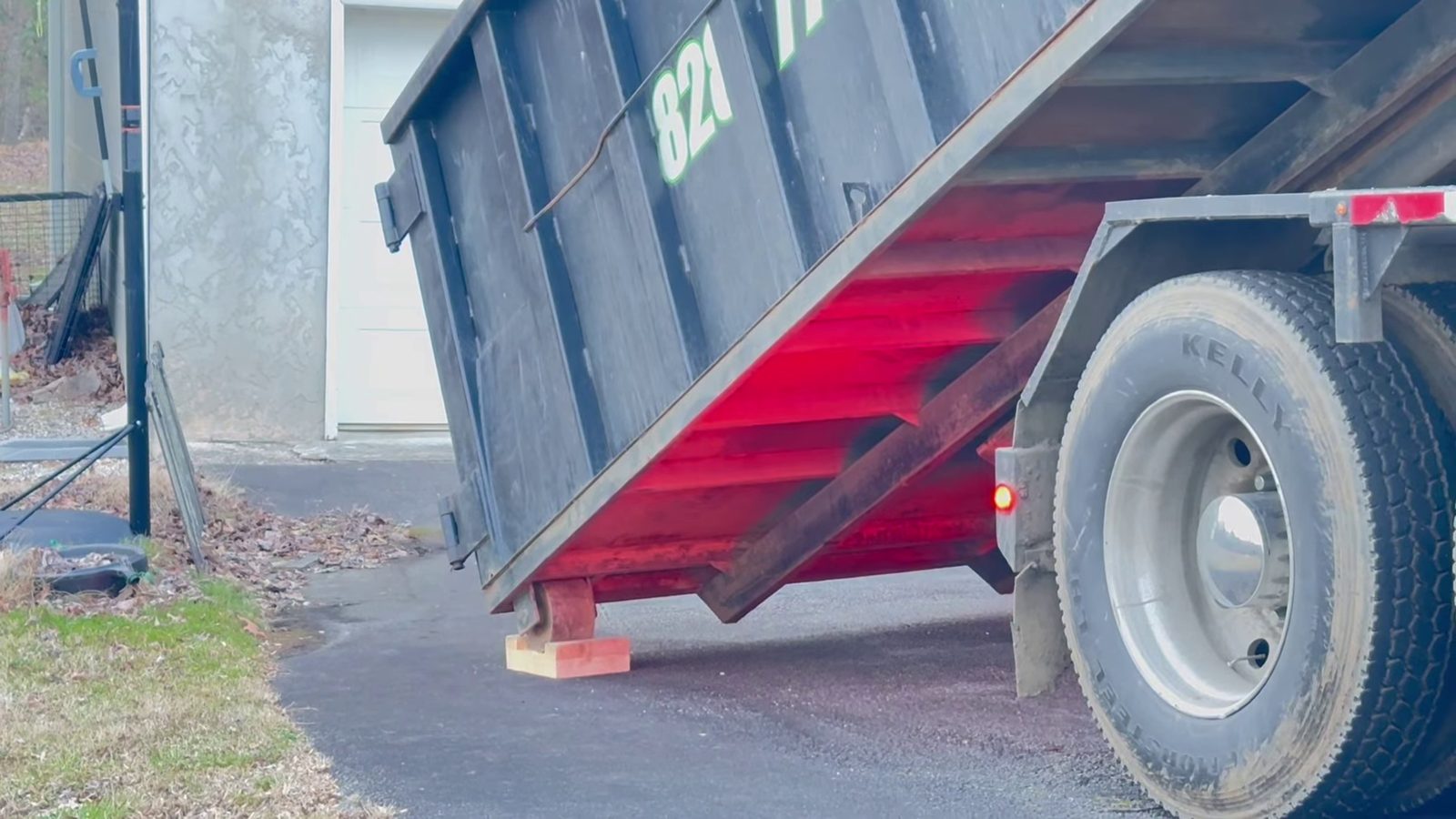
A few logistics worth having ready before you book: confirm the drop location is level enough for the container to sit without shifting (a pitched driveway may need blocking); clear overhanging branches on the drop path since drivers need clearance above the box; and know your debris type so the right size is confirmed upfront. The EPA's guidance on construction and demolition materials notes that separating debris streams before disposal can reduce landfill costs on larger renovation jobs, which is worth considering if your project mixes roofing, drywall, and concrete.