What Western NC projects actually pay for a 30-yard container
Mountain lots do not come with flat driveway aprons and standard curb access. That is the first variable on a dumpster job in Buncombe County, and it is one that most national pricing guides never account for. Add storm-cleanup surges after seasons that stall weather over the Blue Ridge, roofing overlays on older ridge homes, and the narrow streets of historic Asheville neighborhoods, and you have a market where the terrain shapes the total cost as much as the container size does.
Ewing's prices a 30-yard container at $480 (posted January 2026, depending on location), with delivery, pickup, 2 included tons, and a 10-day rental period in that figure. The table below maps common Buncombe County project types against that baseline.
| Project type | Typical load character | Weight vs. 2-ton limit | What you pay |
|---|---|---|---|
| Whole-house cleanout | Furniture, appliances, bags, boxes | Usually under limit | $480 |
| Kitchen or bath remodel | Cabinets, drywall, light fixture debris | Usually under limit | $480 |
| Multi-layer roofing tear-off | Dense asphalt shingles, two or three layers | Commonly over 2 tons | $480 + per-ton overage |
| Mixed demo with concrete or tile | Masonry, old flooring, framing | High risk of overage | $480 + overage, or split loads |
Roofing is the most common weight surprise in this market. Homes across North Asheville, Oakley, and the ridge lots above Haw Creek frequently carry two or three original overlay layers — shingles that compact into a far heavier load than their volume suggests. If your project is a roof, check the weight limits guide before you book the container, not after the truck rolls.
Why a 22-foot container on a mountain lot is a placement problem first
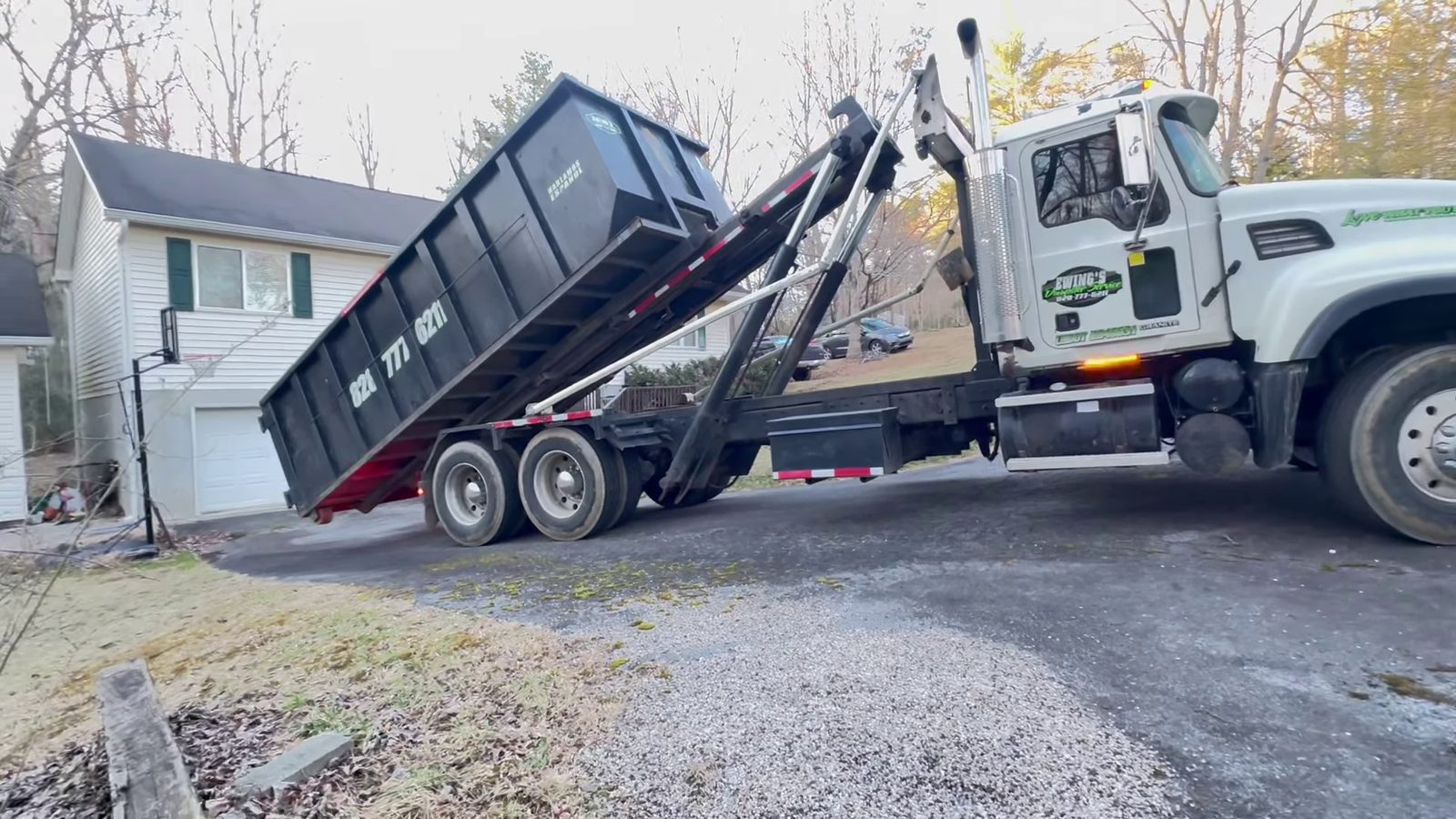
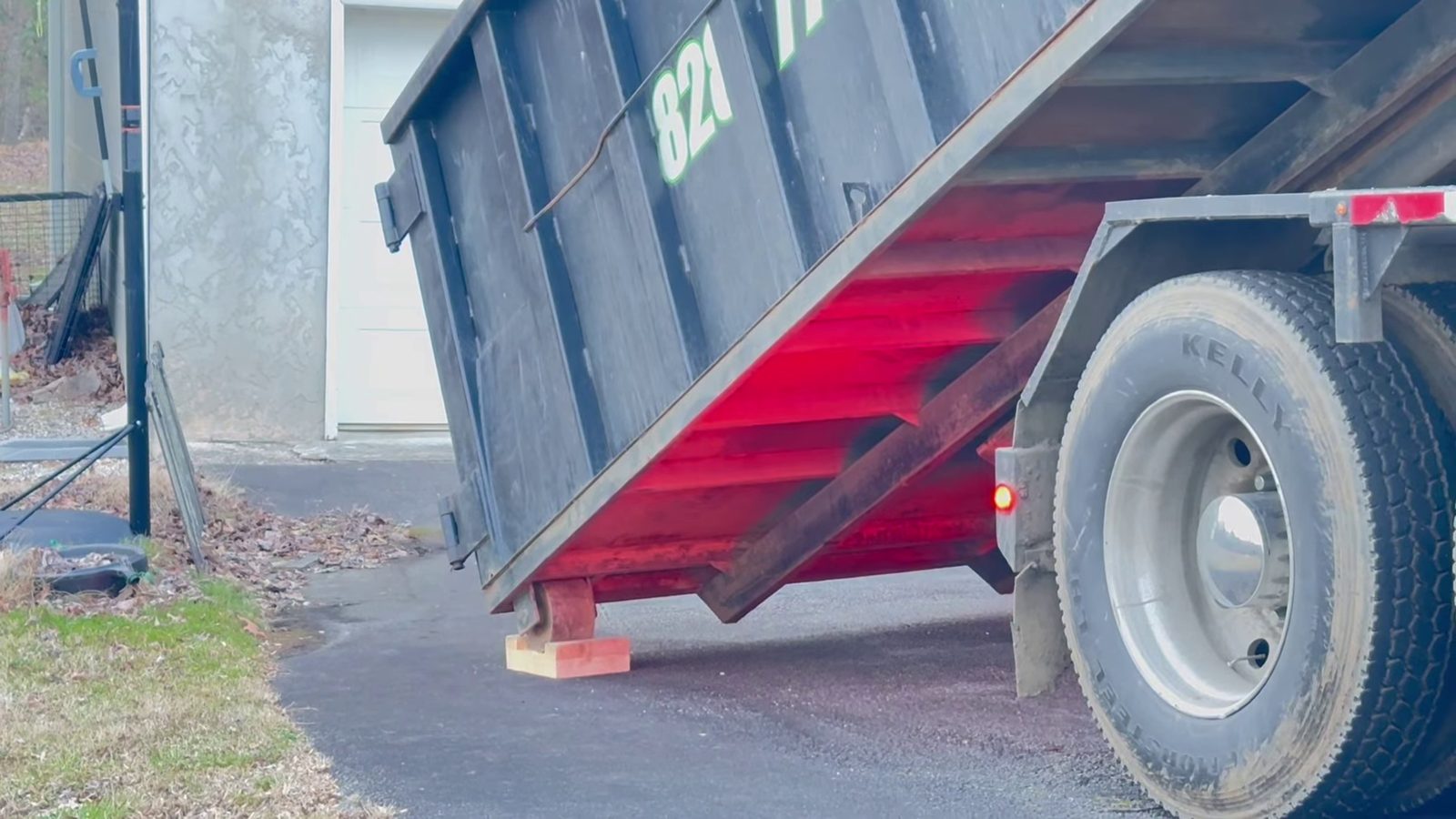
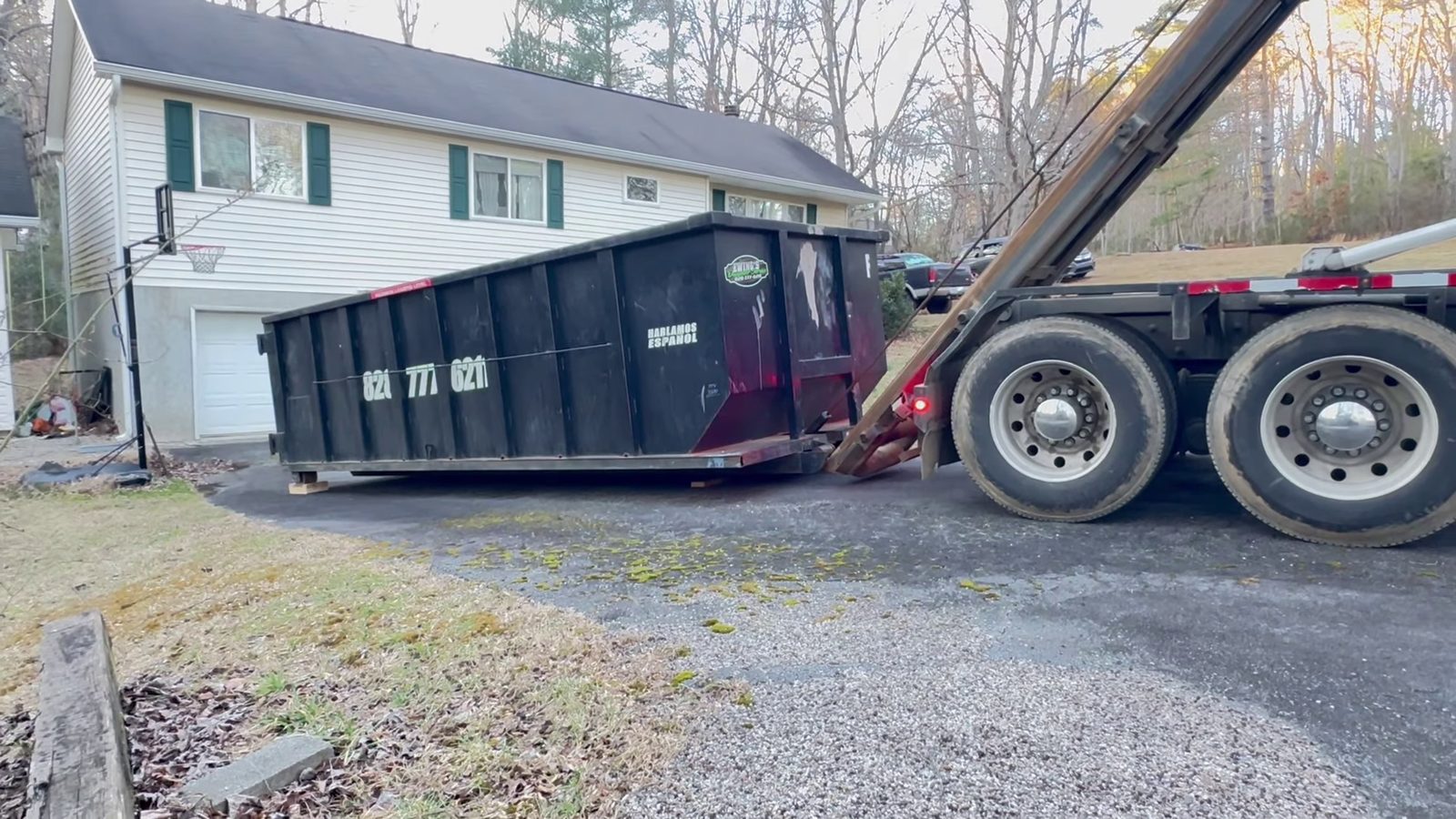
A 30-yard dumpster is 22 feet long and roughly 8 feet wide. In a newer suburb with a flat concrete apron, that is a standard delivery. In Buncombe County, that same container lands on lots where the driveway climbs and curves around a mature white oak, where the street in front of the house is narrow enough that two cars pass slowly, or where the grade drops sharply away from the foundation to the curb. Getting the container to the right spot is a placement question before it is a price question, and the two are not independent.
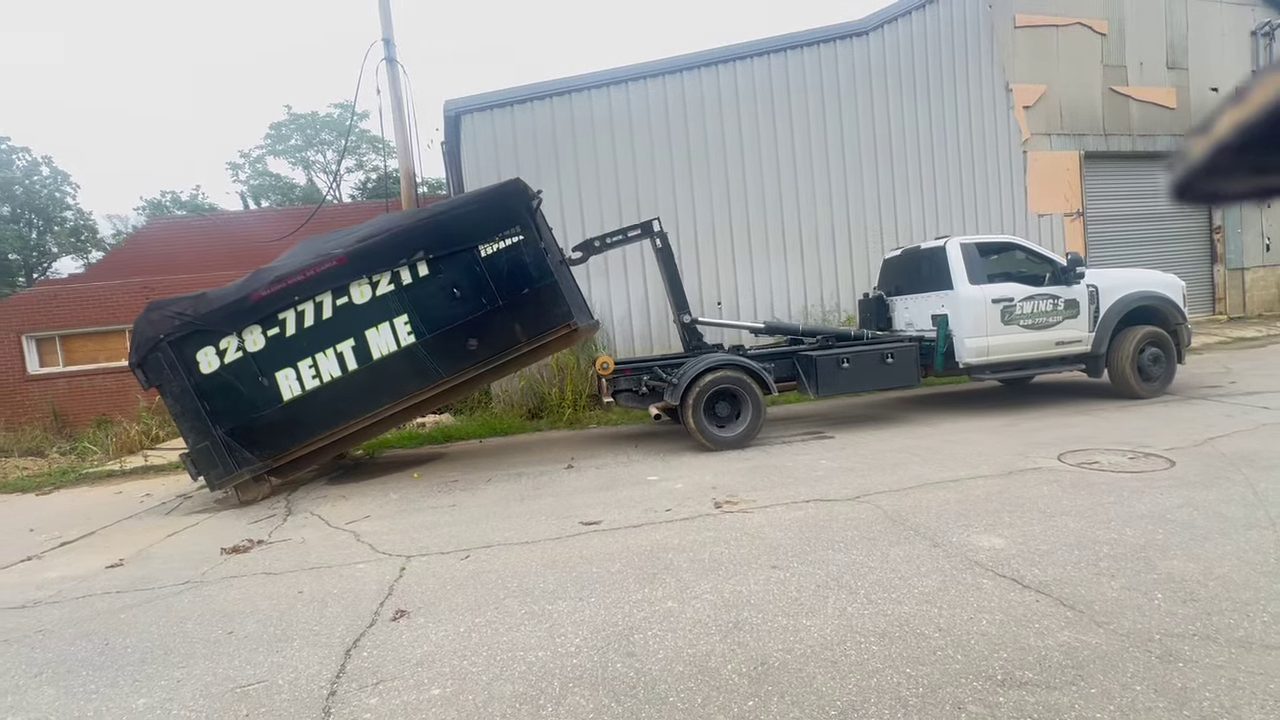
Standard delivery assumes a straight, reasonably flat run of at least 22 feet to the drop point. Homes in Montford, Kenilworth, and the denser blocks of West Asheville often need curbside placement, which requires a street permit. Ridge properties above the city sometimes need a different container size to reach a spot the 30-yard truck cannot safely access. We work through that before confirming a drop — which is what separates an accurate quote from an on-site surprise.
Storm demand adds a timing variable that flatland markets do not carry in the same way. Buncombe County has accumulated 19 federally declared disaster events (1973-2026), most of them tied to storm and flood damage. After a significant weather event, container availability compresses sharply and scheduling windows close faster than expected. Booking early after a storm is not cautious overcorrection — it is the practical move in a mountain county with limited disposal infrastructure and high post-storm volume.
Permits and right-of-way in Asheville, NC and Buncombe County
A container sitting on your own driveway or property does not require a permit in most cases. A container occupying a public street is a different matter, and skipping the permit is not a judgment call with a gray outcome: an unpermitted container in the roadway can be ordered removed at your expense, with no credit for the rental days lost.
For roads maintained by the state, the NC Department of Transportation administers encroachment permits that govern what can be placed in the right-of-way and for how long. For city-maintained streets, the City of Asheville handles street-use permits. The neighborhoods where curbside placement is most common — Montford, downtown, and the blocks surrounding the River Arts District — are also the ones with the most active permit enforcement. Plan the permit lead time before you book the container, not after the truck has left the yard.
Projects inside Asheville's historic districts may require additional review if demo work touches exterior character. That is a building-permit question, not a container-permit question — but if your project is waiting on historic review before demo begins, the container schedule should follow the approval, not precede it. Booking a container before the permit to do the work clears is a timing error that costs rental days.
What cannot go into a 30-yard dumpster in North Carolina
The 30-yard handles general cleanout debris, renovation waste, and construction material without issue. What it cannot accept is shaped by landfill rules, not hauler preference. The NC DEQ Solid Waste Section governs what county facilities accept, and these categories are off the list regardless of volume:
- Household hazardous waste — liquid paint, solvents, pesticides, pool chemicals. Buncombe County holds periodic drop-off collection events for these materials; the EPA's household hazardous waste guidance lists disposal options by type.
- Appliances with refrigerants — refrigerators, window air conditioners, dehumidifiers. Refrigerant recovery is required before disposal; these need a separate haul or an appliance recycler.
- Tires — banned from NC landfills. Tire retailers and municipal collection points accept them at no cost in most cases.
- Asbestos-containing materials — a real concern in pre-1980 Asheville, NC construction. Old floor tile, pipe wrap, and textured ceiling material often test positive. Test before demo; certified disposal is a legal requirement, not a recommendation.
- Batteries and electronics — routed through separate recycling streams under state solid waste rules.
Construction and demolition debris — lumber, drywall, roofing material, windows, and fixtures — goes in cleanly. The EPA's C&D materials guidance covers how facilities handle mixed loads and what diversion options exist. For contractor-scale projects generating mostly construction waste, our construction dumpster rental page covers what changes at that volume and load type.
Three moves that keep the final invoice where the quote said it would be
Most cost surprises on a dumpster rental trace to one of three things: load weight that exceeds the included tonnage, a placement that needs a permit nobody planned for, or a project that runs past the rental window. Each is avoidable with a small step taken in advance.
- Pull heavy material out before the container arrives. Walk the project first and set aside anything that is overweight-risky — concrete blocks, old ceramic tile, appliances with refrigerants. Sorting before the drop takes minutes; sorting a loaded container at pickup does not.
- Measure the drop point before booking. Confirm you have 22 feet of clear, reasonably flat surface at the intended placement spot. A redeliver because the site was not ready costs more than a measuring tape costs you now. If the driveway does not work, talk to us before the truck is dispatched — not on delivery day.
- Extend before day 10, not after. The 10-day window covers most projects. Historic district renovations, estate cleanouts, and jobs waiting on subcontractors frequently run longer. Call before the rental expires — extending an active rental is a phone call; a pickup-and-redeliver is a separate trip charge.
Not sure the 30-yard is the right fit for your project? Our 30-yard dumpster rental page includes a size guide and what to measure before you book. For jobs that are purely construction waste — roofing, demo, framing debris — see the construction dumpster rental page for load notes specific to contractor debris volumes.