What shingle weight means for your bin size
Asphalt shingles weigh somewhere between 230 and 450 pounds per roofing square depending on the product. That range sounds manageable until you do the math on a full tear-off: a 1,800-square-foot Asheville ranch with architectural shingles and two layers from prior re-roofs can send close to five tons of material into a bin before the crew touches a single piece of decking. Volume is not the binding constraint on a shingle load — weight is.
That calculation matters specifically in Buncombe County because of the age of its housing stock. Neighborhoods like West Asheville, Montford, and Kenilworth carry homes built from the 1920s through the 1960s, and houses in this region frequently had layers added over the decades rather than stripped down at each re-roof. A single-story bungalow that looks compact from the street can carry a heavier shingle load than a newer build twice its square footage. A contractor who sizes your bin by eyeballing cubic yards from the driveway is guessing at the wrong variable.
Before you call, ask your roofer two questions: how many layers are on the roof, and is any decking coming off? The first question moves most jobs between bin sizes. The second adds weight that a shingle-only estimate misses entirely. If the decking answer is yes and the layer count is two or more, build in one size above the initial estimate. Our dumpster weight limits guide maps those numbers directly to the right bin for your job.
Buncombe County roof scopes and what they cost
The table below maps common roofing project scopes to the right bin size and Ewing's delivered price. Delivery and pickup are included at every tier — no fuel surcharges or separate fees by bin size.
| Scope of work | Recommended size | Ewing's delivered price |
|---|---|---|
| Small repair or single slope, 1 layer (under 1,000 sq ft) | 10 yard | $199 |
| Average single-family roof, 1 layer (1,200–2,000 sq ft) | 15 yard | $280 |
| Larger home or any 2-layer tear-off | 17 yard | $325 |
| Large home, 3+ layers, or roof plus decking replacement | 30 yard | $480 |
The 15-yard is the most common order for a standard single-family re-roof in this market — it handles the shingle and felt load on a 1,500-to-2,000-square-foot home without leaving headroom for a second pull. If that scope describes your project, see 15-yard dumpster rental for logistics and typical turnaround times in Buncombe County.
The 17-yard earns its price difference on two-layer tear-offs where a contractor might otherwise call for a bin swap partway through the job. That swap-out costs time and a second delivery fee that reliably runs higher than the upgrade would have. The 30-yard is the right tool for large homes, complex roof lines, or any job where the decking replacement estimate is uncertain — it absorbs the overage that shows up on bigger jobs without a service call and a surcharge.
Permits, placement, and Asheville's right-of-way
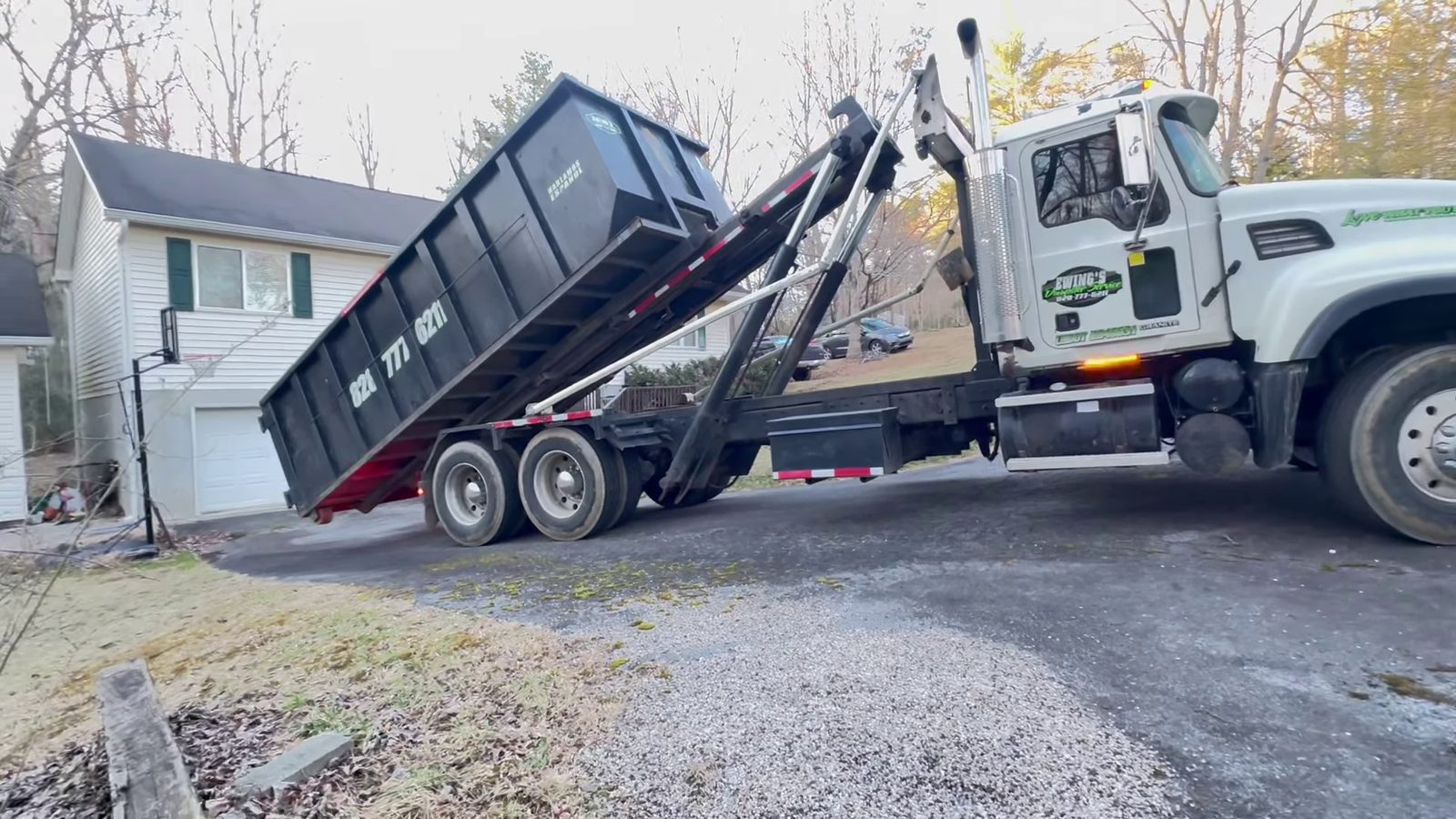
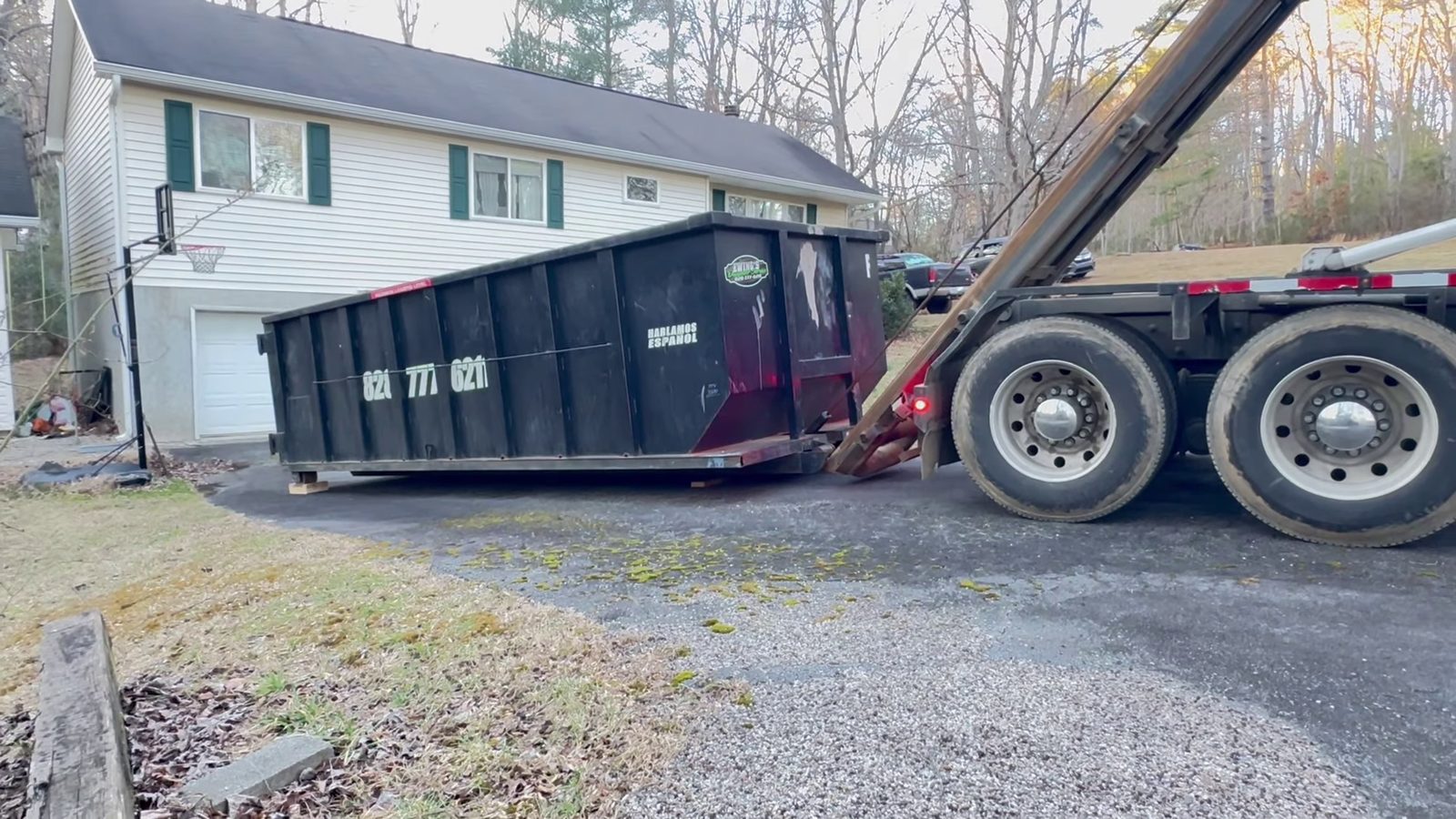
Most residential driveways in Buncombe County absorb a dumpster without any paperwork. The situation changes if the driveway won't work — steep grade, narrow apron, tight turnaround, or a roofer staging materials on the same surface — and the bin has to go in the street instead.
A dumpster sitting in a public right-of-way in North Carolina requires an encroachment permit from the NC Department of Transportation. Inside Asheville's city limits that process runs through the City of Asheville engineering or transportation department. Neither process is difficult, but skipping it can generate a removal notice or fine that costs more than the permit would have. Buncombe County has seen 19 federally declared disaster events over 1973-2026, most of them storm-related — which means emergency roofing timelines are real here, and permit logistics apply even when the job feels urgent.
If the bin goes on the street, ask about required reflectors and lighting before delivery day. Those requirements appear in both NC code and ICC model fire and safety provisions, and they exist for a reason on Asheville's narrower historic-district streets. A bin placed improperly on a Montford side street or a West Asheville residential block can obstruct emergency vehicle access — a flag the city enforces. Clarify access and placement before the roofer is scheduled, not after the bin is already on the ground.
What goes in a roofing dumpster and what stays out
The standard load — asphalt shingles, synthetic or felt underlayment, wood decking, drip edge, metal flashing, and roofing nails — goes in without restriction. These materials are construction and demolition debris under EPA guidance for C&D materials, and North Carolina's solid waste rules (NC DEQ Solid Waste Section) allow them at licensed C&D landfills without special handling fees or separate hauling arrangements.
Two categories require a stop before anything enters the bin. First: asbestos-containing roofing products on pre-1980 homes. Transite panels, certain older felt underlayments, and some fiber-cement shingles fall into this category, and they appear on a portion of Buncombe County's older housing stock. If a roofer pulls something from a West Asheville or Montford home that isn't standard asphalt or fiberglass, that material must be identified by a licensed assessor before it enters any container — NC DEQ prohibits commingling asbestos-containing waste with standard C&D debris at licensed facilities.
Second: lead paint on wood trim or soffits removed during a roof-line repair. Small quantities fall under EPA household hazardous waste guidance, and the right path is to set it aside for proper disposal rather than mixing it into the shingle load. Neither situation is common on a straightforward tear-off of a post-1990 home, but older Buncombe County housing stock makes it worth asking before the first layer comes off. For a full list of accepted and prohibited materials by project type, see roofing dumpster rental.
Three factors that move you to the next bin size
The table above gives the right starting point for most jobs. Three variables can push a project toward the top of its size range or into the next tier up — knowing them before the roofer starts protects both the schedule and the final cost.
Layer count confirmed late. Roofers often confirm the full layer count once they reach the ridge and valleys, not from the ground. If that number comes in higher than estimated, upgrading the bin before it is loaded costs less than a mid-job swap-out that adds a second delivery and a service call. The difference between a 15-yard and a 17-yard is $45 — a mid-job swap runs higher once time and fees are counted.
Unexpected decking damage. Storm-damaged sheathing is weight and volume that does not appear in a shingle-only estimate. A roof replacement triggered by high-wind damage or ice — common in this area given the county's storm history — carries a higher chance of hidden decking issues than an elective replacement scheduled during a dry summer. If your roofer's first estimate does not account for decking, ask what the revised number looks like before you order a bin.
Driveway access constraints. A bin that cannot sit on the driveway and has to go in the street adds permit lead time to the schedule without changing Ewing's price. On a ridge lot or a narrow Kenilworth side street, clarify placement before you schedule the roofer. If your project spans more than one structure — a detached garage or a workshop roof — revisit dumpster weight limits before committing to a single bin size.