Mountain houses carry surprises that change your bin size
Asheville sits in a bowl carved by the French Broad and Swannanoa rivers, surrounded by terrain that made some neighborhoods develop slowly and others quickly. The result is a housing mix unlike most of the Southeast: craftsman bungalows from the 1920s alongside post-war ranch houses alongside newer infill construction, often on the same block. Renovating any of them in Buncombe County means you are as likely to open a wall and find horsehair plaster as standard drywall — and horsehair plaster runs roughly twice the weight per square foot of modern material.
That weight difference matters when sizing a bin. A bathroom gut that generates a half-ton of drywall might generate a full ton of plaster. The older the house, the more this shifts, which is why a 10-yard bin handles a small bathroom update in a newer build but fills quickly in a 1930s bungalow on Montford Avenue. If your house pre-dates 1980, budget toward the next size up and ask about weight limits before you order.
Buncombe County has seen 19 federal disaster declarations over 1973-2026, and water-driven repairs carry their own debris profile — saturated insulation, swollen subfloor, damaged sheathing — that pushes loads heavier and wetter than a dry remodel. If your renovation is repairing flood or storm damage, say so upfront; the bin size and debris guidance both change.
Matching the bin to what your remodel actually generates
The honest answer to "what size do I need?" is that scope and material density both matter. A 10-yard bin holds roughly the volume of a small cargo trailer; a 30-yard holds about four of them. Where most homeowners go wrong is planning for volume alone without accounting for the density of what comes out.
| Renovation Scope | Typical Bin | Ewing's Price |
|---|---|---|
| Single bathroom gut — tile, vanity, fixtures | 10 yard | $199 |
| Kitchen or large bathroom, standard materials | 15 yard | $280 |
| Multi-room remodel or kitchen with plaster walls | 17 yard | $325 |
| Whole-house gut or addition with significant demo | 30 yard | $480 |
Prices include delivery and pickup to Buncombe County and surrounding areas. If you are not sure where your project lands, the size guide walks through the material-density math in more detail. One working rule: if you are pulling any wall with plaster or lifting a subfloor in an older house, move up one size from your first estimate. The remodel debris page lists what common materials weigh, which makes the choice easier before demo starts.
Where the bin lands, and what that takes in this terrain
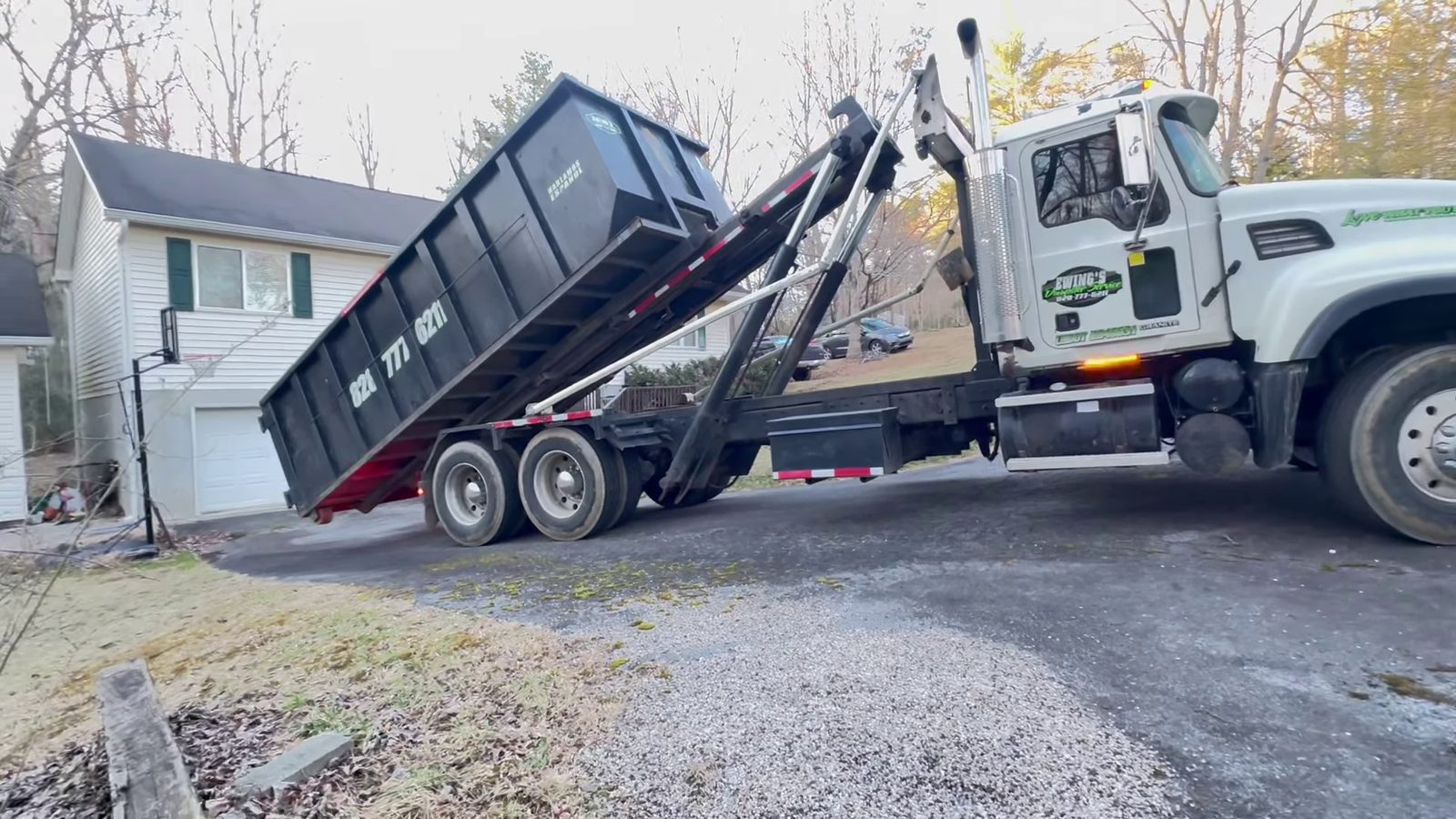
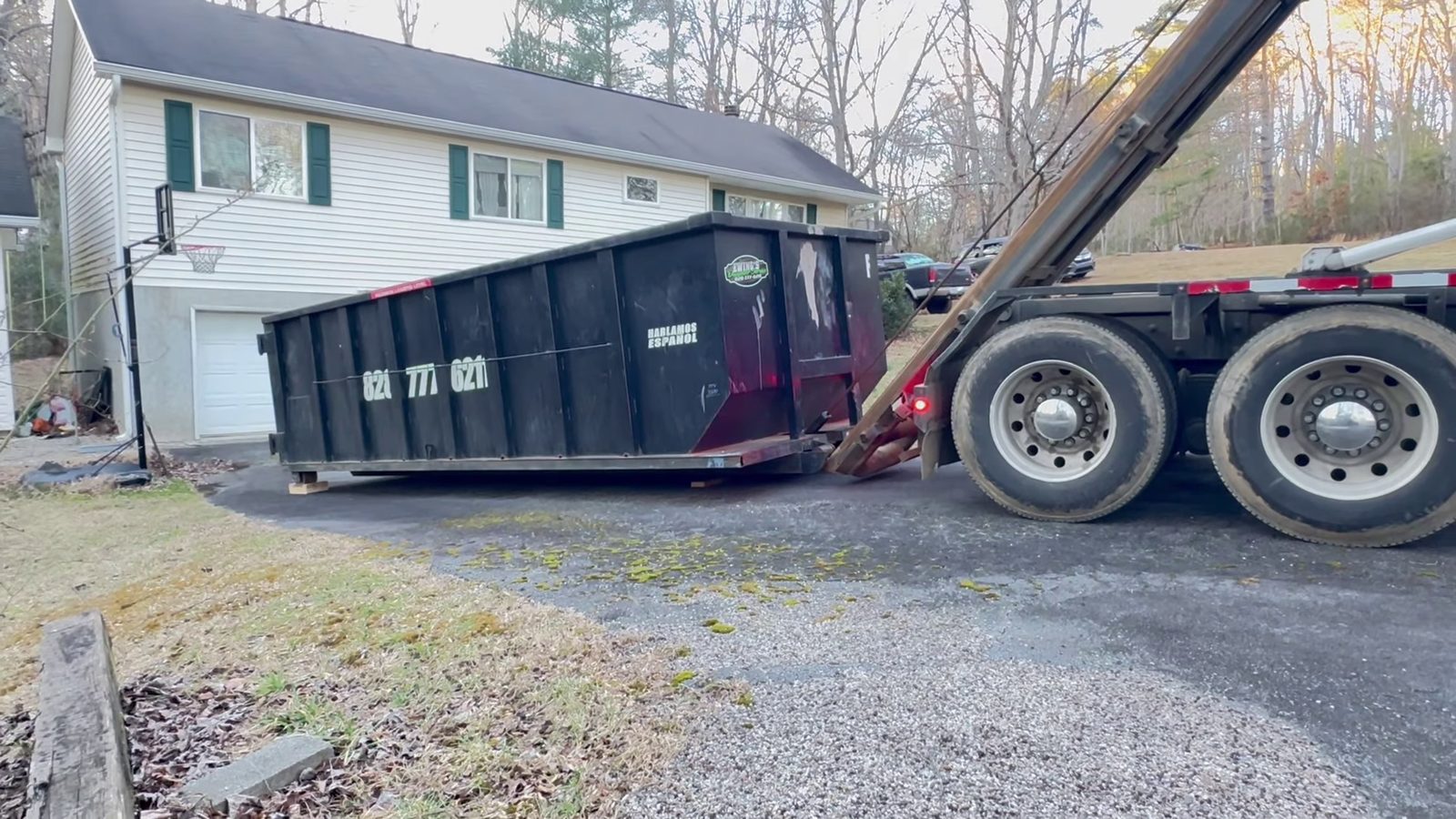
A flat driveway is the simplest placement — the driver sets the bin, it stays level, you fill it. That scenario is less common in Buncombe County than in flatter parts of the state. Hillside lots, narrow paved drives, and switchback approaches are common in neighborhoods like West Asheville, Kenilworth, and North Asheville. Placement is a conversation here, not an assumption.
If the bin needs to sit on a public road or roadside, the rules depend on who maintains that road. State-maintained roads in North Carolina require an encroachment permit from the NC Department of Transportation; streets within Asheville city limits involve separate rules under City of Asheville authority. Driveway placement avoids this layer entirely when access allows, which is the simpler path on most residential jobs and the first choice for a reason.
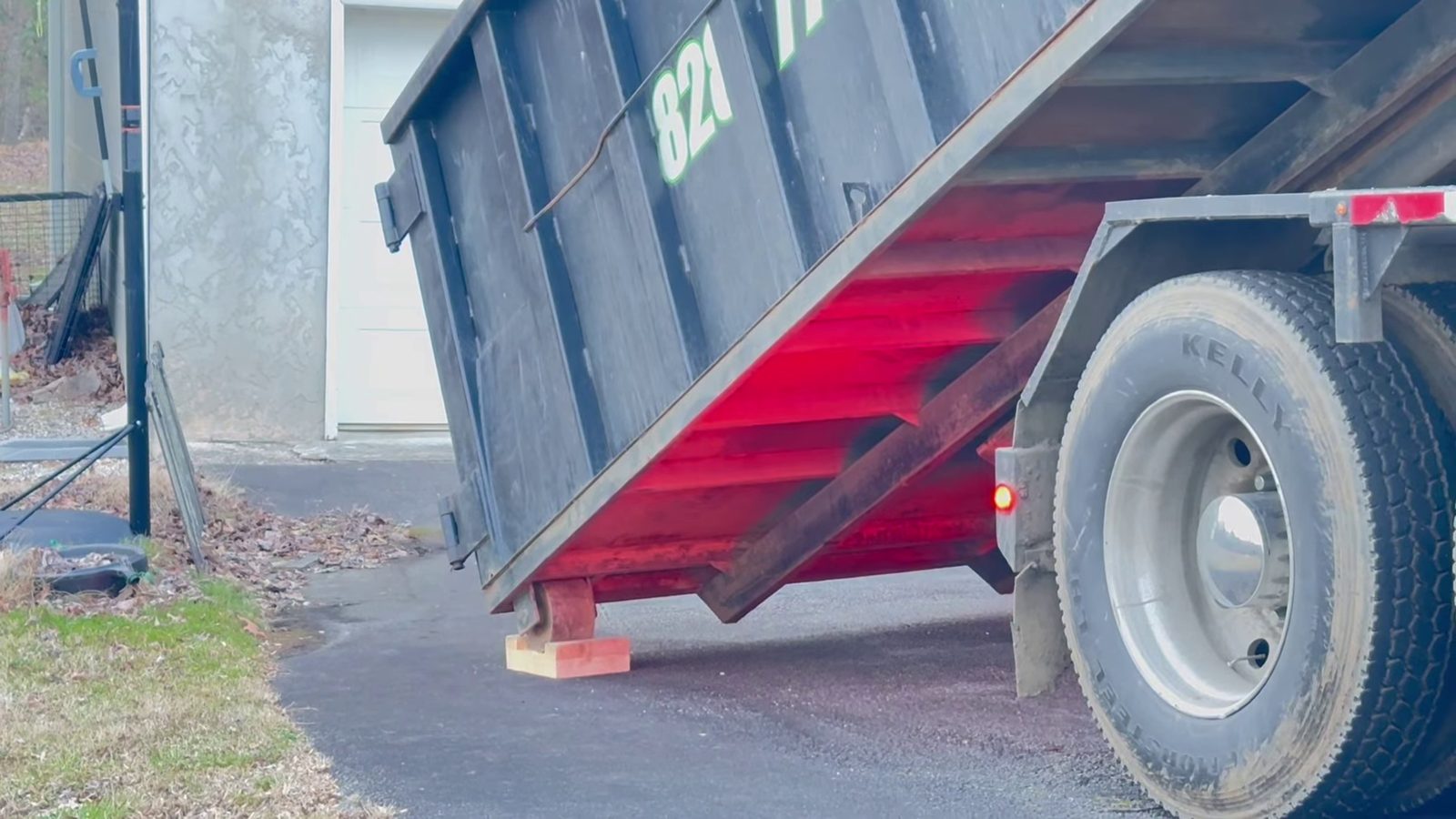
A bin sitting on a grade is not just awkward; it can shift as it fills. Level placement or blocking matters, and a driver should tell you upfront if your driveway geometry is a problem rather than setting the bin anyway and leaving you with something you cannot safely fill.
What belongs in a renovation bin, and what gets turned away
Standard renovation debris — framing lumber, drywall, flooring, cabinets, tile, insulation, windows, and doors — all go in. Heavy materials like concrete, brick, and old plaster are allowed in moderate quantities, but they consume weight limits faster than their volume suggests. Ask about thresholds before demo day if your job involves significant masonry.
What cannot go in is shaped by both state and federal rules. NC DEQ's Solid Waste Section maintains the list of materials prohibited from landfills in this state. In practice, the items that most often surprise renovating homeowners are liquid paint, solvents, appliances containing refrigerants (window AC units, old refrigerators), batteries, and anything that qualifies as household hazardous waste under EPA guidance.
Older houses add a few specific wrinkles. Peeling lead paint on trim is not a separate hazmat event — the painted wood goes in the bin — but containers of old paint do not. Asbestos-containing materials require a licensed removal process before any demo debris goes into a standard rental bin. The EPA's guidance on construction and demolition materials also covers what can be diverted from landfill, worth reviewing if your project generates usable wood or clean metal.
Three questions worth asking before you schedule delivery
"What is the weight limit, and what do you charge over it?" Volume and weight are two different limits. A 10-yard bin full of tile weighs considerably more than a 10-yard bin full of drywall. Know the per-ton overage rate before demo day, not when the invoice arrives.
"What is the rental window, and what does an extension cost?" Renovations run long. A bin sitting past its pickup window typically triggers a daily or weekly rate. Get the number in writing upfront so there is no ambiguity when the project stretches — and it usually does.
"What materials will you turn away at the landfill?" Ask for the prohibited list in writing, not a verbal summary. ICC building and fire codes and NC DEQ regulations both define what facilities can legally receive from residential C&D jobs — a hauler who knows those rules will produce a specific list without hesitation. If getting that list is harder than it should be, treat it as information about how the rest of the job will go.