The valley access question every Swannanoa job starts with
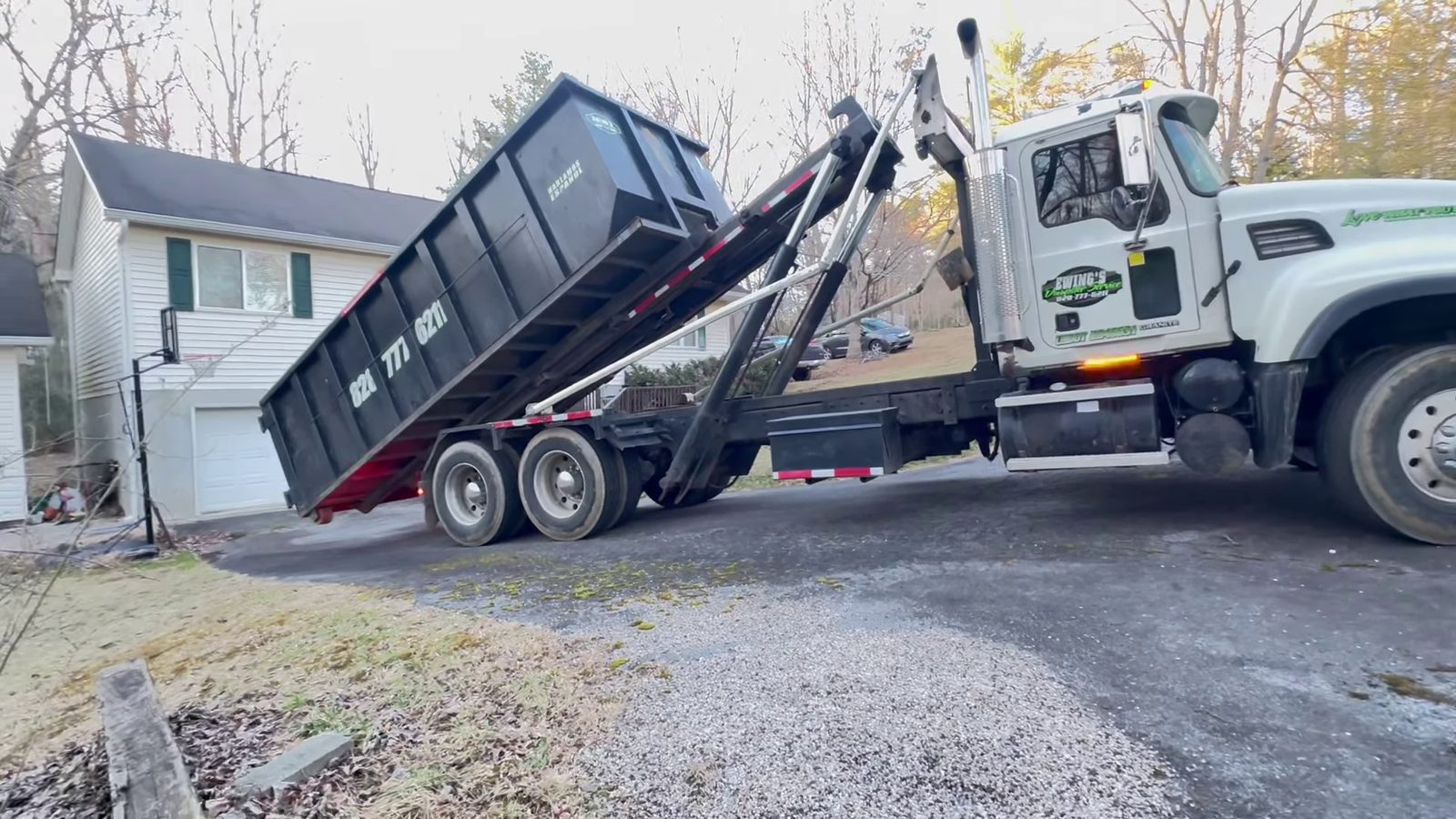
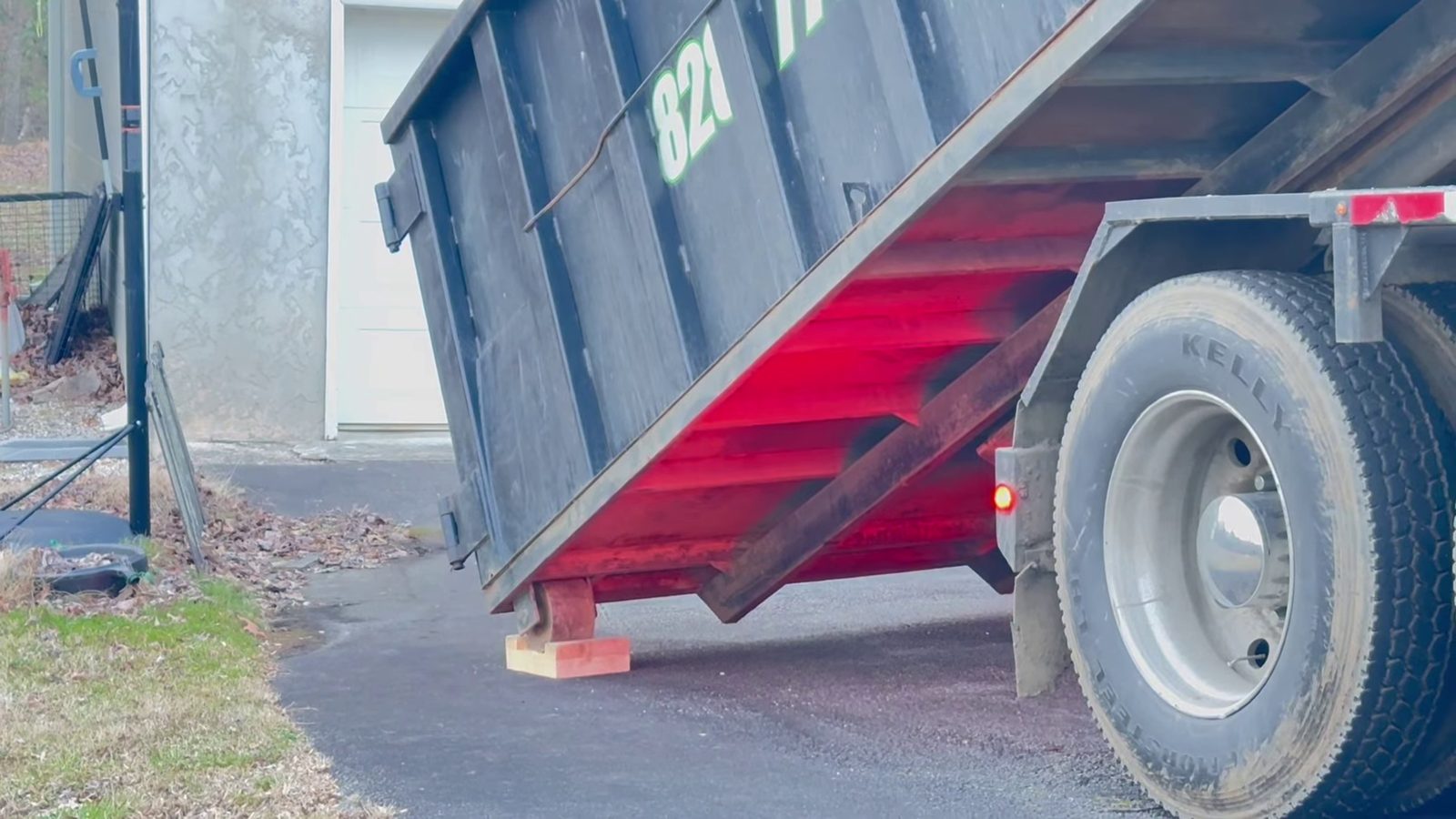
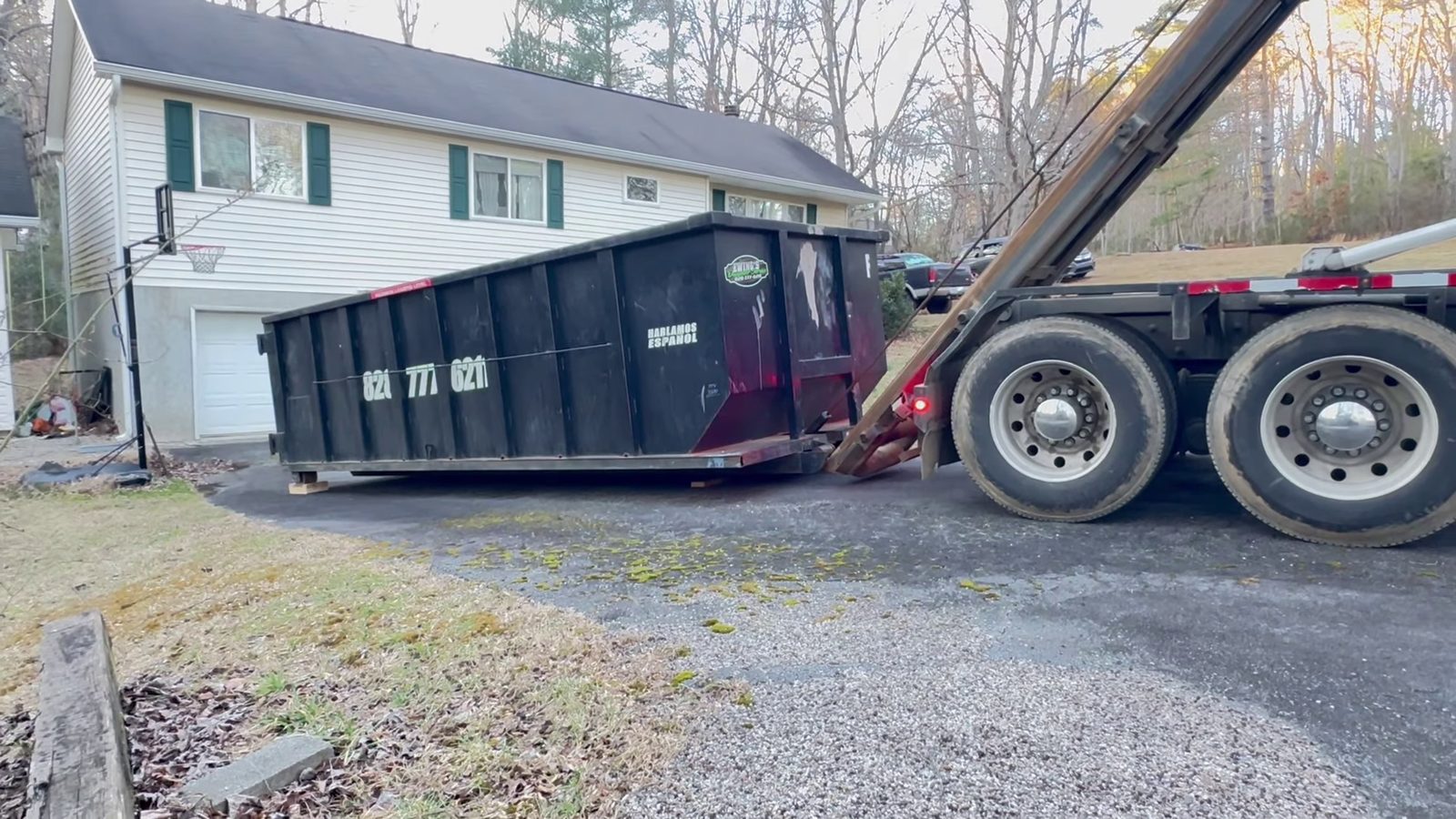
Swannanoa runs east from Asheville along a narrow river corridor where Route 70, the railroad, and the Swannanoa River share a valley floor that leaves most residential lots tight against the hillside, served by driveways that were never built for delivery trucks. A construction dumpster rental in Swannanoa NC is half a logistics problem before it is a capacity problem: where the bin can sit, how the truck exits, and whether the grade drops off past the pad.
The same valley geography that creates access complications also concentrates storm water. Buncombe County has had 19 federally declared disasters across 1973-2026, most of them flood events, and the Swannanoa corridor sits at the bottom of that drainage. That history produced a sustained wave of renovation and remediation work — gutted interiors, removed flooring, stripped framing — and construction dumpsters have become the standard staging tool for that debris. If your project is flood-recovery related, the load composition and weight profile look different from a standard remodel, and the right bin size follows from that, not from square footage alone.
The two things to establish before you book: where the bin will sit (driveway, gravel pad, or street) and what you are pulling out (light wood and drywall, or something heavier). The rest of the sizing conversation follows from those two answers. See the full construction dumpster rental guide for a primer on how to frame that conversation before you call.
Matching bin size to your project scope
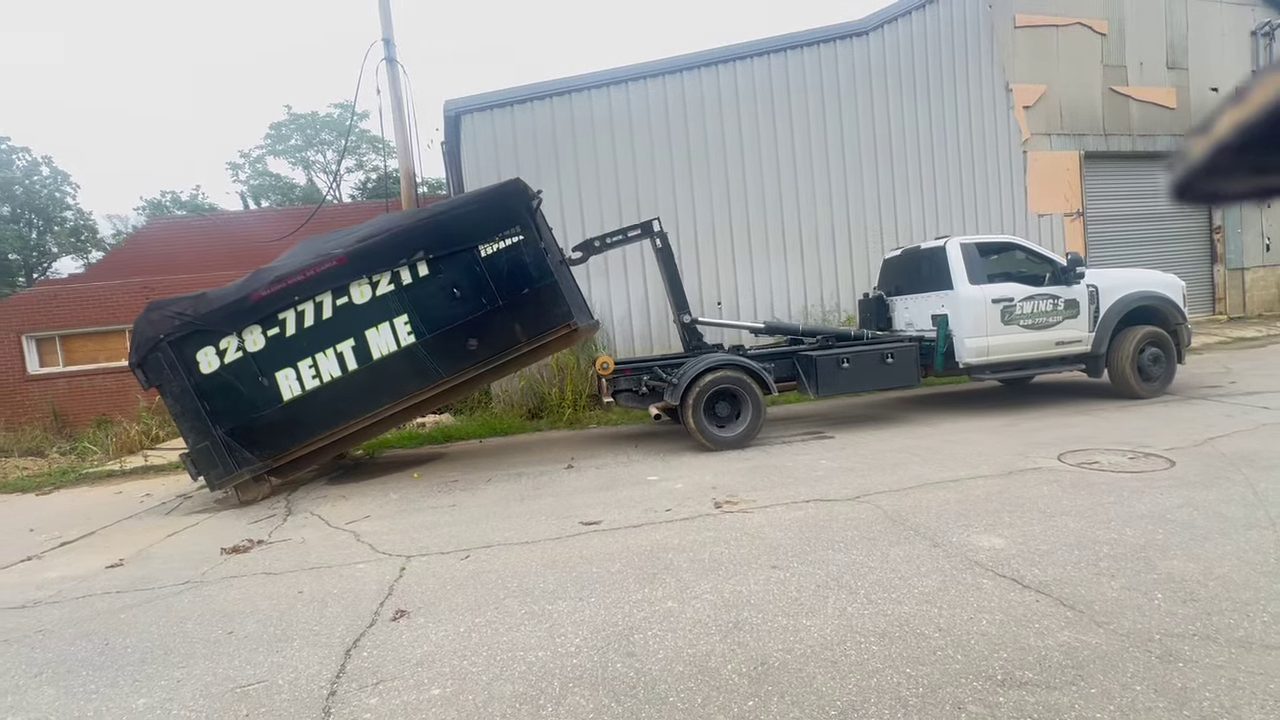
Ewing's runs two sizes for Swannanoa and the surrounding Buncombe County corridor. For most renovation and cleanup projects, one of these will fit — the question is which one, and whether a second pull costs less than moving up in size on the first order.
| Project type | Recommended size | Price (Jan 2026) | Notes |
|---|---|---|---|
| Single-room gut or flooring removal | 17 yard | $325 | Delivery and pickup included; covers most interior demo loads |
| Full interior renovation or multi-room remodel | 30 yard | $480 | Right size for mixed debris — drywall, wood, fixtures |
| Roof tear-off (shingles only) | 30 yard | $480 | Shingles are dense; check weight limits before overfilling |
| Storm debris and flood remediation (single structure) | 17 or 30 yard | $325–$480 | Load composition drives the choice; mixed organic and construction debris shifts weight fast |
| Shed or outbuilding teardown | 17 yard | $325 | Fits typical small-structure demolition |
Weight is the variable that bites most people on roofing and concrete-heavy loads. The weight limits guide explains how overage is calculated and what a mixed load of shingles and lumber actually weighs out to. For the larger option, the 30-yard dumpster rental page covers what fits and what to stage separately.
What goes in and what the landfill turns away
Standard construction and demolition materials load without question: lumber, drywall, framing, roofing shingles, flooring, doors, windows, trim, and mixed light fixtures. The EPA's construction and demolition materials guidance puts C&D debris at a significant share of the national solid waste stream, which is why landfills have specific acceptance criteria for it and why knowing your load composition before you fill the bin matters.
What stays out: anything on the hazardous materials list. Paint cans, solvents, treated wood with visible residue, asbestos-containing materials, and anything that qualifies as household hazardous waste under EPA guidelines cannot go in a dumpster. The NC DEQ Solid Waste Section maintains the state-level list of prohibited materials, and the destination facility enforces it at the gate — a flagged load comes back to you, not to the hauler. If your project touched anything built before 1980, treat asbestos as a question before demolition begins, not after.
Mattresses and tires are also refused at most facilities. Set those aside and arrange separate disposal before the bin arrives so they do not hold up your pickup.
Placement rules and when a road permit is required
Most Swannanoa lots can take a bin in the driveway without any permit at all. The permit question comes up when the dumpster has to sit in the road or on a public right-of-way — and in a valley town with limited off-street space, that is not a rare situation. Any placement on an NCDOT-managed road requires an encroachment or ROW permit from the NC Department of Transportation before the bin touches asphalt. That process carries a lead time, and skipping it creates liability if the bin is struck or blocks traffic.
The practical step: establish where the bin can sit before you call. A gravel shoulder or paved apron entirely on private property avoids the permit process. If the driveway grade is too steep for the truck to back safely, the driver will assess that at delivery — plan an alternate staging point before that conversation happens the morning your project starts.
Scheduling and sequencing on the Swannanoa corridor
Swannanoa is a quick run east from Asheville on Route 70, but job density in the valley has been high through the current renovation cycle. Book ahead when possible, especially for multi-day rentals during peak construction season in spring and summer. If your project timeline is uncertain, ask about flexible pickup windows when you schedule — most projects run long, and a brief extension is easier to arrange in advance than on the day of pickup.
If you are managing multiple loads or a large-scale remediation, a second pull often costs less overall than moving up to a larger bin on the first order. The logistics of a 30-yard bin on a tight hillside lot sometimes make two 17-yard pulls the cleaner answer both operationally and in total cost. Talk through the sequencing when you book and Ewing's can help you map it out before the first delivery.