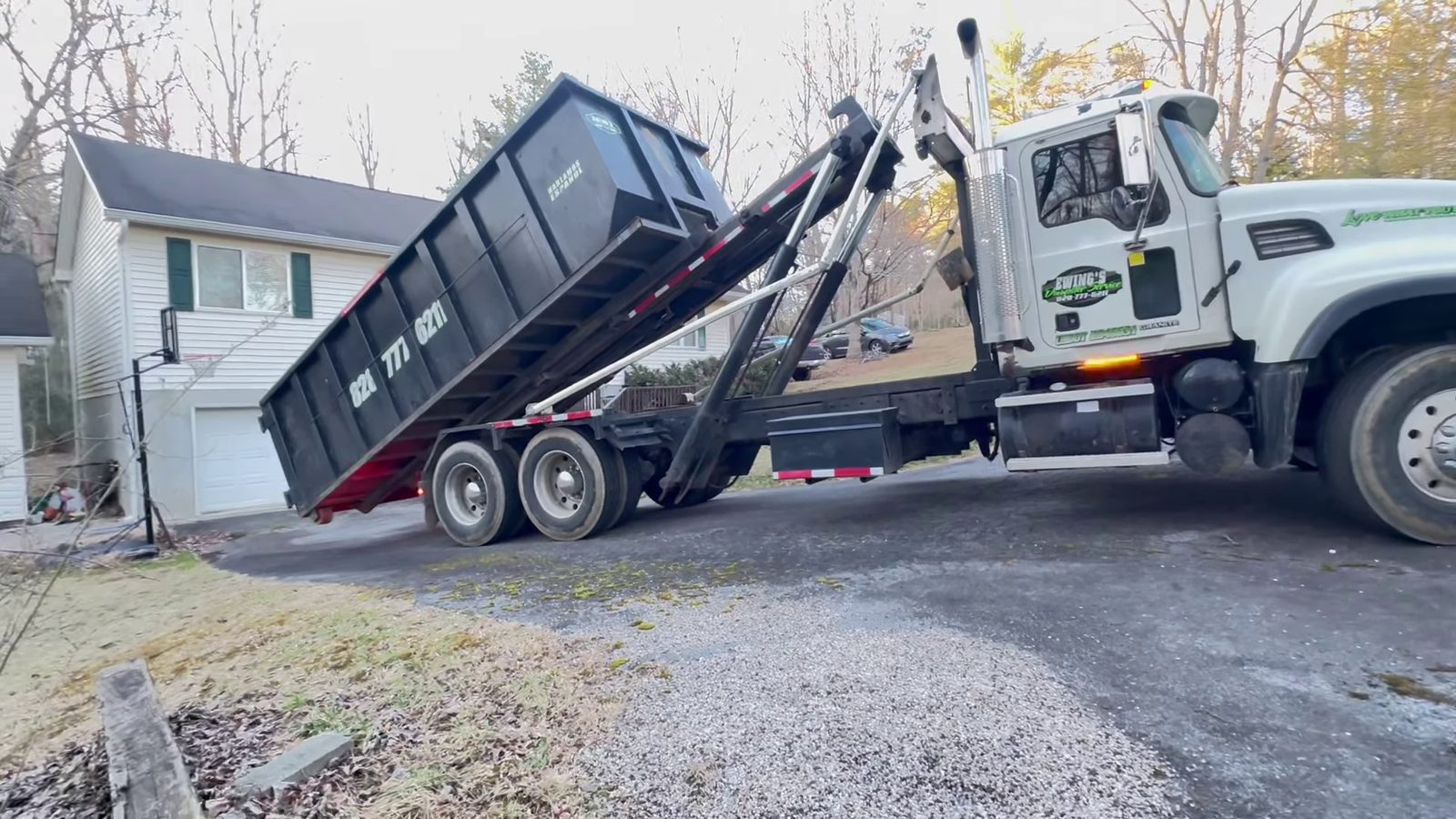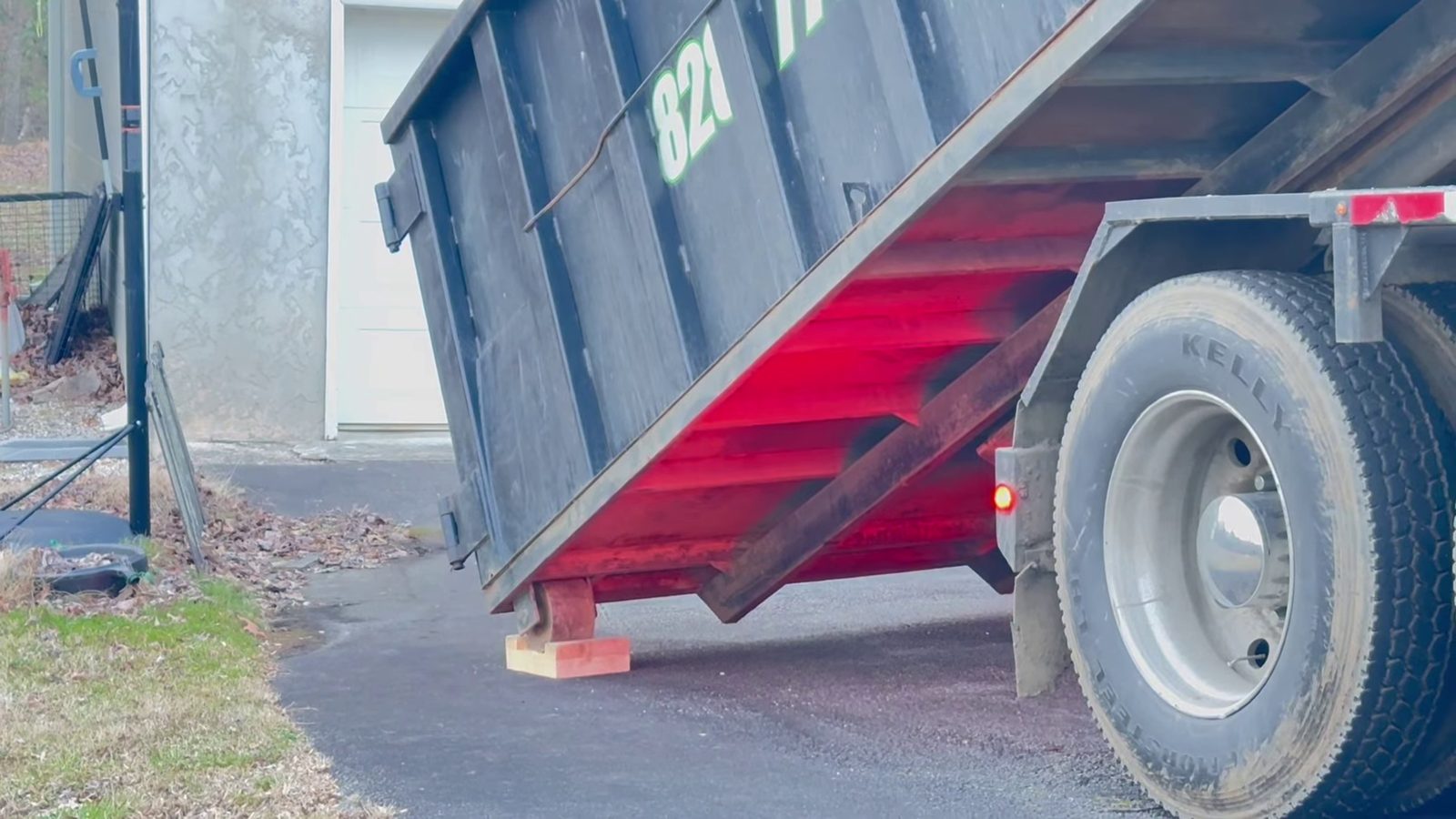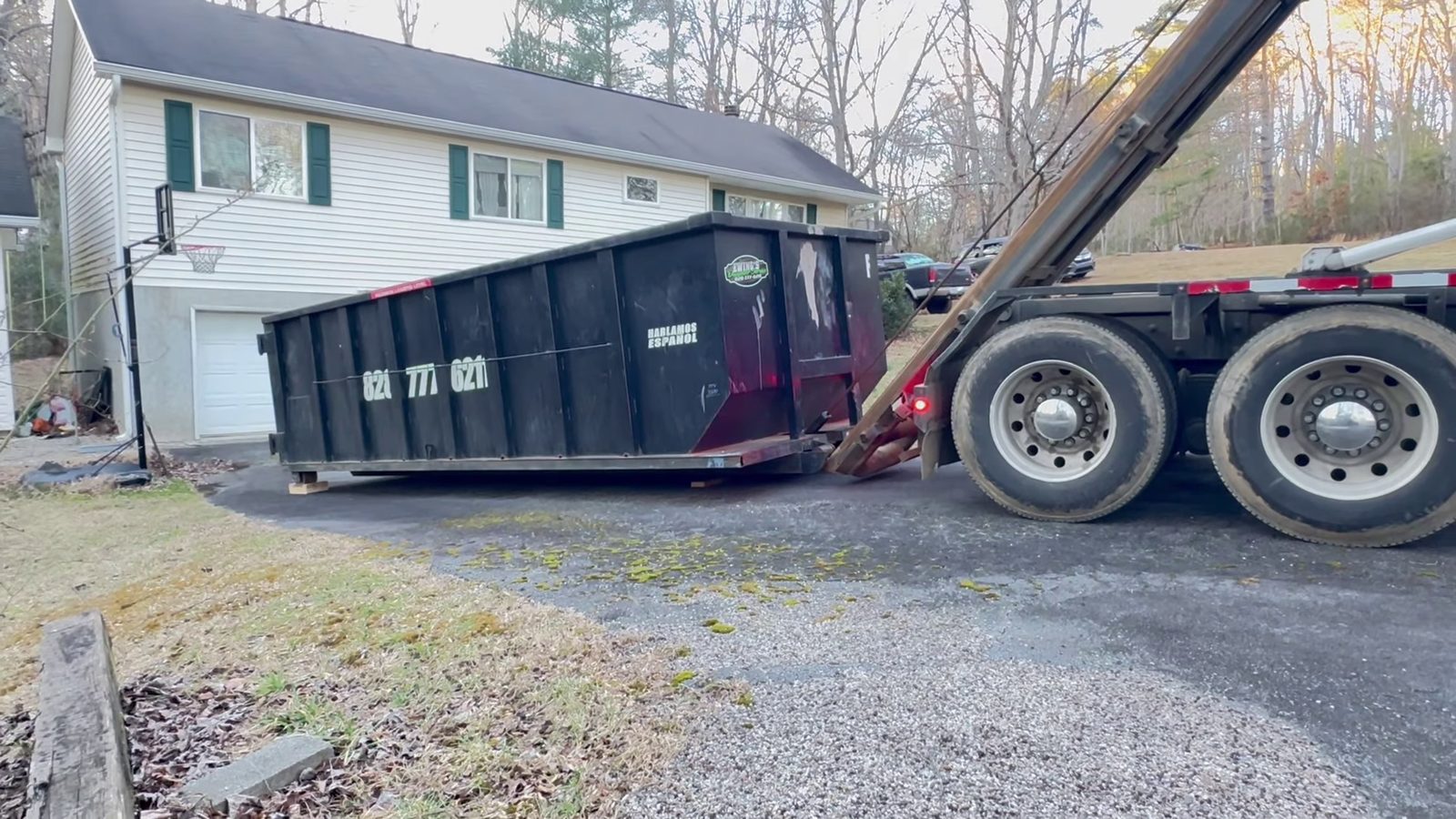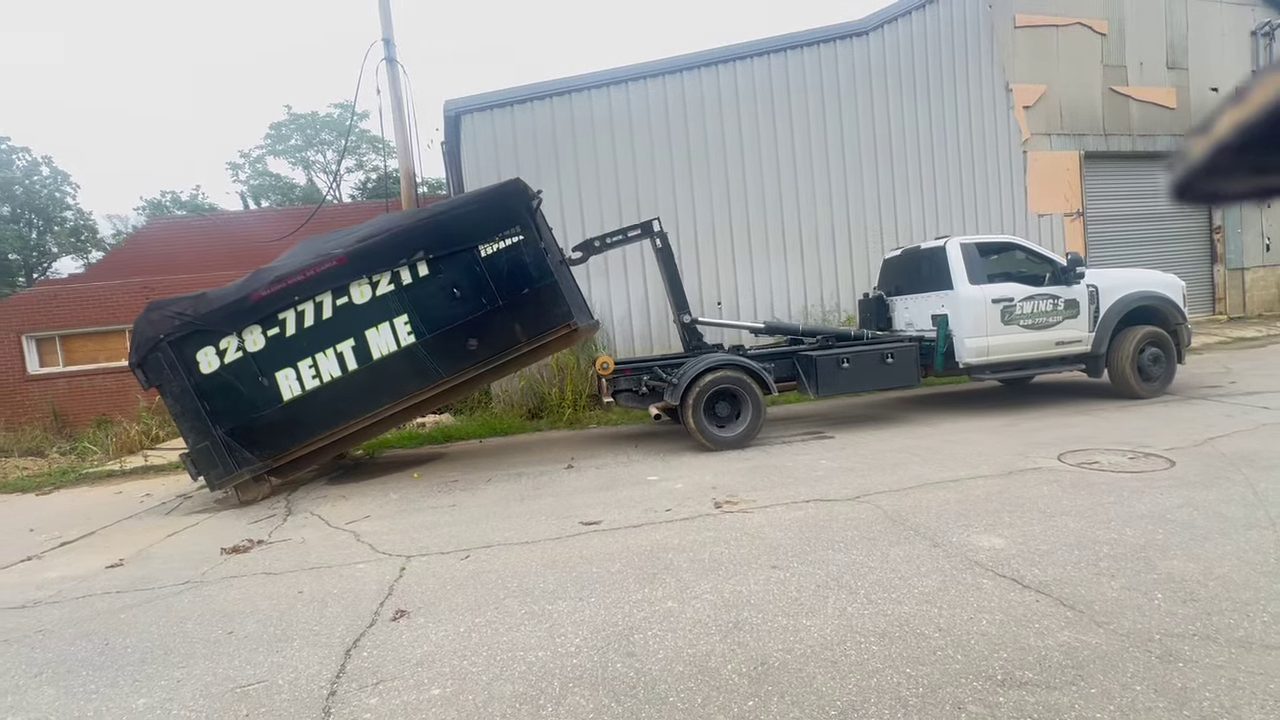
Slope lots, older homes, and apple-country farm properties change the job
Hendersonville sits at roughly 2,100 feet in the Blue Ridge foothills, and most Henderson County residential lots carry some degree of grade. That changes how a dumpster job gets planned before the truck ever leaves. A hillside driveway on a ridge lot north of town is not the same delivery as a flat suburban pad — where the bin gets set determines whether it stays level, whether the approach is passable for a loaded roll-off, and whether you end up hauling debris uphill to fill it. If access is a question on your property, the roll-off rental guide covers what to measure and confirm before you book.
The older housing stock around downtown Hendersonville amplifies the terrain variable. The blocks nearest the historic core hold craftsman bungalows, foursquares, and mill-era cottages that date to the 1920s and 1930s. Renovate one of these homes and a single bathroom gut can produce original plaster walls, old-growth framing, and salvaged built-ins in the same pull — materials that run heavier per cubic yard than modern construction of the same footprint. A 10-yard bin handles a modest bathroom; a full kitchen or multi-room gut in a home this age almost always needs a 15-yard or more.
Henderson County carries one debris category that most suburban counties don't: active and retired agricultural property. Apple orchards, old tobacco barns, and rural homesteads spread across the county from Flat Rock to Mills River generate loads — collapsed outbuildings, fencing, old equipment sheds — that fall outside the standard home-cleanout sizing table. If you're clearing structures on working or former farm land, the sizing guide walks through material type and volume before you commit to a bin.
What projects cost in Henderson County — the working table
Ewing's posted prices (January 2026) cover the full Henderson County service area with delivery and pickup included. The table below maps common project scopes to the bin that fits and the price that goes with it. For a full line-item picture, see the dumpster rental cost guide.
| Project scope | Typical bin | Ewing's price |
|---|---|---|
| Single-room cleanout, bathroom remodel | 10 yd | $199 |
| Kitchen gut, multi-room cleanout, small deck teardown | 15 yd | $280 |
| Large addition debris, roof tearoff on a ranch home | 17 yd | $325 |
| Whole-house gut, barn demolition, major storm cleanup | 30 yd | $480 |
Slope and access factor into which size makes practical sense, not just volume. On a steep or tight driveway, a fully loaded 30-yard bin is significantly heavier and harder to retrieve than a 17-yard; some contractors on ridge properties schedule two pickups rather than trying to max-fill a single large bin. Agricultural project loads — a metal equipment shed, an old outbuilding on orchard land — often run heavier per cubic yard than household debris. Size for weight, not just for the pile you can see.
Mountain weather, storm debris, and Henderson County's disaster record
Henderson County sits in terrain that concentrates mountain weather on residential communities: 16 federal disaster declarations touch this county across 1978-2026, a record driven overwhelmingly by storm and flood events. After a significant wind event or ice storm, demand for roll-off bins across western NC spikes sharply — tree debris, roofing shingles, and damaged outbuilding material need to be cleared before contractors can assess structural damage, let alone begin repairs.
Roofing shingles are among the heaviest loads a residential dumpster sees. A full tearoff on a mid-size ranch home generates two to three tons of shingle weight. A 10-yard bin handles a small job or single-layer reroof; a 17-yard covers most full replacements on a standard home. The EPA's guidance on construction and demolition materials covers how roofing waste and storm debris should be classified — a distinction that matters when county requirements separate disaster-cleanup streams from standard renovation debris.
Post-storm availability across the region tightens fast. Book as early in the cleanup process as your situation allows; Henderson County properties with slope-access constraints have fewer viable delivery windows than flat suburban sites, and that narrows your scheduling options further when inventory is short.
What stays out of the bin
Some materials are barred regardless of how the project is classified. The NC DEQ Solid Waste Section governs what North Carolina landfills are permitted to accept, and those restrictions flow directly to what roll-off operators can collect. The categories that come up most often in Henderson County residential work: lead paint and solvents common in pre-1978 homes, refrigerant-bearing appliances from outbuildings, tires, and batteries of any size.
Household hazardous waste — the paint cans, pesticides, and cleaning chemicals that surface in barn and garage cleanouts across apple-country properties — requires separate disposal. The EPA's household hazardous waste guidance explains what qualifies and why it cannot go to a standard landfill. Henderson County holds HHW collection events periodically; check with the county solid waste office for the current schedule before assuming those items can ride in the bin.
Asbestos deserves a separate mention: homes and farm structures built before 1980 may carry asbestos in floor tile, pipe insulation, or roofing. If you're gutting a structure from that era and materials haven't been tested, do that before anything goes in the dumpster. A contaminated-load rejection at the landfill is expensive and sets a project back significantly.
Permits and placement — what to sort out before the truck arrives
A dumpster set entirely on private property in Henderson County — driveway, yard, gravel pad — generally doesn't require a permit. The question changes when the bin needs to go on a public road or within a right-of-way. Any placement that encroaches on a state-maintained road falls under NC Department of Transportation encroachment permit requirements; placement on city-maintained streets in Hendersonville may require coordination with the city directly. When in doubt, confirm placement specifics at booking so the right approach is on record.
Placement details worth resolving before the truck arrives: check for overhead clearance on the approach (tree branches over driveways are the most common obstruction on rural Henderson County lots), confirm the surface can bear the load without sinking or cracking, and position the bin so the open end faces the debris rather than the street. On a slope lot, setting the bin at the high end of the approach turns gravity into a tool; setting it at the low end turns filling the bin into an uphill carry. These aren't small considerations when the job spans multiple days.